Building Bright Minds: The Essential Role of Educational Toys in Preschool Development
Introduction
The preschool years—typically ages three to five—are a period of remarkable cognitive, social, emotional, and physical growth. During this window, children absorb information at an astonishing rate, building the foundational skills that will support lifelong learning. While formal education often begins in kindergarten, the most powerful learning in early childhood happens through play. Educational toys for preschoolers are not merely distractions or sources of entertainment; they are carefully designed tools that stimulate curiosity, encourage problem-solving, and foster creativity. Unlike passive entertainment such as screen time, high-quality educational toys actively engage a child’s mind and body, turning play into a rich learning experience. This article explores the multifaceted benefits of educational toys, categorizes effective types for different developmental domains, offers guidance on choosing appropriate toys, and emphasizes the critical role parents and caregivers play in facilitating meaningful play.
The Cognitive Benefits: Building the Brain Through Play
Cognitive development in the preschool years involves the maturation of memory, attention, logical reasoning, and symbolic thinking. Educational toys are uniquely positioned to support these processes because they present challenges that are just beyond a child’s current ability—what developmental psychologist Lev Vygotsky called the “zone of proximal development.” For example, simple jigsaw puzzles with five to ten large pieces require a child to recognize shapes, match colors, and understand part-whole relationships. As they rotate and test each piece, they engage in trial-and-error reasoning, spatial visualization, and perseverance. Over time, these activities strengthen neural connections related to executive function, including working memory and cognitive flexibility.
Counting toys, such as wooden number blocks or abacuses, introduce early numeracy concepts in a concrete, tangible way. A three-year-old who stacks blocks while counting aloud is not just memorizing numbers; she is internalizing one-to-one correspondence and the concept of quantity. Similarly, alphabet puzzles and magnetic letters foster phonemic awareness—the ability to hear and manipulate sounds in words, which is a strong predictor of later reading success. By manipulating letters, children begin to see that spoken words are made of distinct sounds that can be represented by symbols. The tactile, hands-on nature of these toys makes abstract concepts accessible, transforming what could be rote memorization into a joyful discovery.
Moreover, many educational toys incorporate multiple sensory modalities. A shape sorter, for instance, requires visual discrimination (seeing the shape), tactile feedback (feeling the edges), and fine motor control (fitting the piece into the slot). This multi-sensory engagement strengthens neural pathways and deepens learning. Research in early childhood education consistently shows that children learn best when they are active participants rather than passive recipients of information. Educational toys embody this principle by demanding action, experimentation, and reflection.
Social and Emotional Development: Learning to Share, Empathize, and Persevere
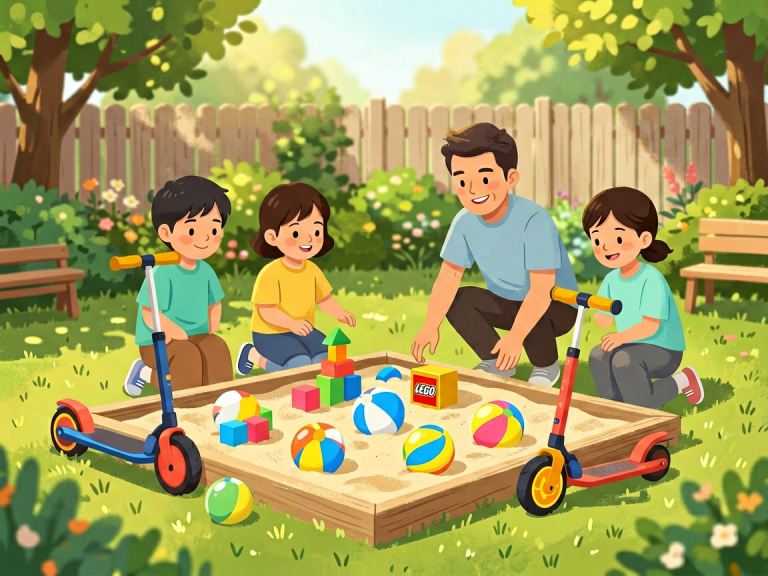
While cognitive gains are often the most celebrated outcome, educational toys also play a vital role in social and emotional growth. Preschoolers are egocentric by nature, but cooperative play with toys provides a natural setting for learning turn-taking, sharing, and negotiation. Building blocks, for example, often inspire group projects. Two children working together to construct a tower must communicate their ideas, resolve disagreements about where to place the next block, and celebrate shared success. These interactions teach emotional regulation—children learn to manage frustration when the tower falls, and to express pride when it stands tall.
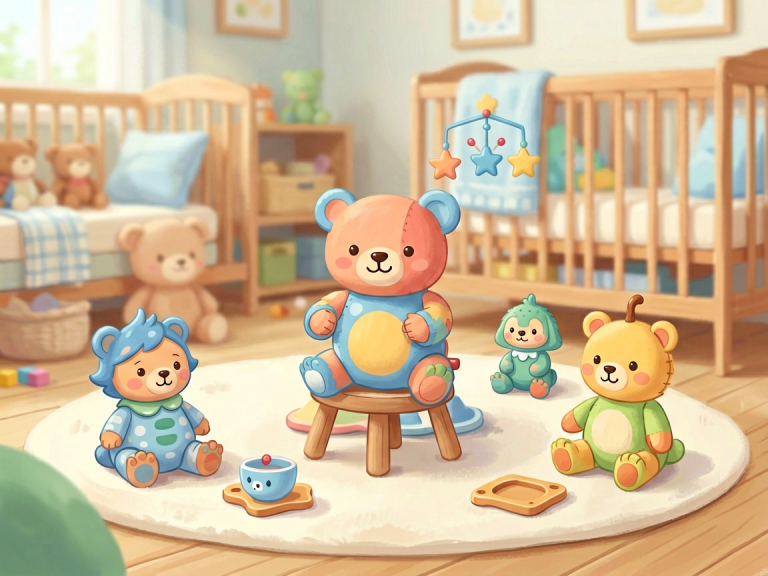
Role-playing toys, such as play kitchens, doctor kits, and dress-up costumes, are especially powerful for emotional development. When a four-year-old pretends to be a parent caring for a doll, he practices empathy and nurturance. He experiments with different social roles and scripts, which helps him understand the perspectives of others. A child who pretends to be a doctor giving a shot to a stuffed animal is processing her own experiences at the pediatrician’s office, gaining a sense of control over a potentially scary situation. This symbolic play is not just cute; it is a critical mechanism for emotional processing and resilience.
Furthermore, many educational toys encourage delayed gratification and perseverance. Completing a 20-piece puzzle or building a complex structure from a set of magnetic tiles requires sustained attention and the willingness to try again after failure. These experiences build a growth mindset—the belief that effort leads to improvement. A child who struggles with a puzzle and eventually solves it learns that challenges are surmountable. This lesson is far more valuable than any specific skill the puzzle teaches, because it cultivates a positive attitude toward learning that will carry into formal schooling and beyond.
Physical Development: Fine Motor Skills and Coordination
Preschoolers are rapidly developing both gross motor skills (large muscle movements) and fine motor skills (small muscle control, especially in hands and fingers). Educational toys are excellent tools for honing these abilities. Simple activities like threading large beads onto a string require precise hand-eye coordination and bilateral coordination (using both hands together). Lacing cards, pegboards, and interlocking building sets like LEGO Duplo further refine the pincer grasp—the ability to hold small objects between thumb and forefinger—which is essential for later writing.
On the gross motor side, toys such as balance beams, tricycles, and large foam blocks encourage movement, strength, and spatial awareness. Although these are often classified as “active play” toys, they are undeniably educational because they help children understand their bodies in space, develop core strength, and practice coordination. Even a simple set of brightly colored beanbags can be used for tossing games that develop aiming, tracking, and hand-eye coordination. Physical play also releases endorphins and reduces stress, creating a positive feedback loop that makes children more receptive to learning.
Types of Educational Toys: A Practical Classification
To help parents and educators make informed choices, it is useful to categorize educational toys by their primary developmental focus. The following types are particularly effective for preschoolers:
- Construction Toys (Blocks, Magnetic Tiles, LEGO Duplo): These encourage spatial reasoning, creativity, and problem-solving. Children learn about balance, symmetry, and cause and effect as they build structures. Open-ended blocks allow for infinite possibilities, supporting divergent thinking.
- Puzzles and Matching Games: From simple knob puzzles to more complex floor puzzles with 50 pieces, these toys enhance pattern recognition, memory, and logical thinking. Memory card games also boost concentration and visual recall.
- Art and Craft Materials (Crayons, Play-Doh, Safety Scissors, Modeling Clay): Creative expression through art supports fine motor control, color recognition, and emotional release. Cutting, drawing, and molding also strengthen the hand muscles needed for handwriting.
- Pretend Play Kits (Kitchens, Tool Benches, Dollhouses, Puppets): These foster imagination, language development, and social skills. When children narrate their pretend scenarios, they practice vocabulary, sentence structure, and storytelling.
- Musical Instruments (Xylophones, Maracas, Drums, Tambourines): Music play develops auditory discrimination, rhythm, and coordination. It also introduces basic concepts of math (patterns, counting beats) and can be a joyful outlet for self-expression.
- Board Games for Young Children (Candy Land, Chutes and Ladders, Simple Matching Games): Cooperative and simple competitive games teach turn-taking, following rules, and handling winning and losing gracefully. They also reinforce counting and color recognition.
- Science and Nature Kits (Magnets, Magnifying Glasses, Simple Microscopes, Plant Growing Kits): These spark curiosity about the natural world. A preschooler using a magnifying glass to examine a leaf is engaging in authentic scientific observation and asking questions about “why” and “how.”
How to Choose the Right Educational Toys
With the overwhelming variety of toys on the market, selecting the most beneficial ones can be challenging. The following criteria can guide thoughtful purchasing:
- Age Appropriateness: Toys should match the child’s developmental stage. A toy that is too advanced will frustrate, while one that is too simple will bore. Look for age recommendations on packaging, but also consider the individual child’s skills and interests.
- Open-Endedness: The best educational toys allow for multiple uses and outcomes. A set of wooden blocks can become a castle, a spaceship, a bridge, or a counting tool. Open-ended toys grow with the child and encourage creativity, whereas single-purpose toys (e.g., a plastic phone that only makes sounds) have limited learning value.
- Safety: Preschoolers explore with their mouths and their hands. Ensure toys are made of non-toxic materials, have no small parts that pose choking hazards, and are durable enough to withstand rough play. Look for certifications like ASTM or CE.
- Sensory Appeal: Toys that engage multiple senses—bright colors, interesting textures, pleasant sounds—tend to be more engaging and effective for learning. However, avoid overstimulating electronic toys with flashing lights and loud noises, as these can reduce deep focus.
- Cultural and Gender Neutrality: Choose toys that reflect diverse backgrounds and do not reinforce stereotypical gender roles. A play kitchen is for all children, not just girls; a tool bench is for all children, not just boys. Inclusive toy choices broaden a child’s understanding of the world.
- Quality over Quantity: A few well-chosen, durable toys are far more beneficial than a closet full of plastic, low-quality items. Children engage more deeply when they have fewer options and can return to the same toy repeatedly, discovering new ways to play.
The Role of Parents and Caregivers in Educational Play
Even the most thoughtfully designed educational toy is only as effective as the context in which it is used. A child left alone with a puzzle may quickly become frustrated and abandon it. But a parent who sits beside her, modeling problem-solving strategies and offering encouraging words, transforms the experience into a powerful learning moment. Adult involvement is crucial in several ways:
- Scaffolding: Adults can provide just enough assistance to help a child succeed without taking over. For example, a parent might say, “Try turning that piece around,” instead of placing it correctly. This maintains the child’s sense of agency while guiding her toward the solution.
- Language Enrichment: While playing, parents can narrate actions, ask open-ended questions (“What do you think will happen if you stack that block here?”), and introduce new vocabulary. This verbal interaction boosts language development far beyond what the toy alone would achieve.
- Modeling Attitudes: Children learn from watching how adults approach challenges. If a parent shows enthusiasm for solving a difficult puzzle or calmly tries again after a mistake, the child internalizes a positive, resilient attitude toward learning.
- Limiting Screen Time: Research strongly indicates that real-world, hands-on play is superior to screen-based learning for preschoolers. Educational apps may have some value, but they cannot replace the tactile, social, and physical richness of playing with actual objects. Parents should prioritize toy play and ensure that screen time, if any, is limited, interactive, and co-viewed.
Conclusion
Educational toys for preschoolers are far more than simple amusements. They are the building blocks of a child’s mind, body, and spirit. Through thoughtful design, these toys support cognitive growth, social-emotional competence, physical development, and creativity. The key lies not in any single toy, but in the way children are encouraged to use them—with curiosity, persistence, and the loving guidance of adults. As parents, educators, and communities, our responsibility is to provide rich, varied opportunities for play and to step back when necessary, allowing children the joy of discovery. In a world that increasingly pushes formal academics ever earlier, we must remember that the most profound learning happens not in a classroom but on a living room floor, where a child holds a block, considers a puzzle piece, or pretends to be a doctor. That is where the future is built—one playful moment at a time.