Screen-Free Toys vs. App-Based Toys: The Ultimate Showdown for Childhood Development
Introduction
In the modern household, the toy box has transformed into a hybrid landscape. Alongside classic wooden blocks and plush animals, parents now find tablets preloaded with interactive apps, robotic kits that respond to voice commands, and plush toys that talk back through a smartphone. The central question that lingers in the minds of educators, pediatricians, and caregivers alike is: which is better—screen-free toys or app-based toys? Both categories claim to foster creativity, learning, and motor skills, yet they operate on fundamentally different principles. Screen-free toys rely on the child’s own imagination and physical manipulation, while app-based toys leverage digital interactivity, animations, and adaptive algorithms. This article delves into the nuances of each type, examining their benefits, drawbacks, and developmental implications, ultimately arguing that neither is universally superior—rather, a thoughtful balance tailored to a child’s age, temperament, and context yields the most enriching play experience.
The Case for Screen-Free Toys
1.1 Encouraging Imaginative Play
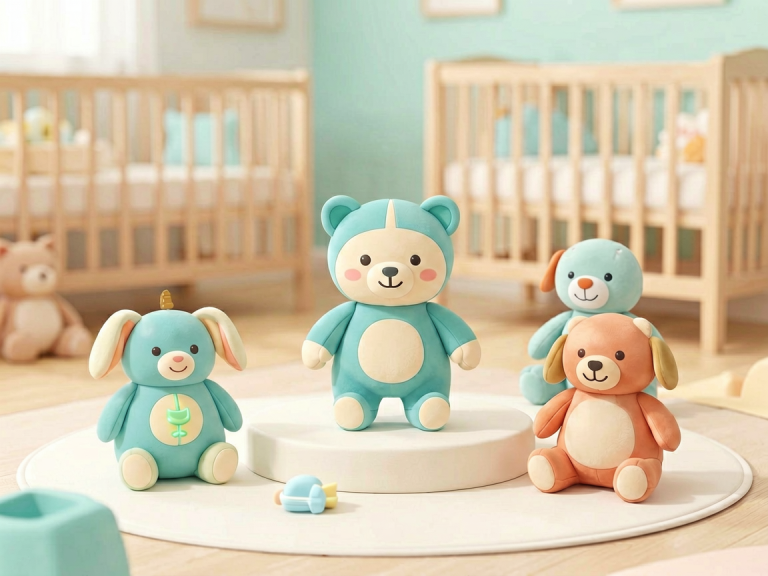
Screen-free toys, from simple building blocks to dollhouses and craft kits, are unparalleled catalysts for open-ended imagination. A cardboard box becomes a spaceship; a handful of Lego bricks transforms into a medieval castle. Without pre-programmed narratives or digital prompts, children must construct their own stories, negotiate roles with peers, and solve problems spontaneously. Psychologists have long emphasized that such unstructured play is crucial for developing executive functions—planning, flexibility, and self-regulation. For instance, when a child builds a tower that keeps falling, they experiment with balance and cause-and-effect without a screen telling them the answer. This iterative trial-and-error process strengthens neural pathways in ways that passive screen consumption cannot replicate.
1.2 Fostering Fine Motor Skills and Sensory Integration
Physical manipulation of toys—stacking rings, threading beads, squeezing playdough—directly supports the development of fine motor skills and hand-eye coordination. These tactile experiences also engage multiple senses: the weight of a wooden car, the grain of a fabric doll, the scent of modeling clay. Such multisensory input is vital for young children, whose brains are wired to learn through touch, motion, and proprioception. In contrast, app-based toys often rely on swiping or tapping a smooth glass surface, which provides limited tactile feedback. Research in occupational therapy suggests that children who spend more time with screen-free manipulative toys show better handwriting readiness and spatial awareness.
1.3 Promoting Social Interaction and Emotional Learning
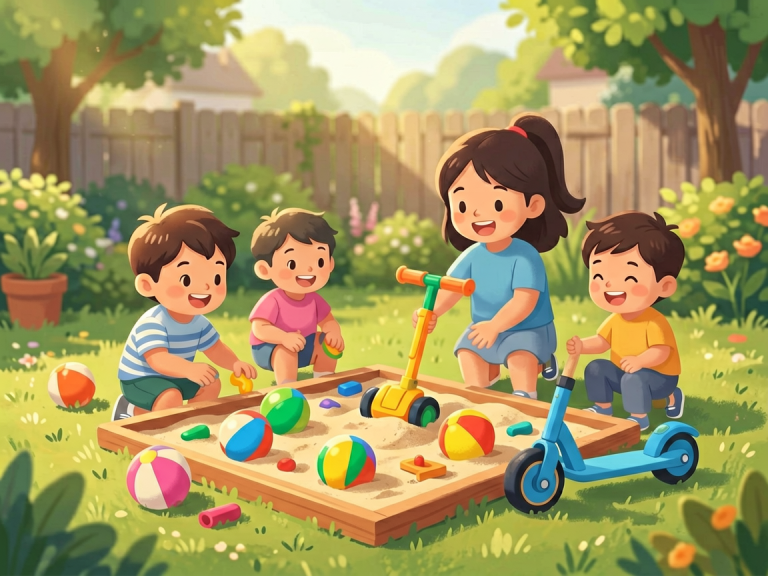
Traditional toys naturally invite cooperative play. A set of animal figures can prompt a group of children to negotiate a zoo scenario, teaching turn-taking, conflict resolution, and empathy. Board games, while structured, require face-to-face communication and reading social cues—a skill that app-based multiplayer games, often played in isolation, cannot fully replicate. Moreover, screen-free toys do not come with built-in rewards or “win states,” so children learn to find satisfaction in the process itself, building intrinsic motivation. When a child fails to fit a puzzle piece, they experience healthy frustration and persistence, emotional muscles that are essential for resilience.
1.4 Drawbacks of Screen-Free Toys
Despite their strengths, screen-free toys have limitations. They can be static and repetitive after a certain point—a doll can only be dressed up so many times before the child craves novelty. They rarely provide adaptive difficulty, so a child may outgrow a toy quickly, leading to clutter and waste. Additionally, screen-free toys offer no built-in assessment; parents must rely on observation to gauge learning progress. For children with specific learning challenges, such as dyslexia or attention deficits, traditional toys may not offer the targeted scaffolding that digital tools can provide.
The Allure of App-Based Toys
2.1 Adaptive Learning and Personalization
App-based toys, especially those integrated with artificial intelligence, can tailor content to a child’s performance in real time. For example, a math app may present easier problems when a child struggles and harder ones when they excel, creating a personalized learning curve. This adaptability is nearly impossible with physical toys unless a teacher or parent is constantly adjusting. For children with special educational needs, such customization can be transformative. Moreover, many app-based toys incorporate data tracking, allowing parents to see precisely which skills their child has mastered or where they need more practice.
2.2 Engaging Multimedia Experience
The combination of visuals, sounds, animations, and interactive feedback can captivate children who might otherwise find traditional toys boring. A digital puzzle that roars when completed or a spelling game that celebrates with confetti can sustain attention longer than a static puzzle. This engagement can be particularly effective for teaching subjects that require memorization or repetition—foreign languages, letter recognition, or basic coding logic. App-based toys also allow for simulations that are impossible physically, such as exploring the solar system or dissecting a virtual frog, bringing abstract concepts to life.
2.3 Accessibility and Variety
A single tablet can house hundreds of app-based toys, making them highly portable and space-efficient. For families living in small apartments or traveling frequently, this convenience is a major advantage. Furthermore, app-based toys can be updated or replaced with a simple download, so a child never truly “outgrows” them—new content is always available. Many apps are also free or low-cost, making educational resources accessible to lower-income households that could not afford expensive physical STEM kits.
2.4 Potential Concerns: Overstimulation, Addiction, and Privacy
The very features that make app-based toys engaging can also be problematic. Bright colors, fast animations, and reward sounds can overstimulate the developing brain, leading to attention difficulties and reduced tolerance for slower-paced activities. The dopamine-driven feedback loops common in many apps can foster addictive patterns, where children demand more screen time rather than seeking intrinsic satisfaction. Additionally, app-based toys often collect data on children’s behavior, raising serious privacy concerns. Many apps are designed to maximize “engagement” (i.e., time spent) rather than genuine learning, so parents must carefully vet content. Lastly, prolonged screen time is linked to eye strain, disrupted sleep, and reduced physical activity—a trade-off that cannot be ignored.
Head-to-Head Comparison: Key Developmental Domains
3.1 Cognitive Development
Both types offer cognitive benefits, but in different ways. Screen-free toys excel at promoting divergent thinking—the ability to generate multiple solutions to a problem. A set of magnetic tiles can be arranged into infinite structures, encouraging creativity. App-based toys, conversely, often emphasize convergent thinking—finding the single correct answer through trial and error within a predefined system. For skills like phonics or arithmetic, which require repetition and immediate feedback, apps may be more efficient. However, research by the American Academy of Pediatrics suggests that the passive consumption of even “educational” apps yields fewer cognitive gains than hands-on play, because children are not actively constructing knowledge. The ideal scenario might be an app that scaffolds a physical activity (e.g., a digital guide that shows how to build a bridge with real blocks).
3.2 Physical Development
This is where screen-free toys hold a clear advantage. Building, stacking, cutting, and molding all require gross and fine motor coordination that screen-tapping does not. While some app-based toys claim to improve hand-eye coordination (e.g., virtual drawing apps), they lack the resistance and proprioceptive feedback of real materials. Occupational therapists warn that excessive screen-based play can delay the development of pencil grip and manual dexterity. That said, some app-based toys that use augmented reality (AR) to project virtual objects into real space can encourage physical movement—for example, an AR game that requires a child to jump or reach to catch virtual marbles. These hybrids blur the line and may offer a compromise.
3.3 Emotional and Social Development
Face-to-face social play is largely irreplaceable by screens. When children play with screen-free toys together, they read body language, learn to compromise, and experience shared joy. App-based toys sometimes offer multiplayer modes, but these are often mediated by a screen, reducing nonverbal communication. Furthermore, the instant gratification of app-based rewards can undermine patience and delay of gratification—skills that screen-free toys naturally teach. However, app-based toys can be a lifeline for children with social anxiety or autism, providing a low-pressure environment to practice social scripts or learn about emotions through interactive stories. The key is moderation and adult co-use.
3.4 Creativity and Imagination
Screen-free toys are the undisputed champions of open-ended creativity. A set of blank paper and crayons offers infinite possibilities; a digital coloring app, even with thousands of colors, confines the child to a pre-drawn outline. Similarly, a story-building app may offer templates and prompts, limiting the child’s narrative freedom. Yet some app-based toys, such as coding games like ScratchJr, allow children to create their own animations and stories, blurring the line between consumer and creator. The most creative app-based toys are those that serve as tools for invention rather than passive consumption.
Finding a Balance: The Role of Parents
4.1 Age-Appropriate Choices
The debate cannot be settled without considering developmental stages. For infants and toddlers (under 2 years), the American Academy of Pediatrics recommends no screen time except video chatting; thus, screen-free toys are non-negotiable for sensory and motor development. For preschoolers (ages 3–5), brief, high-quality app-based interactions (e.g., guided puzzles or book apps) can complement physical play, but should not exceed 30–60 minutes per day. For school-age children, app-based toys can become powerful tools for learning coding, music, or languages, but only when balanced with outdoor play, sports, and creative projects. Parents should treat app-based toys as supplements, not replacements.
4.2 Setting Boundaries and Curating Content
A healthy toy ecosystem includes both categories but with clear rules. Parents can designate “screen-free hours” (e.g., meals, bedtime, outdoor time) and allow app-based play only during certain times. Equally important is curating the app library—choosing open-ended apps (like Toca Boca or Lego Builder) rather than those with aggressive monetization or passive video content. Participating in app-based play alongside the child (co-engagement) dramatically boosts its educational value, turning a screen into a shared conversation starter rather than a babysitter.
4.3 Combining Both Worlds: Hybrid Play
The most innovative approach integrates screen-free and app-based elements. For example, a physical puzzle that, when solved, unlocks a digital reward in an app; or a coding robot that the child programs using physical command blocks and then watches execute the sequence on a tablet. These hybrid toys acknowledge that children today are digital natives, but they ground digital experiences in tangible, kinesthetic interaction. Such toys can offer the best of both worlds—adaptive feedback and physical manipulation—while minimizing passive screen time.
Conclusion
So, which is better? The answer is not an either/or but a thoughtful both/and. Screen-free toys lay the foundational building blocks of imagination, motor skills, and social-emotional intelligence. App-based toys, when chosen wisely, can accelerate learning, personalize challenges, and introduce concepts that physical toys cannot. The enemy is not the toy itself but the imbalance—too much of either leads to deficiencies. A child who only plays with screen-free toys may miss out on digital literacy essential for the 21st century; a child who only uses apps may struggle with attention, physical dexterity, and real-world social skills. The wise parent, educator, or caregiver will curate a diverse play diet, monitoring the child’s reactions and adjusting as they grow. Ultimately, the best toy is the one that sparks a child’s curiosity, invites them to create, and brings a gleam to their eyes—whether it is a wooden train or a glowing tablet.