The Essential Guide to Learning Toys for Kids: Fostering Curiosity, Creativity, and Cognitive Growth
In an age where digital screens often dominate children’s attention, the humble learning toy remains a powerful, hands-on tool for early development. Learning toys are not merely playthings; they are carefully designed instruments that blend entertainment with education, sparking curiosity and encouraging problem-solving. From the first rattle that teaches cause-and-effect to complex building sets that introduce engineering principles, these toys lay the foundation for lifelong learning. This comprehensive guide explores the multifaceted world of learning toys for kids, examining their benefits, types, selection criteria, and practical tips for parents and educators.
The Neuroscience of Play: Why Learning Toys Matter
Play is the brain’s favorite way to learn. Neuroscientific research consistently shows that when children engage in playful activities, neural connections are formed and strengthened at an astonishing rate. Learning toys capitalize on this natural process by providing structured yet flexible opportunities for exploration. For instance, a simple wooden shape-sorter does more than entertain—it teaches spatial reasoning, shape recognition, and fine motor control. Each attempt to fit the triangle into the square hole triggers a cascade of cognitive processes: visual analysis, trial-and-error, memory recall, and eventually triumph. This experience activates the prefrontal cortex, the brain’s executive control center, while simultaneously fostering the release of dopamine, a neurotransmitter associated with motivation and pleasure.
Moreover, learning toys can be tailored to different developmental stages. Infants benefit from high-contrast patterns and textured objects that stimulate sensory integration. Toddlers thrive with toys that involve stacking, sorting, and simple cause-and-effect, as these activities mirror the cognitive leaps they are making in language and motor skills. Preschoolers and early elementary children, on the other hand, crave challenges that require logic, planning, and social interaction—such as cooperative board games or science experiment kits. The key is that learning toys meet children where they are developmentally, offering the right level of challenge without causing frustration.
Categories of Learning Toys: Age-by-Age Breakdown
For Infants and Babies (0–12 Months)
The first year of life is a period of explosive sensory and motor development. Learning toys for this age group should prioritize safety, texture, sound, and contrast. High-contrast black-and-white cards or cloth books stimulate visual tracking. Soft rattles, crinkle toys, and teethers engage auditory and tactile senses. Activity gyms with dangling objects encourage reaching and grasping, building hand-eye coordination. Musical mobiles not only soothe but introduce patterns and rhythm. Importantly, all toys should be free of small parts and made of non-toxic materials, as mouthing is a primary means of exploration.
For Toddlers (1–3 Years)
Toddlers are natural explorers who delight in cause-and-effect relationships. Their learning toys should support language development, motor skills, and early problem-solving. Shape sorters, nesting cups, and simple puzzles (with knobs for easy grasping) are excellent choices. Building blocks, whether wooden or large interlocking plastic, allow for creativity while developing spatial awareness. Push-and-pull toys encourage walking and balance. Musical instruments like xylophones or drums introduce cause-and-effect (hitting makes sound) and rhythm. At this stage, toys that mimic real life—such as toy telephones, play kitchens, or tool sets—foster imaginative play and social role-playing, which are critical for emotional intelligence.
For Preschoolers (3–5 Years)
Preschoolers are ready for more complex cognitive challenges. Learning toys for this group should promote pre-literacy, numeracy, and logical thinking. Alphabet puzzles, magnetic letters, and simple board games that require counting or matching build foundational academic skills. Art supplies—crayons, washable markers, playdough, scissors—enhance fine motor control and creativity. Building sets like Duplo or magnetic tiles introduce basic engineering principles (balance, symmetry, gravity). Science kits for young children, such as a magnifying glass, bug catcher, or simple magnet set, encourage observation and inquiry. Additionally, cooperative board games (no winner/loser) teach turn-taking, patience, and social regulation.
For School-Age Children (5–8 Years)
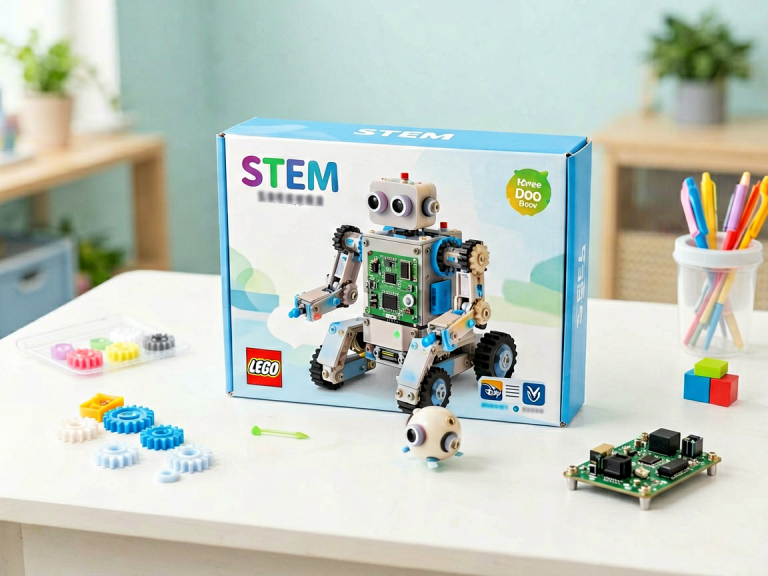
As children enter formal education, learning toys can extend classroom concepts in a playful, low-pressure way. Logic puzzles, pattern blocks, and math games (e.g., number bonds via dice or cards) reinforce arithmetic. Snap-together circuits or beginner robotics kits (like simple coding mice) introduce STEM concepts. Strategy board games like “Blokus” or “Qwirkle” develop spatial reasoning and planning. Language-rich games—such as rhyming cards, word-building tiles, or story cubes—boost vocabulary and narrative skills. Science experiment kits (crystal growing, volcano reactions) satisfy curiosity about the natural world. At this age, children also benefit from toys that encourage persistence, such as intricate mazes or 3D puzzles, as they learn that effort leads to mastery.
How to Select the Best Learning Toys: A Practical Framework
With thousands of options available, choosing the right learning toys can feel overwhelming. However, a few guiding principles can simplify the process. First, consider the child’s individual interests and temperament. A quiet, observant child might prefer a puzzle or a microscope, while a high-energy child might thrive with a balance board or a giant building set. Second, look for “open-ended” toys—those that can be used in multiple ways. Blocks, magnetic tiles, and art materials are classic examples because they encourage creativity rather than a single predetermined outcome. Third, avoid toys that do too much. Many electronic toys that light up and talk have limited interaction value; they entertain but rarely challenge. Simple toys that require the child to act (rather than passively watch) stimulate deeper cognitive engagement.
Fourth, prioritize quality and durability. Well-made wooden or sturdy plastic toys withstand years of use and can be passed down. Check for safety certifications (ASTM, CE) and ensure there are no sharp edges or toxic paints. Fifth, consider the balance between solitary and social play. While independent play builds focus, toys that encourage cooperation (like a memory game or a collaborative building project) develop social skills. Finally, resist the urge to overfill the playroom. A focused collection of high-quality learning toys is more beneficial than a cluttered pile of half-used plastic gadgets. Research suggests that children engage more deeply when they have fewer, carefully chosen options.
The Role of Parents and Educators: Facilitating, Not Directing
A learning toy is only as effective as the adult who supports its use. Parents and educators should resist the temptation to “instruct” children on how to play. Instead, take a facilitating approach: observe, ask open-ended questions, and offer gentle scaffolding when needed. For example, if a child is struggling to fit a puzzle piece, instead of placing it yourself, you might say, “Hmm, I wonder if turning it a little would help?” This encourages problem-solving without removing the challenge. Similarly, when a child uses building blocks to make a tower that falls, resist the urge to fix it. Let them experiment with different foundations—they are learning physics through failure.
Another key role is modeling curiosity. When you play alongside your child, show genuine interest in the toy’s mechanics. Say, “I wonder what happens if we put the red block on top of the blue one?” This demonstrates that learning is a lifelong, joyful process. Additionally, rotate toys periodically to maintain novelty. A toy that has been out of sight for a few weeks will feel fresh and exciting, prolonging its educational value. Finally, remember that the best learning toys often don’t come from a store. Everyday objects—pots and pans, cardboard boxes, recycled containers—can be powerful learning tools. A cardboard box can become a spaceship, a castle, or a sorting bin for counting practice, all while fostering creativity and resourcefulness.
Conclusion: Investing in the Future Through Play
Learning toys for kids are far more than entertainment; they are investments in cognitive, social, and emotional development. By choosing age-appropriate, open-ended, and high-quality toys, and by engaging with children in a supportive, non-directive manner, parents and educators can harness the natural power of play to nurture competent, curious, and resilient learners. In a world that increasingly demands critical thinking and adaptability, the simple act of stacking blocks, solving a puzzle, or performing a mini science experiment provides the foundational skills that will serve children for a lifetime. So the next time you see a child deeply absorbed in a learning toy, remember: they are not just playing. They are constructing their own understanding of the world, one joyful discovery at a time.