Building Brilliant Minds: The Best STEM Toys for 2-Year-Olds
Introduction
The early years of a child’s life are a period of extraordinary brain development. Between the ages of one and three, toddlers are natural scientists—constantly observing, experimenting, and making sense of the world around them. They drop a spoon to see what happens, fill a bucket with sand, or stack blocks until they tumble. Each of these seemingly simple actions is actually a foundational STEM (Science, Technology, Engineering, and Mathematics) experience. For parents and caregivers, choosing the right toys can deliberately channel this innate curiosity into structured learning without sacrificing the joy of play. But not all toys labeled “educational” live up to the promise, and for a two-year-old, safety, durability, and developmental appropriateness are paramount. The best STEM toys for this age group are those that invite open-ended exploration, encourage fine and gross motor skills, introduce basic concepts like cause and effect, measurement, and classification, and—most importantly—are irresistibly fun. In this article, we will explore why STEM matters for toddlers, what to look for when selecting toys, and a carefully curated list of the best types of STEM toys that will stimulate a two-year-old’s growing mind.
Why STEM Matters for Toddlers
It might seem premature to talk about science and engineering with a child who can barely string together a sentence. Yet, research in early childhood development consistently shows that the neural pathways formed during the first three years lay the groundwork for later problem-solving, critical thinking, and even language acquisition. When a two-year-old fits a square peg into a square hole, they are practicing geometry and spatial reasoning. When they roll a ball down a ramp and watch it knock over a tower, they are exploring physics—force, trajectory, and momentum. When they sort plastic animals by color, they are engaging in basic data classification. STEM education at this stage is not about memorizing facts or performing calculations; it is about developing a mindset of inquiry. Toddlers learn best through hands-on, sensory-rich experiences that allow them to test hypotheses repeatedly. The right toys provide a safe environment for trial and error, building resilience as children learn that a block tower falls not because they “failed,” but because the base was too narrow. By nurturing this kind of playful experimentation early, we help children develop confidence in their own ability to understand and shape the world.
Key Considerations When Choosing STEM Toys for 2-Year-Olds
Before diving into specific toy categories, it is essential to understand what makes a toy genuinely appropriate and beneficial for a two-year-old. First, safety is non-negotiable. All toys should be free of small parts that could pose a choking hazard, made from non-toxic materials, and sturdy enough to withstand being thrown, chewed, and dropped. Look for certifications like ASTM or CE marks. Second, the toy should be open-ended rather than prescriptive. A toy that can only be used in one way (like a battery-operated robot that only moves forward) offers limited learning opportunities. In contrast, a set of wooden blocks can become a house, a bridge, a mountain, or a spaceship, depending on the child’s imagination. Third, the toy should engage multiple senses. Two-year-olds are sensory learners—they need to see, touch, hear, and sometimes even taste (though we try to discourage that) to fully process information. Colors, textures, sounds, and weights all contribute to cognitive mapping. Fourth, the toy should offer just enough challenge to keep the child interested without causing frustration. A puzzle with three large pieces is perfect; a 24-piece jigsaw is not. Finally, look for toys that promote interaction between the child and a caregiver or peers. STEM learning is amplified when adults narrate the play: “Oh, you put the red ring on first! Now the blue one—does it fit? What happens if we put the big ring before the small one?” These conversations build vocabulary and deepen understanding.
Top Categories of STEM Toys for 2-Year-Olds
1. Building Blocks and Stacking Toys
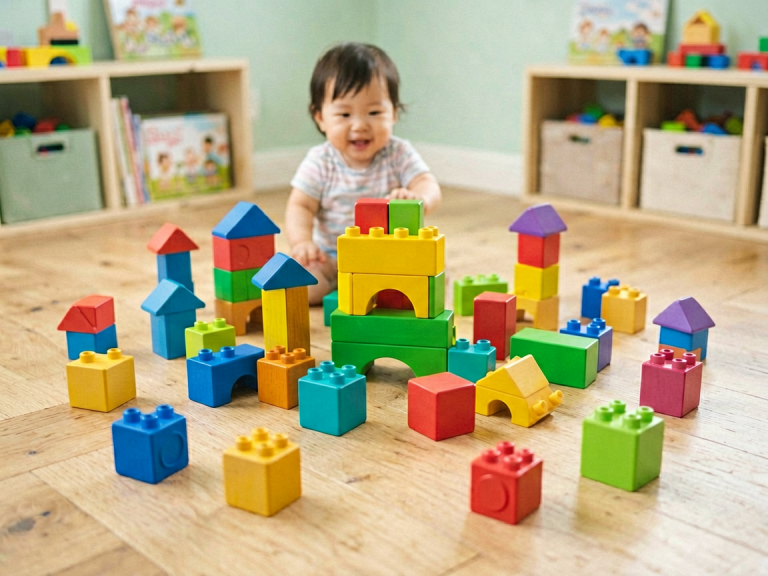
Perhaps the quintessential STEM toy, building blocks are a powerhouse of learning for toddlers. Simple wooden or cardboard blocks introduce concepts of balance, gravity, symmetry, and weight. A two-year-old might start by stacking two blocks on top of each other, then three, then watch in delight as they topple. This is engineering at its most fundamental: testing the stability of a structure. Larger, lightweight blocks made of foam or thick cardboard are ideal because they are easy to grasp and won’t hurt if they fall. Stacking cups or rings on a peg are also excellent variations. These toys teach seriation—ordering objects by size—which is a precursor to mathematical thinking. Look for sets that include blocks in different shapes (squares, rectangles, triangles, arches) so that children can explore how shapes fit together. Some brands offer blocks with textured surfaces or embedded mirrors to add sensory elements. The key is to let the child lead: resist the urge to show them “how to build a tower.” Instead, sit nearby and build your own, narrating what you are doing. The toddler will imitate, modify, and innovate, all while developing hand-eye coordination and spatial awareness.
2. Shape Sorters and Puzzles
Shape sorters are classics for good reason. The classic shape-sorter box with a lid and cutouts for different geometric shapes forces a child to match the shape of the object to the shape of the hole. This task requires visual discrimination, problem-solving, and fine motor control. For two-year-olds, start with a sorter that has large, simple shapes like circles, squares, and triangles, and only a few pieces. As they master those, you can introduce sorters with more shapes or ones that require twisting the piece to fit through a slot. Peg puzzles are another fantastic option. A wooden board with cutouts for animals, vehicles, or fruits, each with a peg handle, helps children practice matching and develops the pincer grasp needed for writing later. Beyond simple matching, puzzles that involve a sequence—like a train puzzle where each car has a number—introduce ordering and pattern recognition. To maximize STEM learning, talk about the attributes of each piece: “This star has five points. Can you count them? The circle is round—it has no corners.” This language builds geometry vocabulary naturally.
3. Cause-and-Effect Toys
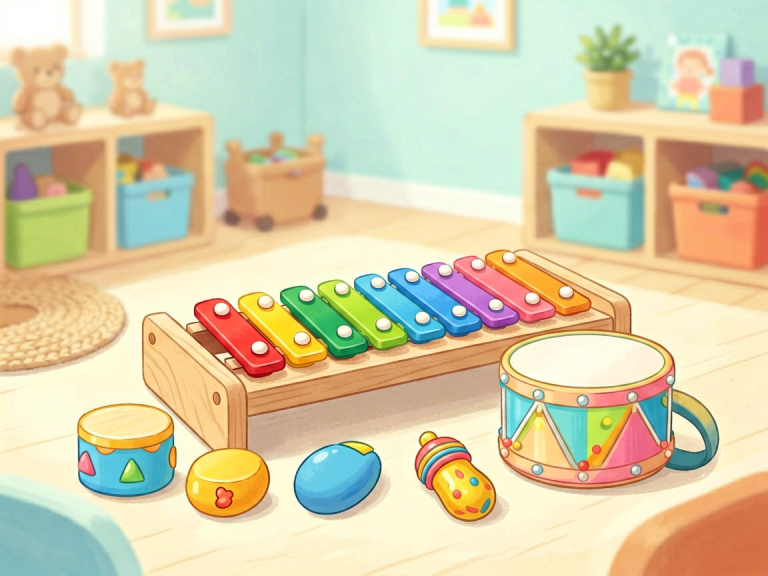
Two-year-olds are obsessed with cause and effect—dropping a toy from a high chair to see you pick it up, pressing a button to hear a sound, or pushing a car down a ramp. Toys that capitalize on this fascination are superb STEM tools. Simple ball tracks or marble runs (with oversized, safe balls) allow children to place a ball at the top and watch it roll down a series of ramps, making turns and hitting bells. This introduces concepts of gravity, slope, and momentum. Another excellent option is a “busy board” with latches, switches, zippers, and wheels. As children manipulate these elements, they learn about mechanical connections and the relationship between action and outcome. Musical instruments like drums, xylophones, or shakers fall into this category too—hitting a drum produces a sound, and hitting it harder produces a louder sound. For a two-year-old, the learning lies in repetition and prediction. After watching a ball roll down a ramp a few times, the child will anticipate where it will end up. That anticipation is the seed of scientific reasoning. To extend the play, vary the slope of the ramp or the weight of the ball and observe together what changes.
4. Sensory Exploration Kits
STEM is not just about visible mechanics; it also includes the scientific practice of observation through the senses. Sensory toys for two-year-olds provide rich opportunities for tactile, visual, and auditory experimentation. Simple water tables or sand tables (used with close supervision) let children pour, scoop, fill, and empty containers—activities that teach volume, conservation, and the properties of liquids versus solids. Kinetic sand or play dough with child-safe tools (rollers, cookie cutters, plastic knives) allows for sculpting and imprinting, which introduces basic concepts of pressure and texture. “Sensory bottles” filled with water, oil, glitter, and small beads can be shaken to observe how different materials move and settle. These calm-yet-engaging toys encourage focused attention and pattern recognition. For a STEM twist, add measuring spoons or cups of different sizes to the water table and ask, “Which cup holds more? How many small scoops fill the big cup?” Such simple questions turn free play into a measurement experiment. Always ensure that sensory materials are non-toxic and that the child is supervised to prevent ingestion.
5. Simple Magnetic and Puzzle-Matching Toys
Magnetic toys have become hugely popular, and for good reason—they introduce the invisible force of magnetism in a tangible way. For two-year-olds, large, chunky magnetic tiles or blocks that snap together with strong, sealed magnets are ideal. Unlike small magnets that are dangerous if swallowed, these large pieces are safe and easy for little hands to manipulate. Children can stick them to a magnetic board or the refrigerator, creating flat shapes or simple 3D structures. The satisfying “click” when two magnets connect provides instant feedback, reinforcing the concept of attraction. Some magnetic sets include pictures or letters, but at age two, free exploration is best. Another related category is matching games: simple cards or boards where the child places a magnetic or Velcro-backed object onto its matching silhouette. This builds classification skills, pattern recognition, and memory. For example, a set of magnetic farm animals with a barn scene—the child places the cow on the cow-shaped outline, the pig on the pig—teaches both categorization and spatial awareness. These toys also encourage language development as you name each animal and describe its features.
Conclusion
Choosing the best STEM toys for a two-year-old is not about buying the most expensive or high-tech gadget. It is about selecting tools that ignite curiosity, invite exploration, and respect the child’s developmental stage. Blocks, shape sorters, cause-and-effect toys, sensory kits, and magnetic play sets all fit the criteria of being safe, open-ended, and rich in learning potential. The true magic, however, happens not in the toy itself but in the interactions that surround it. When a caregiver sits on the floor, asks questions, models wonder, and celebrates discoveries, the toy becomes a gateway to a lifelong love of learning. So the next time you search for that perfect gift, remember: the best STEM toy for a two-year-old is one that makes them say “Again!” and keeps their small hands busy building—both towers and brains.