The Ultimate Guide to Safe Toys for 2-Year-Olds: Ensuring Fun and Development Without Risks
Selecting toys for a two-year-old is a delightful yet daunting task. At this age, children are bursting with curiosity, energy, and a rapidly developing sense of independence. They explore the world by touching, tasting, throwing, and climbing. However, this same exploratory drive makes them particularly vulnerable to injuries from unsafe toys. Every year, thousands of toddlers are treated in emergency rooms for toy-related incidents, many of which are entirely preventable with careful selection. Choosing safe toys for 2-year-olds is not merely about avoiding sharp edges or small parts; it involves understanding the child's developmental stage, evaluating material safety, considering durability, and recognizing the importance of age-appropriate design. This comprehensive guide will walk you through every critical aspect of selecting safe toys for a two-year-old, from regulatory standards to practical tips, ensuring that playtime remains joyful, educational, and hazard-free.
Understanding the Developmental Stage of a 2-Year-Old
To choose safe toys effectively, one must first understand what a two-year-old is capable of and what they are naturally drawn to. At this age, children are in the midst of what developmental psychologists call the "toddler stage," characterized by rapid motor skill advancement, language explosion, and burgeoning social awareness. They can walk steadily, run, climb onto furniture, and use their hands with increasing dexterity. They love to push, pull, stack, and fill containers. Their mouths remain a primary tool for exploration, meaning any object that can fit into their mouths is likely to be chewed or sucked. This oral fixation is a major reason why choking hazards are the number one safety concern for this age group.
Moreover, two-year-olds have limited impulse control and no understanding of danger. They may bite a toy until it breaks, throw a block across the room, or try to climb onto a toy meant for sitting. They also engage in parallel play rather than cooperative play, so they may not always be aware of other children's toys nearby. Their balance is still developing, and they can easily tip over when pushing a ride-on toy. Understanding these behaviors helps parents and caregivers anticipate risks. A safe toy for a two-year-old must withstand rough handling, contain no detachable small parts, have no sharp corners or pinch points, and be made from non-toxic materials that are safe if ingested. It should also encourage development without frustrating the child or requiring constant adult intervention to prevent accidents.
Key Safety Standards and Certifications to Look For
When shopping for toys, the first line of defense is to look for recognized safety certifications. In the United States, the Consumer Product Safety Commission (CPSC) enforces strict regulations, and toys sold in the country must comply with the ASTM F963 standard, which covers mechanical, physical, and chemical hazards. The most common certification mark is the "ASTM" label, often accompanied by a "CE" mark in Europe, indicating conformity with European safety standards. Additionally, the "UL" mark (Underwriters Laboratories) applies to electrical toys, and the "GREENGUARD Gold" certification indicates low chemical emissions, which is especially important for toys made of plastics or foam that might off-gas volatile organic compounds (VOCs).
For toys intended for children under three years old, the most critical regulation is the ban on small parts. In the U.S., any toy for children under three cannot contain a part that fits entirely into a standard small-parts test cylinder (roughly the size of a AA battery). This includes loose parts like buttons, eyes on stuffed animals, or wheels that can be pulled off. However, even if a toy passes the small-parts test, parents must be vigilant about toys that may break during use, creating new small parts. Look for toys labeled "for ages 2+" or "for toddlers," but do not rely solely on age labels—always inspect the toy yourself. Also, be cautious of toys that have been recalled. The CPSC website maintains a searchable database of recalls, and it is wise to check before purchasing secondhand toys. For painted toys, ensure they use lead-free paint, and for plush toys, look for a label stating that they are flame-resistant and that the stuffing is made from non-toxic, hypoallergenic fibers.
Top Categories of Safe Toys for Two-Year-Olds
Not all toys are created equal when it comes to safety and developmental appropriateness. Here are the most reliable categories of toys that balance fun, learning, and safety for two-year-olds.
Building Blocks and Stacking Toys
Classic wooden blocks, large plastic interlocking bricks (like DUPLO, which are larger than standard LEGO), and stacking rings are excellent choices. They promote fine motor skills, hand-eye coordination, and spatial awareness. Safety comes from their size: blocks should be at least 1.25 inches (3.2 cm) in diameter to prevent choking. Wooden blocks should be made of solid, untreated or non-toxic painted wood with no splinters. Avoid blocks with sharp edges or small decorative pieces that might come loose. Stacking rings often have a central post that should be securely attached, and the rings should be large enough that a child cannot fit them entirely into their mouth. Always check that the paint or finish is non-toxic, as toddlers will inevitably bite them.
Push and Pull Toys
As two-year-olds refine their walking and running skills, push-and-pull toys provide stability and entertainment. Look for toys with sturdy handles that are not too long or too short. The wheels should be smooth and not have any small axles that could protrude. Avoid string-based pull toys with cords longer than 12 inches (30 cm), as these can pose a strangulation hazard; instead, choose toys with rigid handles or short, thick cords. The toy itself should be heavy enough to provide resistance but light enough that a child can manage it without tipping over. For push toys, such as a child-sized shopping cart or a wooden lawn mower, ensure the base is wide and stable to prevent tipping. Check for any gaps where little fingers could get pinched, especially between moving parts like wheels and axles.
Shape Sorters and Puzzles
Simple shape sorters with large, chunky pieces are ideal for developing problem-solving skills. The pieces should be at least 2 inches (5 cm) in their smallest dimension to prevent choking, and the sorter itself should have no sharp edges. Many shape sorters have a lid that can be removed; ensure the lid does not have any small hinges or parts that could detach. Puzzles with a single piece per puzzle (like a wooden peg puzzle of an animal) work well. The pegs should be large and securely attached, and the board should be thick enough that it does not splinter. Avoid puzzles with multiple small pieces that could be scattered and lost.
Ride-On Toys Without Pedals
Ride-on toys that a child propels by pushing with their feet (like a small car or a rocking horse) are popular, but they require careful selection. The toy should have a wide base to prevent tipping, and the seat height should be low enough that the child's feet can touch the ground flat. Avoid ride-on toys with sharp protrusions or exposed springs. Those that rock should have a limited range of motion and a smooth, gentle rocking action. For push-along ride-ons (where an adult pushes using a handle), ensure the handle is securely attached and does not have any pinch points. Always supervise children on ride-on toys, as even the safest design cannot prevent falls if the child moves too quickly or climbs onto a slope.
Musical Instruments
Simple musical instruments like maracas, tambourines, xylophones, and drums can be wonderful for auditory development. For two-year-olds, choose instruments that are solidly constructed with no small parts. A maraca should be sealed shut—if it can be opened, the beads inside become a choking hazard. A xylophone's mallets should have thick handles and large heads that cannot be detached. Drums should have a sturdy rim without sharp edges. Battery-powered instruments should have a screw-secured battery compartment to prevent children from accessing batteries, which are corrosive and dangerous if swallowed.
Soft Dolls and Stuffed Animals
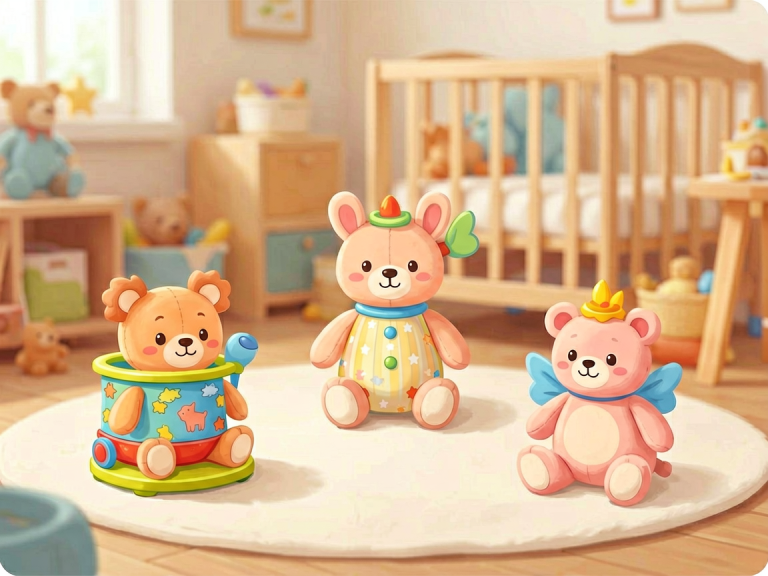
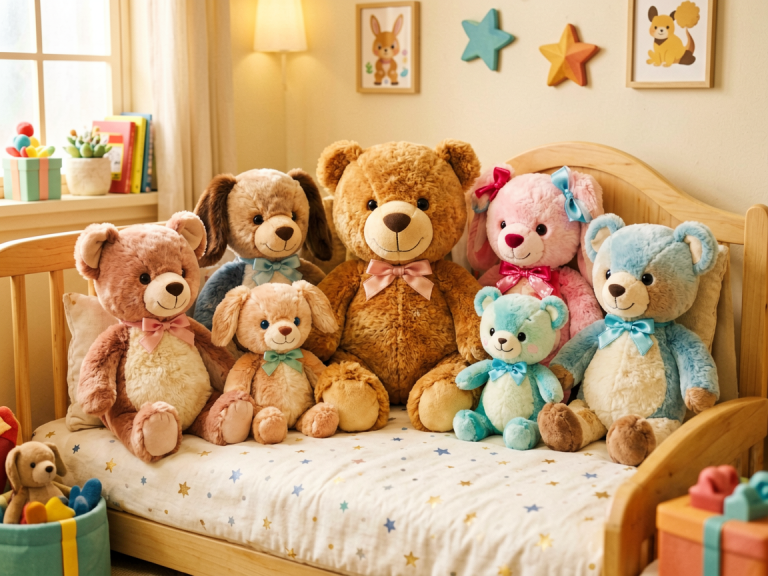
A soft, huggable companion can provide comfort and stimulate imaginative play. Safety criteria for stuffed animals include: tightly sewn seams that cannot be pulled apart, embroidered eyes and noses instead of plastic buttons or beads (which can become detached), and hypoallergenic stuffing. The toy should be machine-washable to maintain hygiene. Avoid any stuffed animal with ribbons, bows, or small accessories like glasses or hats that could be pulled off. The stuffing should not have any hard lumps. Also, be aware of long fur or hair that a child could pull off and ingest; short, dense fleece is safer. As with all toys, check the label for "surface washable" or "machine washable" and confirm that it meets ASTM standards.
Materials to Embrace and Materials to Avoid
The material composition of a toy is as important as its design. Two-year-olds have sensitive skin and immature immune systems, and they frequently put toys in their mouths. Therefore, the choice of materials directly impacts safety.
Safe materials include natural, untreated wood (such as beech or maple) with a smooth finish. If painted, use water-based, non-toxic paint explicitly labeled as safe for children. Another excellent material is food-grade silicone, which is soft, durable, and easy to clean. Silicone teethers, cooking toys, and stacking cups are popular because they are free from BPA, phthalates, and lead. Cotton and organic cotton are good for soft toys, especially if they are filled with polyester fiberfill that is flame-resistant and non-allergenic. For plastic toys, opt for those made from polypropylene (PP) or polyethylene (PE), which are generally stable and free from harmful chemicals. Some manufacturers now use bioplastics from renewable sources.
Materials to avoid include PVC (polyvinyl chloride), which often contains phthalates that can leach out and disrupt endocrine function. Also avoid toys with a strong chemical smell, which may indicate off-gassing from formaldehyde or benzene. Polystyrene foam (like Styrofoam) can break into small pieces and is easily crushed, posing a choking hazard. Avoid toys that are brittle or have sharp edges; for instance, some older plastic toys may become brittle with age and crack. Magnets are extremely dangerous for two-year-olds—if a toy contains small magnets, or if a magnet falls off, swallowing two magnets can cause severe internal injuries. Likewise, avoid toys with button batteries, which can cause chemical burns if lodged in the esophagus. Finally, be wary of cheap, imported toys from online marketplaces that may not comply with safety standards. When in doubt, choose a well-known brand with a track record of safety.
Choking Hazards and Size Recommendations
Choking is the leading cause of toy-related deaths among children under three. The American Academy of Pediatrics recommends that any toy or toy part given to a child under three years old should have a diameter of at least 1.25 inches (3.2 cm) and a length of at least 2.25 inches (5.7 cm) to prevent it from being wedged in the airway. However, these are minimum guidelines; in practice, larger is safer. Avoid toys with small balls, marbles, or beads. Even a deflated balloon is a serious choking hazard because it can conform to the shape of the throat. Furthermore, consider the possibility of a toy breaking. A well-constructed wooden block is less likely to splinter than a cheap plastic block that cracks into shards. Regularly inspect toys for signs of wear, such as loose eyes on stuffed animals, frayed fabric, or cracked plastic.
It is also important to consider the size of the toy as a whole. A toy that is too large or heavy can cause injury if it falls on a child. For instance, a large wooden block that a child tries to stack could tip over and hit their head. Toys with long cord-like attachments (such as pull strings longer than 12 inches) can cause strangulation. Similarly, toys that are meant to be worn, like costumes or masks, should have no neckties or drawstrings. If a toy has a handle or a loop, ensure it is not large enough to encircle a child's neck. In general, parents should perform a simple "toilet paper roll test": if an object can fit through a standard toilet paper roll (about 1.6 inches in diameter), it is too small for a two-year-old.
The Role of Supervision and Practical Tips for Parents
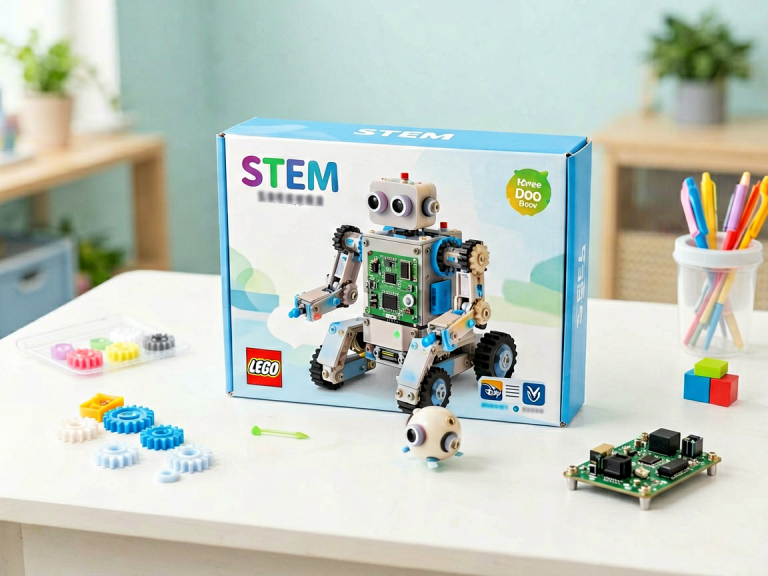
No toy, no matter how carefully selected, can replace active adult supervision. However, with the right guidelines, parents can significantly reduce risks. First, always read the manufacturer's labels and follow the age recommendations—they exist for a reason. When unboxing a new toy, remove all packaging materials, including plastic wrap, twist ties, and styrofoam pieces, which are suffocation hazards. Do not assume that a toy intended for an older sibling is safe for a two-year-old, even if it looks harmless. A building set with small pieces may be left behind by an older child, and the toddler can find them.
Second, create a designated play area that is free from clutter and away from stairs, sharp furniture corners, and electrical outlets. Use a safety gate to confine the toddler to a safe zone. Rotate toys to keep them interesting, but keep the number of toys available at any one time manageable. Too many toys can overwhelm a two-year-old and increase the risk of stepping on or tripping over them. Third, teach older siblings to keep their own toys with small parts in a separate, child-proofed area. Fourth, inspect toys regularly. Look for chips, cracks, loose parts, or faded paint. If a toy shows any damage, discard it immediately. For electrical toys, check that the wires are not frayed and that the battery cover is secured with a screw.
Finally, trust your instincts. If a toy seems flimsy, if it has a strong chemical odor, or if you have any doubt about its safety, do not buy it. Remember that the most engaging toys are often the simplest: a cardboard box, a set of colorful scarves, or a wooden spoon and a pot. These everyday items can spark creativity without the risks associated with poorly designed commercial toys. The goal is to foster exploration and learning while keeping the child safe, and with careful selection, that balance is entirely achievable.
Conclusion
Choosing safe toys for two-year-olds is a responsibility that goes beyond reading a label. It demands an understanding of toddler development, awareness of material science, familiarity with safety standards, and a willingness to inspect each toy as if it were a potential hazard. By focusing on toys that are large, durable, non-toxic, and free from small parts or long cords, parents can create a play environment where a child’s natural curiosity can flourish without unnecessary risk. The best toys are those that invite a child to push, pull, stack, sort, and pretend—while giving the parent peace of mind. Remember that no toy is entirely risk-free, but with the insights provided in this guide, you can dramatically reduce the chances of injury and ensure that the early years are filled with joyful, safe discovery. Whether you are a first-time parent, a grandparent, or a caregiver, investing time in choosing the right toys is one of the most meaningful gifts you can give to a developing child.