The Ultimate Guide to the Best Independent Play Toys for Kids
Introduction: The Power of Solo Play
In the bustling rhythm of modern family life, independent play is not just a luxury—it is a developmental necessity. When children engage in self-directed, solitary play, they learn to entertain themselves, solve problems on their own terms, and build a deep well of creativity. Yet, not all toys are created equal when it comes to fostering this kind of autonomy. The best independent play toys are those that require no adult instruction, no batteries, and no predetermined outcomes. They invite a child to explore, experiment, and imagine freely. This guide will walk you through the top categories of toys that truly support independent play, explaining why each type works and offering specific recommendations that have stood the test of time—and the test of children's relentless curiosity.
Why Independent Play Matters (And What Makes a Toy “Independent”)
Before diving into specific toys, it's worth understanding the psychology behind independent play. According to child development experts, between the ages of two and seven, children enter a stage where pretend play and symbolic thinking explode. Toys that allow them to control the narrative—rather than being controlled by flashing lights and pre-recorded sounds—are the ones that nurture concentration, resilience, and intrinsic motivation. An independent play toy is one that offers *open-ended* possibilities: it can be used in multiple ways, adapts to the child’s current interests, and does not demand constant adult facilitation. The best examples are simple in design but rich in potential. They are the ones you find your child playing with for an hour in complete silence, lost in their own world.
Building Blocks and Construction Sets: The Foundation of Independent Creation
Why They Work
Construction toys are the undisputed champions of independent play. They require a child to plan, balance, test, and rebuild—all without external instructions. A set of wooden blocks, for instance, can become a castle, a spaceship, a zoo, or a balancing tower. There is no right or wrong way to stack them, and the only limit is the child’s imagination. This type of play builds spatial reasoning, fine motor skills, and the ability to persist through failure (when the tower collapses, you simply try again).
Top Picks
- Magna-Tiles – These translucent magnetic tiles click together effortlessly, allowing preschoolers and older kids to build 3D structures, houses, and geometric shapes. They are especially good for independent play because they are satisfying to handle and require no glue or connectors. A four-year-old can spend 40 minutes building a “magic castle” entirely alone.
- LEGO Classic Bricks – While themed LEGO sets (like Star Wars or Harry Potter) often come with step-by-step instructions, the Classic line of basic bricks is the truest independent play tool. Give a child a bucket of mixed bricks, and they will invent cars, robots, and abstract sculptures. The open-ended nature of LEGO bricks encourages trial-and-error engineering.
- Unit Blocks – The classic unpainted wooden blocks (like those from Melissa & Doug or Guidecraft) are a Montessori staple. They are perfectly sized for small hands, and their uniform shapes allow for complex architectural designs. Children learn about gravity, symmetry, and proportion by themselves.
Creative Arts and Crafts Supplies: The Gateway to Self-Expression
Why They Work
Art toys that give children control over materials—rather than coloring inside pre-printed lines—are superb for independent play. When a child sits down with a pile of paper, glue, scissors, and markers, they become the director of their own creative process. There is no “correct” output; the joy is in the making. This type of play strengthens executive function, decision-making, and emotional regulation, as children often use art to process feelings.
Top Picks
- Play-Doh – This compound is endlessly remoldable. A set of Play-Doh with basic tools (a roller, a few cutters) lets a child make pretend food, animals, or abstract sculptures. Because the material is soft and forgiving, it encourages repeated attempts and experimentation. For older kids, adding loose parts like googly eyes, pipe cleaners, and small beads turns Play-Doh into a rich independent play medium.
- Washable Watercolor Sets with Water Brush Pens – Unlike messy tempera paints, watercolor sets that include a brush with a water-filled handle allow kids to paint anywhere with minimal cleanup. They can experiment with color mixing, layering, and washes without needing a parent to fill cups or set up easels. It’s the ultimate “just them and the paper” experience.
- Reusable Sticker Pads and Magnetic Dolls – Products like Melissa & Doug’s reusable sticker scenes (e.g., a farm, a dress-up doll) let children create and re-create stories. They peel, place, and reposition characters, building narratives that change every time. This is pure independent play—no end goal, no instructions, just imagination.
Pretend Play and Role-Playing Sets: The World in Their Hands
Why They Work
Pretend play is the very definition of independent activity. When a child puts on a firefighter hat or picks up a toy stethoscope, they enter a world of their own making. The best pretend play toys are realistic enough to spark ideas but open-ended enough to allow for improvisation. They also build social skills (even in solo play, children often talk to imaginary companions or narrate scenarios) and language development.
Top Picks
- Play Kitchens with Simple Accessories – A compact wooden play kitchen (like the KidKraft Vintage or a simpler IKEA version) invites children to “cook” alone. With a few pots, wooden food pieces, and a pretend stove, they will prepare imaginary meals, wash dishes, and set tables. No batteries, no noise—just the joy of mimicking grown-up life.
- Animal Figures and Small World Play Sets – Schleich or Safari Ltd. animal figurines are incredibly detailed and durable. A child can create a jungle, a farm, or a dinosaur world on the floor. Add a few pieces of felt for water or grass, and you have an entire ecosystem for solo exploration. These toys are particularly good for quiet, focused play.
- Costumes and Dress-Up Box – A simple collection of hats, scarves, old capes, and masks (nothing too themed) lets children become anyone they want. They don’t need a parent to help them dress up—they can put on a pirate hat and a feather boa and immediately transform into a captain of a ship. This kind of play fosters narrative thinking and self-confidence.
Puzzles and Problem-Solving Games: The Quiet Concentration Builders
Why They Work
Puzzles might seem like a solo activity that requires patience, but they are actually excellent for promoting independent play because they provide a clear, achievable goal that a child can work toward alone. The key is to choose puzzles that are challenging enough to hold interest but not so difficult that they cause frustration without a parent’s help. Wooden puzzles with knobs, jigsaw puzzles with large pieces, and logic puzzles all fall into this category.
Top Picks
- Floor Puzzles – Brands like Ravensburger and Mudpuppy make large, sturdy puzzle pieces that a child can spread out on the floor. The act of finding the correct piece and fitting it into place is deeply satisfying. A 48-piece floor puzzle of a map or a busy city scene can keep a four-year-old occupied for 30–40 minutes of focused problem-solving.
- Shape Sorters and Lacing Beads – For toddlers, classic shape sorters (like the Melissa & Doug wooden shape sorter) teach spatial awareness and fine motor control. Lacing beads with strings allow them to create patterns and necklaces independently. These are “quiet time” treasures.
- Magnetic Tangram Puzzles – A set of magnetic tangram pieces with a small board and cards (or just free play) encourages geometric thinking. Children can try to replicate the shapes on the cards or invent their own. The magnetic feature keeps pieces from sliding, making it less frustrating and more independent.
Sensory and STEM Toys: Learning Through Hands-On Experimentation
Why They Work
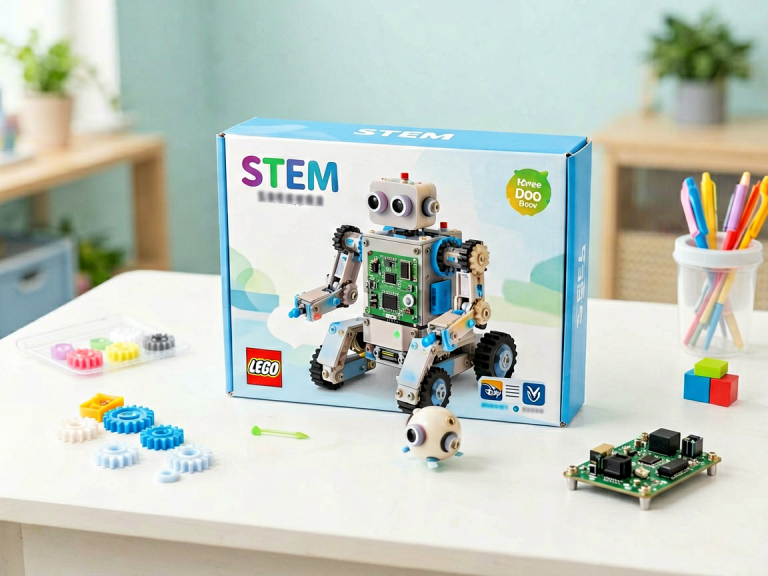
STEM (science, technology, engineering, and math) toys that are designed for open-ended exploration are perfect for independent play. They often involve cause and effect, which fascinates young children and drives them to repeat experiments. The best STEM toys for independent use are those that are safe, simple, and forgiving—meaning that mistakes don’t ruin the materials.
Top Picks
- Kinetic Sand – This moldable sand holds its shape yet flows like a liquid. A small bin of kinetic sand with a few scoops, molds, and a small shovel can occupy a child for an hour. They will build, collapse, and rebuild. It’s sensory-rich and requires no adult setup or supervision (just a mat for easy cleanup).
- Simple Magnet Sets – A set of bar magnets with iron filings or magnetic wands allows children to explore attraction and repulsion. For example, a “magnet maze” where they move a ball through a wooden board using magnets underneath is an independent challenge that feels like magic.
- Gears and Ratchets – Sets like Learning Resources’ Gears! Gears! Gears! provide interlocking plastic pieces that children can assemble into spinning contraptions. Once they figure out how to make the gears connect, they can build wildly different machines on their own, experimenting with speed and direction.
Outdoor Independent Play Toys: The Benefits of Moving Alone
Why They Work
Independent play doesn’t have to happen indoors. Outdoor toys that a child can use solo—without needing a parent to push or supervise—are invaluable for building gross motor skills and a sense of adventure. The key is to choose toys that are self-contained and easy to use.
Top Picks
- Balance Bikes – A balance bike (no pedals, no training wheels) lets a child propel themselves using their feet. They will spend hours scooting, gliding, and learning to balance, all without adult assistance. It’s empowering and physically demanding in a joyful way.
- Water Play Tables – A simple sand-and-water table with cups, funnels, and a water wheel can capture a child’s attention for an entire afternoon. They pour, measure, and splash independently, learning about volume and flow.
- Bubbles with Different Wands – A bottle of bubble solution and an assortment of wands (giant loop, butterfly-shaped, etc.) encourages outdoor exploration. Children run, twirl, and chase bubbles alone, developing coordination and a sense of cause-and-effect.
Tips for Selecting the Best Independent Play Toys
Not every toy marketed as “educational” or “creative” actually fosters independent play. Here are a few guiding principles for parents and caregivers:
- Look for simplicity. A toy with fewer parts and no batteries often wins. The more the toy does, the less the child has to imagine.
- Choose durable, open-ended materials. Wood, silicone, fabric, and metal outlast plastic and allow for reuse in countless ways.
- Resist over-structuring. Avoid toys that come with strict instructions or that only allow one way to play. Instead, pick toys that can be stacked, arranged, combined, or transformed.
- Observe your child’s natural interests. A child who loves animals will engage independently with animal figures for longer than with a generic building set. Match the toy to their current passion, and independent play will flourish.
Conclusion: The Gift of Self-Directed Wonder
Independent play toys are not just about keeping children busy—they are about giving them ownership of their own learning and joy. When a child builds a tower with blocks, creates a story with figurines, or puzzles over a magnet set, they are practicing concentration, perseverance, and creativity. The best toys for independent play are those that whisper, “You can do this yourself,” and then step out of the way. By investing in simple, open-ended, and thoughtfully designed toys, we give our children the most valuable gift: the confidence that they are capable of entertaining and teaching themselves. And that is a skill that will last a lifetime.