Are Robot Toys Safe for Kids? A Comprehensive Analysis of Risks and Benefits
Introduction
In recent years, the market for children’s toys has been revolutionized by the integration of artificial intelligence, sensors, and interactive capabilities. Robot toys—ranging from simple programmable bots to sophisticated companion robots that can talk, learn, and even express emotions—have become increasingly popular among parents and children alike. Yet, as with any emerging technology, a pressing question arises: Are robot toys safe for kids? This article delves into the multifaceted dimensions of safety, including physical hazards, data privacy concerns, psychological impacts, and developmental implications. By examining the latest research, industry standards, and expert opinions, we aim to provide a balanced perspective that helps parents make informed decisions.
Physical Safety: Hardware, Design, and Mechanical Risks
Small Parts and Choking Hazards
The most immediate safety concern with any toy is its physical construction. Many robot toys, especially those aimed at younger children (ages 3–6), contain small components such as wheels, buttons, screws, or detachable limbs. The U.S. Consumer Product Safety Commission (CPSC) has repeatedly issued recalls for robotic toys that pose choking risks. For example, certain “smart” robot pets have been found to have eyes or antennae that can break off, presenting a danger to toddlers who are prone to mouthing objects. Parents should always check the manufacturer’s age recommendations and look for certifications like ASTM F963 (the standard consumer safety specification for toy safety in the United States).
Battery and Electrical Hazards
Robot toys typically run on batteries—either disposable or rechargeable. Lithium-ion batteries, while efficient, can overheat, swell, or even catch fire if damaged or used improperly. In 2022, a popular line of educational robot toys was recalled because the battery compartment lacked a secure locking screw, allowing young children to access the batteries and potentially ingest or mishandle them. Additionally, charging cables and adapters for rechargeable robots may pose electrical shock risks if not designed with child‑proof insulation. To mitigate these hazards, parents should supervise charging sessions, avoid using third‑party chargers, and inspect the toy regularly for signs of wear.
Mechanical Pinch Points and Moving Parts
Robots that move (e.g., rolling, walking, or flying) often incorporate gears, motors, and hinges. If these mechanisms are not adequately shielded, children’s fingers, hair, or clothing can become caught. Cases of minor cuts and bruises have been reported from low‑quality robots where the wheel housings had sharp edges. High‑speed flying drone‑style robots present additional dangers: they can collide with eyes, faces, or fragile objects. The American Academy of Pediatrics recommends that moving robot toys be used only under adult supervision and that the maximum speed and force be limited to prevent injury.
Digital Privacy and Cybersecurity: The Hidden Threats
Data Collection by Connected Toys
Modern robot toys are often “smart”—they connect to Wi‑Fi or Bluetooth, record voice commands, recognize faces, and even learn a child’s preferences over time. While these features enhance interactivity, they also create a digital footprint. A landmark case in 2017 involved a connected doll that recorded children’s private conversations and transmitted them to a cloud server without adequate encryption. The Federal Bureau of Investigation (FBI) subsequently issued a warning about the potential for smart toys to be used for surveillance or data theft. When a robot toy collects personal information (names, locations, voices, or images) and sends it to a remote server, that data can be vulnerable to hacking or misuse.
Lack of Age‑Appropriate Security Standards
Unlike smartphones or computers, many robot toys are not subject to the same rigorous security requirements. Manufacturers may prioritize cost and novelty over robust encryption. A 2023 study by the Mozilla Foundation evaluated several popular children’s robot toys and found that more than 60% lacked basic security features such as two‑factor authentication or end‑to‑end encryption. Some even had default passwords that could be found in online manuals. For a curious child, the risk of a stranger interacting with them through the toy (e.g., via a microphone or camera) is not just a privacy violation but also a potential grooming hazard.
Parental Control and Transparency
The safety of a smart robot toy often depends on how much control the parent has over its data. Many apps that accompany these toys require permission to access the device’s microphone, camera, and contacts. Parents should ask: Does the toy have a clear privacy policy? Can the data be deleted? Is there an option to disable the internet connectivity? Ideally, a safe robot toy should offer a “airplane mode” or a physical switch to disconnect from the network. The Children’s Online Privacy Protection Act (COPPA) in the U.S. mandates that companies obtain verifiable parental consent before collecting data from children under 13—but enforcement remains inconsistent.
Psychological and Developmental Impacts: Cognitive and Emotional Considerations
Stimulation vs. Over‑Stimulation
Robot toys can be highly engaging, but that engagement is not always beneficial. A toy that responds instantly to every action may over‑stimulate a child’s developing nervous system, leading to shorter attention spans and reduced tolerance for low‑stimulation activities (e.g., reading a book or playing with simple building blocks). Psychologists warn that the “interactive feedback loop” of a robot toy can be addictive, especially for children who are sensitive to reward systems. For example, a robot that cheers when a child presses a button might reinforce a behavior pattern that seeks constant external validation.
Social and Emotional Development
One of the most debated questions is whether robot toys can replace or hinder human interaction. Some companion robots are designed to mimic emotions, such as responding to a child’s voice with “happiness” or “sadness.” While this can teach empathy in a controlled way, there is a risk that children might form an emotional attachment to an inanimate object that cannot truly reciprocate. A 2021 study published in the journal *Developmental Psychology* suggested that children who spent extensive time with a social robot exhibited more difficulty reading human non‑verbal cues compared to peers who played with traditional toys. The concern is that a robot’s predictable, programmed reactions may fail to prepare children for the complexity and unpredictability of real human relationships.
Educational Value vs. Passive Consumption
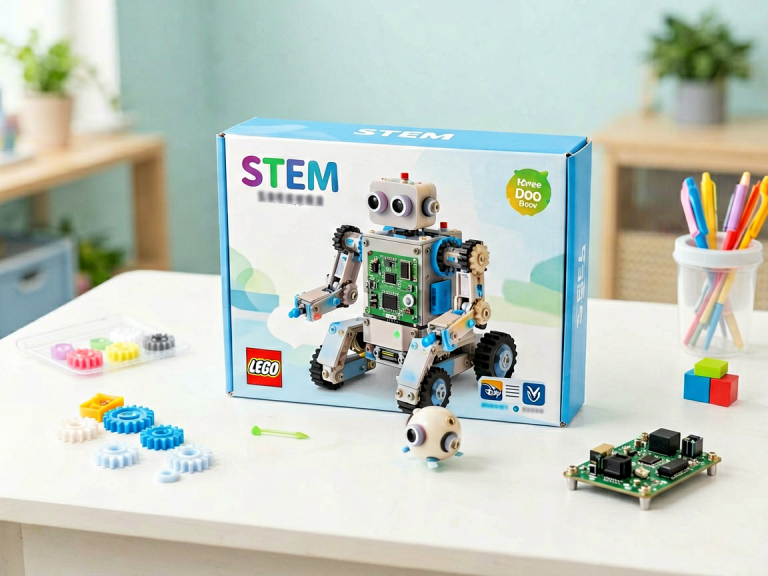
Many parents purchase robot toys to promote STEM learning—coding, problem‑solving, and logic. Indeed, programmable robots like the “Sphero” or “Lego Mindstorms” can teach valuable skills. However, not all robot toys are created equal. Some are little more than remote‑controlled gadgets with a “learn to code” label slapped on. If a robot toy simply entertains without encouraging active thinking, it becomes a passive consumption device rather than an educational tool. Moreover, excessive reliance on a robot to teach can reduce opportunities for open‑ended, creative play. The National Association for the Education of Young Children (NAEYC) recommends that screen‑based or robot‑enhanced play be balanced with unstructured, hands‑on activities.
Regulatory Landscape and Industry Standards
Existing Safety Regulations
In the United States, robot toys are regulated as “toys” under the Consumer Product Safety Improvement Act (CPSIA), which mandates third‑party testing for lead content, phthalates, and mechanical hazards. However, the digital aspects—software, connectivity, data privacy—fall under separate and often weaker regulations. The European Union’s Toy Safety Directive (2009/48/EC) and the General Data Protection Regulation (GDPR) provide more comprehensive coverage, but enforcement varies. In particular, the GDPR’s “data protection by design” principle requires that toys be built with privacy in mind, but many manufacturers still lag behind.
Voluntary Standards and Certifications
Several organizations have developed voluntary standards for smart toys. The “UL 2900” standard, for example, addresses cybersecurity for network‑connected products. The “Kitemark” or “CE” marks indicate conformity with European safety, health, and environmental requirements, but they do not explicitly cover data security. Parents can look for toys that have undergone independent testing by agencies like Underwriters Laboratories (UL) or the Toy Association’s “Play Safe” program. Additionally, some companies now offer “privacy‑focused” robots that process data locally on the device rather than sending it to the cloud.
Practical Guidelines for Parents
Age‑Appropriate Selection
The first step in ensuring safety is choosing a robot toy that matches the child’s developmental stage. For toddlers (ages 1–3), opt for simple, non‑connected robots with large, securely attached parts and no small batteries accessible. For preschoolers (ages 4–7), consider programmable block‑based robots that require active problem‑solving but have limited online features. For older children (ages 8+), more advanced coding robots can be introduced, but always review the privacy settings together.
Supervision and Boundaries
No toy is entirely safe without adult oversight. For connected robots, set up the device in a common area where you can monitor interactions. Disable any features that allow the robot to record or transmit when not in use. Teach your child basic digital safety: never share personal information with a toy, and report any unexpected messages. Establish time limits for play to prevent overuse.
Regular Maintenance and Updates
Like any electronic device, robot toys need software updates to fix security vulnerabilities. Many parents ignore these updates, leaving the toy exposed. Check the manufacturer’s website regularly for firmware updates. Also, inspect the toy physically—check for loose screws, frayed wires, or swollen batteries. If a toy feels hot during charging, unplug it immediately and contact the manufacturer.
Conclusion
So, are robot toys safe for kids? The answer is not a simple yes or no. Physical safety can be managed through careful selection and supervision, but the digital and psychological risks require more vigilance. A well‑designed robot toy that respects privacy, prioritizes child‑friendly interaction, and encourages active learning can be a valuable addition to a child’s playroom. Conversely, a poorly built or overly connected toy can expose children to real dangers. As technology advances, parents must remain informed, proactive, and critical. Ultimately, the safety of a robot toy lies not only in its hardware and software but also in the context in which it is used. With thoughtful choices and mindful supervision, robot toys can be both safe and enriching for kids.