The Power of Play: Selecting the Best Learning Toys for 7-Year-Olds
Introduction
At the age of seven, children stand at a fascinating crossroads of development. They have left behind the early childhood years of pure imagination and are stepping into a world where logical thinking, social awareness, and academic skills begin to flourish. Their attention spans grow, their fine motor skills sharpen, and their curiosity about how things work becomes insatiable. This is precisely why choosing the right learning toys for 7-year-olds can have a profound impact on their growth. A well-selected toy does more than entertain; it nurtures cognitive abilities, fosters emotional intelligence, and encourages creative problem-solving. In an era dominated by screens, high-quality learning toys offer a tangible, hands-on experience that stimulates the brain in ways no digital app can replicate. This article explores the various categories of learning toys that are ideal for seven-year-olds, explaining how each type supports specific developmental milestones and offering practical guidance for parents and educators.
Why Learning Toys Matter at Age 7
The age of seven is often considered a "golden age" of childhood development. Neuroscientific research shows that the prefrontal cortex—the part of the brain responsible for planning, decision-making, and impulse control—undergoes significant maturation around this time. Children begin to think more abstractly, understand cause and effect, and engage in complex problem-solving. Learning toys capitalize on this neural plasticity by providing structured challenges that are both fun and educational. Unlike passive entertainment, these toys require active participation: a child must build, sort, calculate, or collaborate. This active engagement strengthens neural pathways and builds a foundation for lifelong learning. Moreover, at seven, children are increasingly aware of peer relationships and social norms. Cooperative learning toys teach them patience, turn-taking, and empathy. In short, the right toy can transform playtime into a rich, multi-sensory learning experience that prepares a child for school and life.
Cognitive Development: Puzzles, Logic Games, and Building Sets
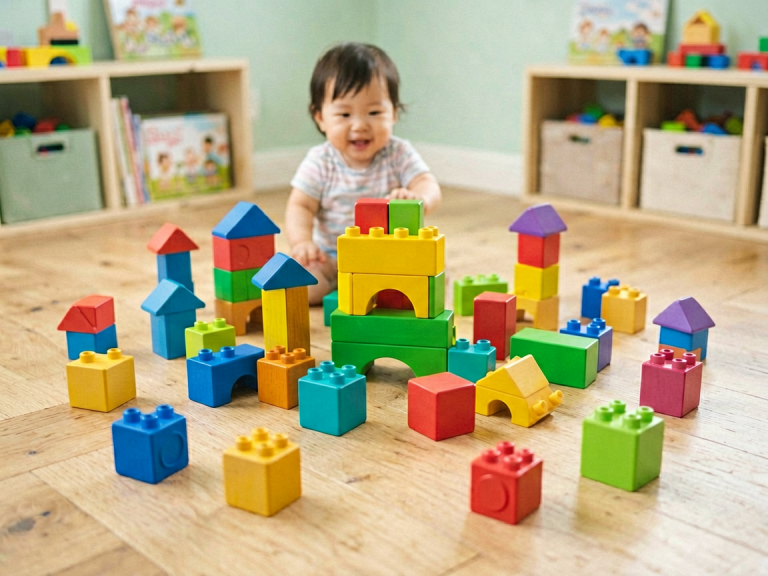
One of the most critical areas of growth for a seven-year-old is cognitive development—specifically, logical reasoning, spatial awareness, and memory. Puzzles with 100 to 200 pieces are excellent choices because they require a child to recognize patterns, categorize colors and shapes, and visualize the final image. More advanced logic games, such as Rush Hour or Laser Maze, introduce sequential thinking and deductive reasoning. These games often come with progressively harder levels, allowing children to experience the satisfaction of solving increasingly complex problems. Building sets like LEGO Boost or magnetic tiles (e.g., Magna-Tiles) take this a step further. When a seven-year-old follows instructions to construct a moving car or a geometric tower, they are not just playing; they are practicing executive function skills such as planning, attention to detail, and flexibility when things don’t fit. Furthermore, these toys can be used in open-ended play, encouraging creativity as children design their own structures. The tactile nature of building also refines fine motor skills, which are still developing at this age. By engaging with puzzles and building sets, children learn that persistence leads to mastery—a lesson that extends far beyond the playroom.
STEM Toys: Igniting a Passion for Science and Math
STEM (Science, Technology, Engineering, and Mathematics) toys are especially powerful for seven-year-olds because they combine hands-on experimentation with core academic concepts. A chemistry set designed for this age, such as the Thames & Kosmos “My First Chemistry Kit,” allows children to mix safe substances and observe reactions, teaching them the scientific method in a concrete way. Similarly, simple circuit kits (e.g., Snap Circuits) let children build working lights, fans, and alarms while learning about electricity. The immediate feedback—a bulb lighting up or a buzzer sounding—reinforces cause-and-effect relationships and builds confidence. For math, board games like Sum Swamp or Math Dice Jr. make arithmetic practice feel like play. Children roll dice, add or subtract numbers, and move along a game board, all while strengthening their number sense. Coding toys, such as the Botley 2.0 robot or the Code & Go Robot Mouse, introduce basic programming logic without screens. Kids learn to sequence commands, debug errors, and think algorithmically. These experiences demystify technology and show children that math and science are not abstract subjects but tools they can use to create and solve real-world problems. For a seven-year-old, the thrill of making a robot move or watching a crystal form can spark a lifelong interest in STEM fields.
Language and Literacy: Board Games, Storytelling Kits, and Interactive Books
Language skills explode between ages seven and eight. Children transition from learning to read to reading to learn. Learning toys that promote vocabulary, grammar, and narrative skills are invaluable. Classic word games like Scrabble Junior or Bananagrams encourage children to form words from letter tiles, reinforcing spelling and word recognition in a competitive yet social setting. Storytelling kits, such as Rory’s Story Cubes or a story journal with prompts, stimulate imagination and verbal expression. A child rolls dice with pictures and must weave a story connecting the images. This activity develops narrative structure, cause-and-effect reasoning, and oral fluency. Interactive books—especially those with lift-the-flaps, pop-ups, or accompanying audio—can turn reading into a multi-sensory adventure. For example, the “National Geographic Kids” series offers books with quizzes, puzzles, and fact cards that make learning about animals or space interactive. Additionally, magnetic poetry sets or letter stamps allow children to physically manipulate language, which is particularly helpful for kinesthetic learners. At this age, children also begin to understand humor, sarcasm, and figurative language. Games that involve puns or riddles, such as “Mad Libs,” can be both hilarious and educational. By making language playful, these toys help children develop a love for reading and writing that will serve them throughout their academic journey.
Social and Emotional Growth: Cooperative Games and Role-Play Sets
Seven-year-olds are deeply concerned with fairness, friendship, and their place in social groups. Toys that encourage cooperation rather than competition can be transformative. Cooperative board games, such as “Hoot Owl Hoot!” or “Outfoxed!,” require all players to work together toward a common goal—defeating a timer or solving a mystery. These games teach communication, compromise, and shared responsibility. When a child loses a turn or makes a mistake, they learn resilience in a supportive environment. Role-play sets also foster emotional intelligence. A doctor’s kit, a pretend grocery store, or a camping set allows children to act out real-life scenarios. Through this imaginative play, they explore different perspectives (e.g., what it feels like to be a patient or a cashier), practice empathy, and negotiate roles with peers. For example, two children playing with a veterinarian set might argue over who gets to be the vet, then learn to take turns or invent a second role. Emotional literacy can be further developed with toys like “The Feelings Game” or plush emotion dolls that help children label and discuss their feelings. Social-emotional learning at age seven is crucial because it lays the groundwork for future relationships and self-regulation. A toy that encourages a child to say “I feel frustrated because…” is not just a toy; it is a tool for emotional growth.
Creative Arts: Music, Art, and Craft Kits
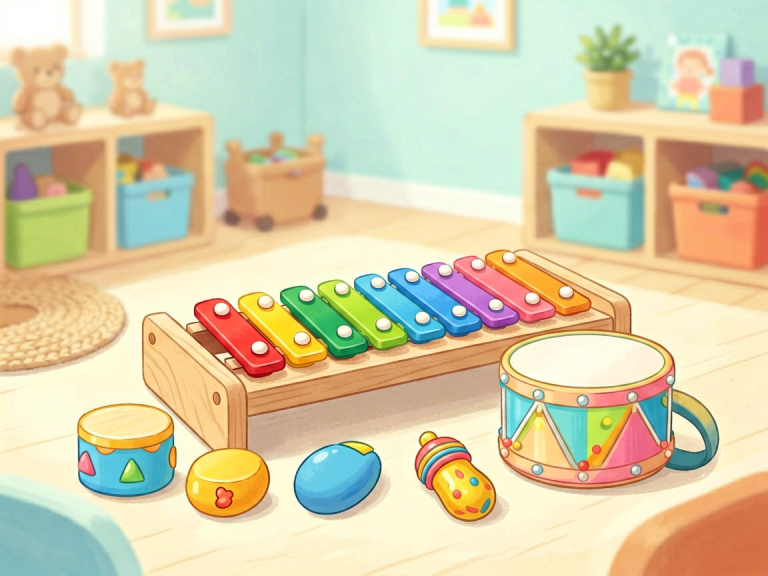
Creativity is not separate from learning—it is an essential component of cognitive flexibility and innovation. For seven-year-olds, art and music toys provide outlets for self-expression while simultaneously developing fine motor skills, patience, and aesthetic appreciation. Art kits that include watercolor pencils, oil pastels, or clay allow children to experiment with different media. More advanced options, such as a pottery wheel for kids or a weaving loom, introduce three-dimensional thinking and hand-eye coordination. Music toys are equally valuable. A simple keyboard with color-coded notes, a recorder, or a mini ukulele can teach rhythm, pitch, and musical patterns. Even percussive instruments like a djembe drum encourage a child to keep a beat, which has been linked to improved reading skills and mathematical abilities. Craft kits that involve sewing, beadwork, or model-building require following instructions, measuring, and problem-solving when a piece doesn’t fit. For example, a kit to build a wooden birdhouse involves reading a diagram, sanding wood, and screwing parts together—all of which require planning and precision. The sense of accomplishment a child feels when they create something tangible—a painting, a song, or a birdhouse—boosts self-esteem and reinforces the idea that effort leads to results. In a world that increasingly values standardized tests, creative arts toys remind us that learning can be messy, beautiful, and deeply personal.
How to Choose the Right Learning Toy: Practical Tips
With so many options available, selecting the perfect learning toy for a seven-year-old can feel overwhelming. Here are several evidence-based guidelines to help parents and educators make informed decisions. First, consider the child’s developmental stage and interests. A toy that is too easy will bore them; one that is too difficult will frustrate them. Look for toys labeled "ages 7+" and read reviews from other parents or educators. Second, prioritize open-ended play. Toys like building blocks, art supplies, and pretend-play sets offer infinite possibilities, while single-purpose toys (e.g., a pre-programmed robot that only moves in one pattern) can be quickly outgrown. Third, look for toys that encourage multiple modes of learning. For instance, a game that involves counting, reading, and cooperation hits three developmental targets at once. Fourth, avoid overstimulation. Toys with flashing lights and loud sounds may seem engaging but can actually hinder deep concentration. Instead, opt for quiet, focused activities that promote flow. Fifth, consider the social context. If a child has siblings or friends, cooperative games can build bonds; if they play alone, choose toys that allow independent exploration. Sixth, be mindful of screen time. While some digital learning toys (e.g., coding apps on a tablet) can be beneficial, the best learning toys for 7-year-olds are often screen-free, as they involve physical manipulation and real-world interaction. Finally, involve the child in the selection process. Take them to a store or browse online together, and ask what excites them. A toy they choose themselves is more likely to be used repetitively, maximizing its learning potential.
Conclusion
The toys we give our children are never just objects; they are invitations to think, feel, and grow. For a seven-year-old, the right learning toy can be a springboard into deeper understanding of the world and themselves. Whether it’s a logic puzzle that sharpens reasoning, a chemistry kit that sparks scientific curiosity, a cooperative game that teaches empathy, or an art set that unleashes imagination, each toy plays a unique role in shaping a child’s development. As parents and educators, we have the privilege—and responsibility—to choose toys that align with a child’s natural desire to learn through play. By investing in high-quality, thoughtfully designed learning toys, we give seven-year-olds the tools they need to build confidence, cultivate skills, and discover the joy of learning. In the end, the greatest toy is one that a child returns to again and again, each time finding a new challenge, a new question, or a new story. And that is the true power of play.