The Power of Solitary Wonder: Why Independent Play Toys Are Essential for Child Development
—
Introduction: The Forgotten Art of Playing Alone
In an age of constant digital stimulation, scheduled activities, and helicopter parenting, the concept of independent play has become almost revolutionary. Yet, for generations, children entertained themselves for hours with nothing more than a cardboard box, a set of wooden blocks, or a handful of pebbles. Today, we have an entire industry dedicated to “educational toys,” but many of these products rely on screens, batteries, or adult guidance. True independent play toys for kids are different. They are tools that invite self-directed exploration, encourage imagination, and foster a sense of competence that no app can replicate. This article explores what makes a toy truly supportive of independent play, why such toys are vital for cognitive and emotional growth, and how parents can curate a play environment that empowers children to become the architects of their own amusement.
—
What Are Independent Play Toys? Defining the Core Characteristics
Not all toys are created equal when it comes to fostering solo engagement. Independent play toys share several distinct features that set them apart from passive or scripted alternatives.
1. Open-Ended Design
The most fundamental quality is open-endedness. A toy that can be used in multiple ways—without a single “correct” outcome—invites repeated experimentation. For example, a set of wooden blocks can become a castle, a bridge, a race track, or a zoo enclosure. There is no manual, no levels to unlock, and no failure state. This flexibility allows a child’s imagination to take the lead, rather than following a predetermined path.
2. Simple and Non-Digital
While tablets and electronic gadgets can occupy a child, they rarely encourage independent play in the truest sense. Many digital toys provide instant feedback, flashing lights, and pre-programmed responses, which train children to expect external rewards. In contrast, independent play toys rely on the child’s own actions to generate meaning. A set of magnetic tiles, a bin of sand, or a collection of art supplies requires the child to initiate and sustain engagement. The toy does not entertain the child; the child entertains herself through the toy.
3. Developmentally Appropriate but Challenging
The best independent play toys strike a balance between accessibility and challenge. A toddler might enjoy oversized interlocking blocks that are easy to grasp, while a five-year-old might prefer smaller, more intricate building sets. The toy should be neither so simple that it bores the child nor so complex that it frustrates her without adult help. This sweet spot allows the child to enter a state of flow—a deeply focused, intrinsically rewarding experience central to independent play.
4. Encourages Manipulation and Physical Interaction
Many modern toys are passive: a child watches a screen or presses a button. Independent play toys, by contrast, require the child to touch, move, stack, pour, sort, or assemble. Fine motor skills, spatial reasoning, and hand-eye coordination are all developed through such physical interactions. Moreover, the tactile feedback—the weight of a wooden block, the texture of clay, the sound of a marble rolling down a ramp—grounds the child in reality and enhances sensory integration.
—
The Proven Benefits of Independent Play for Kids
Why should parents actively choose toys that promote solo play? The research is compelling. Independent play is not merely about keeping children occupied while adults get things done; it is a critical component of healthy development.
Cognitive Development and Problem-Solving
When a child plays alone with an open-ended toy, she must make decisions. Should the block tower be wide or tall? What happens if I put this shape here? These small, self-directed experiments are the building blocks of scientific thinking. Children learn cause and effect, trial and error, and persistence. A 2020 study published in *Child Development* found that children who engaged in more unstructured, independent play showed stronger executive function skills—including working memory, cognitive flexibility, and self-control—by age seven.
Emotional Regulation and Resilience
Independent play provides a safe space for children to experience and manage emotions. A child who builds a tower and watches it topple learns how to handle disappointment. She can try again, modify her approach, and experience the satisfaction of eventual success—all without an adult intervening to “fix” the problem. This builds frustration tolerance and emotional resilience. Furthermore, solitary play offers a break from the social pressures of school and peer interactions. It is a time when a child can be completely in charge, which is empowering for young minds.
Creativity and Imagination
Without structured rules or prompts, a child’s mind is free to wander. A simple wooden peg doll might become a princess, a superhero, a patient in a hospital, or a space explorer. This imaginative role-play is not only delightful but also crucial for developing narrative thinking, empathy, and abstract reasoning. In a world where many children’s activities are adult-led, independent play toys restore the child’s role as the storyteller.
Independence and Self-Confidence
Perhaps the most obvious benefit is the feeling of mastery that comes from entertaining oneself. A child who learns, “I can have fun without anyone else” develops a strong sense of self. This independence lays the foundation for later skills such as self-directed learning, time management, and the ability to work alone on a project. It also reduces the child’s dependence on screens for amusement—a habit that is increasingly important to cultivate early.
—
Top Categories of Independent Play Toys: A Curated Guide
To help parents choose wisely, here are several tried-and-tested categories of toys that excel at promoting solo, self-directed play.
Building and Construction Sets
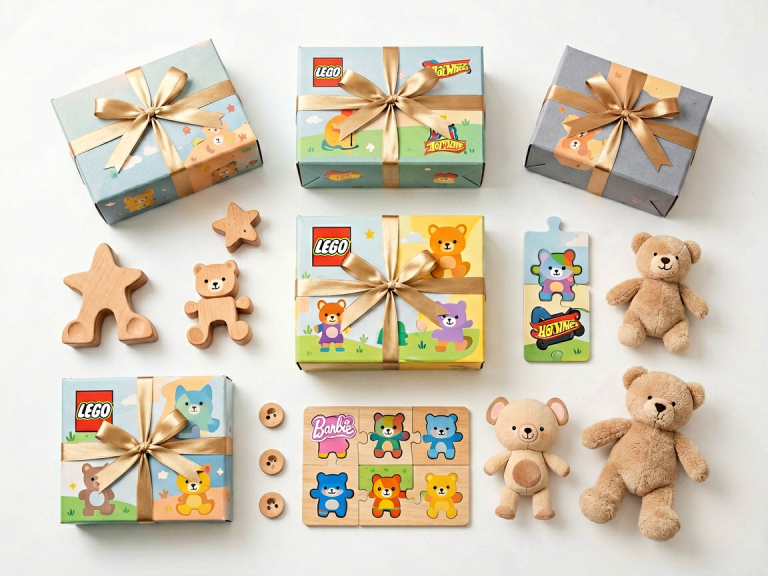
Wooden blocks, magnetic tiles, LEGO Duplo (for younger children), and interlocking plastic connectors are classics for good reason. They offer infinite configurations and can grow with the child. A two-year-old might simply stack blocks; a six-year-old might engineer a suspension bridge. The key is to avoid sets that come with a single, predetermined model. Instead, invest in bulk sets of basic shapes.
Loose Parts and Sensory Play
“Loose parts” refer to collections of small, often natural or everyday objects that children can combine in creative ways. Think of wooden rings, fabric scraps, pinecones, buttons, corks, stones, and shells. When presented in a tray or basket, these items become raw material for classification, sorting, stacking, pattern-making, and imaginary play. Sensory bins filled with rice, sand, or water (with scoops, cups, and funnels) similarly engage children for long stretches. The lack of a fixed purpose is precisely what makes them so powerful.
Art and Craft Supplies
A dedicated art station with paper, crayons, washable markers, child-safe scissors, glue sticks, and modeling clay can occupy a child for an hour. For older children, add yarn for weaving, beads for threading, or watercolor paints. The goal is not to produce a specific “craft” but to allow the child to create whatever she wishes. This builds visual-spatial skills, planning, and creative confidence.
Pretend Play Props
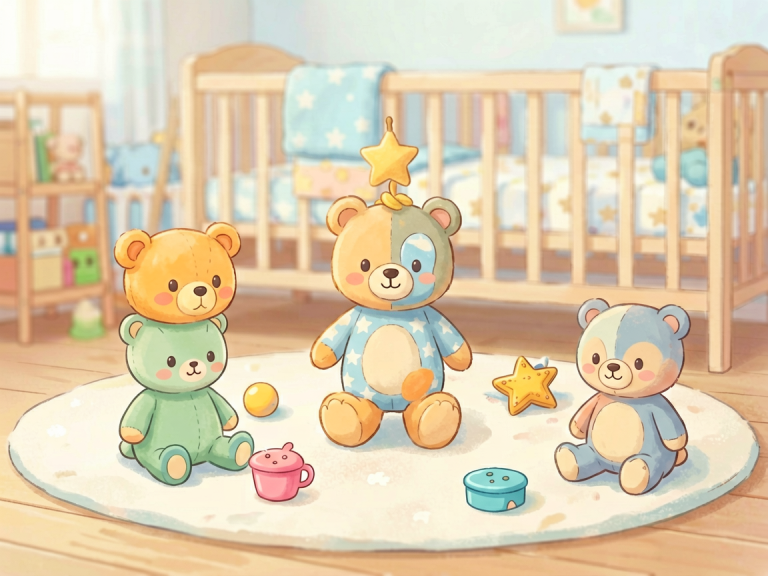
While many pretend play toys encourage social interaction (e.g., play kitchens with friends), some props are perfect for solo play. A set of small animal figurines, a dollhouse with furniture, a wooden train set, or a simple doctor’s kit can inspire elaborate solo narratives. The child becomes both director and actor, moving characters through stories she invents. These toys need not be realistic; simple, neutral-looking figures (like wooden people or animals) allow for more imaginative flexibility than licensed characters from movies.
Puzzles and Logic Games
While puzzles have a correct solution, they still encourage independent concentration. A child alone with a jigsaw puzzle must use visual discrimination, patience, and trial-and-error. Similarly, pattern blocks, tangrams, and simple board games designed for one player (like memory games or sequencing cards) develop logical thinking without requiring a partner.
—
Setting the Stage: How Parents Can Nurture Independent Play
Even the best independent play toys will go unused if the environment and adult expectations are not aligned. Parents play a crucial role in creating conditions for solo play to flourish.
Create a Safe, Accessible Play Space
Designate a corner of the living room or the child’s bedroom as a play zone. Keep toys organized in low, open bins so that children can see and reach them independently. Rotate toys every few weeks to renew interest. Avoid over-stimulating the space with too many options; research suggests that fewer toys actually lead to deeper, more sustained play.
Resist the Urge to Interrupt
One of the hardest things for a modern parent is to step back when a child is deeply engaged. We are conditioned to offer praise, suggestions, or corrections. But when a child is in flow, any external comment can break her concentration. Instead, observe quietly. If she asks for help, you can respond, but try to ask open-ended questions (“What do you think might work?”) rather than providing the answer.
Model Independent Activities
Children learn by watching. If a parent is always scrolling on a phone or watching television, the child will internalize that being “busy” means using a screen. On the other hand, if the parent reads a book, works on a puzzle, draws, or gardens while the child plays, the message is clear: independence and focus are valuable for everyone in the family.
Start Small and Be Patient
Some children, especially those accustomed to constant interaction or screens, may initially resist independent play. Begin with short, ten-minute sessions. Provide a toy that the child already loves, and say, “I’m going to sit here and read my book. You can play with your blocks. Let’s see what you build!” Gradually increase the duration over weeks. Do not force it; the goal is to build a positive association.
—
Conclusion: Letting Children Lead Their Own Play
We live in an era of curated childhoods, where every moment can be programmed, enriched, and supervised. Yet the greatest gift we can give our children is the permission to be bored, to experiment, to fail, and to create their own joy. Independent play toys for kids are not just products; they are invitations to a lifelong relationship with creativity, focus, and self-reliance. By choosing simple, open-ended, and non-digital toys—and then stepping back—we allow children to discover the profound satisfaction of their own company. In doing so, we raise not only more resilient and capable kids but also more confident humans who know that they do not need constant external entertainment to feel whole. The next time you see your child deeply absorbed in building a tower or sorting pebbles, resist the urge to applaud. Instead, smile quietly and let the magic of independent play unfold.