The Power of Play: How Logic Toys Shape Young Minds in Elementary Education
Introduction
In an era dominated by screens and passive entertainment, parents and educators are increasingly seeking tools that stimulate active, meaningful learning. For elementary-aged children—typically between five and eleven years old—the brain is in a critical period of development, particularly in areas related to reasoning, problem-solving, and abstract thinking. This is where logic toys come into play. Far from being mere distractions, carefully designed logic toys can transform play into a powerful vehicle for cognitive growth. They teach children how to think, not what to think. This article explores the multifaceted benefits of logic toys for elementary kids, categorizes the most effective types, offers practical advice for selection, and provides tips for integrating them into daily life. By understanding the science behind these toys and their real-world applications, parents can make informed choices that nurture resilient, curious, and logical young minds.
The Cognitive Science Behind Logic Toys
Before diving into specific categories, it is essential to understand why logic toys work so well for elementary children. Cognitive development theorists like Jean Piaget and Lev Vygotsky emphasized that children learn best through hands-on, concrete experiences. During the elementary years, children transition from preoperational thought (where logic is intuitive but not systematic) to concrete operational thought (where they can perform logical operations on tangible objects). Logic toys bridge this gap by providing physical representations of abstract concepts.
When a child manipulates a puzzle piece or builds a structure according to a pattern, multiple brain regions are simultaneously activated. The prefrontal cortex, responsible for planning and decision-making, engages in trial-and-error analysis. The hippocampus, involved in memory, stores successful strategies. Meanwhile, the motor cortex coordinates fine motor movements. This multisensory integration strengthens neural pathways, making future learning more efficient. Moreover, the iterative process of failing, adjusting, and succeeding in a low-stakes environment builds what psychologist Carol Dweck calls a “growth mindset”—the belief that intelligence can be developed through effort.
Categories of Logic Toys and Their Unique Contributions
Logic toys are not monolithic; they come in many forms, each targeting different subsets of logical reasoning. Understanding these categories helps parents choose toys that align with their child’s current developmental stage and interests.
Puzzles and Spatial Reasoning Toys
Jigsaw puzzles, tangrams, and 3D block puzzles (like those from brands such as SmartGames or ThinkFun) challenge children to match shapes, visualize rotations, and understand spatial relationships. Spatial reasoning is a strong predictor of success in STEM fields, particularly mathematics and engineering. When a child tries to fit a pentomino piece into an irregular space, they are essentially practicing geometry and topology. Additionally, puzzles teach patience and sustained attention—skills that are increasingly rare in a world of short-form content. For younger elementary kids (ages five to seven), large floor puzzles with familiar scenes are ideal. For older kids (eight to eleven), multi-step puzzles with increasing difficulty, such as Rubik’s cubes or magnetic building tiles, provide a satisfying challenge.
Strategy and Board Games
Classic board games like chess, checkers, and even modern cooperative games like “Outfoxed!” or “Castle Logix” require players to anticipate consequences, consider multiple moves ahead, and adapt to changing circumstances. Chess, for example, is often called the “gymnasium of the mind” because it exercises working memory, pattern recognition, and forward planning. For elementary students who may find the full complexity of chess daunting, simplified versions or apps (like “Chess for Kids”) can scaffold learning. Cooperative board games, where players work together against a common goal (e.g., solving a mystery before the clock runs out), teach logical deduction and communication. These games also develop emotional regulation—losing teaches resilience, and winning teaches humility.
Building and Construction Sets
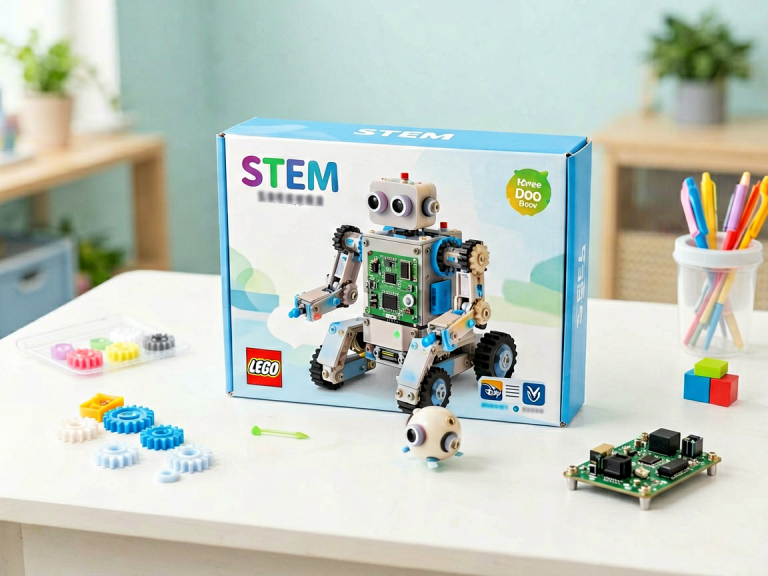
Beyond simple stacking blocks, advanced construction sets such as LEGO Technic, K’NEX, or magnetic rods (e.g., Magneatos) introduce principles of mechanics, symmetry, and cause-and-effect. A child who builds a bridge must consider weight distribution, tension, and stability; if the bridge collapses, they must logically deduce which part failed and why. This is the essence of the scientific method: observe, hypothesize, test, revise. Building sets also encourage creativity within logical constraints—an important balance. Children learn that not all designs are equally functional, and that following instructions (for a model) or optimizing for a goal (for a free-build) both require analytical thinking.
Coding and Computational Thinking Toys
In the digital age, coding toys have become a mainstream category. Products like the “Osmo Coding Awbie,” “Botley the Coding Robot,” and “Code-a-Pillar” introduce the fundamental concepts of algorithms, sequences, loops, and conditionals without a screen (or with minimal screen time). For older elementary kids, text-based platforms like Scratch or micro:bit kits combine physical components with programming. These toys teach decomposition—breaking a large problem into smaller steps—which is a core logic skill applicable to any subject. Computational thinking also fosters metacognition, as children must constantly check their code for errors (debugging) and think about how their commands will be executed step by step.
Patterning and Logic Puzzles
Dedicated logic puzzle games, such as “Rush Hour,” “Laser Maze,” or “Logic Links,” present a specific scenario and a set of rules. The child must deduce the correct arrangement or sequence to meet the goal. These toys are essentially one-player brain teasers that require systematic trial and error, elimination of possibilities, and careful reading of clues. They are excellent for building deductive reasoning, which is the bedrock of mathematics and science. Many of these puzzles come in progressive difficulty levels, allowing children to develop confidence before tackling harder challenges.
How to Choose the Right Logic Toy for Your Elementary Child
Selecting a logic toy that will actually engage a child—not gather dust on a shelf—requires consideration of several factors beyond the child’s age.
First, observe your child’s natural interests. A child who loves building may respond better to construction sets, while a child who enjoys stories may prefer narrative-driven logic puzzles (e.g., mystery games). Forcing a logic toy that feels like “homework” will backfire. The toy should feel like play, even while the child is learning.
Second, check the “frustration level.” Vygotsky’s concept of the Zone of Proximal Development applies here: the toy should be challenging enough to require effort but not so difficult that it causes persistent failure. Many good logic toys include multiple levels or adjustable rules. If a toy consistently leads to tears or throwing pieces, it is either too advanced or not well-matched to the child’s current cognitive abilities.
Third, consider the balance between guided play and open-ended exploration. Some children thrive with explicit instructions (e.g., a puzzle with a single correct solution), while others prefer freedom to create their own challenges (e.g., building blocks). A well-rounded collection includes both types.
Fourth, prioritize quality and durability. Elementary kids can be rough on toys. Look for sturdy materials, non-toxic finishes, and designs that can be used repeatedly. Also, consider whether the toy can be shared with siblings or friends, promoting social interaction and collaborative problem-solving.
Integrating Logic Toys into Daily Life and Schooling
To maximize the benefits of logic toys, they should not be relegated to occasional play. Instead, parents and teachers can weave them into everyday routines.
For instance, a five-minute logic puzzle at the breakfast table can wake up the brain before school. A family board game night once a week strengthens family bonds while sharpening strategic thinking. In the classroom, teachers can use logic toys as early-finisher activities or as part of a “maker station” where students rotate through different challenges. Many schools now incorporate “brain breaks” focused on puzzles or coding cards.
Importantly, adults should model a positive attitude toward struggle. When a child gets stuck, resist the urge to give the answer immediately. Instead, ask open-ended questions: “What have you tried so far?” “What patterns do you notice?” “Is there a different way to approach this?” This scaffolding teaches children that persistence and flexible thinking are valuable, and that mistakes are stepping stones, not dead ends.
The Long-Term Impact of Logic Play
The skills cultivated by logic toys extend far beyond childhood. Logical reasoning is the foundation of critical thinking, which is essential for academic success in all subjects—from reading comprehension (understanding cause and effect in stories) to science (designing experiments) to social studies (analyzing historical events). In the professional world, employers consistently rank problem-solving and analytical thinking among the most sought-after competencies.
Moreover, logic toys nurture executive functions: working memory, inhibitory control, and cognitive flexibility. A child who plans several moves ahead in a strategy game is practicing the same mental muscle needed for long-term project planning. A child who learns to cope with losing a game develops emotional control that will serve them well in competitive or high-pressure situations. And a child who can shift between different strategies when one fails is building the adaptability essential for a rapidly changing world.
Conclusion
Logic toys for elementary kids are far more than mere pastimes—they are catalysts for intellectual growth and character development. By engaging children in hands-on, structured play, these toys transform abstract concepts like deduction, sequencing, and spatial reasoning into tangible, enjoyable experiences. From puzzles and board games to building sets and coding robots, the variety available today means there is a perfect logic toy for every child’s unique interests and abilities. The key is to choose thoughtfully, introduce the toys with enthusiasm and patience, and allow the child to lead their own learning journey. In doing so, we equip the next generation not just with facts, but with the ability to reason, to question, and to solve the complex problems of tomorrow. The humble logic toy, in the hands of a curious child, becomes a tool for building a better brain—and a brighter future.