The Power of Open-Ended Toys: Nurturing Creativity and Development in Toddlers
Introduction
In the modern world of flashing lights, buzzing sounds, and pre-programmed responses, it is easy to assume that the best toys for toddlers are the ones that do the most. Many parents are drawn to electronic gadgets that sing the alphabet, count numbers, or narrate entire stories with a single button press. Yet, a quiet revolution is happening in early childhood development circles—a return to the simplest, most fundamental playthings: open-ended toys. These are toys that have no single correct way to be used, no fixed outcome, and no digital screen. Instead, they invite a toddler to imagine, experiment, build, and create. From wooden blocks to fabric scraps, from play dough to stacking cups, open-ended toys offer a richness that no app can replicate. This article explores the profound impact of open-ended toys on toddlers’ cognitive, social, emotional, and physical development, and provides practical guidance for parents seeking to cultivate a more creative and resilient play environment.
What Are Open-Ended Toys?
Open-ended toys are play materials that can be used in multiple ways, limited only by the child’s imagination. Unlike closed-ended toys—such as a puzzle with a single solution or a battery-operated car that only moves forward—open-ended toys have no predetermined purpose. A set of colored wooden blocks, for example, can become a tower, a bridge, a castle, a train, or even a pretend cake. A cardboard box might transform into a spaceship, a cave, a house, or a robot. The defining characteristic of such toys is that they encourage divergent thinking: the ability to generate many possible solutions to a problem or many ways to use an object. This is the opposite of convergent thinking, which focuses on finding a single correct answer. For toddlers, whose brains are forming billions of neural connections every day, open-ended play provides the ideal environment for cognitive flexibility, problem-solving, and self-expression.
Cognitive Development: Building the Thinking Brain
One of the most significant benefits of open-ended toys is their capacity to stimulate higher-order thinking. When a toddler picks up a wooden block and decides it is a phone, she is not merely imitating an adult—she is practicing symbolic thinking. This is the same cognitive skill that later allows her to understand that the letter “A” stands for a sound, or that a drawing represents a real object. Research in developmental psychology consistently shows that symbolic play is a precursor to abstract reasoning and literacy. Moreover, open-ended toys encourage trial and error. A child stacking blocks to build a tower will quickly learn about balance, gravity, and cause and effect. If the tower falls, she does not see it as failure; she sees it as a puzzle to solve. She might try a wider base, or stack blocks more carefully. This iterative process builds persistence, frustration tolerance, and a growth mindset—the belief that abilities can be developed through effort.
Another cognitive advantage is language development. When a child engages with open-ended toys, she often talks to herself or to others about what she is doing. “This block is the baby. Now the baby is sleeping. Shhh.” This self-talk is a powerful tool for organizing thoughts and building vocabulary. Parents can extend this by asking open-ended questions: “What is your block doing now?” or “Can you tell me a story about your castle?” Such interactions deepen language skills far more effectively than a screen that only offers passive listening. Furthermore, open-ended toys support mathematical thinking. Sorting blocks by size, color, or shape; counting them; noticing patterns—these are foundational numeracy skills that emerge naturally during play.
Social and Emotional Growth: Learning Through Collaboration
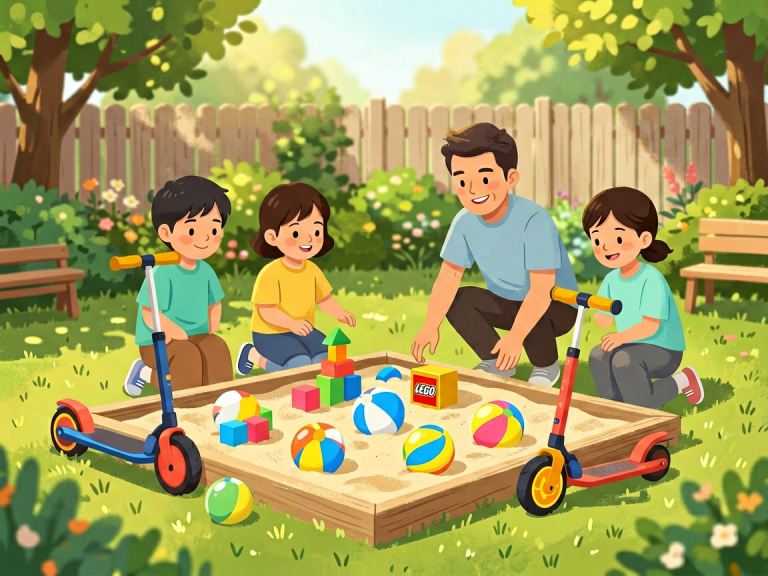
Open-ended toys are also extraordinary tools for social and emotional development. Because they have no fixed rules, they require negotiation and cooperation when shared among children. Two toddlers with a set of wooden blocks must decide together who will build what, resolve conflicts over which block belongs where, and learn to take turns. They might pretend to be characters in a shared story, which builds empathy and perspective-taking. For example, one child might say, “I am the dad, and you are the baby,” and the other must understand and accept that role. This kind of imaginative role-play is one of the most advanced forms of social cognition in early childhood.
Emotionally, open-ended toys provide a safe outlet for expressing feelings. A toddler who is angry might pound play dough or knock down a block tower she built on purpose. A child who is anxious might create a cozy “nest” with blankets and stuffed animals. Unlike structured games that demand a specific emotional response, open-ended play allows children to process their inner world at their own pace. It also fosters a sense of autonomy and mastery. When a toddler decides what to build, how to build it, and when to change her plan, she experiences the joy of being in control of her own learning. This builds self-confidence that lasts a lifetime.
Physical Development: Fine and Gross Motor Skills
While the cognitive and emotional benefits are often highlighted, we must not overlook the physical advantages of open-ended toys. Many of these toys require manipulation of small parts—picking up tiny beads, pinching play dough, stacking pegs—which strengthen the small muscles in the hands and fingers. These fine motor skills are directly linked to later abilities such as writing, buttoning clothes, and using scissors. Larger open-ended toys, such as climbing structures, large cardboard boxes, or fabric tunnels, promote gross motor development—crawling, climbing, balancing, and jumping. Even simple activities like rolling a ball back and forth or pushing a toy cart around the room help build coordination and body awareness.
Moreover, open-ended toys encourage bilateral coordination (using both sides of the body together). For instance, a child building with blocks uses one hand to hold a block while the other hand places it, or uses both hands to carry a large piece. This cross-body movement is essential for developing the corpus callosum, the bundle of nerves that connects the left and right hemispheres of the brain. Activities that involve crossing the midline—such as reaching across the body to grab a block—are particularly beneficial for brain integration and later reading readiness.
Examples of Open-Ended Toys for Toddlers
The beauty of open-ended toys is that they do not need to be expensive or sophisticated. Here are some classic examples that have stood the test of time:
1. Wooden Blocks and Building Sets
Simple, unpainted wooden blocks in various shapes (cubes, cylinders, triangles, arches) are the quintessential open-ended toy. Toddlers can stack, sort, arrange, and knock them down. Adding a few small wooden people or animals extends the play possibilities into storytelling.
2. Play Dough and Modeling Clay
Play dough is endlessly moldable. With a few simple tools (rolling pins, cookie cutters, plastic knives), toddlers can create pretend food, animals, or abstract sculptures. Homemade play dough is easy to make and safe if eaten (though not recommended).
3. Sensory Bins
A shallow bin filled with rice, sand, water, or dried beans, plus scoops, cups, and small toys, offers hours of tactile exploration. Sensory bins promote scientific thinking—discovering that dry rice pours differently than wet sand—and are calming for many children.
4. Loose Parts
This is a broader category that includes any small, open-ended materials: pinecones, pebbles, bottle caps, fabric scraps, ribbons, corks, and buttons. (Always supervise for choking hazards with toddlers under three.) These parts can be sorted, counted, threaded, or used in imaginative play.
5. Cardboard Boxes and Recycled Materials
An empty cardboard box might be the most powerful toy of all. It can become a car, a boat, a house, a fort, or a spaceship. Adding markers, tape, and child-safe scissors (under supervision) turns it into a creative project.
6. Dolls, Stuffed Animals, and Puppets
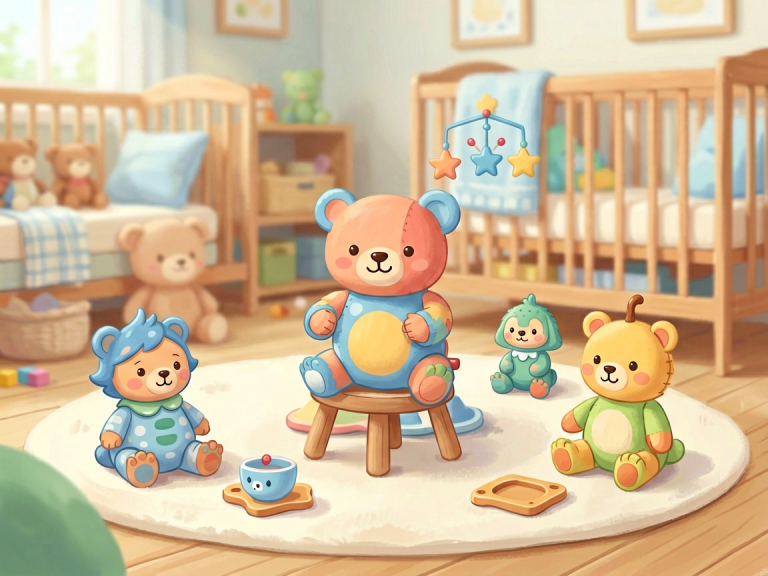
These toys invite nurturing play. A toddler can feed, bathe, put to sleep, or take her stuffed bear for a “walk.” This develops empathy and language as she talks to the toy.
7. Art Supplies
Crayons, washable markers, blank paper, finger paints, and stickers allow open-ended creative expression. The goal is not to produce a perfect picture but to explore color, line, and texture.
8. Water and Sand Play
With cups, funnels, sieves, and boats, a toddler can experiment with pouring, floating, sinking, and measuring. This is basic physics and mathematics in action.
How to Choose and Introduce Open-Ended Toys
Not all open-ended toys are created equal. When selecting them for a toddler, consider safety first: no small parts that could be swallowed (for children under three), no sharp edges, and non-toxic materials. Look for natural materials like wood, cotton, and metal, which feel more satisfying and are often more durable than plastic. Avoid toys that have a single obvious use, such as a shape sorter—though it has some open-ended potential, its primary purpose is closed. Instead, choose toys that invite many different kinds of engagement.
Introducing open-ended toys is not about giving a child a set of instructions. In fact, the best approach is to let the child lead. Place the toys in an accessible, organized space—low shelves with clear containers, so the toddler can see and choose. Resist the urge to demonstrate “correct” usage. If your child starts stacking blocks in a crooked line, let her. If she wants to put a block in her mouth, redirect gently but don’t criticize her creative approach. Model open-ended play yourself occasionally, but without taking over. For example, you might sit beside her and begin building a simple tower, narrating your actions: “I am putting this green block on top of the red one. Oh, it wobbled! I need to try a different spot.” This shows that play is about process, not product.
The Role of the Parent
Parents often ask, “But if I don’t guide my child, will she learn anything?” The answer is yes—more than if you guide her. Your role is to be a supportive observer, a provider of stimulating materials, and a gentle facilitator. Offer occasional open-ended questions: “What could we use this for?” or “I wonder what would happen if we put the big block on top?” Avoid praising outcomes (“Good job building a tall tower!”) and instead praise effort and process (“I saw how carefully you placed that block—you really concentrated.”). This builds intrinsic motivation.
Conclusion: The Gift of Less
In a consumer culture that often equates more toys with better parenting, choosing open-ended toys is a countercultural act. It is an investment in a child’s ability to think, create, and connect—skills that no app can teach. Open-ended toys do not require batteries; they do not have a shelf life; they do not claim to make your child smarter in five minutes. Instead, they offer something far more valuable: the time and space for a toddler to discover her own mind. When a child builds a castle that collapses, she learns about resilience. When she turns a cardboard box into a rocket ship, she learns about imagination. When she shares blocks with a friend, she learns about cooperation. These are the building blocks of a meaningful life. As parents, we can give our toddlers the greatest gift of all: not the toy that does everything, but the toy that lets them do everything.
(Word count: ~1,500 words)