The Power of Play: How Logic Toys Shape Toddlers Cognitive Development
In the bustling world of early childhood, where every giggle, stumble, and babbled word marks a milestone, the role of play is often underestimated. Yet for toddlers—those curious explorers between the ages of one and three—play is not merely a pastime; it is the primary engine of learning. Among the vast array of toys that fill nurseries and playrooms, logic toys hold a special place. These seemingly simple objects—puzzles, shape sorters, nesting blocks, and matching games—are far more than entertainment. They are carefully designed tools that introduce the foundations of reasoning, problem-solving, and causal thinking. This article explores the world of logic toys for toddlers, examining what they are, why they matter for brain development, how to choose appropriate ones, and what parents and educators need to know about fostering logical thinking from the earliest years.
What Are Logic Toys for Toddlers?
Logic toys are any play items that require a toddler to think, observe, compare, and make decisions based on rules or patterns. Unlike simple sensory toys that primarily stimulate touch, sound, or sight, logic toys engage the prefrontal cortex—the part of the brain responsible for planning, sequencing, and reasoning. For a toddler, a logic toy might involve fitting a square block into a square hole, stacking rings from largest to smallest, or completing a two- or three-piece puzzle. The key characteristic is that the toy presents a problem with a correct solution, and the child must use trial, error, and deduction to achieve it.
Common examples include:
- Shape sorters: Classic cubes or boards with differently shaped holes and corresponding blocks.
- Nesting cups or stacking rings: Items that must be arranged by size.
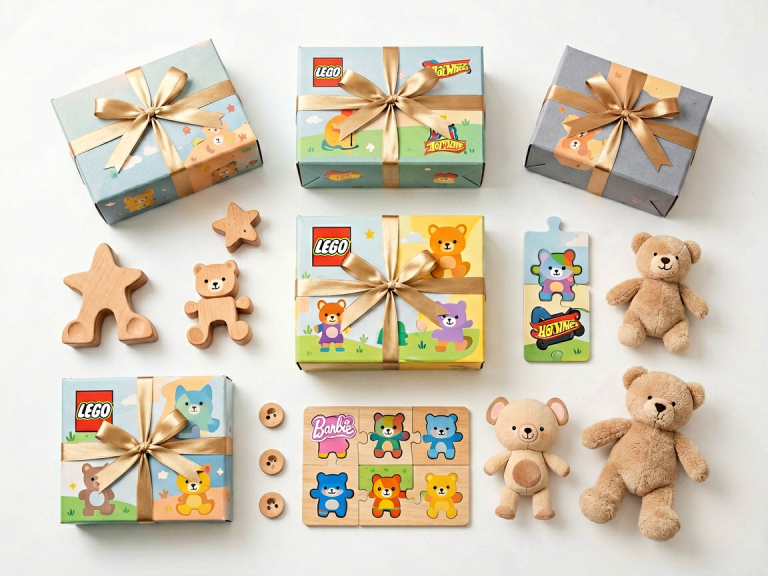
- Simple jigsaw puzzles: Usually with wooden knobs and only two to four pieces.
- Matching games: Where toddlers pair identical pictures, colors, or patterns.
- Cause-and-effect toys: Such as levers that make a ball drop or buttons that trigger a sound.
These toys are distinct from open-ended toys like building blocks or dolls, which allow infinite creativity. Logic toys have a built-in goal, and that goal is what trains a young mind in structured thinking.
Why Logic Toys Matter: The Neuroscience of Toddler Reasoning
The toddler brain undergoes explosive growth. Between ages one and three, neural connections are formed at a rate of over one million per second. This period, often called the "critical window," is when foundational cognitive skills are laid down. Logic toys leverage this plasticity by repeatedly exercising several essential mental faculties.
Executive function development is perhaps the most significant benefit. Executive functions include working memory, inhibitory control, and cognitive flexibility. When a toddler tries to fit a triangular block into a square hole, she must first recognize the mismatch (cognitive flexibility), hold the shape of the triangle in memory while searching for the correct hole (working memory), and resist the urge to force the wrong block (inhibitory control). Each failure is a learning opportunity, and each success reinforces neural pathways.
Cause-and-effect reasoning also blossoms with logic toys. A toy that makes a sound only when the correct shape is inserted teaches the toddler that actions have consequences. This is the seed of scientific thinking: forming a hypothesis ("If I put this here, maybe a bell rings") and testing it. Over time, toddlers learn to predict outcomes, a skill that underpins all later problem-solving.
Moreover, logic toys promote persistence and frustration tolerance. Toddlers naturally experience frustration when a task is too hard, but a well-designed logic toy offers just enough challenge to stretch the child without overwhelming them. The satisfaction of finally fitting the last piece or stacking the last ring releases dopamine, a neurotransmitter associated with reward and motivation. This positive reinforcement encourages toddlers to keep trying, building a growth mindset that will serve them throughout life.
Types of Logic Toys and Their Specific Benefits
Not all logic toys are created equal. Understanding the different categories can help parents select toys that target specific skills at the right developmental stage.
1. Spatial Reasoning Toys
Toys like shape sorters, puzzles, and nesting blocks teach toddlers about geometry, size, and spatial relationships. When a child learns that a star-shaped block cannot fit into a circle hole, she internalizes concepts of shape and space. Stacking rings in order of size introduces the concept of seriation—arranging items along a dimension. These toys are ideal for toddlers aged 18 months and older.
2. Categorization and Matching Toys
Matching games—where a child pairs identical animals, colors, or patterns—train the ability to classify. Classification is a fundamental logic skill that underlies mathematics and language. For example, a simple wooden game with pictures of fruits might require a toddler to match an apple card to an apple picture on the board. This activity strengthens visual discrimination and memory.
3. Sequencing and Pattern Toys
Some logic toys introduce simple patterns, such as alternating colors on a string of beads or placing tiles in a repeating sequence (red, blue, red, blue). These toys are slightly more advanced, suitable for toddlers around two and a half to three years old. Recognizing and continuing patterns is a precursor to understanding algorithms and mathematical logic.
4. Cause-and-Effect Toys
Toys with buttons, levers, or gears that produce a specific outcome—like a ball rolling down a ramp or a pop-up animal—teach that actions have predictable results. These are often the first logic toys for very young toddlers (12–18 months). They build the understanding that the world operates according to rules, which is the bedrock of logical reasoning.
How to Choose the Right Logic Toy for a Toddler
Selecting a logic toy requires attention to the child's current developmental stage, interests, and temperament. A toy that is too easy will bore a toddler; one that is too hard will frustrate him. The "zone of proximal development," a concept by psychologist Lev Vygotsky, suggests that the best learning happens when a child is challenged with tasks just beyond their current ability but achievable with some assistance.
For toddlers aged 12–18 months: Look for toys with large, chunky pieces that are safe to mouth. Cause-and-effect toys (like a simple pop-up box) and single-shape sorters are excellent. At this age, toddlers are mastering object permanence and beginning to understand that a block fits into a hole. Avoid toys with many small pieces or complex rules.
For toddlers aged 18–24 months: Introduce multi-shape sorters, nesting cups, and two-piece puzzles. Children at this stage can sort by one attribute (e.g., shape or color) and may start to show interest in matching. Look for toys that require gripping and manipulating, as fine motor skills are rapidly developing.
For toddlers aged 24–36 months: This is the age for more complex puzzles (3–6 pieces), pattern games, and simple board games like "Memory" with only a few pairs. Many toddlers can now sort by two attributes (shape and color) and follow two-step instructions. Logic toys that involve sequencing, such as "first put the green block, then the red block," are very beneficial.
Safety is paramount. All toys should be made of non-toxic materials, have no sharp edges, and be large enough to prevent choking. Wooden toys are often preferred for their durability and natural feel, but high-quality plastic ones can also be fine. Avoid batteries in very young toddler toys, as the reliance on electronic feedback can reduce the child's need to think through the problem.
Integrating Logic Toys into Daily Play
A logic toy is most effective when it is part of a rich, varied play routine. Toddlers learn best through repetition and guided exploration. Parents and caregivers should sit with the child during play, offering gentle prompts rather than taking over. For example, instead of solving the puzzle for the child, one might say, "Hmm, this piece has a pointy corner. Can you find a hole with a pointy corner?" Such questions develop language and reasoning simultaneously.
It is also important to rotate toys. Toddlers quickly become habituated to a toy, and its logic challenge diminishes. By putting away some toys and reintroducing them weeks later, the child encounters the challenge anew. Additionally, free play with open-ended toys like blocks should balance the structured play with logic toys. The goal is not to turn every moment into a lesson but to sprinkle logic challenges into a playful, loving environment.
The Broader Picture: Logic Toys and Future Academic Success
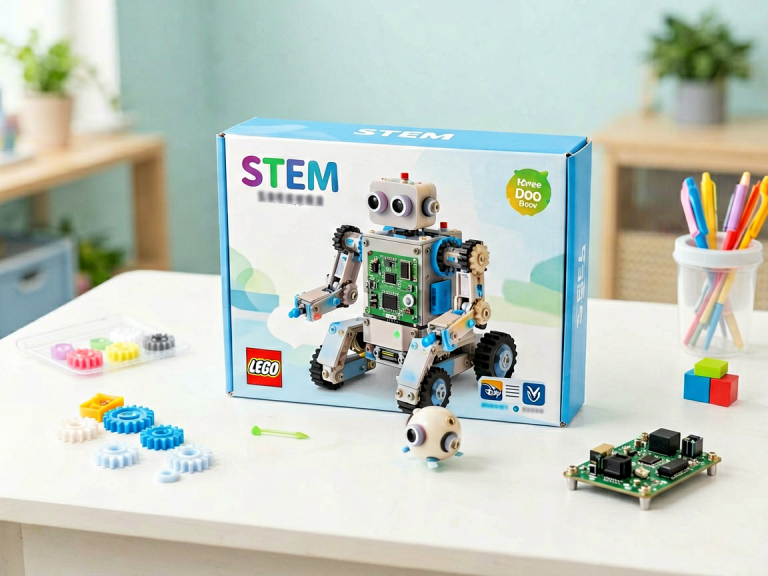
Research in early childhood education consistently shows that strong logical thinking skills in the preschool years predict later success in mathematics and science. While it would be overreaching to claim that a toddler's shape sorter guarantees a career in engineering, the neural connections formed through such play create a fertile ground for higher-order thinking. Schools increasingly emphasize "STEM" (Science, Technology, Engineering, and Mathematics) education, and the foundations of these disciplines begin with simple logical operations.
Furthermore, logical play fosters independence and confidence. A toddler who learns to solve a puzzle by himself develops a sense of agency—the belief that he can influence his environment. This self-efficacy is crucial for motivation and learning in all areas. By contrast, a toddler who never encounters challenges may become overly dependent on adults.
Conclusion
Logic toys for toddlers are not merely cute trinkets; they are powerful learning instruments that harness the natural curiosity of early childhood. Through shape sorters, puzzles, and matching games, toddlers practice reasoning, memory, and problem-solving in ways that wire their brains for future intellectual growth. Choosing age-appropriate toys, engaging in supportive play, and recognizing the value of trial and error can turn a simple playroom into a laboratory of thought. In an age of screens and passive entertainment, logic toys offer something irreplaceable: the joy of figuring things out for oneself. For parents and educators who wish to give toddlers a head start in thinking clearly and creatively, there is no better companion than a well-chosen logic toy.