The Power of Play: Why Educational Hands-On Learning Toys Are Essential for Kids’ Development
Introduction: Beyond the Screen
In an era dominated by digital screens, educational hands-on learning toys have emerged as a powerful counterbalance, offering children a tactile, immersive, and developmentally rich alternative to passive entertainment. From wooden building blocks to chemistry sets, these toys do more than simply occupy a child’s time—they actively engage their minds, bodies, and creativity. As parents, educators, and researchers increasingly recognize the limitations of excessive screen time, the demand for high-quality, hands-on educational toys has surged. But what exactly makes these toys so valuable? And how can we choose the right ones for our children? This article explores the profound benefits, diverse categories, and practical selection strategies for educational hands-on learning toys, demonstrating why they remain an indispensable tool for nurturing curious, capable, and resilient young minds.
The Science Behind Hands-On Learning
How Physical Interaction Shapes the Brain
Hands-on learning is not merely a pedagogical preference; it is grounded in neuroscience. When children manipulate objects—stacking, sorting, building, or assembling—they activate multiple sensory pathways simultaneously. Touch, sight, and proprioception (the sense of body position) work in concert, creating richer neural connections than visual or auditory input alone. Research in cognitive development shows that active, physical engagement with materials strengthens memory retention, problem-solving skills, and spatial reasoning. For instance, a child who physically rotates a 3D puzzle piece to fit into a slot develops an intuitive understanding of geometry that no video tutorial can replicate.
The Role of Play in Cognitive Growth
Play is the natural language of childhood, and hands-on toys transform play into a powerful learning mechanism. Unlike passive entertainment, where children merely consume information, hands-on toys require active participation. A set of magnetic tiles, for example, demands that a child plan, test, and revise their designs. Each failure becomes a lesson in cause and effect; each success builds confidence. Psychologist Jean Piaget famously argued that children construct knowledge through interaction with their environment. Educational hands-on toys provide precisely this environment—a safe, repeatable, and endlessly variable space for experimentation.
Key Benefits of Educational Hands-On Toys
1. Fostering Critical Thinking and Problem-Solving
One of the most significant advantages of hands-on learning toys is their ability to cultivate higher-order thinking skills. A construction kit like LEGO or K’NEX does not come with a single “correct” answer. Instead, it presents open-ended challenges: How can I build a bridge that holds weight? What happens if I add another gear? Children must hypothesize, test, adjust, and retest. This iterative process mirrors the scientific method and teaches resilience. When a tower collapses, a child learns that failure is not an endpoint but a stepping stone. Such experiences are far more valuable than memorizing facts because they teach how to think, not what to think.
2. Enhancing Fine Motor Skills and Coordination
For young children, especially those aged two to six, hands-on toys are essential for developing fine motor skills. Lacing beads, threading buttons, or using tweezers to pick up small objects strengthens the small muscles in the hands and fingers. This dexterity directly impacts later abilities such as writing, typing, and playing musical instruments. Moreover, activities that require bilateral coordination—using both hands together, as in building with blocks—support the development of the corpus callosum, the bundle of nerves connecting the brain’s hemispheres. The result is improved communication between the logical and creative sides of the brain.
3. Boosting Creativity and Imagination
Educational hands-on toys often have no prescribed outcome. A set of wooden blocks can become a castle, a spaceship, or a farm depending on the child’s whim. This open-endedness is a fertile ground for imagination. Unlike screens that present ready-made images and narratives, hands-on toys require children to invent their own stories, characters, and worlds. This creative process is not just fun; it is foundational for innovation. By learning to generate multiple solutions to a single problem, children develop what psychologist Edward de Bono called “lateral thinking”—the ability to look at challenges from fresh perspectives.
4. Building Social and Emotional Skills
Many hands-on toys are designed for collaborative play. Board games, cooperative building projects, and science experiment kits encourage children to share, negotiate, and take turns. Through these interactions, they learn empathy and communication. For example, two children working together to build a marble run must discuss their plans, resolve conflicts when their ideas clash, and celebrate joint successes. These experiences teach patience, compromise, and the joy of shared achievement—skills that are increasingly rare in a world of solo screen time.
5. Introducing STEM and STEAM Concepts Early
In a rapidly technological world, early exposure to science, technology, engineering, arts, and mathematics (STEAM) is invaluable. Hands-on toys like circuit kits, microscope sets, and coding robots introduce complex concepts through tangible, playful experiences. A child who builds a simple electric circuit with a battery, wires, and a light bulb internalizes the basics of electricity far better than someone who only reads about it. Similarly, coding toys that use physical blocks or tiles to program a robot teach sequencing and logic without the abstraction of a computer screen. These early experiences can spark lifelong interests and lay the groundwork for academic success.
Types of Educational Hands-On Learning Toys
Building and Construction Toys
This is perhaps the most classic category, encompassing everything from simple wooden blocks to advanced mechanical sets. Building toys teach spatial awareness, balance, and structural integrity. Magnetic tiles (e.g., Magna-Tiles) are especially popular because they click together easily, allowing very young children to create complex structures. For older kids, gear-based kits and motorized sets introduce principles of engineering and physics. The key is to choose sets that grow with the child—those that offer increasing complexity and new challenges.
Science and Experiment Kits
Science kits bring laboratory concepts into the living room. They range from crystal-growing experiments to volcano eruption kits, from microscope slide sets to astronomy models. High-quality kits include clear instructions, safety equipment, and enough materials for multiple trials. These toys demystify scientific processes and encourage methodical observation. They also teach patience: a crystal does not grow overnight, and a chemical reaction requires careful measurement.
Art and Craft Supplies
Art is a form of hands-on learning that engages creativity, fine motor skills, and emotional expression. Modeling clay, paint sets, bead kits, and sewing projects all require manual dexterity and planning. More advanced kits, such as pottery wheels or weaving looms, introduce cultural and historical contexts. Art also provides a non-verbal outlet for emotions, which is especially beneficial for children who struggle to articulate their feelings.
Math and Logic Games
Many parents dread math homework, but hands-on math toys make numbers and patterns engaging. Abacuses, counting bears, geometric puzzles, and fraction tiles turn abstract concepts into concrete objects. Board games that involve counting or strategy (like “Sum Swamp” or “Qwirkle”) teach arithmetic and logic in a low-pressure, social setting. These toys help children see math not as a chore but as a puzzle to be solved.
Coding and Robotics Toys
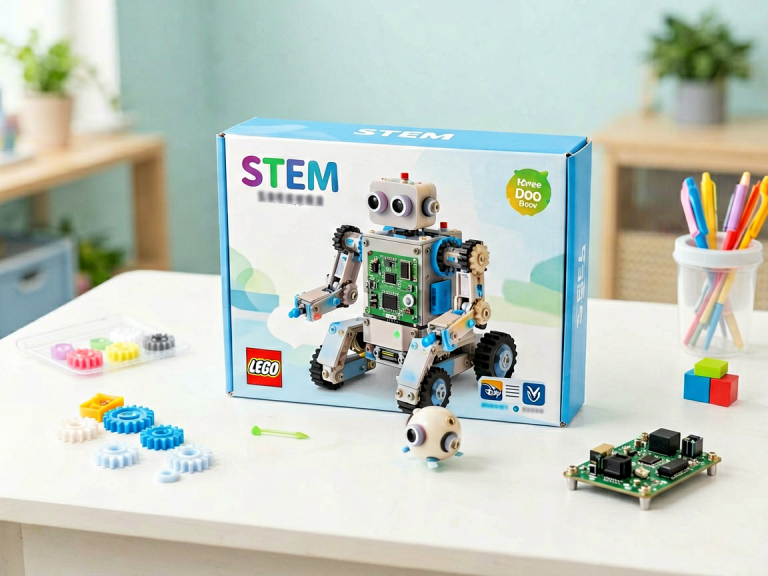
In the 21st century, understanding how technology works is as important as reading or writing. Coding toys for young children often use physical blocks or picture-based commands. For example, “Botley” the coding robot has no screen—children program it by pressing buttons on a remote. As they get older, kits like “LEGO Boost” or “Sphero” introduce more sophisticated programming languages. These toys demystify technology and empower children to be creators, not just consumers.
Pretend Play and Role-Playing Sets
Kitchen sets, doctor kits, tool benches, and dollhouses are also educational hands-on toys. Through role-playing, children practice social scenarios, develop language skills, and explore adult roles. A play kitchen, for instance, teaches measurement, sequencing (first mix, then bake), and even nutrition. These toys are particularly effective for developing empathy as children imagine themselves in someone else’s shoes.
How to Choose the Right Educational Hands-On Toys
Age Appropriateness
The most important factor is matching the toy to the child’s developmental stage. A toy that is too simple will bore the child; one that is too complex will frustrate them. Look for age recommendations on packaging, but also consider the individual child’s interests and abilities. For toddlers, focus on sensory play (textures, sounds, colors) and large, safe pieces. For preschoolers, introduce basic puzzles and construction sets. For school-age children, look for kits that require reading, planning, and multi-step processes.
Open-Ended vs. Structured Play
Some toys have a fixed outcome (a puzzle that forms one picture), while others are open-ended (a set of building blocks). Both have value. Structured toys teach following directions and achieving specific goals. Open-ended toys foster creativity and problem-solving. A well-rounded collection should include a mix. However, be wary of toys that promise “learning” but are actually just electronic gadgets with pre-programmed responses. True educational toys require the child to do the thinking, not the device.
Durability and Safety
Children learn through rough handling. Invest in toys made from high-quality, non-toxic materials. Wooden toys are durable and often more eco-friendly than plastic. Avoid toys with small parts for children under three. Check for sharp edges, toxic paints, or batteries that can be swallowed. Reputable brands often exceed safety standards, so read reviews and look for certifications like ASTM or CE.
Encouraging Multi-User Play
Whenever possible, choose toys that two or more children can use together. Cooperative toys teach social skills that solo play cannot. Even if your child is an only child, toys that can be played with friends or parents encourage bonding and communication. Board games, outdoor building sets, and large floor puzzles are excellent choices.
Balancing Novelty and Longevity
Children can quickly tire of a toy that offers only a single activity. Look for toys with “replay value”—those that can be used in different ways over time. A set of magnetic tiles can build towers today and a castle tomorrow. A chemistry kit has dozens of experiments. Avoid trendy toys that are heavily marketed but shallow in content. Instead, invest in classics that have stood the test of time, like wooden train sets or marble runs.
Conclusion: Investing in the Future
Educational hands-on learning toys are far more than playthings—they are tools for cognitive, emotional, and social growth. In a world that increasingly prizes instant gratification and passive consumption, these toys remind us that true learning is active, messy, and joyful. By providing children with opportunities to build, experiment, create, and collaborate, we equip them with the skills they need to navigate an uncertain future: adaptability, curiosity, resilience, and imagination.
As you build your child’s toy collection, remember that fewer but higher-quality toys often deliver more value than a cluttered shelf of disposable gadgets. Observe your child’s passions. A budding engineer might thrive with a construction kit, while a storyteller may prefer a puppet theater. The best educational toy is one that meets the child where they are and invites them to go further. So turn off the screens, clear the floor, and hand your child a box of blocks. You might be surprised at the wonders they build.