The Power of Logic Toys: Building Young Minds in Preschool Years
—
Introduction
In a world increasingly driven by digital screens and passive entertainment, the role of traditional hands-on play in early childhood development remains irreplaceable. Among the most impactful types of early learning tools are logic toys for preschoolers—toys designed not merely to amuse, but to challenge a child’s thinking, reasoning, and problem-solving abilities. These toys come in countless forms: simple wooden puzzles, colorful shape sorters, sequencing blocks, pattern-matching games, and even basic coding kits made for tiny hands. But beneath their playful exteriors lies a profound educational value. Research in developmental psychology consistently shows that the preschool years (ages 3–5) are a critical window for cognitive growth, especially in areas related to logical reasoning, spatial awareness, and executive function. Logic toys act as catalysts during this period, turning natural curiosity into structured exploration. This article explores why these toys matter, what types are most effective, how they benefit a child’s mind, and practical strategies for parents and educators to maximize their potential.
—
The Developmental Importance of Logic Toys for Preschoolers
A Foundation for Critical Thinking
Preschoolers are naturally intuitive learners. They absorb information through sensory experiences and trial-and-error. Logic toys formalize this process by introducing rules, patterns, and relationships. For instance, when a child attempts to fit a triangular block into a square hole, they are not just practicing motor skills—they are engaging in deductive reasoning: “This shape doesn’t match that opening, so I must try another.” Such simple moments teach cause and effect, hypothesis testing, and persistence. Over time, repeated exposure to logical challenges strengthens neural pathways associated with analytical thinking. This is particularly important because the prefrontal cortex—the part of the brain responsible for planning, decision-making, and self-regulation—develops rapidly between ages three and six. Logic toys exercise this region in a way that free play alone sometimes cannot.
Supporting Executive Function Skills
Executive function refers to a set of mental skills that include working memory, inhibitory control, and cognitive flexibility. Logic toys directly target these abilities. Consider a memory-matching game: the child must hold the location of two cards in mind (working memory), resist the urge to flip a card they have already seen (inhibitory control), and adjust their strategy when a match is not found (cognitive flexibility). Similarly, a simple board game that requires taking turns and following rules fosters impulse control and patience. These skills are strong predictors of later academic success, social competence, and even career outcomes. Logic toys, therefore, are not just about teaching “logic” in a narrow sense—they are building the mental infrastructure for lifelong learning.
—
Diverse Categories of Logic Toys for Preschoolers
Puzzles: From Simple to Complex
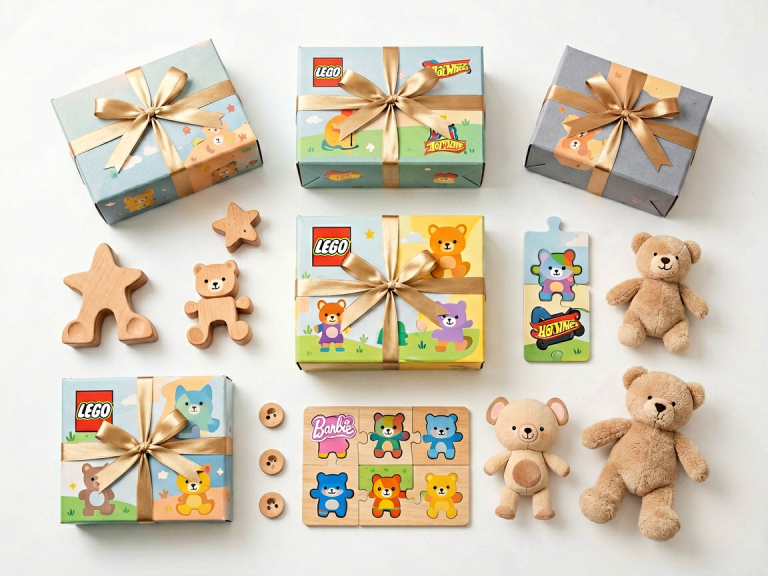
Puzzles are perhaps the most classic logic toy. For preschoolers, floor puzzles with large pieces and familiar images (animals, vehicles, seasons) provide an excellent starting point. The act of identifying where a piece belongs based on shape, color, and image details requires visual-spatial reasoning. As children grow, jigsaw puzzles with increasing piece counts (12, 24, 48) teach sequencing—how to start with corners and edges before filling the center. More advanced puzzles, such as those with irregular cuts or hidden patterns, encourage pattern recognition and logical deduction.
Building Blocks and Construction Sets
Blocks are not merely for stacking—they are three-dimensional logic problems. When a preschooler builds a tower, they must consider balance, symmetry, and structural integrity. When they follow a picture card to replicate a specific model, they engage in spatial reasoning and step-by-step planning. Sets like magnetic tiles, LEGO Duplo, or wooden unit blocks all offer different levels of challenge. The key is that they require the child to think ahead: “If I put this block here, will the next one fit?” This is foundational for later mathematical and engineering concepts.
Sorting, Sequencing, and Patterning Toys
Toys that involve sorting by color, size, shape, or texture teach categorization—an essential logical skill. For instance, a set of graduated rings that must be stacked from largest to smallest introduces seriation (ordering by size). Sequencing cards that depict a story in three or four steps (e.g., a seed growing into a flower) teach temporal logic and cause-and-effect. Pattern blocks that require continuing a sequence (red, blue, red, blue, ? ) develop inductive reasoning. These toys are often simple and inexpensive, yet they pack a powerful cognitive punch.
Matching and Memory Games
Classic memory card games (often with 12 to 20 pairs) remain a staple for good reason. They train visual memory and concentration. More advanced versions add a logic twist: instead of matching identical pictures, the child must match a picture with its corresponding beginning letter sound, or match an animal with its habitat. This blends logic with early literacy or science concepts. Dominoes with pictures or colors rather than dots can also introduce matching and turn-taking logic.
Simple Strategy Board Games
Preschool-appropriate board games like “Candy Land,” “Hoot Owl Hoot!,” or “First Orchard” involve more than luck. They require children to follow a sequence, anticipate outcomes, and adapt to changing circumstances. Cooperative games, where players work together toward a common goal, especially encourage logical problem-solving as children discuss moves and strategies. Even a game as simple as “Simon Says” strengthens inhibitory control and rule-following.
Introductory Logic Puzzles and Coding Toys
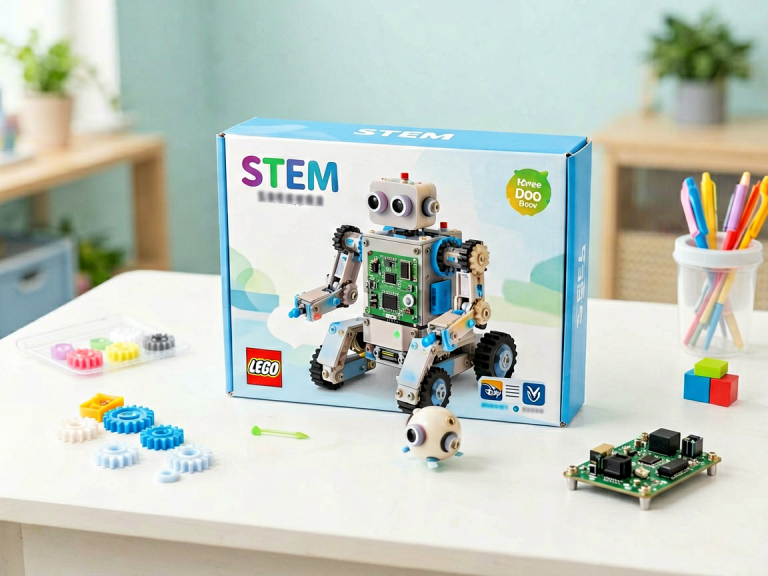
In recent years, the market has seen a surge in logic toys designed to introduce computational thinking without screens. Examples include robot mice that must be programmed with directional arrows, wooden coding blocks that create a path for a marble, or logic puzzle books with mazes and “what comes next?” exercises. These toys teach algorithms, sequencing, and debugging in a tangible, engaging way. They prove that logic toys can be modern and tech-integrated without requiring a tablet.
—
Core Cognitive Benefits of Logic Toys
Enhanced Problem-Solving Capabilities
Every time a preschooler picks up a logic toy, they confront a small problem: “How do I make this piece fit? What should I do next?” Over time, children develop a systematic approach—they learn to try, observe, fail, and try again. This iterative process is the essence of problem-solving. Unlike passive toys that simply entertain, logic toys demand active engagement. A child who regularly works with logic toys learns that challenges are opportunities, not obstacles. This resilience transfers to academic subjects like math and reading, where problems are inevitable.
Strengthened Mathematical and Spatial Reasoning
Many logic toys inherently teach mathematical concepts: counting, shape recognition, symmetry, measurement, and pattern identification. For example, a pegboard with colored pegs can be used to create repeating patterns—an early introduction to algebra. Building blocks require estimation (Will this stack be tall enough?) and geometry (How many sides does a triangle have?). Studies have shown that preschool children who play frequently with construction toys score higher on spatial reasoning tests, which are strong predictors of future success in STEM fields. Logic toys lay the groundwork for understanding numbers and operations in a concrete, hands-on way.
Improved Language and Communication
Logic toys are rarely solitary in a social context. When children play with peers or adults, they must verbalize their thought processes: “I think the red piece goes here because it matches the circle.” This kind of language—describing actions, predicting outcomes, explaining reasoning—develops higher-order vocabulary and syntactic complexity. Parents can also use logic toys as conversation starters: “Why do you think that piece doesn’t fit? What could we try instead?” These interactions build both cognitive and linguistic skills simultaneously.
Boosted Attention Span and Self-Regulation
Because logic toys present a clear goal (complete the puzzle, finish the pattern, win the game), they require sustained focus. A preschooler’s attention span is naturally short, but engaging with a challenging toy can gradually extend it. The satisfaction of solving a problem provides intrinsic motivation, teaching the child to delay gratification and persist through difficulty. This self-regulation is critical for kindergarten readiness, where children must listen to instructions, wait for their turn, and stay on task.
Development of Metacognition
By the age of four or five, children begin to develop metacognition—thinking about their own thinking. Logic toys facilitate this by encouraging reflection: “How did I figure that out?” or “What would have happened if I had done it differently?” A child who finishes a maze might trace their path and reconsider an alternative route. A child who builds a tower that falls will analyze why it fell. These moments of self-evaluation are the seeds of higher-order thinking.
—
How to Select Age-Appropriate Logic Toys
Consider the Child’s Current Abilities
Logic toys should challenge a child but not frustrate them beyond their ability to cope. For a three-year-old, a simple shape sorter with four basic shapes is ideal. A five-year-old may enjoy a 24-piece puzzle or a simple strategy game. Pay attention to the toy’s recommended age range, but also observe the child’s individual development. A toy that is too hard can be set aside and revisited later; one that is too easy will not stimulate growth.
Prioritize Open-Endedness
While some logic toys have a single correct solution (e.g., a jigsaw puzzle), the best ones offer multiple ways to play. Building blocks, for instance, can be used to create countless structures. Pattern blocks can be arranged in infinite designs. Open-ended toys encourage creativity and divergent thinking alongside logical reasoning. They also grow with the child, providing value over several years.
Ensure Safety and Durability
Preschoolers explore with their mouths as well as their hands. Choose toys made from non-toxic materials, with no small parts that could be choking hazards. Wooden toys are often a safe, durable, and tactilely satisfying choice. Check for smooth edges and sturdy construction. Logic toys should withstand being dropped, thrown, and stepped on—reliability matters for both safety and longevity.
Look for Toys That Promote Interaction
The most effective logic toys are those that encourage shared play. Board games, cooperative puzzles, and building sets meant for two or more players foster social logic—negotiating, taking turns, and explaining reasoning. While independent play is valuable, parent–child or peer interaction enriches the learning experience. A child who explains their strategy aloud internalizes it more deeply.
—
Practical Tips for Parents and Educators
Model Logical Thinking Aloud
Children learn by imitation. When you play with a logic toy, narrate your own thought process: “I’m looking at the picture on the box. This piece has a blue sky, so I think it goes at the top. Let me try turning it… Yes, now it fits!” This models a systematic approach and introduces vocabulary like “compare,” “predict,” “estimate,” and “check.”
Embrace Mistakes as Learning Opportunities
Resist the urge to correct a child immediately. If a piece doesn’t fit or a tower falls, ask guiding questions: “What happened? What could you change?” Allowing the child to struggle—within reason—builds problem-solving confidence. Celebrate the process, not just the correct answer. A child who tries multiple strategies is learning far more than one who succeeds on the first try.
Integrate Logic Toys into Daily Routines
Logic play doesn’t have to be a separate “lesson.” Place a few logic toys in a low shelf that the child can reach independently. Use bath time with floating puzzle pieces or sorting cups. During snack time, ask the child to arrange fruit slices in a pattern. The more natural the integration, the more the child internalizes logic as a fun, everyday activity.
Rotate Toys to Maintain Novelty
Children can lose interest if they see the same toys every day. Consider a rotation system: keep out only four or five logic toys at a time, and swap them every week or two. This keeps the play fresh and prevents cognitive stagnation. When a toy returns after a few weeks, the child may approach it with new skills and see it in a different light.
Combine Logic Toys with Storytelling
Narrative makes logic memorable. Instead of just asking a child to sort shapes, create a story: “These shapes are animals trying to find their homes. The triangle lives in the triangle house. Can you help them get back?” This engages the imagination while still reinforcing classification skills. Many logic toys come with themed characters, but you can invent your own stories with any set.
—
Conclusion
Logic toys for preschoolers are far more than playthings; they are powerful instruments for cognitive, social, and emotional development. From the simplest shape sorter to a cooperative board game, each toy offers a unique opportunity for a child to practice reasoning, persistence, and creativity. In a time when early childhood education often emphasizes rote memorization and screen-based learning, logic toys remind us that the most profound learning happens through hands-on, mindful play. Parents and educators who intentionally select and use these toys equip children with a mental toolkit that will serve them well in kindergarten and beyond. The investment is small—a set of blocks, a puzzle, a memory game—but the returns, in terms of sharpened minds and resilient attitudes, are immeasurable. So the next time you see a preschooler absorbed in a puzzle, remember: they are not just playing. They are building the architecture of thought itself.