Outdoor Toys vs. Indoor Toys: Navigating the Landscape of Play for Optimal Child Development
—
Introduction: The Enduring Question of Play
Play is the universal language of childhood—a vibrant, unstructured laboratory where young minds experiment with reality, build social bonds, and stretch their physical limits. Yet parents, educators, and toy manufacturers often find themselves locked in a gentle but persistent debate: are outdoor toys superior to indoor toys, or does each domain serve an irreplaceable purpose? The answer, as with most questions about human development, is not binary. Both categories offer distinct cognitive, physical, and emotional benefits. This article delves deeply into the characteristics, advantages, and potential drawbacks of outdoor and indoor toys, providing a comprehensive framework for understanding how each type contributes to a child's holistic growth. By examining safety, creativity, social interaction, and developmental milestones, we can move beyond the false choice and toward a balanced, intentional approach to play.
—
The Unmatched World of Outdoor Toys: Freedom, Risk, and Sensory Richness
Physical Development and Gross Motor Skills
Outdoor toys are inherently designed to engage the whole body. From tricycles and scooters to swings, slides, and climbing frames, they encourage running, jumping, balancing, and coordinating large muscle groups. A child who pushes a wheelbarrow across the lawn, pedals a bike up a gentle slope, or throws a Frisbee in the park is not merely having fun—she is building cardiovascular endurance, core strength, and proprioception (the awareness of body position in space). Pediatric physical therapists often recommend outdoor play to combat sedentary lifestyles; a study published in the *Journal of Physical Activity and Health* found that children who spend at least 60 minutes daily in active outdoor play show significantly lower rates of childhood obesity and better bone density. Outdoor toys like jump ropes, hula hoops, and inflatable bounce houses turn exercise into effortless joy, making physical activity a natural part of a child's routine rather than a chore.
Sensory Stimulation and Connection with Nature
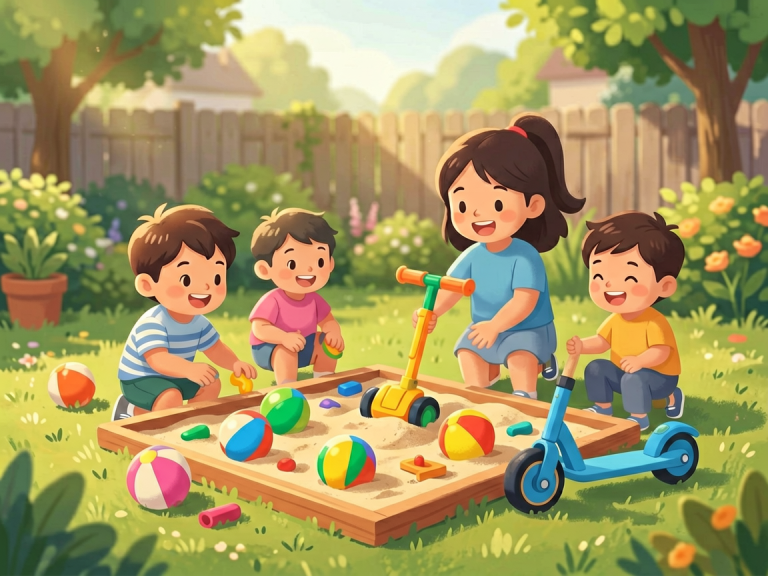
Unlike the controlled environment of a playroom, the outdoors bombards the senses with unpredictable variety. The texture of grass under bare feet, the sound of wind rustling leaves, the sight of clouds drifting overhead, the smell of rain-soaked earth—these natural stimuli are irreplaceable. Outdoor toys amplify this sensory feast: a sandbox invites tactile exploration of dry versus wet sand; a water table teaches concepts of volume and flow; a magnifying glass or bug catcher turns a backyard into a living laboratory. Neuroscientific research indicates that such varied sensory input strengthens neural connections, particularly in the prefrontal cortex, which governs attention and executive function. Moreover, exposure to natural light helps regulate circadian rhythms, improving sleep quality, which in turn enhances learning and mood regulation.
Social Dynamics and Unstructured Cooperation
Outdoor play often involves larger groups and less structured rules. A set of outdoor toys—a soccer ball, a kite, a trampoline—can spontaneously draw together children of different ages and backgrounds. Unlike many indoor toys that are designed for solitary or dyadic play (e.g., board games with strict turn-taking), outdoor toys encourage fluid negotiation: “You go first down the slide, then I’ll push you on the swing.” This organic negotiation builds empathy, conflict resolution, and leadership skills. The risk element—a slightly wobbly balance bike or a high slide—also teaches children to assess danger, trust their bodies, and support one another. When a child falls and another offers a hand, a miniature social contract is forged. Such experiences are harder to replicate in the quieter, more controlled realm of indoor play.
Potential Drawbacks: Safety, Weather, and Accessibility
Of course, outdoor toys come with genuine concerns. Injuries from falling off a trampoline, collisions on scooters, or sunburn during prolonged play are real risks that require adult supervision and proper protective gear (helmets, knee pads, sunscreen). Weather constraints also limit outdoor play—extreme heat, rain, snow, or air pollution can make outdoor time unsafe or impractical. Furthermore, not all families have access to safe backyards, parks, or green spaces, especially in urban environments. These limitations mean that outdoor toys cannot be the sole source of play for many children, highlighting the need for complementary indoor options.
—
The Rich Interior of Indoor Toys: Structure, Creativity, and Cognitive Focus
Fine Motor Skills and Cognitive Development
Indoor toys often excel in refining small muscle movements and higher-order thinking. Building blocks (e.g., LEGO or wooden unit blocks), puzzles, threading beads, and art supplies (crayons, scissors, clay) demand precise hand-eye coordination and sustained concentration. A child constructing a complex tower must apply principles of physics—gravity, balance, symmetry—often without realizing it. Similarly, board games like chess, Memory, or Snakes and Ladders teach strategic planning, pattern recognition, and turn-taking. Educational toys such as magnetic tiles, coding robots (e.g., Sphero or Botley), or science experiment kits introduce abstract concepts in a tangible, playful way. Montessori-inspired toys, which emphasize self-directed, hands-on learning, are especially effective for developing focus and problem-solving. The indoor environment allows for fewer distractions and more controlled, repeated practice—essential for mastering skills like reading, writing, and arithmetic that require sustained mental effort.
Imagination and Narrative Building
Indoor toys have a unique capacity to create worlds that defy physical constraints. Dollhouses, action figures, play kitchens, and puppet theaters allow children to script elaborate scenarios—family dynamics, superhero rescues, tea parties with imaginary guests. Unlike outdoor play, which is often governed by the immediate environment (you can’t pretend to be a pirate on a ship if there’s no sand or water), indoor play is bounded only by the child’s imagination. This narrative building is crucial for language development: children who engage in pretend play use more complex vocabulary and sentence structures as they assign roles and dialogues. Additionally, indoor toys like musical instruments (pianos, drums, recorders) and art easels foster creative self-expression and emotional regulation. A child who draws a picture of a stormy day after a tantrum is processing her feelings in a safe, private space—a form of emotional intelligence that outdoor toys rarely facilitate as directly.
Safety and Consistency in a Controlled Environment
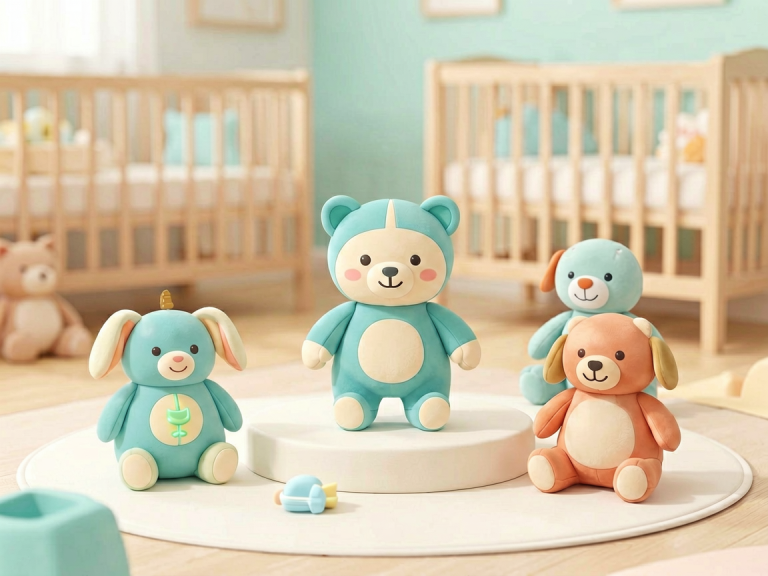
Indoor toys offer predictability. There are no sharp rocks, no sudden weather changes, no aggressive insects. Parents can curate the types of toys available, ensuring they are age-appropriate, non-toxic, and free from choking hazards. For toddlers especially, indoor play spaces can be designed with soft mats, rounded corners, and low shelves, minimizing the risk of serious injury. This safety also encourages independent play: a child in a well-prepared playroom can explore without constant fear of harm, which builds autonomy and self-confidence. Moreover, indoor toys are available year-round, rain or shine, making them a reliable foundation for daily play routines. For families living in apartments or regions with harsh winters, indoor toys are not a luxury but a necessity for maintaining development during long months of confinement.
Potential Drawbacks: Over-sedentariness and Lack of Vitality
The most significant critique of indoor toys is their tendency to promote sedentary behavior. A child who spends hours building with LEGO or playing on a tablet app—even an educational one—may develop poor posture, weakened core muscles, and reduced cardiovascular fitness. Over-reliance on screen-based “smart toys” (e.g., interactive learning tablets) can also impair attention spans, as the instant feedback and flashy graphics train the brain to expect constant stimulation. Additionally, indoor play often lacks the rich sensory input and risk-taking opportunities that outdoor play provides. A child who only plays indoors may develop a fear of mess, discomfort with dirt, or a reluctance to engage in physical challenges—traits that can hinder resilience later in life.
—
A Balanced Approach: Integrating Both Worlds for Optimal Development
Recognizing the Complementary Strengths
Rather than pitting outdoor toys against indoor toys, the most effective strategy is to treat them as complementary components of a child’s “play diet.” Think of it as nutrition: outdoor toys are akin to vigorous exercise and whole foods—they provide broad physical health, sensory variety, and social robustness. Indoor toys are like mental vitamins and fine motor workouts—they sharpen focus, creativity, and foundational academic skills. A child who only plays outdoors may lack the patience for reading or the precision for writing; a child who only plays indoors may be physically weak and socially timid in unstructured settings. The goal is to ensure that each day includes a generous dose of both.
Practical Strategies for Parents and Educators
- Create a flexible schedule: Aim for at least 30–60 minutes of active outdoor play and 30–45 minutes of focused indoor play (construction, puzzles, art) daily.
- Rotate toys strategically: Keep a core set of outdoor gear (balls, bikes, kites) and indoor staples (blocks, art supplies, board games), but periodically swap lesser-used items to maintain novelty.
- Use outdoor toys to teach academics: Counting steps on a hopscotch grid, measuring the speed of a rolling ball, identifying plants during a scavenger hunt—these turn outdoor play into covert learning.
- Bring the inside out and the outside in: Set up an easel in the garden for plein air painting, or create a “nature table” indoors where children can display pinecones, leaves, and rocks collected during outdoor play.
- Prioritize open-ended toys: Whether indoor or outdoor, choose toys that can be used in multiple ways. A simple wooden plank can be a balance beam outdoors or a ramp for toy cars indoors. Open-ended toys stretch creativity and longevity.
The Role of Technology and Modern Hybrid Toys
In recent years, toys have begun to blur the line between indoor and outdoor. Drones, remote-control cars, and programmable robots can be used both inside (in large rooms) and outside (in parks). Augmented reality (AR) toys, such as interactive scavenger hunt apps, combine the digital engagement of indoor play with the physical movement of outdoor play. While these hybrids can be exciting, they should not replace the raw, unmediated experiences that traditional outdoor and indoor toys provide. The best approach is to treat tech-enhanced toys as occasional supplements, not staples.
—
Conclusion: The Playground of Life Needs Both Sun and Shelter
The debate between outdoor toys and indoor toys ultimately reflects a deeper truth about child development: children thrive when they are exposed to diverse environments that challenge different aspects of their being. Outdoor toys invite them to conquer gravity, feel the wind, and negotiate with peers in real time. Indoor toys invite them to master tiny worlds, build intricate systems, and explore the quiet landscapes of their own imagination. Neither realm is superior; each is essential. As parents, educators, and caregivers, our role is not to choose one side but to curate a rich tapestry of play experiences that respects the child’s natural curiosity, safety, and developmental stage. In the end, the best toy is not the one that comes with a flashy box or the one that sits in the backyard—it is the one that sparks a child to say, “Let’s do that again,” whether under the open sky or within the shelter of four walls. Encourage both, and you give a child the freedom to grow whole.