The Ultimate Guide to Open-Ended Toys for Parents: Unlocking Your Childs Infinite Creativity
Introduction
As parents, we are constantly bombarded with a dizzying array of toys, each promising to boost intelligence, develop motor skills, or entertain for hours. Yet, many of these flashy, battery-operated gadgets end up forgotten in a corner within weeks. Meanwhile, a simple set of wooden blocks, a box of crayons, or a pile of old scarves can captivate a child for years. Welcome to the world of open-ended toys—playthings that have no fixed purpose, no single “correct” way to use them, and no predetermined outcome. This guide will help you understand why open-ended toys are essential for your child’s development, how to choose them, and how to integrate them into your home. By the end, you will feel confident in curating a toy collection that grows with your child and fuels imagination rather than consumption.
What Are Open-Ended Toys?
Open-ended toys are items that can be used in multiple ways, limited only by a child’s imagination. Unlike closed-ended toys—such as a puzzle with a single solution or a remote-control car that only moves forward and backward—open-ended toys invite endless possibilities. A classic example is a set of wooden blocks: they can become a tower, a castle, a bridge, a spaceship, a counting tool, or even a pretend phone. Other examples include loose parts like fabric scraps, pebbles, bottle caps, playdough, water, sand, and simple dolls without fixed expressions. The defining characteristic is that the child, not the toy, dictates the play narrative. This type of play is often referred to as “free play” or “imaginative play,” and it is foundational to cognitive, social, and emotional development.
Why Open-Ended Toys Matter
The benefits of open-ended play are backed by decades of child development research. First and foremost, these toys foster creativity and divergent thinking—the ability to generate many different ideas from a single starting point. When a child turns a cardboard box into a pirate ship, they are not merely playing; they are practicing problem-solving, storytelling, and symbolic thinking. In a world that increasingly values innovation, these skills are priceless.
Open-ended toys also support cognitive development in a way that structured toys often do not. For example, building with blocks teaches concepts of balance, symmetry, gravity, and spatial reasoning without a formal lesson. A child who repeatedly tries to stack blocks in a certain pattern learns through trial and error—a process that builds resilience and a growth mindset. Similarly, when a child uses play dough to make “food” for a stuffed animal, they are engaging in pretend play that develops language, sequencing, and empathy.
Socially and emotionally, open-ended play encourages cooperation, negotiation, and self-regulation. Two children sharing a set of magnetic tiles must decide together whether to build a house or a rocket, how to share pieces, and how to resolve disagreements. These interactions are more organic and meaningful than those prompted by a board game with fixed rules. Moreover, because open-ended toys have no “right” answer, children are free to make mistakes and experiment without fear of failure—a crucial component of healthy emotional development.
How to Choose the Right Open-Ended Toys for Your Child
Selecting open-ended toys does not mean buying expensive, curated “educational” products. In fact, some of the best open-ended materials are free or low-cost. However, there are a few key principles to keep in mind.
First, consider your child’s age and developmental stage. For infants and toddlers, safe, sensory-rich items like soft blocks, stacking cups, fabric balls, and textured rattles are ideal. As children grow, you can introduce more complex materials such as wooden train tracks, magnetic building sets, art supplies (crayons, chalk, paint, clay), and loose parts like pinecones, buttons, or small safe containers. For preschoolers and older kids, think about incorporating dramatic play props (scarves, costumes, play food), simple science tools (magnifying glass, measuring cups), and construction toys that allow for open-ended building (LEGO Duplo, wooden planks, or even recycled cardboard).
Second, prioritize quality and safety. Look for toys made from natural materials like wood, cotton, or silicone, as they are often more durable and less toxic than cheap plastics. Avoid toys with small parts that could be choking hazards for children under three. Check for smooth edges, non-toxic paints, and sturdy construction. Also, consider the toy’s longevity—will it still be interesting in a year or two? A set of plastic dinosaurs might be exciting for a week, but a collection of wooden animals can be used in countless scenarios for years.
Third, think about versatility. The best open-ended toys can be combined with other toys and household items. For example, a set of rainbow silk scarves can be used as costumes, as sails for a block boat, as a blanket for a doll, or as a color-matching game. Similarly, a simple cardboard box can become a car, a time machine, or a fort. When shopping, ask yourself: “How many different ways could my child play with this?” If the answer is only one or two, it might not be truly open-ended.
Top Examples of Open-Ended Toys
To help you get started, here are some tried-and-true categories of open-ended toys, along with specific suggestions.
1. Building and Construction Materials: Wooden blocks (unit blocks, hollow blocks, or colored cubes), magnetic tiles, LEGO bricks (especially basic sets without specific themes), connecting gears, and Tinker Toys. For older children, consider K’Nex or simple straw-and-connector sets.
2. Loose Parts: This category includes any small, movable objects that can be sorted, stacked, counted, or used in pretend play. Examples include wooden rings, glass gems (smooth, not sharp), acorns, pinecones, seashells, large buttons, bottle caps, corks, and fabric scraps. Always supervise young children with small parts, and store them in a container that allows for easy access and clean-up.
3. Art and Creativity Supplies: Crayons, washable markers, watercolor paints, play dough, modeling clay, scissors (safety for kids), glue sticks, paper of various textures, and recycled materials like egg cartons and toilet paper rolls. A simple easel or a roll of butcher paper taped to the floor can inspire hours of creativity.
4. Dramatic Play Props: Dress-up clothes (scarves, hats, old shirts, fabric scraps), play kitchen items (pots, pans, wooden spoons, pretend food made from felt), dolls with simple faces (no pre-programmed speech), puppets, and a “doctor’s kit” made from real items like band-aids and a toy stethoscope.
5. Sensory Play Materials: Sand, water, kinetic sand, rice, beans, shaving cream, or cooked spaghetti (for messy play). Provide scoops, funnels, cups, and containers to encourage experimentation. Sensory bins are excellent for toddlers and preschoolers.
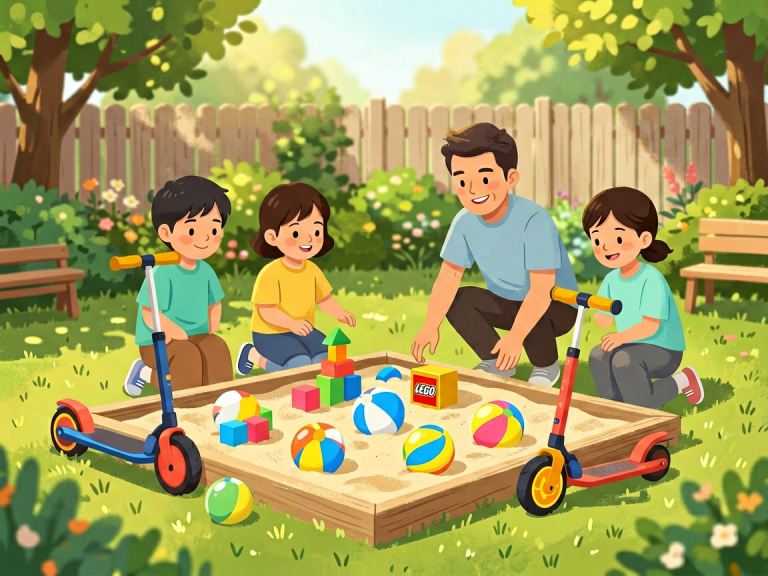
6. Nature-Based Items: Sticks, leaves, rocks, flowers, and mud can become anything in a child’s imagination. Encourage outdoor play with simple tools like a magnifying glass, a shovel, or a bucket.
Common Mistakes to Avoid
Even with the best intentions, parents can inadvertently undermine open-ended play. Here are some pitfalls to watch for.
Over-Structuring Playtime: Do not feel the need to direct your child’s play or “teach” them how to use a toy. The purpose of open-ended toys is for the child to discover their own uses. If you see your child stacking blocks in a way that seems “wrong,” resist the urge to correct them. Let them explore.
Buying Too Many Toys: A cluttered playroom can overwhelm a child, leading to short attention spans and less creative play. Rotate toys every few weeks to keep things fresh. Store most items out of sight and only offer a few choices at a time.
Choosing Themed Toys: While a fire truck toy might seem exciting, it often comes with a fixed narrative (the child must pretend to fight fires). Instead, offer generic vehicles or a simple bucket and hose that can be used in various scenarios. Similarly, avoid character-branded toys that limit play to the show’s storyline.
Ignoring the Environment: The way you arrange toys matters. Place open-ended materials on low, open shelves where children can see and choose them. Avoid deep bins where small items get lost. Provide a clear surface, like a low table or a small rug, where building and creating can happen without interruption.
Disregarding the Child’s Interests: While open-ended toys are versatile, they will only captivate your child if they align with current interests. If your child loves animals, a set of plain wooden animal figures will get more use than a set of geometric blocks. Pay attention and adapt.
Integrating Open-Ended Play into Daily Life
Open-ended play does not need to be confined to a special playtime or a dedicated playroom. You can weave it into everyday routines. For example, while cooking, give your toddler a few silicone muffin cups, a whisk, and some dry pasta to “cook” alongside you. During bath time, provide measuring cups, empty shampoo bottles, and spoons for pouring and scooping. On a walk, collect leaves and twigs to later sort and glue onto paper. The key is to see ordinary moments as opportunities for imagination.
Parents also play a crucial role by modeling curiosity and creativity. When you sit on the floor and build a tower alongside your child, or when you wonder aloud, “What do you think would happen if we added this rock to our sand castle?” you are validating their play and encouraging deeper exploration. Be careful not to take over, but show genuine interest and ask open-ended questions like, “Tell me about your creation!” or “What else could this be?”
Conclusion
Choosing open-ended toys is not about following a trend; it is about respecting your child’s natural drive to explore, create, and make sense of the world. These simple, unassuming playthings offer profound benefits that no flashy electronic gadget can match. They teach patience, resilience, and joy in the process rather than the product. As a parent, you have the power to shape your child’s play environment in a way that nurtures a lifelong love of learning. Start small—maybe with a set of wooden blocks or a fabric scrap bin—and watch as your child’s infinite creativity unfolds. Remember, the best toy is often the one that does nothing by itself, leaving everything for the child to imagine.