The Ultimate Guide to the Best Toys for 7-Year-Olds: Sparking Creativity, Curiosity, and Growth
Introduction
At the age of seven, children stand at a remarkable crossroads. They have outgrown the simple, sensory-driven toys of toddlerhood but have not yet entered the complex, abstract world of pre-adolescence. Seven-year-olds are full of energy, curiosity, and a burgeoning desire for independence. They can read simple books, solve basic math problems, and engage in more sophisticated imaginative play. They are also developing social skills, learning to cooperate with peers, and beginning to understand rules and consequences. Choosing the right toys for this age group is not just about keeping them entertained—it is about nurturing their cognitive, physical, and emotional development. The best toys for 7-year-olds are those that challenge their growing minds, encourage creative expression, promote physical activity, and foster social interaction. In this comprehensive guide, we will explore a curated selection of toys across several key categories, each designed to support different aspects of a seven-year-old’s development. From STEM kits that ignite a passion for science to building sets that test engineering skills, from board games that teach strategy to art supplies that unleash imagination—this article will help parents, educators, and gift-givers make informed choices. With careful consideration of safety, durability, and age-appropriateness, these toys will provide hours of meaningful play while helping children learn and grow.
The Cognitive and Creative Power of STEM Building Sets
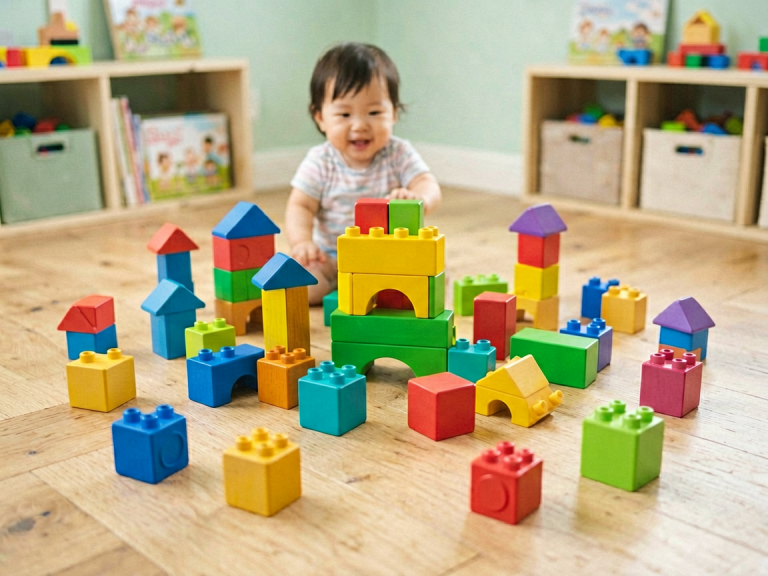
One of the most valuable types of toys for a seven-year-old is a high-quality building or construction set. At this age, children’s spatial reasoning, problem-solving, and fine motor skills are rapidly improving. They can follow multi-step instructions and also invent their own designs. Building sets like LEGO Classic or LEGO Creator, K’NEX, or magnetic tiles (such as Magna-Tiles) are outstanding choices. These toys allow children to construct anything from vehicles and buildings to abstract sculptures. The open-ended nature of such sets teaches resilience: when a tower falls, the child learns to try a different approach. Moreover, many building sets now incorporate STEM (Science, Technology, Engineering, and Mathematics) principles. For instance, LEGO Boost or LEGO Spike Prime introduce basic coding and robotics. A seven-year-old can build a motorized robot and then program its movements using a simple app. This not only demystifies technology but also instills a sense of accomplishment. Another excellent option is the “Snap Circuits” series, which lets children build working electronic circuits—lights, fans, alarms—by snapping components onto a board. It is safe, intuitive, and endlessly fascinating. These toys encourage logical thinking and patience, and they often lead to conversations about how everyday devices work. For parents looking to combine fun with educational value, STEM building sets are hard to beat.
Imaginative Play and Role-Playing Kits
Contrary to the belief that imaginative play declines after preschool, seven-year-olds actually thrive on more complex role-playing scenarios. They love to imitate adults, explore different professions, and create elaborate stories. Toys that facilitate this kind of play are essential for developing empathy, language skills, and social understanding. A classic example is a doctor’s kit or a veterinarian’s set, complete with stethoscope, syringe, and animal figurines. A seven-year-old can treat a stuffed animal, learning about health and compassion. Similarly, a play kitchen with realistic accessories (pots, pans, play food) allows children to cook imaginary meals, practice sequencing, and even learn basic nutrition. For budding scientists, a pretend laboratory with test tubes, goggles, and a microscope (the kind that is safe and does not require real chemicals) can spark hours of discovery. Another popular option is a dress-up trunk filled with costumes—firefighter, astronaut, pirate, princess. These costumes enable children to step into different roles, which enhances their narrative skills and confidence. What makes these toys especially suitable for seven-year-olds is that they can now combine their play with reading and writing. A child might create a menu for a pretend restaurant or write a prescription for a patient. This integration of literacy and play is a powerful learning tool.
Board Games That Build Strategy and Social Skills
Seven-year-olds are ready for board games that involve more than just luck. They can understand simple rules, take turns, and handle winning or losing with increasing maturity. Board games are fantastic for teaching social skills like cooperation, sportsmanship, and communication. Some of the best options for this age include “Catan Junior,” a simplified version of the classic strategy game where players collect resources and build settlements. It teaches resource management and negotiation. “Ticket to Ride: First Journey” is a train-themed game that introduces route planning and geography. Another excellent game is “Sequence for Kids,” which combines card playing with a board to reinforce pattern recognition. For children who enjoy wordplay, “Bananagrams” or “Scrabble Junior” can boost vocabulary and spelling in a fun, fast-paced way. Cooperative games are also highly recommended. In “Outfoxed!,” players work together to solve a mystery, which fosters teamwork rather than competition. Similarly, “The Magic Labyrinth” requires players to remember a maze layout while moving magnetic pieces—great for memory and spatial awareness. Board game time also provides valuable family bonding. Unlike solitary screen time, board games require direct interaction, conversation, and laughter. They teach children to follow instructions, plan ahead, and adapt to changing circumstances. For seven-year-olds, these games strike a perfect balance between challenge and accessibility.
Creative Arts and Hands-On Craft Kits
Creativity flourishes at age seven. Children can draw more detailed pictures, use scissors with precision, and follow multi-step craft instructions. Art supplies and craft kits are therefore excellent investments. A high-quality art set with markers, colored pencils, watercolor paints, and sketch pads encourages self-expression. But to truly engage a seven-year-old, consider kits that have a clear project goal. For example, a “Pottery Wheel” kit (using air-dry clay) allows children to create cups or bowls, teaching them about form and texture. A “Sewing Kit” with pre-cut felt shapes, needles, and thread can introduce basic stitching—perfect for making small pillows or animals. Another popular option is “DIY Slime” or “Kinetic Sand” kits. While messy, these sensory activities are incredibly satisfying and teach basic chemistry concepts (mixing ingredients to achieve a desired consistency). For children who love jewels and beads, a “Friendship Bracelet” or “Bead Loom” kit can improve fine motor skills and yield wearable art. Also consider “Make-Your-Own Lava Lamp” or “Crystal Growing” kits—these combine art and science in a visually stunning way. The key is to choose kits that are age-appropriate and include clear instructions without being too restrictive. The best crafts allow for variation and personalization, so the child feels a sense of ownership over the final product.
Active Outdoor and Gross Motor Toys
Physical development remains crucial at age seven. Children need opportunities to run, jump, climb, and balance. Outdoor toys that encourage active play help combat sedentary habits and improve coordination. A “Bicycle” or “Scooter” is a classic choice—seven-year-olds often gain the confidence to ride without training wheels, which is a huge milestone. A “Jump Rope” is simple but provides excellent cardiovascular exercise and can be used in games with friends. “Frisbees,” “Flying Discs,” and “Nerf Sports Sets” (like foam footballs or basketball hoops) are great for group play. For a more structured activity, consider a “Kids’ Archery Set” with suction cup arrows—it teaches focus and control. “Balance Beams” and “Stepping Stones” can be placed in the backyard to create an obstacle course. Another fantastic toy is a “Pogo Stick” or “Hover Soccer Ball,” which combines active movement with indoor safety. For families with space, a “Trampoline” (with safety net) is a wonderful way for children to burn energy and develop leg strength. Even simple toys like “Kites” or “Parachutes” encourage running and coordination. Remember that active play does not have to be expensive; a simple ball and a designated play area can lead to hours of creative games like tag, catch, or soccer. The goal is to make movement fun, so children naturally develop healthy habits.
STEM Science Kits and Experiments
Seven-year-olds are natural scientists. They ask “why” and “how” constantly, and they love hands-on experiments that yield visible results. Science kits tailored to this age group can satisfy their curiosity while teaching the scientific method. One outstanding option is the “National Geographic Mega Science Series,” which includes kits for rock tumbling, volcano making, and crystal growing. Another is “Thames & Kosmos’s Candy Chemistry,” where children use sweets to learn about reactions and states of matter. “Magic Science Kits” that allow kids to perform tricks like making colored water disappear or inflating a balloon with baking soda and vinegar are both entertaining and educational. For children interested in the natural world, a “Bug Catcher Kit” with a magnifying glass and observation container can spark an interest in entomology. “Ant Farms” or “Butterfly Gardens” (where children watch caterpillars transform) provide lessons in biology and patience. Also consider a “Weather Station Kit” that lets kids measure temperature, wind speed, and rainfall. These experiments often require adult supervision, which creates quality time and opportunities for discussion. The best science kits are those that include clear, step-by-step instructions and explain the underlying principles in simple terms. They empower children to ask their own questions and explore further.
Conclusion
Selecting the best toys for a seven-year-old is a delightful responsibility. The options are vast, but the most effective toys are those that align with the child’s developmental stage—challenging without frustrating, encouraging without dictating, and fun without being trivial. Whether it is a building set that teaches engineering, a board game that sharpens strategy, or a science kit that ignites curiosity, each toy should be a tool for growth. Parents and caregivers should also consider the child’s unique interests; a budding artist will thrive with a high-quality craft set, while a future engineer will love a robotics kit. Variety is important, too: a mix of solo and group toys, active and quiet play, structured and open-ended activities ensures balanced development. Finally, remember that the most valuable “toy” is often time spent together—playing, building, and exploring. Toys are simply the medium through which children learn about themselves, others, and the world. With thoughtful choices, we can give seven-year-olds the gift of joyful, meaningful play that lays a foundation for lifelong learning.