Mastering Fine Motor Skills: Top Toys Under $50 That Deliver Big Results
Introduction
In a world dominated by screens and digital distractions, the humble toy remains one of the most powerful tools for childhood development. Among the many skills that toys can nurture, fine motor skills stand out as foundational for everything from writing and buttoning a shirt to using scissors and tying shoelaces. Fine motor skills involve the coordination of small muscles in the hands, fingers, and wrists, and they develop gradually through repeated, purposeful practice. The good news for parents, educators, and gift-givers is that you don’t need to spend a fortune to provide high-quality, effective toys. This article explores a wide range of fine motor skill toys available for under $50, breaking them down by category, explaining how each type supports development, and offering practical shopping tips. Whether you are looking for a birthday present, a classroom addition, or a simple activity to keep a toddler engaged, you will find affordable options that are both fun and educational.
The Importance of Fine Motor Skill Development
Before diving into specific toys, it is worth understanding why fine motor skills matter so much. In early childhood, these skills are closely tied to cognitive growth, self-care independence, and even social confidence. A child who struggles with fine motor tasks may become frustrated when trying to draw, eat with utensils, or manipulate small objects, which can affect their willingness to try new things. Conversely, a child who has developed strong fine motor skills often shows better handwriting, greater creativity in art projects, and increased patience with problem-solving activities. Toys that require pinching, grasping, twisting, lacing, stacking, or squeezing all contribute to strengthening the tiny muscles in the hands and improving hand-eye coordination. According to occupational therapists, regular play with fine motor toys can also help children develop bilateral coordination (using both hands together) and tactile discrimination (understanding textures and shapes). Given that the first five years of life are a critical window for neural development, investing in a few well-chosen toys is one of the most cost-effective ways to support a child’s growth.
Key Features to Look for in Fine Motor Toys
When shopping for fine motor toys under $50, it helps to know what makes a toy truly effective. First, look for toys that require precise movements—such as threading a string through a small hole, fitting a peg into a tight space, or turning a tiny screw. Second, consider the material: wooden toys often provide more resistance and tactile feedback than plastic, which can be beneficial for grip strength. Third, choose toys that offer multiple levels of difficulty so the child can grow with the toy. Finally, always check safety: ensure that small parts are not a choking hazard for children under three, and that edges are smooth and paints are non-toxic. With these criteria in mind, let’s explore specific categories of fine motor toys that are widely available for under fifty dollars.
Category 1: Building and Construction Toys
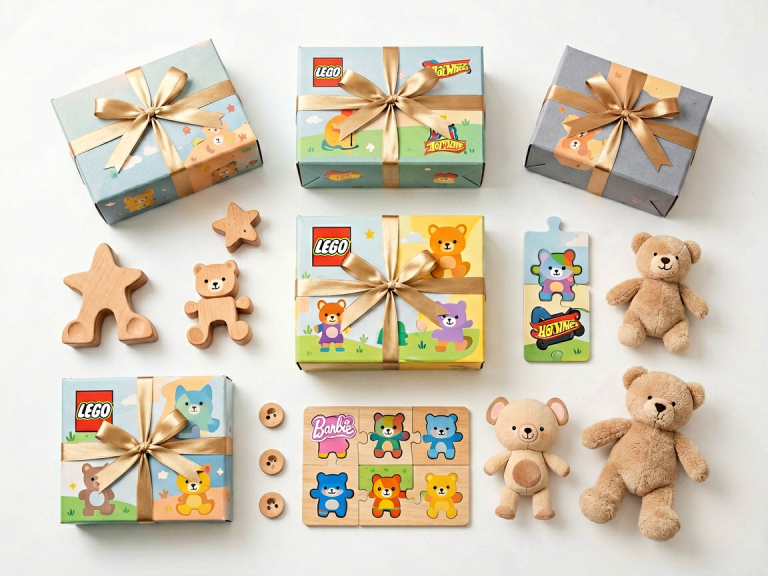
Building toys are classic fine motor workhorses. They require children to pick up small pieces, align them correctly, and apply just the right amount of pressure to connect them. Lacing blocks or interlocking plastic bricks (like those from Mega Bloks or LEGO Duplo) are excellent for toddlers. For older preschoolers, magnetic building sets with small spheres and rods demand careful pincer grasps and precise placement. Another affordable option is wooden unit blocks—simple, unpainted cubes and rectangles that can be stacked and balanced. The act of carefully placing one block atop another without toppling the tower trains both fine motor control and spatial awareness. Many sets cost between $15 and $30. For a twist, try building straws and connectors, which require pushing flexible straws into plastic hubs—a great activity for strengthening hand muscles. Parents can even create their own building challenges, such as “build the tallest tower using only ten pieces,” to add an extra layer of cognitive demand.
Category 2: Lacing and Stringing Toys
Lacing and stringing activities are among the most direct exercises for the small muscles of the hand and fingers. Wooden lacing beads or shape lacing cards are classic staples. A typical set includes a wooden or plastic needle (or a simple string with a stiff tip) and a collection of beads with holes of various sizes. The child must hold the string steady with one hand while using the other to guide a bead onto the string—a task that requires bilateral coordination and hand-eye synchronization. For younger children, larger beads with wider holes are best; for older kids, smaller beads and more intricate patterns challenge their dexterity. You can find high-quality wooden lacing sets for under $20. Another variation is lace-up puzzles, where a child threads a string through pre-drilled holes around a picture of an animal or vehicle—this also helps with pre-writing skills because the motion mimics the handwriting grip. Some sets even include plastic lacing needles that are easier for little hands to hold. These toys are quiet, portable, and wonderfully effective.
Category 3: Puzzles and Shape Sorters
Puzzles are obvious fine motor tools because they require a child to grasp a piece, rotate it to the correct orientation, and then insert it into a precise space. Peg puzzles with knobs on each piece are ideal for toddlers just beginning to develop a pincer grasp. As children grow, jigsaw puzzles with larger pieces (typically 12 to 24 pieces) demand more refined manipulation. Look for puzzles with pieces that have varying shapes and sizes to keep things interesting. Shape sorting cubes or shape sorting boards are another classic: the child must pick up a block, identify the corresponding hole, and then twist or turn the block to fit it through. This action strengthens finger muscles and improves problem-solving skills. Many wooden shape sorters are priced under $25. For extra challenge, magnetic puzzles that require a child to use a magnetic wand to guide tiny metal beads into holes offer a unique tactile experience. All of these toys can be found at discount retailers, online marketplaces, or educational supply stores within the $10–$30 range.
Category 4: Art and Craft Supplies
Art materials are perhaps the most accessible fine motor toys because they are so easy to incorporate into daily play. Play-Doh or other modeling compounds allow children to roll, pinch, squeeze, and sculpt, building hand strength and finger agility. A set of child-safe scissors with blunt tips, combined with construction paper, lets children practice cutting along lines, which is a complex bilateral task. Sticker books require peeling tiny stickers from a backing sheet—an excellent pincer grip exercise. String beads as part of a jewelry-making kit (with larger beads for safety) can keep a child engaged for hours. Dot markers (bingo daubers) are perfect for children who are not yet ready for crayons; pressing the marker down activates a spring mechanism that strengthens hand muscles. Even colored pencils with a triangular shape promote a proper tripod grip. Most of these supplies cost under $15 each, and you can assemble a rich fine motor activity basket for well under $50. Additionally, tweezers or tongs designed for children can be used in a sensory bin filled with rice, beans, or pompoms to practice transferring objects—a fantastic hand-exercise activity.
Category 5: Manipulative and Sensory Toys
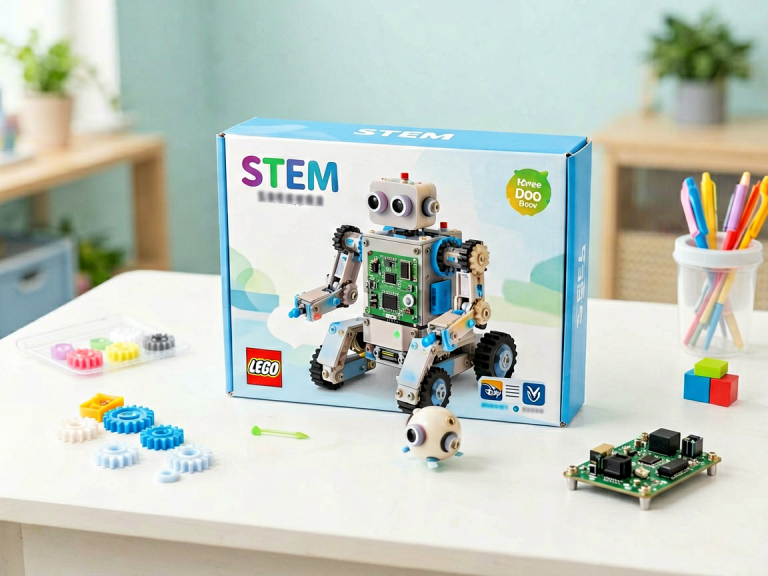
The final category includes specialized toys that focus on repetitive, precise hand movements. Pop beads (plastic beads that snap together with a satisfying click) are inexpensive and excellent for building finger strength. Gear sets require children to fit small plastic gears onto a board and then turn a crank to make them spin—this adds a cause-and-effect element that keeps children motivated. Busy boards or busy cubes feature multiple latches, switches, zippers, and buttons; manipulating these real-life fasteners is a direct way to practice fine motor skills while also learning practical life skills. Many busy boards are sold as small, portable boards for under $30. Sensory bins filled with kinetic sand, water beads, or play sand can be paired with small scoops, cups, and molds to develop hand control. Peg boards with tiny pegs that must be placed into corresponding holes are another low-cost option (often under $20). For children who enjoy repetition, threading boards that use shoelace-like strings to weave through patterns are both calming and skill-building.
How to Choose the Right Toy for Your Child’s Age
Age-appropriateness is crucial for both safety and developmental benefit. For infants (6–12 months), look for toys that encourage grasping and transferring, such as small rattles, fabric blocks with crinkle sounds, or simple stacking rings. For toddlers (1–3 years), focus on larger pieces that require two-handed coordination: shape sorters, large peg puzzles, and chunky crayons. Preschoolers (3–5 years) can handle smaller pieces, lacing beads, scissors, and more complex puzzles (up to 24 pieces). School-age children (5+) may enjoy origami sets, small building kits (like LEGO Classic), beading jewelry kits, or even tweezers-based science experiments. Always check the manufacturer’s age recommendation and supervise play with small parts. Remember that a toy that is too easy will bore a child, while one that is too difficult can cause frustration; look for toys that offer a slight challenge but are still achievable with practice.
Budget-Friendly Tips for Maximizing Value
With so many excellent toys under $50, it is tempting to buy several at once, but a more strategic approach can yield better results. First, choose two or three toys that target different aspects of fine motor development—for example, one building set, one lacing activity, and one art supply. Second, look for open-ended toys that can be used in multiple ways: wooden blocks can be stacked, sorted by color, used for pretend play, or even painted. Third, consider buying used toys from thrift stores, garage sales, or online marketplaces; wooden toys often hold up beautifully. Fourth, combine toys with household items: a bowl of dried beans and a spoon is a free fine motor activity. Finally, rotate toys every few weeks to maintain novelty and sustained interest. By being thoughtful, you can create a rich fine motor learning environment for far less than the cost of a single expensive gadget.
Final Thoughts
Fine motor skills are not just about manual dexterity; they are about building independence, confidence, and cognitive pathways that support lifelong learning. The toy market offers a wealth of high-quality, engaging options that cost less than $50, making it possible for families of all budgets to provide meaningful developmental experiences. From classic wooden peg puzzles to modern magnetic building sets, from colorful lacing beads to versatile art supplies, every category provides a unique way for children to practice and master small muscle movements. As you shop, remember that the best fine motor toy is one that a child actually wants to play with repeatedly. Watch for signs of engagement—a focused face, quiet determination, and the joy of accomplishment. When a child picks up a tiny bead and successfully threads it onto a string, they are not just playing; they are wiring their brain for a future of writing, drawing, typing, and creating. And that is a gift that costs very little but pays dividends for a lifetime.
*(Word count: approximately 1,150 words)*