The Ultimate Guide to Logic Toys for Parents: Unlocking Your Child’s Cognitive Potential
Introduction: Why Logic Toys Matter More Than Ever
In an age dominated by screens, instant gratification, and passive entertainment, the role of traditional toys that challenge the mind has never been more critical. Logic toys—puzzles, strategy games, building sets, and problem-solving kits—are not just playthings; they are powerful tools for cognitive development. As a parent, you may wonder which toys truly deliver educational value without sacrificing fun. This guide will walk you through everything you need to know about selecting, introducing, and maximizing the benefits of logic toys for your child, from toddlerhood through the teenage years.
Logic toys are uniquely designed to engage a child’s executive functions—working memory, flexible thinking, and self-control. They encourage persistence, teach cause and effect, and foster a growth mindset. Unlike many electronic games that reward quick reflexes, logic toys reward careful reasoning, patience, and strategy. By incorporating these toys into your child’s daily routine, you are not only entertaining them but also building the neural pathways that will serve them in school, relationships, and future careers.
Understanding the Developmental Benefits of Logic Toys
Before diving into specific recommendations, it is essential to understand *why* logic toys are so beneficial. Research in child psychology and neuroscience consistently shows that hands-on, open-ended play is one of the most effective ways for children to learn.
Cognitive Skills: More Than Just Puzzle-Solving
Logic toys directly stimulate critical thinking. When a child tries to fit a block into the correct shape, they are engaging in pattern recognition and spatial reasoning. When they play a strategy board game like chess or checkers, they practice planning ahead, evaluating consequences, and adapting to their opponent’s moves. These skills translate directly to academic subjects such as mathematics, science, and reading comprehension. For example, understanding fractions becomes easier when a child has physically manipulated fraction tiles or pie-shaped puzzles.
Emotional and Social Growth: Patience, Resilience, and Cooperation
Many logic toys are designed for solo play, but cooperative logic games—where children must work together to solve a puzzle—teach invaluable social skills. They learn to communicate their ideas, listen to others, negotiate strategies, and share credit for success. Furthermore, the very nature of a challenging puzzle builds emotional resilience. A child who fails to complete a maze on the first try learns that mistakes are stepping stones, not dead ends. This frustration tolerance is a cornerstone of emotional intelligence.
Fine Motor Skills and Hand-Eye Coordination
Building sets, stacking blocks, and manipulating small puzzle pieces require precise hand movements. These activities strengthen the small muscles in the hand and improve coordination between what the eyes see and what the hands do. For younger children, this is a critical precursor to writing, drawing, and using tools.
How to Choose Age-Appropriate Logic Toys: A Practical Framework
Not all logic toys are created equal, and what works for a four-year-old will likely be boring (or impossible) for a twelve-year-old. Here is a breakdown by age group, along with specific examples.
Ages 2–4: Foundations of Logic
At this stage, children are developing basic concepts like shape, color, size, and cause and effect. Toys should be simple, safe, and engaging.
- Shape sorters and stacking rings: Classic toys that teach matching and ordering.
- Simple wooden puzzles: Start with 3–6 piece puzzles with chunky knobs. Themes like animals or vehicles work well.
- Magnetic fishing games: These require concentration and hand control.
- Pattern blocks and pegboards: Allow children to copy simple patterns or create their own.
Parenting tip: Let your child explore freely. Do not correct them immediately. Instead, ask open-ended questions like, “What shape do you think fits here?” This encourages trial-and-error learning.
Ages 5–7: Building Logical Thinking
Children in this age range can handle more complex rules and multi-step problems. They begin to understand sequencing and basic strategy.
- Maze books and magnetic mazes: Excellent for planning a route.
- Simple board games like “Hi Ho! Cherry-O” or “Candy Land”: Teach turn-taking and counting, though they are largely luck-based. Introduce strategy games like “Checkers” or “Connect Four” for deeper logic.
- Building sets with instructions (e.g., LEGO Classic or DUPLO sets with a theme): Following step-by-step instructions builds sequencing skills.
- Tangrams and pentominoes: Classic puzzles that teach geometric relationships.
Parenting tip: Play alongside your child. Narrate your own thinking: “I wonder if this piece will fit if I rotate it?” Modeling problem-solving language is incredibly powerful.
Ages 8–11: Advanced Strategy and Deduction
Now children can handle abstract rules, multi-step reasoning, and complex spatial challenges. This is a golden age for logic toys.
- Rubik’s Cube and its variants: A classic that teaches algorithm-like sequencing and patience.
- Strategy board games: “Settlers of Catan” (junior version), “Ticket to Ride,” “Carcassonne,” “Blokus” These involve resource management, planning, and spatial reasoning.
- Logic puzzle books (e.g., “Logic Puzzles for Kids”): Grid-based puzzles like “Einstein’s Riddle” or nonograms.
- 3D construction sets (e.g., K’NEX, Magz, or magnetic tiles with new complexity): Encourage engineering thinking.
- Coding toys like “Botley” or “Code-a-pillar”: Introduce basic programming logic without a screen.
Parenting tip: Encourage group play. At this age, children benefit from discussing strategies with peers or siblings. They can also start keeping a “puzzle journal” to record their approaches and successes.
Ages 12+: Abstract and Deductive Reasoning
Teens can tackle complex, multi-layered logic problems. These toys can even become hobbies that last a lifetime.
- Chess and Go: Timeless games of pure strategy. Online platforms like Lichess also offer tutorials.
- Escape room board games (e.g., “Unlock!” or “Exit: The Game”): Require team-based puzzle-solving under time pressure.
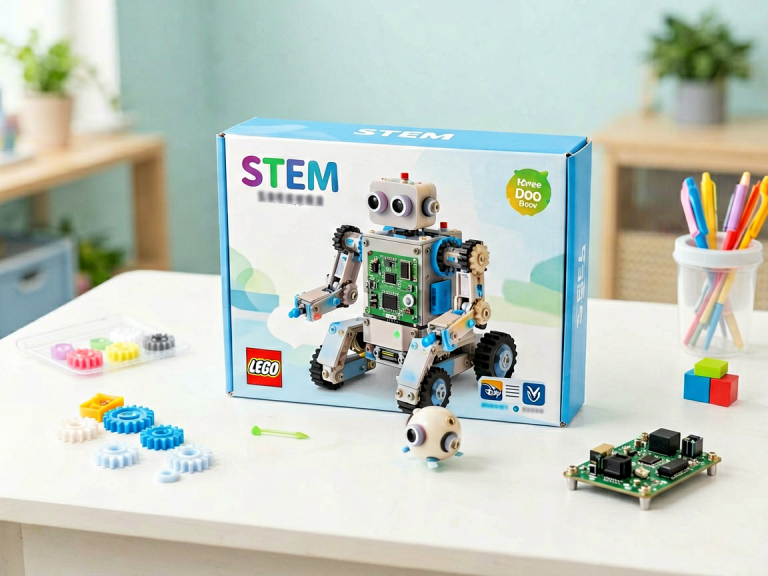
- Programming kits (e.g., Arduino starter kits, Raspberry Pi projects): Combine logic with engineering.
- Math puzzles and brainteasers: Books like “The Moscow Puzzles” or “The Art of Problem Solving” challenge teens to think outside the box.
- Wooden mechanical puzzles (e.g., disentanglement puzzles, burr puzzles): These foster spatial reasoning and persistence.
Parenting tip: Respect their autonomy. Let them choose puzzles that interest them, even if it seems too hard. Offer help only when asked, and celebrate their “aha” moments.
Top 10 Logic Toys Every Parent Should Consider
Based on expert recommendations and parent reviews, here are ten universally acclaimed logic toys that span different ages and interests:
- LEGO Classic Creative Brick Box (ages 4+) – Endless possibilities for following instructions or free building.
- Melissa & Doug Pattern Blocks and Boards (ages 3+) – Simple yet powerful for learning shapes and patterns.
- Ravensburger Puzzles (various ages) – High-quality jigsaw puzzles that range from 24 pieces for toddlers to 1000+ for teens.
- Blokus (ages 7+) – A four-player strategy game that requires spatial reasoning and blocking opponents.
- ThinkFun Gravity Maze (ages 8+) – A marble-run logic puzzle that teaches physics and sequential thinking.
- Rubik’s Cube (ages 8+) – The ultimate portable logic challenge.
- Qwirkle (ages 6+) – A tile game that combines pattern recognition and strategy, similar to Scrabble with colors and shapes.
- Code Master: Programming Logic Game (ages 8+) – Teaches programming concepts through a board game.
- SmartGames escape puzzles (ages 7+) – Compact, single-player logic puzzles with increasing difficulty.
- Settlers of Catan: Junior (ages 6+) – A streamlined version of the classic that teaches resource management and negotiation.
How to Integrate Logic Toys into Daily Life Without Overwhelming Your Child
Even the best toys can gather dust if not presented thoughtfully. Here are practical strategies to make logic play a natural part of your family’s routine.
Create a “Puzzle Station”
Designate a small table or shelf where logic toys are always accessible. Rotate the selection every week or two to maintain novelty. Keep the station clutter-free—too many choices can overwhelm a child.
Make It a Family Ritual
Set aside 15–20 minutes after dinner or on weekends for “puzzle time.” The entire family can work on a jigsaw puzzle together, play a quick game of chess, or tackle a brainteaser. This normalizes problem-solving as a shared, enjoyable activity rather than a chore.
Use Technology Wisely
While this guide emphasizes physical toys, there are high-quality digital logic games. Apps like “Monument Valley,” “The Room,” or “Khan Academy Kids” offer excellent problem-solving experiences. The key is to set time limits and choose apps that require active thinking, not passive swiping.
Encourage Reflection, Not Just Winning
After completing a puzzle, ask your child: “What was the hardest part? How did you figure it out?” This metacognitive conversation deepens their learning. If they fail, ask: “What would you try differently next time?” This reinforces a growth mindset.
Common Pitfalls to Avoid When Choosing Logic Toys
Even well-intentioned parents can make mistakes. Here are traps to avoid.
Don’t Buy Too Many Toys at Once
A child with thirty puzzles will likely appreciate none. Fewer, carefully chosen toys encourage deeper engagement. The classic Montessori principle applies: “Less is more.”
Don’t Choose Based on Age Label Alone
Age recommendations are guidelines, not rules. A highly advanced five-year-old might enjoy a puzzle meant for seven-year-olds, while a struggling eight-year-old might need simpler toys to build confidence. Observe your child’s actual abilities and interests.
Don’t Turn Play into a Competition
While friendly competition can be motivating, if your child feels pressured to “win” or “be smart,” they may avoid challenging toys altogether. Focus on effort and progress, not outcome.
Don’t Replace Active Play with Passive Watching
A logic toy is not a babysitter. The real benefit comes from hands-on manipulation and thinking. If your child simply watches you solve the puzzle, they gain little. Encourage them to try—even if they struggle.
Conclusion: Investing in Your Child’s Future, One Puzzle at a Time
Logic toys are more than educational trinkets; they are investments in your child’s ability to think clearly, solve problems creatively, and persist through challenges. In a world that increasingly rewards quick answers and surface-level knowledge, the child who has learned to sit with a difficult puzzle and enjoy the process of discovery will have a profound advantage.
As a parent, you don’t need to be an expert in child development or a master of every game. What you need is a willingness to play, to ask thoughtful questions, and to model the joy of figuring things out. So clear a space on the shelf, pick a puzzle that sparks your own curiosity, and start. The cognitive rewards—and the shared memories—will last a lifetime.