Introduction
Title: The Ultimate Hands-On Learning Toys Guide for Parents: Nurturing Curiosity, Building Skills, and Making Play Purposeful
In an age dominated by screens, digital devices, and passive entertainment, the value of hands-on learning has never been more critical. As parents, we constantly seek ways to support our children’s cognitive, emotional, and physical development while keeping them engaged and happy. Hands-on learning toys offer a powerful bridge between play and education. They encourage children to touch, manipulate, build, experiment, and create, transforming abstract concepts into tangible experiences. This guide is designed to help parents navigate the vast landscape of hands-on learning toys, understand why they matter, and choose the right tools to spark a lifelong love of learning.
—
Why Hands-On Learning Matters
Research in child development consistently shows that active, tactile engagement strengthens neural connections far more effectively than passive observation. When a child builds a tower with blocks, they are not just stacking; they are learning about balance, gravity, spatial relationships, and cause and effect. When they mix baking soda and vinegar, they witness chemical reactions firsthand, internalizing scientific principles through wonder rather than rote memorization.
Hands-on toys also promote executive function skills — the mental processes that enable self-control, working memory, and cognitive flexibility. Manipulating puzzle pieces requires planning and patience. Constructing a marble run demands trial and error, fostering resilience. In contrast, many screen-based toys provide instant gratification and limit the child’s role to that of a passive receiver. The open-ended nature of physical toys allows children to set their own goals, solve problems creatively, and experience the deep satisfaction of “I did it myself.” This builds confidence and a growth mindset that benefits academic and social success alike.
—
Key Categories of Hands-On Learning Toys
Understanding the different types of hands-on toys can help you curate a diverse collection that targets multiple developmental domains. Here are the most impactful categories:
Construction and Building Sets
From classic wooden blocks to magnetic tiles, LEGOs, and interlocking gears, building toys are foundational. They develop fine motor skills, hand-eye coordination, and spatial awareness. More advanced sets introduce engineering concepts such as leverage, torque, and structural stability. Look for sets that are open-ended — ones that don’t prescribe a single outcome but instead encourage children to invent their own designs. A set of simple planks, for example, can become a house, a bridge, or a spaceship, limited only by imagination.
Science and Experimentation Kits
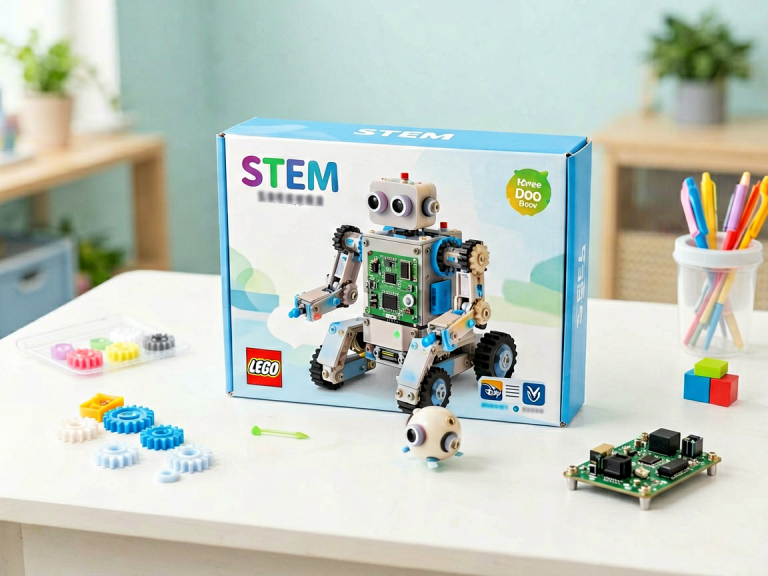
These toys turn the kitchen or backyard into a laboratory. Chemistry sets, crystal-growing kits, microscopes, and electronics kits (like snap circuits) demystify STEM subjects. For younger children, simple water play with funnels and measuring cups teaches volume and density. For older kids, robotics kits or coding blocks (where physical blocks represent commands) introduce logic without a screen. The key is to choose kits that allow repeated, varied experiments rather than a one-time project.
Art and Creative Expression
Hands-on learning isn’t limited to science and math. Art supplies like clay, play dough, weaving looms, sewing kits, and watercolors develop fine motor precision and creative problem-solving. Engaging with open-ended art materials allows children to make choices, express emotions, and practice visual planning. Look for materials that are non-toxic, washable, and varied in texture. Modeling clay, for example, strengthens hand muscles needed for writing, while painting encourages color theory and pattern recognition.
Puzzles and Logic Games
Puzzles teach patience, pattern recognition, and deductive reasoning. Jigsaw puzzles with age-appropriate piece counts improve visual-spatial skills. Logic puzzles, tangrams, and mazes challenge children to think sequentially and consider multiple solutions. Strategy board games (like chess or cooperative games) add social dimensions such as turn-taking, negotiation, and managing wins and losses — all essential life skills.
Role-Play and Imaginative Sets
Pretend play is a cornerstone of cognitive and social development. Toys like kitchen sets, tool benches, doctor kits, and costumes allow children to act out scenarios, experiment with language, and understand the world around them. When a child “cooks” a meal using play food and utensils, they practice sequencing, counting, and social roles. Look for realistic yet simple props that invite open-ended storytelling rather than electronic sound effects that dictate the play.
—
Age-Appropriate Selection Guide
Choosing the right toy for your child’s developmental stage ensures safety and maximizes learning potential.
Infants and Toddlers (0–2 years)
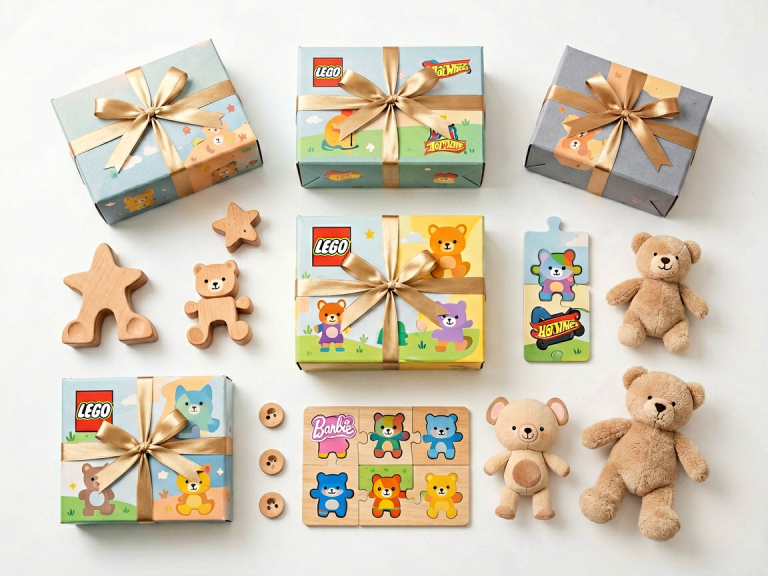
At this stage, sensory exploration is paramount. Choose toys that are safe, large enough to prevent choking, and easy to grasp. Soft blocks, textured rattles, stacking cups, and simple shape sorters allow babies to explore cause and effect and develop hand-eye coordination. Wooden push toys and activity tables encourage gross motor skills. Avoid toys with small parts or long strings. The best toys for this age are those that respond to the child’s actions — a rattle that makes noise when shaken, or a ball that rolls when pushed.
Preschoolers (3–5 years)
Preschoolers are ready for more complex manipulations. Building blocks (like Duplo or magnetic tiles), simple puzzles (12–24 pieces), play dough with tools, and art supplies (crayons, safety scissors, glue) are excellent. At this age, children begin to engage in pretend play, so dollhouses, train sets, and dress-up costumes are wonderful. Look for toys that encourage sorting, counting, and matching, such as colored counters or simple board games. Educational value: they learn sharing, following rules, and early literacy as they describe their creations.
Early Elementary (6–8 years)
Children in this age group have improved dexterity and longer attention spans. Advanced building sets (LEGO Technic, K’NEX), marble runs, beginner coding kits (like Botley or coding mice), and science kits with simple experiments (e.g., growing crystals, making slime) are ideal. They can handle jigsaw puzzles with 100–200 pieces, logic puzzles, and strategy board games. Role-play becomes more elaborate — children may enjoy puppet shows, child-sized kitchen sets with more accessories, or simple sewing kits. This is the sweet spot for introducing tools that require reading instructions and problem-solving independently.
Tweens and Teens (9+ years)
Older children can tackle complex, multi-step projects. Robotics kits (LEGO Mindstorms, VEX), chemistry sets with actual experiments (safety first), 3D puzzles, and advanced coding kits (like Arduino or Raspberry Pi starter kits) challenge their growing analytical abilities. Model-building, woodworking kits, and jewelry-making sets allow for creative self-expression. Strategy games like Settlers of Catan or cooperative escape-room-style board games develop critical thinking and teamwork. At this stage, the focus shifts from basic skill development to deeper understanding, specialization, and personal interest.
—
What to Look for When Choosing Hands-On Toys
With countless options on the market, narrowing down choices can be overwhelming. Use these criteria to evaluate any toy:
- Safety First: Always check for non-toxic materials, rounded edges, and age recommendations. Avoid toys with small magnets or hazardous chemicals. Look for certifications like ASTM (American Society for Testing and Materials) or CE marking.
- Open-Endedness: The best hands-on toys have no fixed “right” answer. Blocks can be stacked in infinite ways; clay can be shaped into anything. Open-ended toys grow with the child and encourage creativity rather than rote following.
- Durability: Children are active, and cheap plastic breaks quickly. Invest in toys made of solid wood, sturdy metal, or high-quality plastic. Repairability is a bonus — can parts be replaced if lost?
- Educational Value: Does the toy naturally invite problem-solving, critical thinking, or skill-building? A simple marble run teaches gravity and trajectory, while a matching game sharpens memory. Avoid toys that claim to be “educational” but are actually flashy, battery-operated distractions.
- Interest Alignment: Your child will learn more from a toy they actually enjoy. If your child loves dinosaurs, a dinosaur excavation kit or a dinosaur-themed building set will engage them far more than a generic science kit. Observe their natural curiosities and choose accordingly.
- Multiplicity of Uses: Can the toy be used in multiple ways or combined with other toys? Wooden blocks can accompany toy cars, dolls, or even become a math counting tool. Versatility extends the lifespan and value of the toy.
—
Tips for Parents to Maximize the Learning Experience
Even the best hands-on toy is only as effective as the environment in which it is used. Here’s how you can transform playtime into deep learning:
1. Create a “Yes” Space
Designate an area where mess is allowed — a corner with a washable floor or a large playmat. When children can freely explore without constant “don’t spill” or “be careful,” they are more likely to take creative risks.
2. Be a Co-Player, Not a Director
Sit alongside your child and ask open-ended questions: “What do you think will happen if we add this piece?” or “How could you make the tower taller without it falling?” Resist the urge to correct or show the “right” way unless safety is an issue. Your role is to scaffold — provide just enough support for the next step.
3. Embrace Failure as Learning
When a block tower collapses or a science experiment fizzles, celebrate the effort. Say, “That didn’t work — what could you try differently?” This teaches resilience and the scientific method. Avoid jumping in to fix the problem immediately.
4. Rotate Toys to Maintain Novelty
Children often lose interest in toys they see every day. Store half of their hands-on toy collection in a closet and swap it out every few weeks. The “new” old toys will feel fresh and re-engage your child’s curiosity.
5. Integrate Learning into Daily Life
Use hands-on toys to reinforce real-world concepts. Count the blocks as you build. Measure ingredients for a “potions” science experiment. Write labels for a pretend store. These small bridges between play and practical skills make learning relevant.
6. Limit Screens During Play
Set boundaries for screen time so that hands-on play is not competing with digital entertainment. Consider having “no-screen hours” during which building, creating, and experimenting are the default choices.
—
Top Recommendations (By Type, Not Brand)
While I avoid specific brand endorsements, here are classic types of hands-on toys that consistently deliver high learning value:
- Magnetic Building Tiles: Transparent, colorful, and infinitely expandable. They teach geometry, symmetry, and magnetism while encouraging collaborative building.
- Simple Wooden Unit Blocks: The gold standard for early construction. They require no batteries, make no noise, and allow children to explore balance, weight, and design.
- Snap Circuit Sets: These large, colorful pieces let children build working circuits (lights, fans, alarms) by snapping components together. No soldering required — pure curiosity and experimentation.
- Modeling Clay or Air-Dry Clay: Inexpensive and endlessly reusable. Children can sculpt, press patterns, and even paint their creations. Excellent for hand strength and artistic expression.
- Logic Puzzles (Tangrams, Rush Hour, Kanoodle): Compact, travel-friendly puzzles that challenge spatial reasoning and patience. Great for car rides or quiet afternoons.
- Simple Science Kits (Crystal Growing, Volcano, Slime): Choose kits that include clear instructions and safe, non-toxic ingredients. The wow factor of a growing crystal or erupting volcano creates lasting memories.
—
Conclusion
Hands-on learning toys are not just playthings; they are catalysts for cognitive growth, emotional resilience, and creative confidence. As parents, we have the opportunity — and the responsibility — to fill our children’s worlds with materials that invite inquiry, support exploration, and celebrate discovery. By selecting toys wisely, creating a supportive environment, and engaging alongside our children, we transform everyday play into a foundation for lifelong learning. Remember: the best toy is often the simplest one that sparks a child’s imagination and leaves them asking, “What if I try this?” Start small, observe your child’s joy, and watch their minds grow one block, one puzzle, one experiment at a time.