Building Minds: The Essential Role of Hands-On Learning Toys for Elementary Children
Introduction
In an age dominated by screens, digital tablets, and online educational apps, the simple act of picking up a physical object and manipulating it with one’s own hands may seem almost old-fashioned. Yet for elementary school children—those curious minds between the ages of five and eleven—hands-on learning toys remain one of the most powerful tools for cognitive, social, and emotional development. These toys are not merely distractions or pastimes; they are carefully designed instruments that transform abstract concepts into tangible experiences. When a child builds a bridge with wooden blocks, mixes baking soda and vinegar in a science kit, or fits together the pieces of a complex puzzle, they are not just playing—they are constructing neural pathways, solving real problems, and laying the foundation for lifelong learning. This article explores why hands-on learning toys are indispensable for elementary students, what categories of such toys are most effective, and how parents and educators can integrate them meaningfully into daily life.
Why Hands-On? The Science Behind Learning by Doing
To understand the value of hands-on toys, we must first look at how young children learn best. Developmental psychologists, from Jean Piaget to Maria Montessori, have long emphasized that children in the elementary stage are concrete operational thinkers. They learn most effectively when they can see, touch, and manipulate objects rather than simply hear explanations or read text. This is because their brains are still developing the capacity for abstract reasoning. When a child holds a set of fraction circles and physically places one half next to two quarters, the concept of equivalence becomes an immediate, sensory reality. The tactile feedback, the visual arrangement, and the motor planning involved all reinforce the mathematical idea in a way that a worksheet never can.
Furthermore, hands-on learning engages multiple senses simultaneously, a process known as multimodal learning. Research in neuroscience shows that when a child uses their hands to build, they activate the motor cortex, the visual cortex, and the prefrontal cortex (responsible for planning and decision-making) all at once. This multisensory activation leads to stronger memory retention and deeper understanding. For example, a child who assembles a gear train with a construction set not only learns about mechanical principles but also develops fine motor skills, spatial reasoning, and persistence when the gears don’t align on the first try. Mistakes become lessons, and frustration becomes a stepping stone to resilience. Thus, hands-on toys are not merely supplementary; they are fundamental to how elementary children construct knowledge.
Key Categories of Hands-On Learning Toys for Elementary Kids
While almost any physical toy can offer some learning value, certain categories have proven especially effective for elementary-aged children. These toys are designed to target specific skill sets while keeping engagement high.
Building and Construction Sets
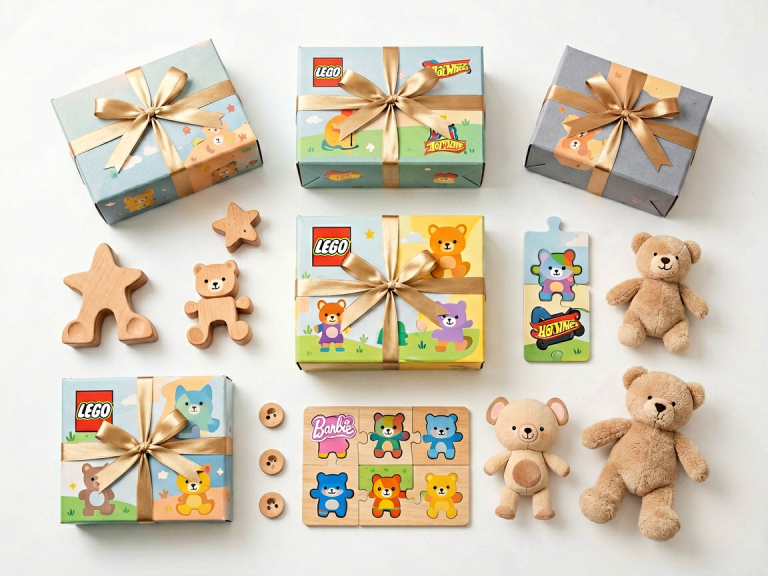
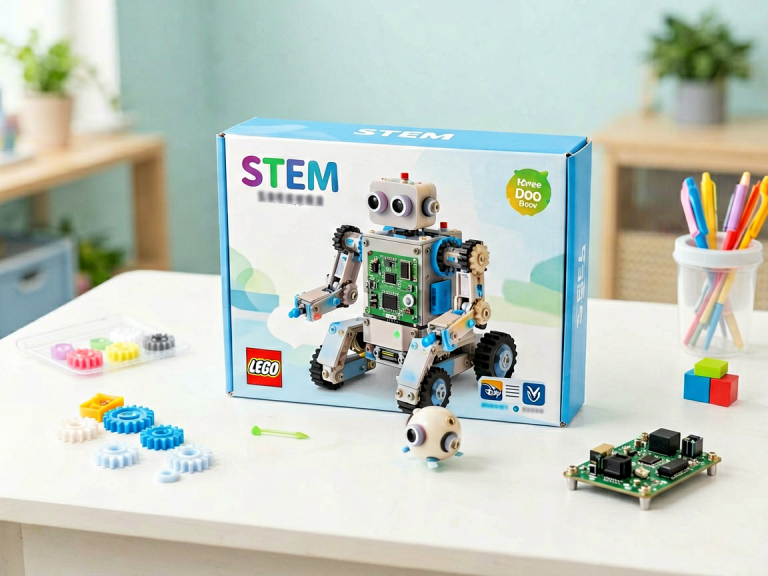
From classic wooden blocks to interlocking plastic bricks (like LEGO) and magnetic tiles, building toys are perhaps the most versatile hands-on learning tools. They teach spatial awareness, balance, symmetry, and basic engineering principles. When children build a tower that must withstand an earthquake simulation (created by shaking the table), they learn about structural integrity. When they collaborate on a large fort, they practice communication and negotiation. Advanced sets with gears, pulleys, and motors introduce early physics and mechanics. The open-ended nature of building toys also encourages creativity—no two creations are exactly alike.
Science and Exploration Kits
Elementary children are natural scientists, constantly asking “why” and “how.” Science kits that allow them to grow crystals, create simple circuits, observe caterpillars metamorphose into butterflies, or conduct safe chemical reactions bring the scientific method to life. Unlike reading about photosynthesis in a textbook, planting a seed in a transparent cup and watching roots and shoots develop day by day gives a child a direct, personal connection to biology. These kits also teach patience, observation, and record-keeping. Many kits now align with STEM (Science, Technology, Engineering, and Math) curricula, making them valuable for both home and classroom use.
Puzzles and Logic Games
Jigsaw puzzles, tangrams, Rubik’s cubes, and pattern blocks challenge a child’s visual-spatial skills and logical reasoning. For elementary students, puzzles with increasing difficulty levels help develop the ability to hold multiple pieces of information in mind, compare shapes, and test hypotheses (e.g., “Will this piece fit here if I rotate it?”). Logic games like “Mastermind” or “Rush Hour” introduce sequencing, deduction, and strategy. These toys are particularly good for building executive function—the set of mental skills that includes working memory, flexible thinking, and self-control.
Art and Craft Materials
While often overlooked in “educational” discussions, art supplies—clay, play dough, weaving looms, bead kits, and even simple scissors and paper—are profoundly hands-on. Manipulating clay strengthens hand muscles needed for writing. Weaving patterns teaches sequencing and symmetry. Creating a collage requires planning and visual-spatial organization. Art toys allow children to express emotions and ideas non-verbally, which is crucial for emotional development. Moreover, the iterative process of cutting, gluing, and revising teaches that creativity comes from trying and trying again.
Math Manipulatives
Counting bears, base-ten blocks, fraction tiles, geoboards, and abacuses turn abstract mathematical concepts into concrete objects. When a child groups ten unit cubes into a “ten rod,” they are literally constructing the concept of place value. When they stretch rubber bands on a geoboard to form shapes, they explore perimeter and area through touch. These manipulatives are widely used in Montessori and other progressive educational approaches because they allow children to discover mathematical truths independently before they are expected to memorize formulas.
Developmental Benefits: From Fine Motor Skills to Executive Function
The benefits of hands-on learning toys extend far beyond academic content. One of the most immediate physical benefits is the development of fine motor skills. Elementary-aged children are still refining the small muscle control needed for handwriting, buttoning clothes, and using tools. Building with small pieces, threading beads, or carefully placing puzzle pieces strengthens the finger and hand muscles and improves hand-eye coordination. This, in turn, boosts confidence in self-care tasks and later in more complex activities like playing a musical instrument or typing.
Cognitively, hands-on toys promote what psychologists call “executive function”—the brain’s air-traffic control system. When a child follows a set of instructions to build a LEGO model, they are practicing working memory (holding steps in mind), inhibitory control (resisting the urge to skip steps or grab the wrong piece), and cognitive flexibility (adjusting the plan if a piece is missing). These skills are strong predictors of academic success and even future career readiness. A study by the American Academy of Pediatrics found that unstructured, hands-on play—especially with open-ended toys—significantly improves children’s ability to self-regulate and solve problems.
Socially and emotionally, hands-on toys offer opportunities for collaboration, negotiation, and emotional regulation. When two children build a city together, they must share resources, agree on a plan, and resolve conflicts when their visions clash. They learn to take turns, to express their ideas clearly, and to appreciate others’ perspectives. On the other hand, when a child works alone on a challenging puzzle, they learn to manage frustration and persist through difficulty—an essential emotional skill that will serve them well in school and life. Hands-on toys also provide a sense of accomplishment. Completing a model or solving a puzzle gives a tangible reward that boosts self-esteem far more than a digital sticker.
Integrating Hands-On Toys into Home and Classroom
To maximize the benefits, parents and educators must think carefully about how to introduce and use hands-on learning toys. In the home, the key is to create a “loose parts” environment—a space where children can freely access a variety of materials without strict instructions. A shelf with building blocks, a bin of craft supplies, and a basket of puzzles invites spontaneous exploration. However, adults should also occasionally engage in guided play. Sitting down with a child to build a simple machine or to sort geometric shapes provides a model of focus and enthusiasm. Asking open-ended questions like “What do you think will happen if we add another block?” or “How could we make this bridge stronger?” deepens the learning.
In the classroom, hands-on toys can be integrated into subject-specific learning centers. A math center might feature base-ten blocks, pattern blocks, and a balance scale. A science center can include magnifying glasses, magnets, and simple microscopes with prepared slides. Teachers should allow for both structured activities (e.g., “Use these fractions tiles to show three different ways to make one whole”) and free exploration time. Research shows that when children have regular access to hands-on materials, their engagement and understanding in subjects like math and science improve significantly. Moreover, these toys can be especially beneficial for struggling learners—children who have difficulty reading instructions often thrive when they can physically manipulate objects to grasp concepts.
One critical caveat: hands-on toys are not a substitute for direct instruction or digital tools, but they are a crucial complement. The best learning environments blend hands-on, kinesthetic experiences with verbal explanations and, when appropriate, digital enrichment. A child who has physically built a model of the solar system with foam balls will later understand a computer simulation of planetary orbits far more deeply than a child who only watched a video.
Conclusion
In a world that increasingly prizes speed, efficiency, and virtual interaction, the humble hands-on learning toy stands as a quiet but powerful ally in elementary education. These toys do not require batteries, Wi-Fi, or screens. They rely instead on the most sophisticated technology ever created: the human hand guided by a curious mind. From building blocks that teach physics to puzzles that train logic to art supplies that unleash creativity, hands-on toys provide the sensory richness, the challenge, and the joy that young learners crave. For parents and educators who want to nurture not just academic skills but also resilience, collaboration, and a lifelong love of discovery, there is no better investment than a well-stocked shelf of hands-on learning toys. As the ancient Chinese proverb says, “I hear and I forget, I see and I remember, I do and I understand.” For elementary children, doing is everything.