The Enduring Power of Screen-Free Logic Toys: Cultivating Minds Beyond the Digital Glow
—
Introduction: A Quiet Revolution in Play
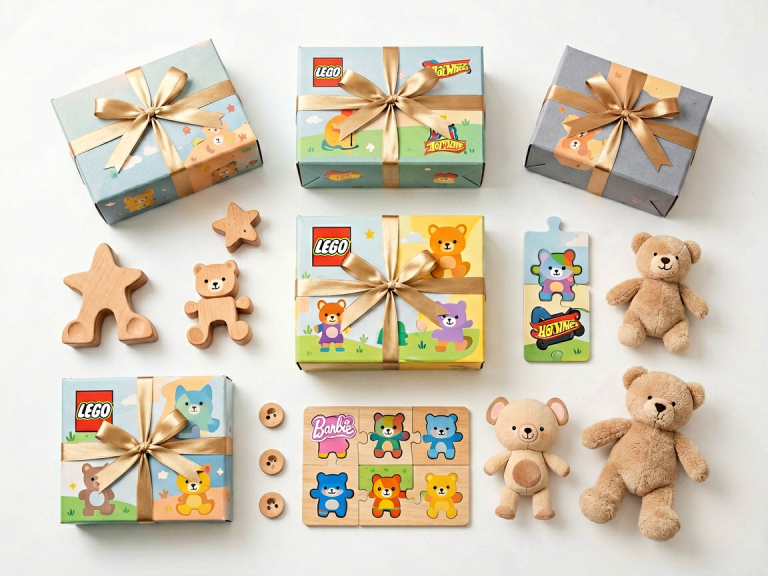
In an age where children’s attention is constantly captured by glowing screens—tablets, smartphones, and interactive video games—the humble box of wooden blocks, the intricate puzzle, or the metal brainteaser might seem like relics of a bygone era. Yet, a quiet countermovement is underway. Parents, educators, and developmental psychologists are rediscovering the profound value of screen-free logic toys. These tangible, analog playthings are not merely nostalgic indulgences; they are powerful tools for cognitive development, problem-solving, and emotional resilience. Unlike digital apps that often provide instant gratification and passive consumption, screen-free logic toys demand active engagement, patience, and hands-on manipulation. This article explores why these seemingly simple objects remain indispensable in a hyper-digital world, delving into their cognitive, social, and educational benefits while offering specific examples and practical insights for integrating them into modern childhood.
—
1. The Cognitive Foundations: How Analog Play Shapes the Brain
The human brain learns best through multisensory interaction with the physical world. When a child picks up a solid wooden puzzle piece or a magnetic tile, they are not just solving a visual problem—they are engaging their fine motor skills, spatial awareness, and tactile feedback systems in a way that no touchscreen can replicate. Screen-free logic toys, such as tangrams, Rubik’s Cubes, and interlocking construction sets, require the child to rotate, fit, and test physical constraints. This process strengthens neural pathways associated with executive function—the set of mental skills that include working memory, flexible thinking, and self-control.
A 2020 study published in *Frontiers in Psychology* found that children who regularly engaged with physical puzzles and building blocks showed significantly higher scores in spatial reasoning and nonverbal problem-solving compared to peers who spent equivalent time on digital puzzle apps. The reason lies in the three-dimensional nature of analog toys. When a child tries to fit a star-shaped block into a square hole, they must mentally rotate the object, estimate dimensions, and adjust their grasp—all skills that translate directly into mathematical and engineering abilities later in life. Moreover, screen-free logic toys often lack the "undo" button. Mistakes require physical correction, teaching children that failure is part of the process and that persistence leads to mastery. This builds grit and frustration tolerance, emotional competencies that are increasingly rare in an era of swipe-and-reset digital games.
—
2. Fostering Creativity and Open-Ended Exploration
One of the greatest advantages of screen-free logic toys is their open-ended nature. Unlike many digital games that follow a linear narrative with predetermined solutions, analog logic toys often allow for multiple approaches and outcomes. Consider a set of wooden geometric shapes: a child can use them to recreate an image from a card, or they can ignore the instructions entirely and build an imaginary castle. This flexibility encourages divergent thinking—the ability to generate many possible solutions to a problem—which is a cornerstone of creativity.
Take Lego as a prime example. While Lego has ventured into digital sets and video games, the classic brick remains a screen-free logic toy par excellence. A child building a Lego bridge must apply principles of physics: weight distribution, symmetry, and balance. But they can also add a dragon, a spaceship, or a tree house. The toy does not dictate the story; the child does. This contrasts sharply with many digital logic puzzles, which often confine a child to a single, optimized solution. Screen-free logic toys, by their very tangibility, invite trial and error, improvisation, and personal expression. They teach that there is not always one right answer, but rather a landscape of possibilities shaped by the child’s own imagination.
Furthermore, the absence of a built-in timer or leaderboard removes the pressure of performance anxiety. A child can spend hours refining a single puzzle or deconstructing a structure and rebuilding it differently. This unhurried, flow-state play is critical for developing deep concentration and intrinsic motivation—traits that are eroded when children are constantly lured by the dopamine hits of digital rewards.
—
3. Social Interaction and Collaborative Problem-Solving
Screen-free logic toys also excel at bringing people together. In a world where many digital games isolate players into individual screens or anonymous online interactions, analog toys invite face-to-face cooperation. A family huddled around a cooperative board game like *Rush Hour* or a giant floor puzzle must communicate, negotiate, and share strategies. These interactions build essential social skills: taking turns, listening to others’ ideas, and managing disagreements.
Consider a classic logic maze such as a marble run. When two children work together to build a track that guides a marble from start to finish, they must discuss angles, slopes, and obstacles. If the marble falls off, they troubleshoot together. This collaborative problem-solving mirrors real-world team dynamics and teaches children that intelligence is not a solitary pursuit but a collective achievement. Research from the University of Cambridge’s Centre for Play in Education, Development, and Learning highlights that cooperative play with physical objects enhances perspective-taking and theory of mind—the ability to understand that others have different thoughts and feelings.
Even solitary screen-free logic toys, like a metal disentanglement puzzle, can become social when a child asks a parent or friend for a hint. The conversation that follows—“Why did you twist it that way? Try rotating it counterclockwise”—becomes a language-rich learning moment. In contrast, digital logic games often provide hints through silent pop-ups or videos, bypassing the human interaction that scaffolds deeper understanding.
—
4. Tangibility and Embodied Learning: Why Physicality Matters
The phrase “screen-free” is not merely a label; it describes a fundamental pedagogical principle. Embodied cognition theory posits that thinking is not confined to the brain alone but is shaped by the body’s interactions with the physical environment. When a child manipulates a magnetic geometry set or a wooden shape-sorter, they are not just “thinking” about the problem—they are feeling it through their hands, eyes, and kinesthetic sense. The weight of a wooden piece, the smoothness of a plastic surface, the satisfying click of interlocking gears—all these sensory inputs create a richer, more memorable learning experience.
For instance, a screen-free logic toy like Pattern Blocks—a set of plastic shapes in six colors—allows a child to physically rotate and flip pieces to create symmetrical designs. On a digital tablet, rotating a shape is a two-finger gesture; in reality, it requires a child to coordinate thumb and index finger, perceive the shape’s orientation in space, and adjust their grip. This fine motor feedback is crucial for brain development in early childhood, strengthening the connections between the motor cortex and the prefrontal cortex. A 2018 meta-analysis in *Developmental Science* concluded that hands-on manipulation of physical objects significantly improves mathematical understanding and problem-solving transfer compared to virtual manipulation, especially for children under eight.
Moreover, screen-free toys do not suffer from the distracting animations and advertisements that often plague educational apps. The child’s attention is entirely on the task, not on a flashing banner urging them to upgrade to the premium version. This focused, uninterrupted engagement is the very foundation of deep learning.
—
5. Timeless Examples: A Closer Look at Screen-Free Logic Toys
To fully appreciate the power of screen-free logic toys, it is helpful to examine specific types that have stood the test of time.
Tangrams – This ancient Chinese puzzle consists of seven flat pieces (tans) that can be arranged to form hundreds of silhouettes. It challenges spatial visualization and geometric reasoning while requiring only a few simple shapes. Studies show that tangram play improves mental rotation skills, which are linked to higher achievement in STEM fields.
Rubik’s Cube – Perhaps the most iconic logic puzzle of the modern era, the 3×3 cube demands sequential thinking, pattern recognition, and memory. Solving it requires learning algorithms, but more importantly, it teaches a systematic approach to complex problems. The recent resurgence of speed cubing has also fostered a vibrant community where children teach each other in person, face-to-face.
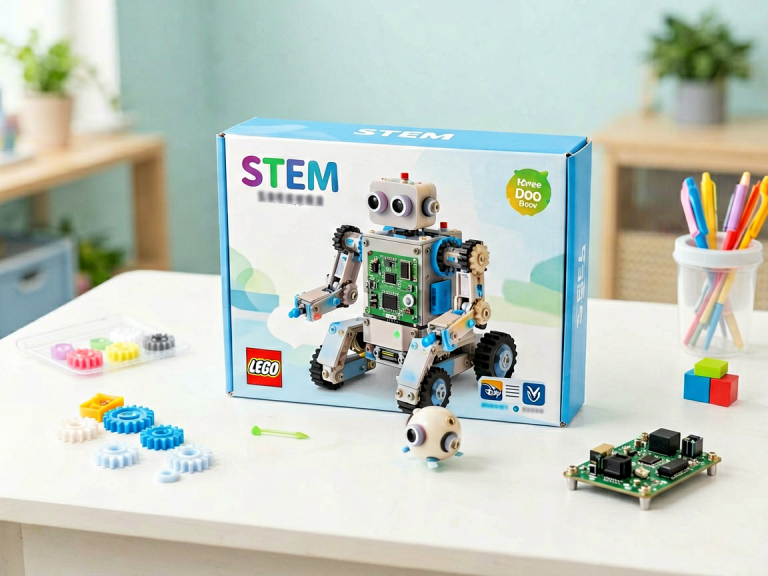
Construction Kits (e.g., K’NEX, Meccano, Tinkertoys) – These sets introduce mechanical principles such as leverage, torque, and structural stability. Building a working crane or a bridge that can hold weight involves experimentation and physical testing. Unlike virtual simulations, a real construction collapses if the design is flawed—a powerful, visceral lesson in engineering.
Logic Board Games – Games like *Guess Who?*, *Clue*, *Mastermind*, and *Settlers of Catan* require deductive reasoning, logical inference, and strategic planning. They are screen-free by nature and often involve bluffing, memory, and social deduction. These games sharpen critical thinking while building social bonds.
Magnetic Tiles (e.g., Magna-Tiles, Connetix) – A modern classic, these translucent tiles snap together with magnets. They teach geometry, symmetry, and fractions as children build 2D and 3D structures. The open-ended nature allows for infinite creativity, and the magnetic feedback provides immediate physical satisfaction.
Maze Puzzles and Marble Runs – From wooden labyrinth puzzles to complex plastic tracks, these toys develop planning skills, spatial sequencing, and cause-and-effect thinking. A child learns that a slight tilt determines success or failure, and they adjust their approach accordingly.
—
6. Balancing the Digital and the Analog: A Practical Guide
No article advocating screen-free logic toys should descend into technophobia. Digital tools have their place in education and entertainment. The goal is not to eliminate screens but to strike a healthy balance that maximizes the unique benefits of each medium. Children today will inevitably need digital literacy, but that should not come at the expense of the foundational cognitive skills that screen-free play provides.
Parents and educators can implement a few simple strategies:
- Create dedicated “unplugged” times—such as after-school hours or weekend mornings—when only analog toys are available. This allows the brain to reset from the constant stimulation of screens.
- Rotate toy access to maintain novelty. Having too many options can overwhelm a child; a curated selection of five to seven screen-free logic toys, changed every few weeks, encourages deeper engagement.
- Model the behavior. When adults sit down to solve a puzzle or build a structure alongside their children, they signal that this activity is valued and enjoyable. Collaborative play also strengthens relationships.
- Choose quality over quantity. Well-made wooden puzzles, durable magnetic tiles, and classic board games may cost more initially but last for years and can be passed down. In contrast, cheap plastic toys often break quickly and lack the precise engineering needed for satisfying play.
- Integrate storytelling. A logic toy need not be purely analytical. A child sorting geometric shapes can be told a story about a “triangle family looking for their home.” This weaves narrative into logic, enhancing engagement.
—
Conclusion: The Screen-Free Imperative
Screen-free logic toys are far more than simple pastimes. They are the gymnasiums of the mind, where children flex their reasoning muscles, learn from failure, and develop the patience and creativity that no algorithm can replicate. In an era of accelerated digital saturation, these tangible, tactile, and often beautifully simple objects offer an antidote: a space for deep thought, authentic social connection, and joyful discovery. The next time a child picks up a wooden puzzle or a Rubik’s Cube, they are not just playing—they are building the cognitive architecture that will serve them for a lifetime. Let us champion these timeless tools, not against technology, but alongside it, ensuring that the next generation grows up with hands as active as their thumbs, and minds as free as their imaginations.