The Enduring Power of Screen-Free Hands-On Learning Toys: Building Minds Through Tangible Play
Introduction: A Digital Pause for Authentic Growth
In an era where toddlers swipe before they speak and preschoolers navigate tablets with surprising dexterity, the humble wooden block, the chemistry set, and the magnetic building tile may seem like relics of a bygone age. Yet, paradoxically, as screens dominate every corner of modern life—from classrooms to living rooms—a quiet but powerful counter-movement is gaining momentum. Parents, educators, and child development experts are rediscovering what generations before us knew intuitively: the most profound learning happens not through pixels, but through touch, manipulation, and real-world cause and effect. Screen-free hands-on learning toys are not merely nostalgic artifacts; they are essential tools for cognitive, social, and emotional development. This article explores why these tangible playthings remain irreplaceable in the digital age, how they shape young minds, and why integrating them into daily learning routines is more critical now than ever.
The Neuroscience of Tactile Learning: Why Hands Matter
To understand the value of screen-free hands-on toys, we must first look at how the human brain learns. Neuroscience has repeatedly demonstrated that multisensory engagement—particularly the sense of touch—activates neural pathways in ways that passive observation cannot. When a child picks up a wooden puzzle piece, turns it in their hand, feels its weight, and fits it into a carved slot, their brain is not just processing visual information. The tactile feedback, the proprioceptive awareness of hand position, and the motor planning required all fire simultaneously, creating rich, interconnected neural networks.
This is fundamentally different from swiping a digital puzzle app. On a screen, the puzzle piece glides effortlessly; there is no resistance, no texture, no physical consequence of a mistake. The brain receives a simplified, two-dimensional input. Researchers have found that children who learn geometric concepts with physical blocks demonstrate better spatial reasoning and mental rotation abilities than those who use virtual counterparts. The reason is simple: physical manipulation embeds abstract concepts into concrete, body-based experience. A child who builds a tower with real blocks feels the instability as it wobbles; they internalize gravity, balance, and structural integrity through their muscles, not just their eyes.
Moreover, hands-on learning toys activate the reward system in a uniquely satisfying way. The "click" of a connecting snap-together piece, the satisfying thud of a dropped marble, the snap of a magnetic rod clicking into place—these micro-moments of success release dopamine, reinforcing persistence and problem-solving. Screen-based interactions, by contrast, often provide instant gratification with little effort, which can undermine the development of patience and frustration tolerance. In short, screen-free toys train the brain to learn through doing, not just watching.
Types of Screen-Free Hands-On Learning Toys and Their Unique Contributions
The category of screen-free hands-on learning toys is vast, spanning ages from infancy through adolescence. Each type targets specific developmental domains, and together they form a comprehensive toolkit for holistic growth.
Construction and Building Toys: Engineering the Young Mind
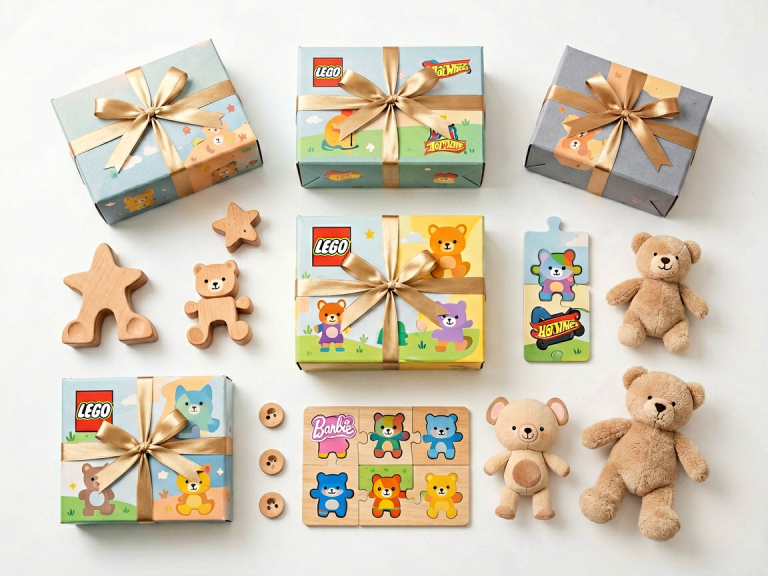
Construction toys—ranging from classic wooden blocks to LEGOs, magnetic tiles, and geodesic dome kits—are arguably the most versatile. They teach spatial awareness, symmetry, balance, and basic physics. More importantly, they foster what psychologist Carol Dweck calls a "growth mindset." A structure collapses? The child must troubleshoot: Was the base too narrow? Did I place the center of gravity too high? This trial-and-error process builds resilience and analytical thinking. Unlike a video game where the solution is often pre-programmed, a block tower demands creative, iterative problem-solving.
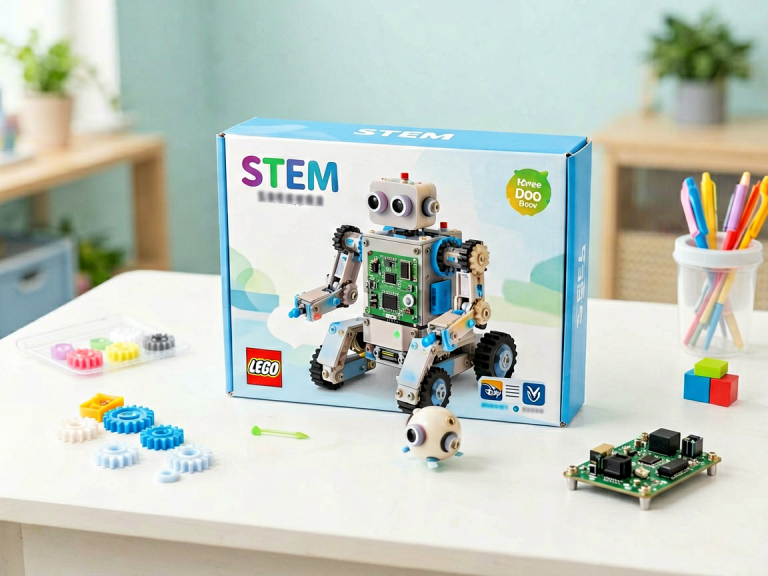
For older children, advanced construction kits like K'NEX or robotic arm kits (without digital controllers) introduce principles of engineering and mechanics. They learn about gears, levers, and pulleys by physically meshing cogs and adjusting tensions. This kinesthetic understanding forms a foundation that later makes formal physics concepts intuitive rather than abstract.
Puzzles and Pattern Games: Organizing the Logical Mind
Jigsaw puzzles, tangrams, and logic puzzle sets like Rubik's Cubes or coGAT-style block designs are deceptively simple. They train visual-spatial processing, working memory, and sequential reasoning. Unlike a digital puzzle that can be solved by trial-and-error without deep thought, physical puzzles require the child to hold multiple pieces in mind, compare shapes, and plan moves. The tactile act of rotating a piece in one's hand to visualize its orientation is a cognitive exercise that cannot be replicated on a flat screen.
Pattern-based toys—such as bead sequencing sets, mosaic pegboards, or pattern block kits—also develop mathematical thinking. Children who arrange colored tiles to replicate a given design are essentially learning about symmetry, fractions, and geometric transformations. These activities are especially valuable in the early years, when the brain is most receptive to concrete representation of abstract mathematical ideas.
Science and Nature Kits: Inquiry Through Discovery
Screen-free science kits—microscopes, chemistry sets (with safe, non-toxic materials), magnet sets, crystal-growing labs, and nature exploration kits—ignite curiosity in a way that a YouTube science video cannot. When a child mixes baking soda and vinegar in a real bowl, they see, smell, and feel the fizzing reaction. The surprise and delight are authentic. They can touch the bubbles, notice the warmth of the reaction, and experiment with different quantities. This hands-on inquiry teaches the scientific method implicitly: hypothesis, experiment, observation, conclusion.
Similarly, a simple magnifying glass or bug-catching kit encourages outdoor exploration. Children learn to observe detail, classify organisms, and ask questions. These experiences build a sense of wonder and a connection to the natural world that screens often replace with curated, sanitized versions of reality.
Arts, Crafts, and Modeling: Creative Expression with Physical Feedback
Beyond structured learning, free-form creative toys—clay, playdough, weaving looms, knitting kits, beadwork, and model-making—offer profound benefits. They develop fine motor skills, hand-eye coordination, and bilateral coordination. More importantly, they provide an outlet for emotional expression. A child who is frustrated can pound clay; a child who is anxious can focus on the repetitive rhythm of weaving. Screens, by contrast, tend to flatten emotional range.
Creating something from raw materials also teaches delayed gratification and pride in craftsmanship. A finished clay sculpture or a knitted scarf has real presence; it can be held, displayed, and gifted. This tangible reward system builds a sense of competence and agency that no digital trophy can match.
Screen-Free vs. Screen-Based Learning: A Critical Comparison
Proponents of educational apps and digital learning tools often argue that screens offer efficiency, personalization, and access to infinite content. While these points have merit, they overlook fundamental differences in how learning occurs.
Depth vs. Breadth. Screen-based learning tends to favor breadth—flitting from one topic to another through hyperlinks and interactive animations. Hands-on play fosters depth. A child building a bridge with blocks may spend 45 minutes focused on a single problem, iterating and refining. This sustained attention is precisely what modern children need, yet digital media often trains them for short bursts of engagement.
Passivity vs. Agency. Educational apps often position the child as a consumer of content, reacting to prompts. Hands-on toys require the child to be an agent—to choose, to act, to fail, to create. This distinction is critical for developing executive function skills like planning, self-monitoring, and impulse control. A child playing with blocks must decide what to build, gather materials, and adjust their plan. A child on a tablet is guided by the app's algorithm.
Social Learning. Screen-free toys naturally invite collaboration. Two children building with magnetic tiles must negotiate, share, and communicate. They learn to resolve conflicts, take turns, and offer help. Screen-based play, even multiplayer gaming, often lacks the nuanced non-verbal communication and physical proximity that builds empathy and social skills. A child who sees their friend's facial expression after a tower falls learns more about compassion than one who sends a "thumbs up" emoji.
Attention and Overstimulation. Screens are designed to be highly stimulating—bright colors, rapid transitions, sound effects. This can overstimulate developing nervous systems, leading to difficulty with calm, focused play. Hands-on toys, by contrast, offer a slower pace. The sound of wooden blocks clacking, the texture of smooth stones, the gentle weight of a fabric doll—these inputs are calming and grounding. Many occupational therapists use sensory-rich hands-on materials specifically to help children with regulation and attention issues.
Integrating Screen-Free Hands-On Learning Toys into Modern Life
Given the overwhelming evidence in favor of tangible play, how can parents, educators, and caregivers intentionally incorporate these toys into a world saturated with screens?
First, create an environment that invites hands-on exploration. Designate a low, accessible shelf in the living room for open-ended toys like blocks, magnifying glasses, and art supplies. Rotate toys regularly to maintain interest. Remove the assumption that toys must be "educational" in a didactic sense; a set of wooden planks or a pile of natural objects (pinecones, shells, stones) can be more educational than a pre-packaged learning kit.
Second, model hands-on engagement. Children imitate what they see. If adults are constantly on phones, children will gravitate toward screens. When an adult sits down to build with LEGOs, knit, or tinker with a broken gadget, they signal that hands-on activities are valued and satisfying. Family game nights, cooking together (measuring ingredients, kneading dough), or gardening are powerful forms of screen-free learning.
Third, set boundaries for screen time, but use them sensibly. The American Academy of Pediatrics recommends that for children aged 2 to 5, screen time should be limited to one hour per day of high-quality programming. For older children, the key is balance. Prioritize screen-free learning during school hours or after-school hours, especially during the critical early years when brain plasticity is highest.
Finally, resist the pressure to digitize everything. Many schools are pivoting back to hands-on math manipulatives (e.g., base-ten blocks, fraction tiles) after years of over-reliance on math apps. Parents and educators should advocate for learning environments that respect the body's role in learning. A child who has built a model of the solar system with papier-mâché and painted planets remembers the relative sizes and positions far better than one who watched a video.
Conclusion: The Tangible Future of Learning
The resurgence of interest in screen-free hands-on learning toys is not a rejection of technology—it is a recognition of its limits. Screens are tools, not teachers. They can deliver information, but they cannot build understanding. Understanding requires the whole body: the hands that grasp, the eyes that judge distance, the ears that hear the crack of a breaking piece, the heart that swells with pride at a completed creation.
In a world that increasingly values speed and efficiency, hands-on learning is a slow, deliberate, and deeply human process. It teaches patience, creativity, resilience, and collaboration—qualities that no algorithm can replicate. As we prepare children for an uncertain future, we must equip them not just with digital fluency, but with the tactile wisdom that comes from building, creating, and fixing things with their own hands. The wooden block, the chemistry set, the sewing needle, the clay pot—these are not outdated artifacts. They are timeless bridges between the mind and the world, and they will continue to shape the innovators, thinkers, and creators of tomorrow.
Let us put down the tablet, pick up the puzzle piece, and remember that the most profound learning happens when we are hands-on, fully present, and truly engaged with the real world. That is the gift of screen-free learning toys—a gift that keeps giving, one touch at a time.