Choosing Age-Appropriate Toys for Elementary School Children: A Guide for Parents and Educators
Introduction: Why Age Appropriateness Matters
Selecting the right toys for elementary school children is far more than a simple matter of entertainment. During the elementary years—roughly ages 6 to 12—children undergo rapid cognitive, social, emotional, and physical development. A toy that challenges a first grader may frustrate a fifth grader, while a toy designed for older kids might be unsafe or incomprehensible to a younger child. Age-appropriate toys not only match a child’s current abilities but also stretch them just enough to encourage growth without causing discouragement. They can foster creativity, problem-solving skills, cooperation, empathy, and even resilience. Moreover, inappropriate toys can lead to boredom, misuse, or safety hazards such as choking risks from small parts. This article breaks down the specific developmental needs of elementary children at different stages and offers practical guidance on choosing toys that are both engaging and beneficial.
Developmental Milestones for Elementary Kids
Before diving into specific toy categories, it is helpful to understand the broad developmental trajectory of elementary-aged children. Psychologist Jean Piaget described this period as the “concrete operational stage,” where children begin to think logically about concrete events but still struggle with abstract or hypothetical concepts. They become more capable of classification, reversibility, and understanding cause-and-effect relationships. Socially, they move from parallel play in early childhood to more cooperative and rule-based play. They start to form friendships based on shared interests and develop a sense of fairness and competition. Physically, fine and gross motor skills improve dramatically: handwriting becomes neater, sports become more coordinated, and complex manual tasks become possible. Emotionally, children develop greater self-regulation and empathy, though they may still struggle with disappointment or frustration. Recognizing these milestones helps parents and educators choose toys that align with a child’s natural curiosity and growing capabilities.
Toys for Early Elementary (Grades K-2): Building Foundations
Children in kindergarten through second grade (roughly ages 5 to 7) are still in a stage of mastering basic skills. They are learning to read, write, and perform simple arithmetic. Their attention spans are relatively short, but they are eager to explore and imitate the world around them. Toys for this age group should encourage active, hands-on learning and imaginative play.
Construction and Building Toys: Classic options like large LEGO Duplo blocks, wooden building blocks, or magnetic tiles are excellent choices. They help develop spatial awareness, fine motor control, and early engineering concepts. Children can build towers, houses, or simple machines, and they often engage in trial-and-error problem-solving when a structure collapses.
Pretend Play Sets: At this age, pretend play is still highly valuable. Dress-up costumes, play kitchens, doctor kits, and toy cash registers allow children to act out adult roles, which develops language skills, social understanding, and emotional expression. Look for sets that are open-ended rather than overly scripted; a simple set of animal figures can spark more creativity than a branded movie tie-in.
Simple Board and Card Games: Games with minimal rules, such as “Candy Land,” “Chutes and Ladders,” or matching memory card games, teach turn-taking, counting, and following directions. They also provide a gentle introduction to winning and losing, which builds emotional resilience. Cooperative games, where all players work together toward a common goal, are especially good for fostering teamwork and reducing competitive stress.
Art and Craft Supplies: Chunky crayons, washable markers, finger paints, safety scissors, and modeling clay allow children to express themselves creatively. Engaging in art supports fine motor skill development and encourages decision-making (e.g., “Which color should I use?”). It also provides a calming, focused activity that can balance more energetic play.
Puzzles and Sorting Toys: Simple jigsaw puzzles with 20 to 60 pieces, as well as shape sorters and pattern blocks, help children practice visual discrimination and logical thinking. These toys are excellent for building persistence, as children learn to try different strategies when pieces do not fit.
Toys for Middle Elementary (Grades 3-4): Encouraging Exploration
Children in third and fourth grades (roughly ages 8 to 9) have developed stronger reading and math skills, longer attention spans, and a greater interest in understanding how things work. They enjoy more complex challenges and begin to engage in strategy and planning. Socially, they are forming closer friendships and may enjoy small-group activities.
STEM and Science Kits: This is a prime age for introducing basic science experiments, such as crystal-growing kits, simple circuit sets, or microscopes for examining everyday objects. Kits that allow children to build a working volcano, a solar-powered car, or a water filtration system combine hands-on fun with learning about cause and effect. Ensure that the kit includes clear instructions and adult supervision as needed.
Advanced Building Sets: Traditional LEGO sets with more pieces (e.g., 300–600 pieces) or construction sets like K’NEX or Meccano challenge children to follow complex instructions and create moving models. These toys strengthen spatial reasoning and fine motor skills while teaching patience and attention to detail.
Strategy Games and Puzzles: Games like “Blokus,” “Qwirkle,” or “Catan Junior” require more strategic thinking, planning ahead, and adapting to opponents’ moves. Logic puzzles, Sudoku (with numbers or pictures), and brain teasers also sharpen deductive reasoning. Card games such as “Uno” or “Skip-Bo” reinforce number recognition and sequence.
Creative Writing and Storytelling: Toys that encourage narrative creation, such as story cubes (dice with pictures), blank books and markers, or magnetic poetry sets, help children develop literacy skills and imagination. Some board games, like “Rory’s Story Cubes” or “Mad Libs,” combine language play with social interaction.
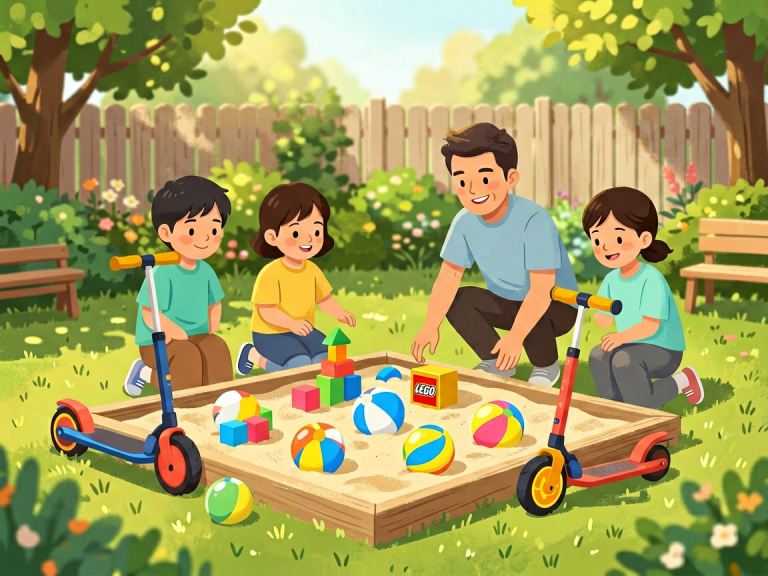
Sports Equipment and Outdoor Toys: At this age, children often show improved coordination and enjoy organized sports. Age-appropriate balls (soccer, basketball, football), jump ropes, hula hoops, and bicycle accessories promote physical activity and gross motor development. Simple sports sets that include goals or nets allow for unstructured play or friendly matches with peers.
Collectible and Trading Toys: Many 8- and 9-year-olds enjoy collecting items like trading cards, small figurines, or rocks and minerals. While these toys may seem simple, they teach categorization, comparison, and social negotiation (e.g., trading duplicates). Ensure that collectibles do not contain choking hazards and are not so expensive as to cause competitive pressure.
Toys for Upper Elementary (Grades 5-6): Fostering Independence and Critical Thinking
Children in fifth and sixth grades (ages 10 to 12) are on the cusp of adolescence. They can handle abstract concepts, complex rules, and sustained projects. They are becoming more independent and may prefer activities that challenge them intellectually and allow for personal expression. Social dynamics become more nuanced, and peer influence grows.
Advanced Construction and Robotics Kits: Robotics kits like LEGO Mindstorms, VEX Robotics, or more advanced electronic building sets (e.g., Snap Circuits, Arduino-compatible kits) let children design, build, and program their own machines. These toys teach engineering, coding, and troubleshooting. They can be used alone or in groups, and many encourage iterative design—a valuable skill for problem-solving.
Strategy Board Games and Role-Playing Games: Complex board games such as “Settlers of Catan,” “Ticket to Ride,” “Pandemic,” or “Risk” require resource management, negotiation, long-term planning, and adaptation to changing conditions. Role-playing games (RPGs) like “Dungeons & Dragons” (with simplified rules for younger players) foster creativity, storytelling, and cooperative puzzle-solving. These games can be played with friends and help develop social skills like compromise and conflict resolution.
Coding and Digital Creation Tools: Many upper-elementary children are ready to learn basic coding through platforms like Scratch, Code.org, or physical coding toys like Sphero robots. They can create their own animations, games, or interactive stories. These tools build computational thinking and digital literacy, which are essential in today’s world. However, screen time should be balanced with offline activities.
Creative and Fine Arts Materials: At this age, children can handle more sophisticated art supplies: acrylic paints, pastels, clay for sculpting, jewelry-making kits, or woodworking tools (with supervision). They may enjoy designing and sewing simple projects, knitting, or building model airplanes. These activities promote patience, attention to detail, and self-expression.
Science and Nature Exploration Kits: Chemistry sets, rock tumbling kits, telescopes, or more advanced microscopes allow children to conduct independent investigations. They can follow guided experiments or create their own hypotheses. Such toys nurture scientific curiosity and analytical thinking.
Journaling and Goal-Setting Tools: While not traditional “toys,” items like personal notebooks with locks, planners, or goal trackers can help older elementary children develop self-reflection and organizational skills. Some kids enjoy bullet journaling or creative writing journals with prompts. These tools support emotional growth and autonomy.
Safety Considerations When Selecting Toys
Age appropriateness is not only about developmental fit but also about physical safety. For all elementary children, avoid toys with sharp edges, toxic materials, or small parts that could be choking hazards (especially if there are younger siblings at home). Check for certifications from recognized safety organizations (e.g., ASTM International, the Consumer Product Safety Commission). Be cautious with toys that require electricity, batteries, or small magnets, which can be harmful if swallowed. Online purchases should be scrutinized for accurate age ratings and customer reviews regarding durability and safety. Additionally, consider the child’s individual maturity and interests: a toy rated for ages 8+ might be perfectly safe for a mature 7-year-old or too childish for an 11-year-old. Always supervise play with new toys, especially those involving chemicals or building instructions, and teach children how to use toys properly.
Conclusion: Balancing Fun and Learning
Choosing age-appropriate toys for elementary kids is an investment in their development. The best toys are those that spark joy, challenge the mind, and encourage interaction with others. They should not feel like chores or drills; rather, they should invite exploration and discovery. As children grow, their toy preferences will shift from concrete, hands-on items to more abstract, strategic, and creative ones. By aligning toy choices with each stage of development, parents and educators can support a child’s natural curiosity and lay the groundwork for lifelong learning. Remember that no single toy fits every child—observe your child’s interests, listen to their requests, and be open to trying new things. Ultimately, the most important element is the engagement and love of play itself, which remains a powerful engine for growth all through the elementary years and beyond.