The Playful Blueprint: How to Choose Age-Appropriate Toys for Preschoolers
In a world overflowing with flashy plastic gadgets, glowing screens, and battery-operated noise-makers, the simple act of choosing a toy for a three- to five-year-old can feel overwhelming. Yet the stakes are higher than many parents realize. A child’s preschool years are a critical window for cognitive, social, emotional, and physical development. The right toy, at the right stage, can spark curiosity, build resilience, and lay the foundation for lifelong learning. Conversely, a toy that is too advanced may frustrate a child, while one that is too simplistic can bore them, stunting their growth. This article explores the logic behind age-appropriate toys for preschoolers, offering a practical framework for caregivers, educators, and gift-givers who want to nurture, not merely entertain.
Understanding the Preschooler’s Developmental Landscape
Before diving into specific toy categories, it is essential to grasp what a preschooler is capable of. Children between the ages of three and five are experiencing a burst of cognitive development. They move from purely concrete thinking toward symbolic play, begin to understand cause and effect, and develop rudimentary problem-solving skills. Their language expands rapidly, vocabulary grows, and they start to use sentences to express complex ideas. Physically, they are refining both gross motor skills—running, jumping, climbing—and fine motor skills—cutting with scissors, drawing circles, buttoning buttons. Socially, they are learning to share, take turns, negotiate conflicts, and engage in cooperative play.
Age-appropriate toys are not about coddling or restricting; they are about matching the toy’s demands to the child’s current abilities, with just enough of a stretch to encourage growth. The concept of the “zone of proximal development,” introduced by psychologist Lev Vygotsky, is especially relevant here: toys should challenge a child just beyond their independent capacity, but within reach with some guidance or practice.
Key Categories of Age-Appropriate Toys for Preschoolers
The best toys for this age group support multiple areas of development simultaneously. Below, we break them down by domain, offering concrete examples and explaining why each toy works.
2.1 Toys That Spark Creativity and Imagination
Preschoolers are natural storytellers. Their minds create elaborate narratives where a cardboard box becomes a spaceship and a stick transforms into a magic wand. Toys that nurture imaginative play are therefore not just fun—they are essential for cognitive flexibility, language development, and emotional processing.
Dress-up clothes and costumes allow children to experiment with roles. A simple cape and crown can help a shy child practice being a brave king or queen. Puppets, dolls, and action figures also invite storytelling. When children give voices to their toys, they practice dialogue, sequencing, and perspective-taking. Open-ended building sets, such as wooden blocks or interlocking bricks with no fixed instructions, encourage children to design and redesign, fostering divergent thinking. Avoid toys that dictate a single story or outcome—preschoolers need the freedom to invent their own.
2.2 Toys That Build Fine and Gross Motor Skills
Physical development in preschoolers is rapid but uneven. Fine motor skills—the small muscle movements in fingers and hands—are crucial for later writing, drawing, and self-care tasks like zipping a jacket. Gross motor skills—coordination of larger muscle groups—build confidence for playground adventures and sports.
For fine motor skills: threading beads, lacing cards, playdough, and pegboards are superb choices. They require hand-eye coordination and pincer grip. Simple puzzles with knobbed pieces (not too many, but enough to challenge) also help. Avoid tiny choking hazards, but do not shy away from toys that require precision—preschoolers are often more capable than we assume.
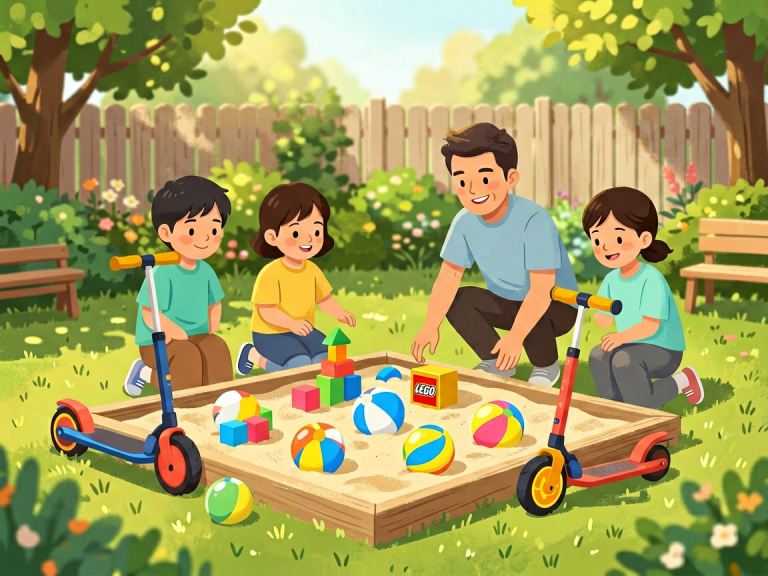
For gross motor skills: tricycles, balance bikes, small climbing structures, and balls of various sizes are ideal. Jump ropes, hula hoops, and beanbag toss games encourage whole-body movement. A simple nature walk with a bucket for collecting leaves and rocks doubles as both gross motor and sensory exploration. The key is that the equipment should be appropriately scaled—a full-sized basketball hoop will only frustrate a four-year-old, while a lowered hoop or a soft foam ball builds success.
2.3 Toys That Encourage Language and Early Literacy
Preschoolers are language sponges. They absorb new words at an astonishing rate, and toys can accelerate this process by providing rich vocabulary in context.
Picture books with repetitive phrases (e.g., *Brown Bear, Brown Bear, What Do You See?*) allow children to “read along” and predict text, building pre-reading skills. Alphabet puzzles, magnetic letters, and sound-matching games turn letter recognition into a tactile, playful experience. However, avoid pushing formal reading instruction too early. The goal is exposure and enjoyment. Storytelling cards—cards with simple illustrations that children can arrange to tell a story—also promote oral language and sequencing. Electronic toys that speak single words or phrases can be useful in moderation, but they should never replace human interaction. A parent or caregiver commenting on a toy (“Look, the blue truck is driving fast!”) provides far richer language than any pre-recorded voice.
2.4 Toys That Teach Logic, Math, and Problem-Solving
Preschoolers are beginning to understand patterns, counting, classification, and simple cause-and-effect relationships. Toys that tap into these cognitive skills should feel like play, not schoolwork.
Sorting and matching games are classic. For example, a set of colored bears or farm animals that can be sorted by color, size, or species helps children categorize and count. Simple board games like “Candy Land” or “First Orchard” introduce turn-taking and basic counting without overwhelming rules. Puzzles with four to twelve pieces are excellent for spatial reasoning. A child learns to rotate a piece, visualize the whole, and persist through trial and error. Construction sets with gears or magnets add an element of physical causality—turning one gear makes another move, which is a powerful early physics lesson. Avoid overly competitive games that might produce tears; the focus at this age should be on cooperation and process, not winning.
2.5 Toys That Foster Social-Emotional Growth
Social-emotional learning is perhaps the most overlooked domain in toy selection. Preschoolers are learning to identify and regulate their emotions, understand others’ feelings, and navigate friendships.
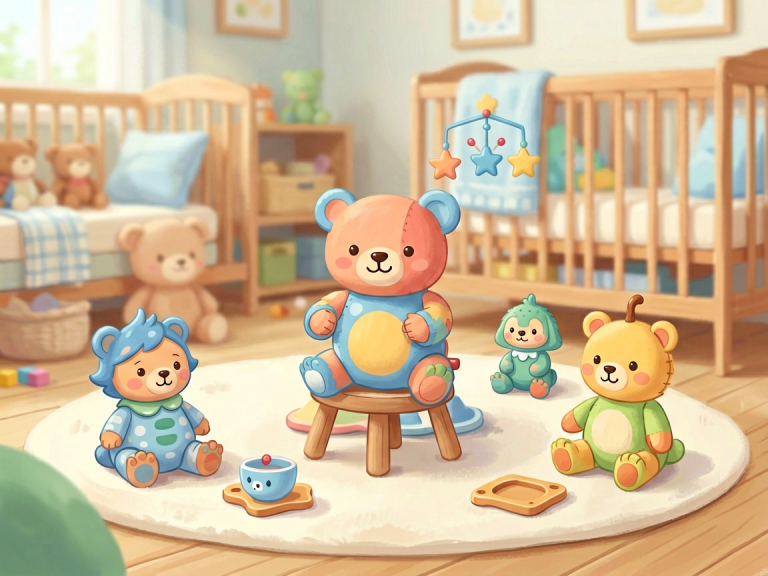
Cooperative games where everyone works together, such as “Hoot Owl Hoot!” or “The Sneaky, Snacky Squirrel,” teach patience and teamwork. Dolls and stuffed animals can serve as practice partners for empathy: a child can “feed” a hungry teddy or “bandage” a sad bunny, rehearsing nurturing behaviors. Emotion flashcards or “feelings” puzzles help children label emotions like frustrated, excited, or scared. A simple puppet that a parent uses to express a feeling can open a dialogue about what the child is experiencing. Avoid toys that encourage aggressive or solitary play exclusively; preschoolers need tools for connection.
What to Avoid: Common Pitfalls in Toy Selection
Even well-intentioned adults can fall into traps. One major mistake is buying toys that are “aspirational” rather than actual. A four-year-old may be enchanted by a complex LEGO set meant for eight-year-olds, but when she cannot assemble it, she may feel inadequate or lose interest. Similarly, many electronic toys with flashing lights and sounds often do all the work for the child, reducing opportunities for active engagement. A singing, dancing robot may hold attention for five minutes, but a set of wooden blocks can hold attention for fifty minutes of creative play.
Another pitfall is gender-stereotyping. Preschoolers are still forming their identities, and limiting toys to “boy toys” (trucks, tools) or “girl toys” (dolls, kitchen sets) restricts their development. A boy who plays with a doll learns caregiving; a girl who plays with a construction set learns spatial reasoning. Age-appropriateness is not about gender—it is about developmental stage.
The Role of Parents and Caregivers in Play
No toy, no matter how perfect, can replace the presence of a responsive adult. The most age-appropriate toy in the world will fall flat if a child is left to play alone without guidance or interaction. When a parent sits on the floor with a preschooler, building a tower together, they are not just playing—they are modeling language, problem-solving, and emotional regulation. A toy becomes age-appropriate when it invites this kind of shared experience.
As children grow, their needs change. A three-year-old may delight in a simple shape sorter; by age five, that same child may be ready for a memory matching game. Observing your child’s interests and struggles is the best guide. Watch which toys they return to again and again, and which ones gather dust. Trust their curiosity, but also offer gentle challenges. The goal is not to accelerate development, but to honor the natural rhythm of childhood.
In conclusion, age-appropriate toys for preschoolers are not about labels on a box. They are about respect—respect for where a child is right now, and faith in where they are headed. Choose toys that spark wonder, invite connection, and leave room for mistakes. The best toy is one that a child can transform, explore, and eventually outgrow, having gained a little more confidence along the way.