The Ultimate Age-Appropriate Toys Guide for Parents: Nurturing Development Through Play
Introduction
Every parent wants the best for their child, and choosing the right toys is a deceptively simple yet powerful way to support growth. A toy that is too advanced can frustrate a child, while one that is too simple may bore them, missing opportunities for learning. Age-appropriate toys are not just about safety—though that is paramount—but about matching a child’s cognitive, physical, social, and emotional abilities. This guide breaks down the key developmental stages from infancy to early adolescence, offering concrete recommendations and explaining *why* each toy type works. By the end, you will feel confident turning toy shopping into an investment in your child’s future.
Why Age-Appropriate Toys Matter
Children’s brains develop in predictable windows—often called “sensitive periods”—when they are primed to learn specific skills. For example, a six-month-old who puts everything in their mouth is exploring texture and cause-and-effect, not being naughty. A toy that rattles or squeaks provides immediate feedback, teaching the concept that actions produce reactions. Conversely, a toddler forced to play with a complex board game may withdraw, associating play with failure. Age-appropriate toys also reduce choking hazards, toxic materials, and sharp edges. More importantly, they build confidence: a child who successfully stacks blocks feels competent, motivating them to try harder challenges next time.
0–12 Months: Sensory Exploration and Bonding
*Developmental Focus*
Newborns rely almost entirely on their senses. By three months, they begin tracking objects with their eyes; by six months, they can grasp and transfer items between hands. Around nine months, object permanence (knowing something still exists when hidden) emerges.
*Recommended Toys*
- High-contrast black-and-white cards or mobiles (0–3 months): Infants’ vision is blurry; strong contrasts stimulate neural connections.
- Soft, textured rattles and teethers (3–6 months): Look for BPA-free silicone or natural wood. Different surfaces (bumpy, smooth, ribbed) provide tactile variety.
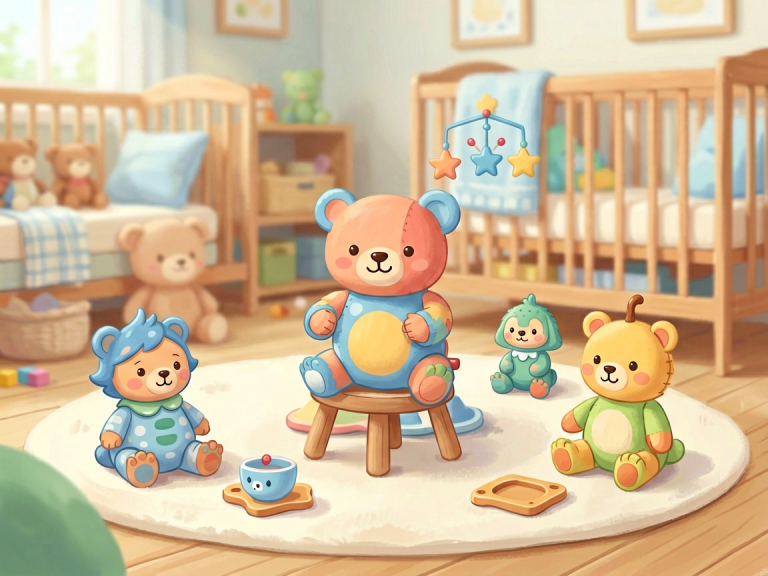
- Activity gyms with hanging toys (0–6 months): Encourage swatting and later grasping. Ensure mirrors are shatterproof.
- Board books with simple faces (6–12 months): Babies love looking at human expressions. Books with flaps or crinkle pages add surprise.
- Stacking cups or rings (6–12 months): They teach size relationships and hand-eye coordination.
*Safety Note*: Avoid any toy with small parts that can fit inside a toilet paper roll. All fabrics should be machine-washable.
1–2 Years: Walking, Naming, and Imitation
*Developmental Focus*
Toddlers transition from crawling to walking, and their vocabulary explodes from a handful of words to about 50 by age two. They imitate adult actions—pretending to talk on a phone or sweep the floor. Fine motor skills improve enough to turn pages and unscrew caps.
*Recommended Toys*
- Push-and-pull toys (e.g., a wooden snail on a string): These improve balance and coordination. Avoid long cords that could strangle.
- Shape sorters and simple puzzles (2–4 pieces with knobs): They combine visual recognition with problem-solving.
- Pretend-play sets (play kitchen utensils, toy phone, doll with a blanket): Encourage language by narrating actions: “I’m calling Grandma.”
- Chunky crayons or washable markers: Scribbling strengthens finger muscles for later writing. Use large paper taped to a table.
- Musical instruments (tambourine, maracas, xylophone): Rhythm aids auditory processing and cause-and-effect.
*Safety Note*: Batteries should be secured with screws. All edges must be rounded.
3–4 Years: Imagination, Cooperation, and Questions
*Developmental Focus*
Preschoolers are masters of “why?” Their fantasy world blossoms—they have imaginary friends, act out stories, and begin playing with peers rather than just alongside them. Gross motor skills allow hopping, jumping, and catching a large ball.
*Recommended Toys*
- Dress-up clothes and props (hats, capes, doctor kits): Dramatic play builds empathy and narrative skills. Include neutral items like scarves that can become anything.
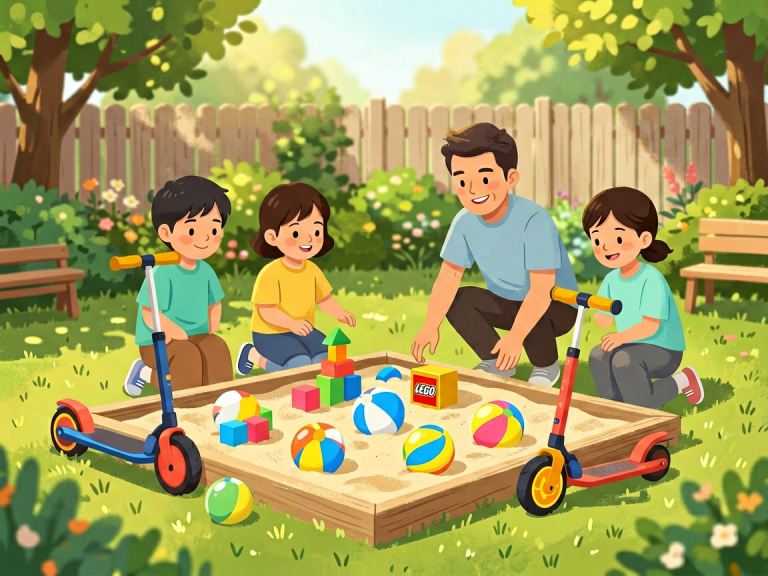
- Construction toys (large LEGO Duplo, magnetic tiles, wooden blocks): They teach spatial reasoning and early math (symmetry, balance).
- Simple board games (e.g., Candy Land, matching memory games): Taking turns and managing mild disappointment (“I didn’t win”) builds emotional regulation.
- Art supplies (washable paint, Play-Doh, safety scissors, glue sticks): Open-ended creativity develops divergent thinking.
- Trikes or balance bikes: Great for leg strength and coordination without the complication of pedals.
*Safety Note*: Choking hazards remain a concern—avoid tiny marbles or beads. Check paint for lead.
5–7 Years: Literacy, Rules, and Small Muscle Control
*Developmental Focus*
School-age children learn to read and write, follow multi-step instructions, and understand game rules. They can use scissors precisely, tie knots, and build intricate structures. Socially, they form friendships based on shared interests.
*Recommended Toys*
- Science kits (magnets, bug catchers, simple chemistry sets): Hands-on experiments satisfy curiosity while teaching the scientific method.
- Chapter books with audiobooks (e.g., *Frog and Toad* series): Following a plot strengthens comprehension and memory.
- Advanced building sets (LEGO Classic, K’NEX, marble runs): They require following diagrams and inventing solutions.
- Strategy card games (Uno, Go Fish, Spot It!): These teach pattern recognition and quick thinking.
- Jump ropes, hula hoops, or junior sports equipment: Physical play improves cardiovascular health and coordination.
*Safety Note*: Ensure that any electronic toys have volume controls to protect hearing.
8–12 Years: Logic, Hobbies, and Social Dynamics
*Developmental Focus*
Preteens develop abstract thinking—they can hypothesize, plan several moves ahead, and understand irony. Hobbies become intense and identity-forming. Friendship groups can be exclusionary, so cooperative play is valuable.
*Recommended Toys*
- Complex board games (Settlers of Catan Junior, Chess, Ticket to Ride): They require negotiation, resource management, and long-term strategy.
- Coding robots or STEM kits (LEGO Mindstorms, littleBits, Snap Circuits): These introduce engineering, programming, and troubleshooting.
- Crafting kits (knitting looms, jewelry making, model airplanes): Repeated practice builds patience and fine motor precision.
- Sports gear (basketball hoop, skateboard, rock-climbing pass): Physical confidence counteracts screen time.
- Journaling supplies (lockable diary, fancy pens): Writing becomes a tool for emotional processing.
*Safety Note*: Monitor online multiplayer games. For physical activities, ensure helmets and knee pads fit properly.
How to Choose Without Overwhelming Your Child
Even with this guide, the sheer number of options can paralyze parents. Here are three timeless principles:
- Follow the child’s interest, not gender stereotypes. A boy who loves dolls is practicing nurturing; a girl who wants trucks is exploring physics.
- Less is more. A child surrounded by dozens of toys often plays less deeply. Rotate a small collection every few weeks to reignite curiosity.
- Include open-ended toys. Blocks, clay, and cardboard boxes can be used in infinite ways, adapting to a child’s growing skills.
Conclusion: Play Is the Work of Childhood
An age-appropriate toy is not a luxury or a bribe—it is a tool that scaffolds a child’s natural drive to learn and connect. By selecting toys that match your child’s current abilities while stretching them just a little, you create a foundation for problem-solving, creativity, and resilience. Remember that the best toy in the world is still your presence: sit on the floor, ask questions, and let them lead. The time spent playing together is the only “toy” that never becomes outdated.
*(Word count: approximately 1,020)*