Beyond the Screen: The Screen-Free Toys That Captivate Kids and Spark Real Play
In an age where tablets, smartphones, and interactive screens dominate childhood, many parents find themselves wrestling with a familiar dilemma: how to encourage their children to engage with the physical world. The market is flooded with “educational” apps and digital platforms, yet a quiet revolution is taking place in living rooms and backyards. The toys that actually get used—not just looked at or abandoned after the first hour—are often the simplest, most tactile, and completely screen-free. These are the objects that invite children to build, imagine, struggle, and triumph without the hypnotic glow of a screen. Understanding why these toys work, and which ones truly earn a place in a child’s daily play, can help parents cut through the noise and invest in playthings that foster genuine growth.
The Enduring Appeal of Open-Ended Play
The most successful screen-free toys share a crucial feature: they are open-ended. Unlike a video game with a fixed storyline or a pre-programmed robot that performs only a set of actions, open-ended toys have no single “correct” way to be used. This freedom is precisely what keeps children coming back. When a toy can be a castle one day, a spaceship the next, and a hiding spot for a favorite stuffed animal the day after, its lifespan stretches far beyond that of any app or electronic gadget. Open-ended play encourages divergent thinking, problem-solving, and the kind of deep immersion that screens often interrupt with notifications or timed challenges. Children build their own narratives, set their own goals, and experience the satisfaction of self-directed achievement—all without a single pixel.
Building Blocks: The Timeless Classics That Never Sit Idle
Perhaps the most iconic screen-free toys are building blocks. From simple wooden cubes to interlocking plastic bricks, these toys consistently rank among the most used in any child’s collection. Why? Because they offer infinite possibilities. A set of wooden unit blocks can become a city skyline, a bridge for toy cars, or a balancing tower that challenges gravity. Magnetic tiles, such as Magna-Tiles, have gained particular popularity in recent years because they allow even very young children to build stable, three-dimensional structures with satisfying clicks. The tactile feedback—the weight of a block, the snap of a magnet, the wobble of an unstable tower—grounds children in physical reality. They learn cause and effect not from a cartoon animation but from their own hands: if I place this block here, the tower falls; if I rotate it, it stays. This direct feedback loop is powerful and deeply satisfying. Moreover, these toys grow with the child. A toddler may simply stack, while an older child creates complex geometric patterns or mechanical contraptions. The same set of blocks can engage a child for years, adapting to their developmental stage, which is why they remain in active rotation long after flashier electronic toys have lost their charm.
The Magic of Imaginative Role-Play: Dolls, Action Figures, and Costumes
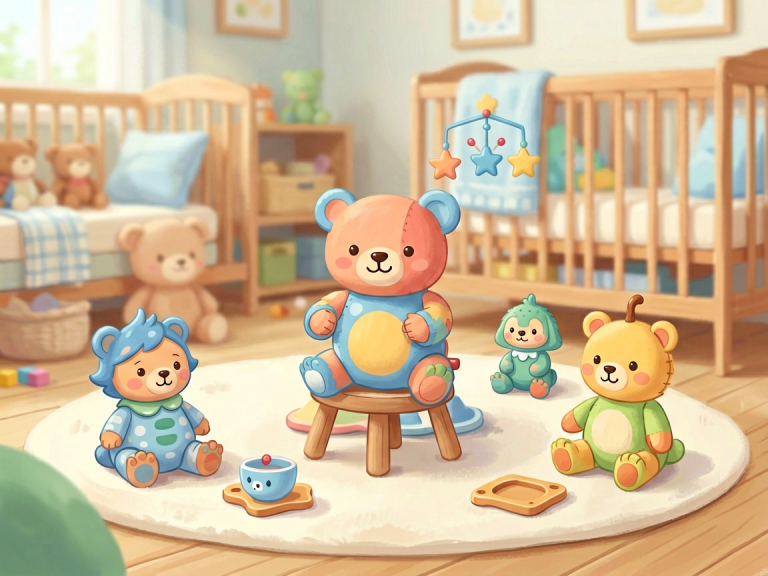
Ask any teacher or child development specialist, and they will tell you: dramatic play is the engine of childhood creativity. And the toys that fuel this engine are often the simplest: a doll, a set of plastic animals, a costume cape, a play kitchen. These objects are not passive; they are invitations. A child who picks up a toy firefighter helmet instantly becomes a hero rushing into a burning building. A small figure of a veterinarian becomes the protagonist in a story of healing and friendship. Unlike screen-based role-playing games, where characters and plots are pre-scripted by developers, physical toys leave every decision to the child. They must invent the dialogue, negotiate the plot with a playmate, and physically manipulate the props. This process builds language skills, empathy, and social understanding. Some of the most popular screen-free toys in this category are surprisingly low-tech: wooden food sets, simple fabric dolls (like Waldorf-style dolls with neutral expressions), and open-ended playsets such as animal families or fantasy creatures. These toys do not dictate a story; they respond to the child’s imagination. That is why a cardboard box can be more engaging than a plastic spaceship with lights and sounds—the box is a blank slate, while the spaceship already tells you what to do.
Art Supplies: Creativity Without Crayons (and Without Screens)
While many parents worry about the mess, art supplies are among the screen-free toys that children actually use with near-daily enthusiasm. But the key is to go beyond the basic coloring book. The most engaging art toys are those that offer open-ended creation: clay or modeling dough, watercolor paints, simple drawing tools with thick paper, and collage materials like glue, scissors, and fabric scraps. These materials allow children to express themselves in ways that screens cannot replicate. A finger painting is not just an image; it is a sensory experience—the cool squish of paint, the smell of paper, the sound of a brush swishing. Moreover, the process matters more than the product. When children are given freedom to experiment without fear of “mistakes” (no eraser, no undo button), they develop resilience and creative confidence. A notable example is the simple set of wooden colored pencils paired with a large sketchbook. Unlike a tablet drawing app that can be reset with a tap, a sketch on paper is permanent. This permanence teaches children to think before they draw, to solve visual problems, and to take pride in their physical creations. Art supplies also transition naturally into other forms of play: a painted cardboard box becomes a robot costume; a clay creature stars in a stop-motion animation (which is screen-based but still requires extensive hands-on construction and storytelling beforehand).
Outdoor and Active Play: Moving Bodies, Growing Minds
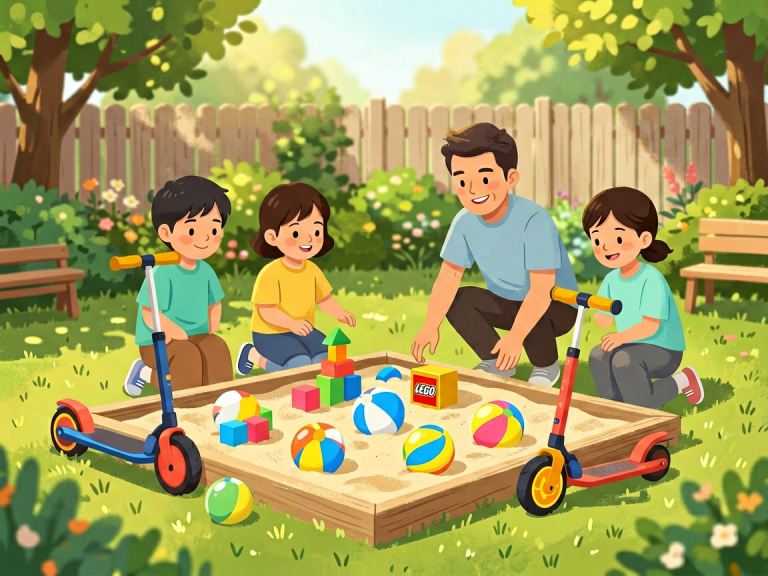
Perhaps the most obvious category of screen-free toys that kids actually use is the one that takes them outside. Balls, jump ropes, scooters, bicycles, and playground equipment are not just about burning energy—they are about developing motor skills, spatial awareness, and social bonds. Yet parents sometimes overlook these in favor of indoor “educational” toys. The truth is that a simple soccer ball can provide hours of fun for a group of children, teaching teamwork, strategy, and physical perseverance. Similarly, a set of sidewalk chalk turns a concrete driveway into a canvas for hopscotch, mazes, and artistic masterpieces. Nature-based toys such as bug-catching kits, gardening tools for children, and simple kites also have high engagement because they connect children to the real world. When a child digs in the dirt and finds an earthworm, or watches a kite climb into the sky on a windy day, the experience is visceral and unforgettable. Screens cannot replicate the wind in your hair or the mud under your fingernails. These toys also promote physical health in an era of rising sedentary behavior, and they often lead to family activities that strengthen relationships.
Puzzles and Board Games: Social Connection Through Structured Play
While building blocks and dolls represent free-form play, puzzles and board games offer a different but equally compelling experience: structured challenges with clear goals. Jigsaw puzzles, for instance, teach pattern recognition, patience, and spatial reasoning. Children who might resist a worksheet full of shapes will eagerly spend an hour matching puzzle pieces, feeling a genuine sense of accomplishment when the final piece clicks into place. Similarly, modern board games designed for children—such as cooperative games where players work together against a common challenge—have become wildly popular. These games require turn-taking, verbal communication, strategic thinking, and emotional regulation when things don’t go as planned. Unlike video games, board games demand eye contact, physical manipulation of tokens, and real-time negotiation. They create shared memories and inside jokes. Simple games like *Candy Land* for preschoolers or *Settlers of Catan: Junior* for older children have proven staying power precisely because they involve real human interaction. The laughter of a family gathered around a table cannot be replaced by a multiplayer online session.
Why These Toys Work When Others Don’t
It is worth asking: why do so many expensive, high-tech toys end up in the donation bin while a set of wooden blocks stays in the family for generations? The answer lies in the toy’s ability to engage a child’s agency. A screen-based toy often does the work for the child—it shows a flashy animation, provides scaffolded instructions, or rewards with instant gratification. Over time, this can actually reduce a child’s tolerance for boredom and their capacity for self-directed play. In contrast, screen-free toys that require the child to take action—to build, to imagine, to negotiate, to create—build internal motivation. They are harder to master but infinitely more rewarding. Furthermore, these toys often involve other children or adults, fostering the social connections that are crucial for development. A child playing alone with blocks is engaged in internal dialogue; a child playing with dolls with a sibling is engaged in cooperation. Screens, by their nature, isolate. Physical toys bring us closer together, even when used alone, because they root us in a shared physical space.
Tips for Choosing Screen-Free Toys Kids Will Actually Use
To maximize the likelihood that a new toy will be played with repeatedly, parents should consider a few guiding principles. First, choose toys that are simple and robust: a toy with many small parts that break easily will frustrate rather than inspire. Second, look for age-appropriate open-endedness: a one-year-old needs a soft block to mouth and grasp; a six-year-old needs a more complex building set. Third, resist the urge to over-buy. A cluttered toy shelf actually overwhelms children and reduces engagement. Rotating a small collection of high-quality toys—bringing out only a few at a time—often results in deeper, more sustained play. Fourth, prioritize toys that encourage collaboration rather than competition, especially for younger children. Cooperative board games, large building sets that require two sets of hands, and dramatic play props for group scenes all invite shared play. Finally, participate yourself. No toy, no matter how wonderful, can replace a parent who sits on the floor and builds a castle alongside their child. The toy is just a tool; the real magic is in the relationship it facilitates.
In conclusion, the most successful screen-free toys are not necessarily the most advertised or the most expensive. They are the ones that make room for a child’s imagination to take the lead—blocks that can become anything, dolls that can be anyone, crayons that can create whole worlds, and balls that invite movement and laughter. In a world increasingly mediated by screens, these simple objects offer a profound gift: the chance to experience the world directly, with all its textures, sounds, and surprises. And that is something no app can ever truly replicate.