The Lasting Power of Play: Why Screen-Free Toys Matter for 6-Year-Olds
Introduction: A World Beyond the Glowing Rectangle
In an era where children as young as toddlers are handed tablets to keep them quiet during restaurant meals, and where streaming services curate endless hours of algorithm-driven content, the simple wooden block or a set of colorful building bricks can feel almost revolutionary. For a six-year-old, the world is still fresh, mysterious, and full of possibilities. Yet modern parenting often finds itself caught between the convenience of digital entertainment and the deeper developmental needs of a child. The question is not whether screens are evil—they are not—but whether we have unknowingly traded the rich, messy, tactile world of childhood for a passive, pixelated substitute. Screen-free toys for six-year-olds are not a nostalgic indulgence; they are a critical investment in cognitive growth, emotional resilience, social skills, and physical development. This article explores why these analog playthings deserve a central place in a child’s life, how they shape the brain at a pivotal age, and what parents should look for when curating a toy box that truly serves a child’s flourishing.
The Developmental Landscape of a Six-Year-Old
Why Six Is a Golden Age for Play
At six years old, children are no longer toddlers, but they are not yet fully independent. They are in what developmental psychologists call the “middle childhood” phase, a sweet spot where language is blossoming, fine motor skills are becoming more precise, and the capacity for imaginative play is at its peak. A six-year-old can follow multi-step instructions, negotiate rules with peers, and sustain attention on a self-chosen activity for thirty minutes or more. They are also beginning to understand cause and effect, to experiment with early logic, and to crave mastery—the satisfaction of figuring something out on their own. Screen-based activities, even educational apps, often short-circuit this process by providing instant feedback, colorful rewards, and a pre-packaged narrative. In contrast, screen-free toys require the child to become the author of their own play. A cardboard box can become a spaceship, a castle, or a time machine. A set of dominoes can teach patience, spatial reasoning, and the physics of falling objects. The six-year-old brain is wired to learn through doing, through failure, through repetition, and through the unscripted joy of discovery. Screen-free toys honor that wiring.
The Sensory and Cognitive Demands of Analog Play
Unlike digital interfaces that rely on sight and hearing alone, screen-free toys engage multiple senses simultaneously. The texture of wooden blocks, the smell of modeling clay, the sound of a marble rolling down a ramp, the weight of a fabric doll—these sensory inputs are not distractions but essential components of neural development. Proprioception—the sense of where our body is in space—improves when a child builds a tower that wobbles or catches a ball that bounces unpredictably. Fine motor control develops when they thread a needle for a simple sewing card or snap together interlocking plastic gears. Furthermore, analog play demands sustained attention without the “dopamine drip” of app notifications. A child who spends forty minutes constructing a LEGO castle has practiced the art of deep focus, a skill increasingly rare in a world of endless distraction. Screen-free toys also encourage divergent thinking: there is no single “right” answer. A magnetic tile can be a window, a roof, or a bridge. This flexibility is the foundation of creativity and problem-solving.
Categories of Screen-Free Toys That Deliver Real Value
Building and Construction Toys: The Architects of Thought
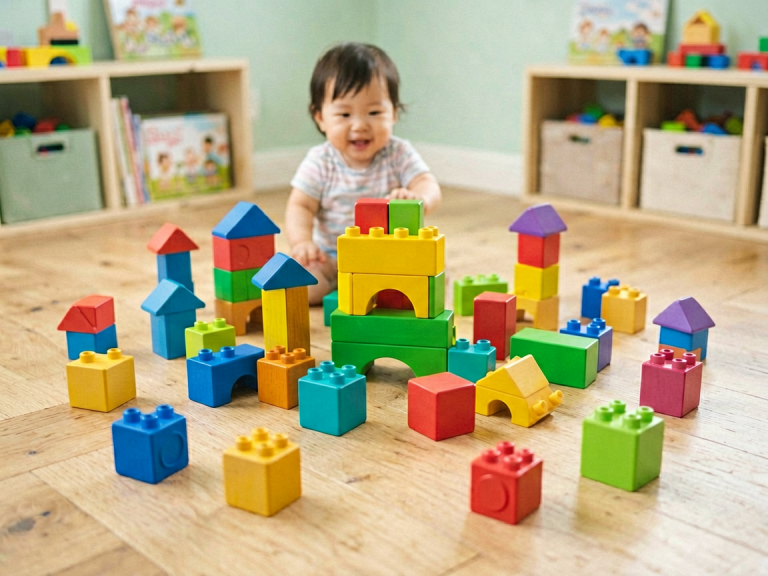
For a six-year-old, construction toys are not just about making things; they are about making sense of the world. Classic wooden blocks, LEGO Duplo (the larger pieces are still appropriate for some six-year-olds, though standard LEGO is often fine), magnetic tiles, and interlocking plastic rods all offer different challenges. Wooden blocks teach stability, balance, and weight distribution. Magnetic tiles introduce concepts of polarity and geometry while allowing for rapid, frustration-free assembly and disassembly. A set of simple gears and pulleys can demonstrate mechanical advantage in a way no app can replicate. The value here is not the finished product but the process: planning, testing, revising, and sometimes watching a tower crash to the ground in a lesson of humility. Parents can extend this play by suggesting challenges: “Can you build a bridge that holds a toy car? Can you make a tower as tall as your arm?” Such prompts encourage engineering thinking without imposing rigid instructions.
Art and Craft Supplies: The Canvas of Emotion
Six-year-olds are often at a magical stage of artistic expression. They move beyond scribbles into recognizable shapes, and they love to make things that are uniquely theirs. Screen-free art supplies should go beyond crayons and coloring books. Consider watercolor sets, washable tempera paints, modeling clay, air-dry clay, child-safe scissors, glue sticks, colored paper, yarn, beads, and fabric scraps. The act of cutting, pasting, squeezing, and painting develops hand strength and coordination. More importantly, art allows children to process emotions they cannot yet name. A painting with dark, heavy strokes might express frustration; a collage of sparkly stickers might reflect joy. Unlike screen-based drawing apps that allow infinite undos, physical art teaches acceptance of imperfection—a spilled drop of paint can be incorporated into the design, or the whole piece can be set aside and started anew. The best craft supplies are open-ended: pipe cleaners can become animals, flowers, or abstract sculptures. The child’s imagination, not the toy’s programmed response, is the engine.
Pretend Play and Role-Playing Toys: The Theater of Social Learning
At six, children are deeply engaged in pretend play, often acting out scenarios from their daily lives or from stories they have heard. Screen-free toys that support this include dolls and action figures (without excessive branding), dress-up clothes, play kitchens, tool benches, doctor kits, puppet theaters, and simple play tents or forts. The critical feature is that these toys do not dictate a narrative. A doll that can be dressed, fed, and put to bed encourages nurturing and empathy. A play kitchen invites children to imitate adult activities while also inventing imaginary recipes. When two or more children play together, they must negotiate roles, share props, and reconcile disagreements—skills that are foundational for later relationships. Screen-free pretend play also allows for emotional rehearsal: a child who is anxious about a doctor’s visit can play “hospital” with a toy stethoscope, taking control of the scenario and reducing fear. The toy is not a passive entertainment device; it is a tool for active world-making.
Puzzles and Strategy Games: The Gymnasium for Logic
Six-year-olds are ready for puzzles beyond the simple wooden shapes of toddlerhood. Jigsaw puzzles with 50 to 100 pieces challenge visual-spatial reasoning and perseverance. Board games that involve matching, counting, simple strategy, or memory are also excellent. Classics like Candy Land (for younger sixes), Chutes and Ladders, Memory, and more sophisticated options like Sequence for Kids, Hoot Owl Hoot!, or My First Catan teach turn-taking, patience, and emotional regulation—losing gracefully is a skill that requires practice. Card games like Go Fish, Old Maid, or Crazy Eights reinforce number recognition and social interaction. Unlike screen-based games where the computer handles the rules, analog games require players to remember and enforce them, which strengthens executive function. The family game night is not just fun; it is a laboratory for fairness, resilience, and laughter.
Outdoor and Gross Motor Toys: The Body in Motion
Screen-free does not mean indoor-only. Six-year-olds have boundless physical energy that needs an outlet. Toys that encourage active play include jump ropes, balls of various sizes (for kicking, throwing, catching), scooters, balance bikes, hula hoops, sidewalk chalk, and simple sports equipment like a plastic baseball bat and tee. Climbing structures, sandboxes, and water tables (if space allows) provide rich sensory and motor experiences. The benefits extend beyond physical health: outdoor play reduces stress, improves attention spans, and fosters a connection with nature. A six-year-old who spends time climbing, balancing, and running is developing vestibular and proprioceptive systems that support academic learning. Even a simple game of tag involves strategy, spatial awareness, and social cooperation. In a world where children’s play is increasingly supervised and structured, free outdoor play with minimal equipment is a gift.
How to Choose and Rotate Toys Without Overwhelming the Child
The Principle of Less Is More
One common mistake parents make is buying too many toys, which leads to clutter, distraction, and a shallow engagement with each item. A six-year-old does not need dozens of options. Research suggests that a moderate number of well-chosen toys actually fosters deeper play. A good rule of thumb is to have toys that fit into a few broad categories (building, art, pretend, puzzles, active) and to rotate them every few weeks. When a toy has been tucked away for a month, it can feel fresh and exciting again. Rotation also helps children learn to focus on what is available rather than constantly asking for new things. Involve your child in the rotation: “Which toys would you like to save for later, and which ones do you want to play with now?” This gives them a sense of agency and ownership.
Quality Over Novelty
Screen-free toys for six-year-olds should be durable, safe, and made from natural materials whenever possible. Wood, metal, fabric, and high-grade plastic that can withstand chewing, dropping, and general roughhousing are preferable to cheap, flimsy items that break quickly and frustrate the child. Look for toys that are open-ended—a set of plain wooden blocks offers more long-term value than a pre-designed plastic castle that can only be assembled one way. Avoid toys with batteries that make sounds or light up, as these often dictate the play rather than supporting the child’s imagination. The best toy is one that the child can use in multiple ways, alone or with others, and that grows with them. For example, a simple marble run can be as simple or as complex as the child’s skill level allows, and it will still be interesting a year later.
The Role of the Adult: Participation Without Domination
Screen-free toys are not a babysitter. They are tools for connection. When an adult sits down to play—building a tower together, painting side by side, or playing a board game—the child receives a powerful message: “What you are doing is valuable, and I want to share it with you.” However, adults must resist the urge to direct the play. The magic happens when the child is in charge. Ask open-ended questions: “What do you think will happen if we put this block here?” “How did you decide to make that shape?” “Can you tell me a story about your drawing?” This scaffolding supports cognitive development without stealing the child’s sense of discovery. Also, be willing to sit back and observe. Solitary play is also important; it builds independence, concentration, and imagination.
Addressing Common Concerns and Misconceptions
“But My Child Loves Educational Apps!”
It is true that many educational apps teach letters, numbers, and phonics effectively. The problem is not the content but the medium. Studies have shown that children learn best through interactive, hands-on experiences rather than passive screen consumption. A child who practices counting by moving physical beads on an abacus engages multiple brain regions simultaneously, whereas tapping numbers on a screen is more superficial. That said, screen time is not the enemy—it is a tool that, like any tool, can be overused. The American Academy of Pediatrics recommends that children ages 2 to 5 have no more than one hour of high-quality screen time per day, and for children 6 and older, consistent limits should be set. Screen-free toys are not about eliminating screens entirely; they are about ensuring that the majority of a child’s waking hours are spent in active, creative, sensory-rich play.
“Won’t They Get Bored Without Screens?”
Boredom is not a problem to be solved; it is a gift. When a child is bored, they are forced to tap into their own inner resources—to invent, to daydream, to explore. A six-year-old who has access to a shelf of open-ended toys and unstructured time will eventually find something to do. The first five minutes of whining gives way to an elaborate construction project, a dramatic story, or a new game invented with a sibling. Boredom is the mother of creativity. If a child truly seems stuck, a parent can suggest a few possibilities: “You could build a spaceship, or you could get out the modeling clay, or you could go outside and draw with chalk.” But resist the urge to hand them a tablet. The discomfort of boredom teaches children to self-regulate and to discover their own interests, a skill that will serve them for a lifetime.
Conclusion: A Playful Path to Wholeness
The years between six and seven are fleeting, filled with wobbly teeth, first friendships, and the dawning realization that the world is larger than their own home. Screen-free toys are not a cure-all, nor are they a judgment on parents who use screens. They are simply an invitation—to slow down, to touch, to build, to imagine, and to connect. A six-year-old playing with a set of wooden blocks is not just stacking shapes; she is learning balance, gravity, symmetry, and the satisfaction of a carefully balanced creation. A child painting with watercolors is not just making a mess; he is learning about color theory, emotion, and the courage to create something imperfect. A child negotiating whose turn it is to be the doctor in a pretend game is practicing empathy, communication, and compromise.
In a society that increasingly measures childhood by test scores, extracurricular achievements, and digital literacy, we must not lose sight of the simple truth: children learn best when they are playing. And the best toys are not the ones that beep, flash, or connect to the internet. They are the ones that sit quietly in a wooden box, waiting for a child’s imagination to bring them to life. For the six-year-old, the world is still a place of wonder. Let us give them the tools to explore it with their hands, their hearts, and their minds—unplugged, unhurried, and utterly free.