The Power of Play: Selecting the Best Learning Toys for 6-Year-Olds
At the age of six, children stand at a remarkable crossroads of development. They have outgrown the simple cause-and-effect toys of toddlerhood, yet they are not quite ready for the abstract concepts of late childhood. This pivotal year is when cognitive, social, emotional, and motor skills undergo rapid transformation. The right learning toys can harness this energy, turning playtime into a rich, structured experience that builds foundational skills for life. But with an overwhelming array of options on store shelves, how do parents and educators choose wisely? This article explores what makes a toy truly educational for a six-year-old, why this age matters, and which categories of toys deliver the most value.
Why Six-Year-Olds Are at a Unique Developmental Stage
To understand what toys work, we must first understand the child. At six, children typically enter first grade, where formal schooling demands more sustained attention, reading readiness, and basic math concepts. Their fine motor skills have improved enough to handle scissors, pencils, and small objects with precision. Cognitively, they are moving from preoperational to concrete operational thinking (in Piaget’s terms), meaning they can perform logical operations on tangible objects but still struggle with abstract hypotheses. They love rules, sequences, and patterns—hence their obsession with games that have clear structures, like board games or simple coding challenges.
Socially, six-year-olds crave peer interaction but also enjoy solo imaginative play. They are learning to cooperate, take turns, and handle disappointment. Emotionally, they may experience frustration when a task is too hard, so toys that offer incremental challenges—not too easy, not too hard—are essential. The "just right" challenge state, often called the zone of proximal development, keeps them engaged and motivated. Learning toys for this age should therefore serve multiple purposes: they must stimulate intellectual growth, refine physical dexterity, foster social skills, and feed the imagination.
The Best Categories of Learning Toys for 6-Year-Olds
1. STEM and Construction Kits
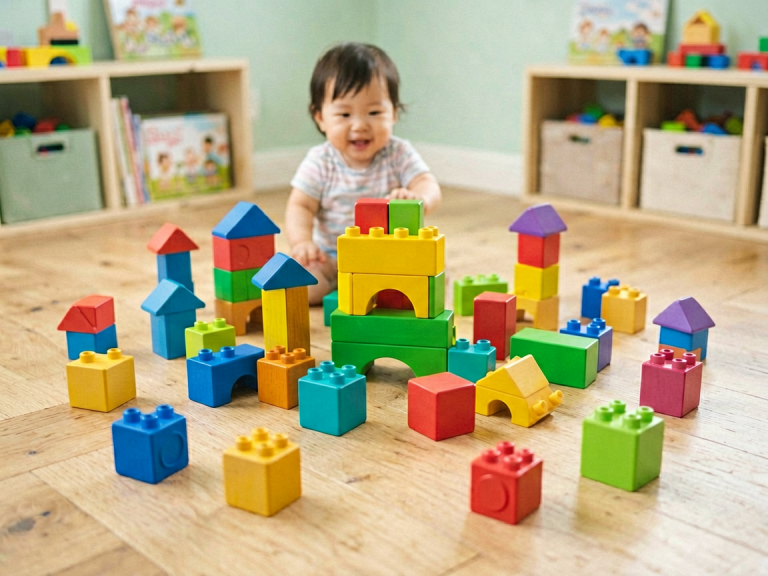
STEM (Science, Technology, Engineering, and Math) toys are a powerhouse for six-year-olds because they combine hands-on exploration with logical thinking. Construction kits—like magnetic tiles, interlocking building bricks (LEGO Classic sets, for instance), or wooden blocks—allow children to design structures, test stability, and grasp basic engineering principles. For example, a set of magnetic rods and balls can teach geometry, symmetry, and magnetism without a single worksheet. Similarly, simple coding toys, such as a robot that follows a sequence of arrow commands, introduce algorithmic thinking in a playful way.
Science kits tailored to this age are equally valuable. A crystal-growing set or a volcano eruption kit provides dramatic, visual results that spark curiosity about chemistry and geology. The key is to look for kits that require adult supervision but are not overly complex—ones where the child can perform most steps independently. These toys build patience, observation skills, and the habit of asking “what happens if…?” In an era of screen-based entertainment, a physical STEM toy invites a child to manipulate real matter, a deeply satisfying experience.
2. Language and Literacy Games
Reading readiness is a major milestone at age six. While some children are already reading simple sentences, others are still blending sounds. Learning toys that support language development should be playful, not drill-based. Phonics board games are excellent: they turn letter sounds and word building into a race or a puzzle. For instance, a game where players match picture cards with the correct starting letter reinforces phonemic awareness without pressure.
Another category is story-creation kits. Sets of picture cards or magnetic storyboards allow a child to sequence events and invent narratives. By arranging characters, settings, and problems, the child practices narrative logic, vocabulary, and oral storytelling. Some electronic toys can read a word aloud when a child presses a sensor, which helps with independent reading. However, be cautious: the American Academy of Pediatrics recommends limiting passive digital play. The best language toys are interactive and require the child to respond verbally or physically.
3. Logic Puzzles and Strategy Board Games
Six-year-olds are developmentally ready for games with multiple steps and simple strategies. Classic board games like "Candy Land" or "Chutes and Ladders" teach counting and turn-taking, but slightly more advanced games offer richer cognitive benefits. "Connect 4" teaches spatial reasoning and forward planning. "Guess Who?" hones deductive reasoning and question formulation. Cooperative games—where players work together against a common challenge—are especially valuable for developing empathy and teamwork.
Puzzles also deserve mention. A 100-piece jigsaw puzzle challenges a child to categorize pieces by color and shape, while also building perseverance. Complex puzzles that depict maps, world landmarks, or the solar system can subtly introduce geography or science content. The satisfaction of placing the last piece is a powerful reinforcement of goal-setting.
4. Art and Creativity Kits
Creativity is not just about self-expression; it also supports problem-solving and fine motor skills. For a six-year-old, advanced art materials like watercolor sets, clay modeling tools, or weaving looms offer new ways to explore texture, color, and form. A simple sewing kit with a plastic needle and pre-punched cards can improve hand-eye coordination and patience. Craft kits that involve following instructions—like making a felt animal or a paper mache project—also teach sequencing.
What about digital creativity? There are child-friendly drawing tablets and animation apps designed for this age. Used in moderation, they can teach digital literacy. But the hands-on tactile experience remains crucial. The act of squeezing clay, mixing paints, or cutting paper engages sensory pathways that screens cannot replicate.
5. Imaginative and Role-Play Sets
Pretend play may seem less "academic," but it is a cornerstone of emotional and social learning. Six-year-olds often enjoy more elaborate role-play with costumes and props. A toy cash register with play money teaches basic arithmetic and economic concepts. A doctor’s kit with a stethoscope and bandages lets a child process their own experiences of illness or check-ups. Puppets and puppet theaters encourage dialogue, perspective-taking, and storytelling.
Open-ended toys like dollhouses, train sets, or animal figures allow children to create entire worlds. Unlike battery-operated toys that do the action for them, these toys require the child to be the director. This type of play builds executive function skills—planning, self-regulation, and flexible thinking. In a study by the University of Cambridge, researchers found that children who engaged in more complex pretend play developed stronger language and problem-solving abilities.
How to Choose the Right Learning Toy
Not every toy on a store shelf labeled “educational” truly delivers learning. Here are criteria to guide selection:
- Active, not passive. A good learning toy requires the child to do something—build, sort, reason, create. Avoid toys that simply flash lights or play music unless the child must respond.
- Open-ended possibilities. Toys that can be used in multiple ways grow with the child. A set of wooden blocks is more valuable than a single-purpose plastic robot.
- Appropriate challenge. The toy should be slightly above the child’s current skill level but not so hard that it causes frustration. Look for toys with adjustable difficulty or multiple levels.
- Low battery dependency. The best toys often run on imagination, not electricity. If a toy needs batteries, ask whether they enhance the experience or replace it.
- Safety and durability. Six-year-olds are still prone to putting small objects in their mouths occasionally, so ensure all parts are large enough. Durable materials like wood, metal, and thick cardboard outlast cheap plastic.
Conclusion
The learning toys we choose for six-year-olds are far more than fleeting distractions. They are the tools with which children construct their understanding of numbers, letters, physics, and human relationships. A carefully selected toy can ignite a passion for science, build the confidence to read aloud, or teach the delicate art of losing gracefully in a board game. As parents and educators, we have the privilege of curating these experiences. By prioritizing toys that are active, open-ended, and appropriately challenging, we give six-year-olds not just something to play with, but something to grow with. After all, the best learning toy is one that a child returns to again and again, discovering new possibilities each time. And in that repeated discovery, real learning takes root.