The Ultimate Guide to the Best Logic Toys for Kids: Boosting Critical Thinking Through Play
Introduction
In an age dominated by screens and passive entertainment, the value of logic toys for children has never been greater. These are not just playthings; they are powerful tools that cultivate reasoning, problem-solving, pattern recognition, and strategic thinking—skills that form the bedrock of academic success and lifelong learning. But with countless options flooding the market, how do parents and educators choose the best logic toys for kids? This article delves deep into the most effective logic toys available today, explaining why each category works and how they nurture young minds. From classic wooden puzzles to high-tech coding kits, we will explore toys that challenge children to think, experiment, and persist. The goal is to provide a comprehensive, evidence-based guide that helps you select toys that are not only fun but also genuinely educational. Let’s embark on a journey through the world of logic toys, where every game is a lesson and every challenge is an opportunity for growth.
What Makes a Toy a “Logic Toy”?
Before we dive into the best options, it is essential to define what we mean by a logic toy. A true logic toy requires the player to apply deductive or inductive reasoning, understand sequences, recognize patterns, or manipulate variables to achieve a specific outcome. Unlike simple action toys or those that rely solely on randomness, logic toys demand active mental engagement. They often involve rules, constraints, and multiple steps. For example, a jigsaw puzzle teaches spatial reasoning and visual pattern matching; a Sudoku board game teaches number logic and elimination strategies; a building set like LEGO encourages planning and structural reasoning. The best logic toys are those that balance challenge with frustration—they are difficult enough to stretch a child’s abilities but not so hard that they give up. They also offer multiple levels of difficulty, allowing children to grow with the toy over months or even years.
Top Categories of Logic Toys for Kids
1. Classic Puzzles: The Timeless Foundation of Logical Thought
The humble jigsaw puzzle is perhaps the most underrated logic toy. When a child picks up a piece, they must analyze its shape, color, and pattern, then mentally rotate it to find the correct position. This process hones visual-spatial reasoning, attention to detail, and the ability to break a complex problem into smaller parts. For younger children (ages 3–6), large-piece puzzles with familiar images (animals, vehicles) are ideal. For older kids (7–12), 500- to 1000-piece puzzles featuring intricate scenes or gradient colors offer a serious mental workout.
Beyond jigsaws, there are specialty puzzles like tangrams, which challenge children to assemble seven geometric shapes into a silhouette. Tangrams teach geometric intuition and the concept of area conservation. Another classic is the Rubik’s Cube, which, despite its reputation, is an excellent logic toy for children aged 8 and up. Solving a Rubik’s Cube requires algorithmic thinking, pattern recognition, and patience. Many children find it addictive and gain a sense of mastery that boosts confidence. The key is to start with simplified versions—like 2×2 cubes or one-sided cubes—before moving to the standard 3×3.
2. Building and Construction Sets: Engineering Logic Through Design
LEGO is the king of construction toys, but not all LEGO sets are created equal in terms of logic development. The best logic-building LEGO products are those that allow open-ended creation or include mechanical elements. For instance, LEGO Classic bricks encourage children to plan, measure, and adapt their designs—a process that involves iterative logic. LEGO Technic sets, with gears, axles, and motors, teach mechanical reasoning and the cause-and-effect relationships between moving parts. For younger builders (ages 4–7), DUPLO sets with simple mechanisms like wheels and ramps introduce basic physics.
Another standout in this category is Magna-Tiles or magnetic building blocks. These transparent, magnetic tiles click together to form 3D structures. Children learn about symmetry, balance, and magnetic attraction as they build towers, bridges, and geometric shapes. The open-ended nature of magnetic tiles promotes divergent thinking—there is no single “correct” solution, only creative possibilities. Similarly, wooden block sets (like unit blocks) are timeless logic toys. Stacking requires understanding of gravity and weight distribution; creating arches requires comprehension of structural tension. These simple materials offer profound lessons in engineering logic.
3. Board Games That Demand Strategic Reasoning
Board games are perhaps the most social logic toys, teaching children to think ahead, anticipate opponents’ moves, and weigh risks. Classic games like chess and checkers are obvious choices. Chess, in particular, is a masterclass in logic: every move has consequences, and players must calculate multiple steps ahead. For children as young as 5, simplified versions (like “Chess for Kids” with larger pieces and clear rules) can be introduced. Checkers is easier but still requires pattern recognition and jumping sequences.
However, modern board games have taken logic play to new heights. Rush Hour (by ThinkFun) is a sliding puzzle game where players must move cars and trucks to free a red car from a traffic jam. It teaches sequential thinking and spatial planning. Another excellent choice is Cat Crimes (also by ThinkFun), a logic deduction game where players use clues to identify which cat committed a “crime.” This game develops deductive reasoning and elimination strategies. For older kids (8+), Settlers of Catan involves resource management and strategic trading, requiring players to optimize their choices based on probability and negotiation. Meanwhile, Ticket to Ride builds route-planning logic as players connect cities while blocking opponents.
4. Coding and Programming Toys: Logic in the Digital Age
In the 21st century, computational thinking is a critical skill, and coding toys are the best way to introduce it without a screen. Code-a-Pillar (Fisher-Price) is designed for preschoolers: children arrange segments of a caterpillar to create a sequence of movements (forward, turn left, make a sound, etc.). This tangible programming teaches cause-and-effect and basic sequencing. For early elementary kids (ages 4–7), Botley the Coding Robot (Learning Resources) offers screen-free coding. Kids use a remote to program Botley to navigate obstacle courses, learning loops, conditionals, and debugging in the process.
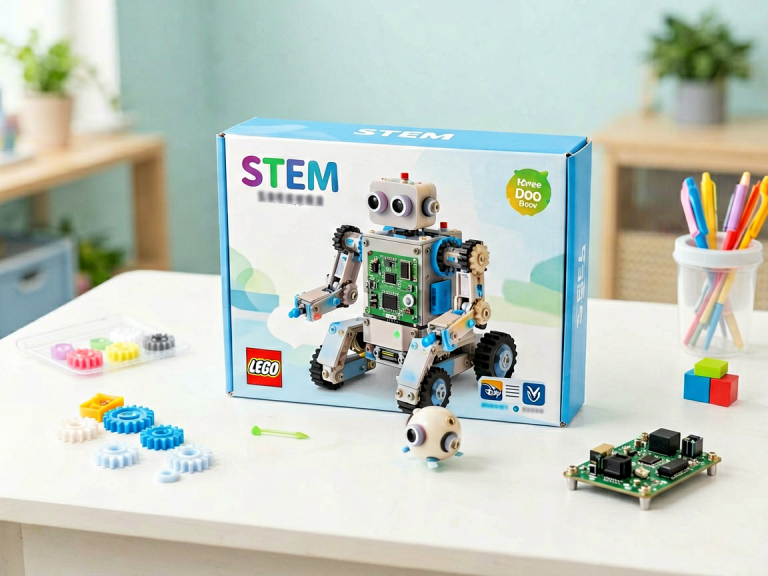
For older children (ages 8–12), LEGO Boost or LEGO Spike Prime combine building with block-based coding. These kits allow kids to construct robots, animals, or vehicles, then program their behaviors using a tablet app. The logic comes from figuring out what commands make the model move, react to sensors, or perform sequences. Another fantastic option is Osmo Coding (for iPad), which uses physical blocks to code on-screen characters. The combination of physical manipulatives with digital feedback reinforces logical thinking while keeping kids engaged.
5. Strategy and Logic Puzzles: Solo Challenges for Focus
Sometimes the best logic toys are those a child can tackle alone, fostering independence and deep concentration. Brain Teasers like Kanoodle (by Educational Insights) challenge kids to fit 3D pieces into a grid or form specific shapes. There are hundreds of puzzles from beginner to expert, so children can progress at their own pace. Logix (by ThinkFun) is another excellent series: bookslike “Logic Puzzles for Clever Kids” (by Gareth Moore) offer paper-and-pencil challenges involving grid logic, riddles, and lateral thinking.
For matrix-style logic, HABA’s “My First Logic Game” series uses colorful wooden pieces and simple rules to teach classification and deduction. And let’s not forget Sudoku—not just for adults. Kid-friendly Sudoku puzzles with images or 4×4 grids are perfect for teaching number logic and the process of elimination. Many parents find that starting with a small Sudoku book can become a daily ritual that sharpens a child’ reasoning.
6. Marble Runs and Chain Reaction Toys: Physics Logic
Marble runs, like ThinkFun’s Gravity Maze or Quercetti’s Skyrail, teach children about gravity, momentum, and sequential cause-effect. In Gravity Maze, kids place towers and ramps to guide a marble to a target. This requires planning, testing, and adjusting—a perfect cycle of logical problem-solving. Chain reaction toys, such as Tumbling Towers or Domino Sets, also encourage children to predict outcomes and create sequences. The classic game of Mousetrap (Hasbro) is a delightful introduction to chain reactions: players build a Rube Goldberg-like machine that triggers a trap. Although it relies on some luck, assembling the components and understanding each step's role in the chain is a logical exercise.
How to Choose the Right Logic Toy for Your Child
Not every logic toy suits every child. Age, interests, and attention span all play a role. For toddlers (ages 2–3), focus on simple shape sorters, stacking rings, and large knob puzzles. These build foundational logic like matching and spatial orientation. For preschoolers (ages 3–5), choose toys that introduce sequencing and simple rules: think pattern blocks, memory games, and cooperative board games. Early elementary (ages 5–8) thrive on building sets, simple coding robots, and strategic games like Rush Hour or checkers. Tweens (ages 8–12) can handle complex puzzles, chess, advanced LEGO Technic, and coding kits with sensors.
Also consider the child’s personality. A child who loves art may prefer tangrams or pattern-based puzzles; a child who loves mechanics may prefer marble runs or LEGO; a social child may enjoy two-player strategy games. The best approach is to offer variety and observe which toys capture their sustained interest. Remember, a toy that is too easy will bore, while one that is too hard will frustrate. The “flow” state—where challenge meets skill—is the sweet spot for learning.
Educational Benefits Beyond Logic
While the primary benefit is logical reasoning, these toys also impart other valuable skills. Persistence is perhaps the most important. When a child fails to complete a puzzle or loses a game, they learn to try again, adjust their strategy, and cope with disappointment. Patience develops as they work through complex problems. Creativity emerges when they build something unique from blocks or invent their own game rules. Social skills improve through cooperative play or friendly competition. Even math skills get a boost: logic toys often involve counting, geometry, probability, and pattern recognition—all precursors to algebra and geometry.
Conclusion: Investing in a Smarter Future
The best logic toys for kids are not necessarily the most expensive or the most high-tech. A simple set of wooden blocks, a chessboard, or a deck of logic puzzle cards can provide hours of intellectually stimulating play. The key is intentionality: choose toys that require active thinking rather than passive watching. Rotate them to maintain novelty, and play alongside your child when possible. The conversation that arises from playing a logic game—“Why did you put that piece there?” “What would happen if you moved it differently?”—is priceless. It teaches metacognition, or thinking about thinking, which is the ultimate goal of logic education.
In a world that increasingly demands problem-solving and adaptive thinking, giving children the gift of logic toys is one of the best investments you can make. These toys do not just entertain; they build the neural pathways for reasoning, analysis, and creativity. Whether your child becomes an engineer, a lawyer, a doctor, or an artist, the ability to think logically will serve them in every endeavor. So next time you shop for a birthday or holiday gift, bypass the flashy electronic gadgets and consider a logic toy. Your child’s brain will thank you—and you might just find yourself joining in the fun.
(Word count: approximately 1,100 words, excluding the title and section headers)