The Unplugged Imagination: Why Screen-Free Creativity Toys Are Essential for Child Development
In an era where toddlers swipe before they speak and preschoolers navigate tablets with effortless precision, the concept of "screen-free" has become a countercultural statement. Yet amidst the glittering allure of digital babysitters—apps that teach, games that reward, videos that mesmerize—a quiet revolution is taking place in living rooms, classrooms, and pediatricians' offices. Parents, educators, and neuroscientists are rediscovering a simple truth: the most powerful tool for a child's cognitive, emotional, and social growth is not a glowing rectangle, but a box of wooden blocks, a tub of clay, a set of crayons, or a handful of loose parts. Screen-free creativity toys are not merely nostalgic relics; they are the unsung heroes of authentic learning, the architects of flexible minds, and the antidote to a generation raised on passive consumption.
The Neuroscience of Play: Why Screens Fail Where Toys Succeed
To understand the profound value of screen-free creativity toys, we must first examine what happens inside a child’s brain during unstructured, tactile play. When a child picks up a set of magnetic tiles and begins constructing a castle, their neural pathways are firing in ways that no app can replicate. The act of physically manipulating objects engages the somatosensory cortex, the motor cortex, and the prefrontal cortex simultaneously. The child must plan, balance, test hypotheses, and adjust—all in real time, without a programmed feedback loop telling them whether they are "right" or "wrong."
Screen-based activities, by contrast, often rely on pre-determined outcomes. A digital puzzle game may teach shape recognition, but it eliminates the messy, trial-and-error process of physically rotating a piece, feeling its weight, and discovering spatial relationships through proprioception. Research from the American Academy of Pediatrics has consistently linked excessive screen time in early childhood with delays in language development, executive function, and self-regulation. The reason is not that screens are inherently evil, but that they are inherently passive. Even the most "interactive" app is still a closed system: the child responds to stimuli designed by someone else. Screen-free creativity toys, however, are open-ended. A pile of LEGO bricks does not have a script. A lump of modeling clay does not demand a specific outcome. This openness is precisely what builds the neural infrastructure for divergent thinking—the ability to generate multiple solutions to a single problem, a skill that correlates more strongly with lifelong success than IQ.
The Architecture of Imagination: How Open-Ended Toys Foster Deep Play
From Prescription to Possibility
One of the most insidious effects of digital play is the illusion of choice. A child using a drawing app may select from twelve preset colors and five brush sizes, but the constraints are invisible. Screen-free creativity toys, on the other hand, offer genuine freedom. A set of watercolor paints can be mixed to create infinite hues; a cardboard box can become a spaceship, a castle, or a time machine. This flexibility is the breeding ground for what psychologist Lev Vygotsky called the "zone of proximal development"—the sweet spot where a child stretches beyond their current abilities through imaginative scaffolding.
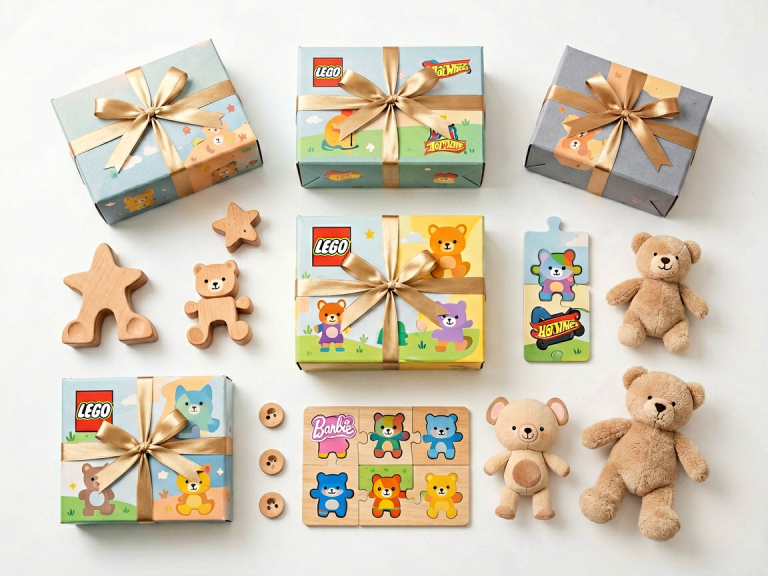
Consider the humble wooden block. It has no designated function. It can be a wall, a roof, a car, a phone, or a sandwich. In block play, children engage in symbolic representation, which is the foundation of abstract thinking. They must negotiate with peers about the rules of their imagined world, which builds social cognition and language skills. They encounter physics when a tower collapses, learning about gravity and balance without a single textbook. They experience frustration and resilience when their structure wobbles, and they develop the patience to rebuild. No algorithm can teach this kind of holistic learning because no algorithm can replicate the unpredictability of real materials.
The Sensory Richness of the Real World
Screen-free creativity toys also provide a sensory banquet that digital media cannot match. The smell of Play-Doh, the cool smoothness of a glass marble, the satisfying click of a snapping dinosaur skeleton, the resistance of crayon against paper—these tactile experiences are essential for integrating the senses. Sensory play stimulates the development of neural connections in the brain’s tactile and proprioceptive systems, which are critical for motor skills, body awareness, and even emotional regulation. A child who kneads dough for twenty minutes is not just making a mess; they are calming their nervous system, practicing bilateral coordination, and learning cause and effect.
Moreover, real-world materials carry an inherent unpredictability that fosters adaptability. A lump of clay dries out; a marker runs out of ink; water spills. These small crises teach problem-solving in a way that a digital "undo" button never can. When a child’s paper boat sinks in the bathtub, they learn about material properties and water absorption. When they try to stick two pieces of tape together the wrong way, they discover the physics of adhesion. These are not lessons that can be gamified; they are lived experiences that embed knowledge in the body as well as the mind.
The Social Dimension: Screen-Free Toys as Catalysts for Connection
Collaborative Creation vs. Parallel Consumption
One of the most troubling trends of the digital age is the rise of "parallel play" with screens—children sitting side by side, each absorbed in their own device, communicating only through the occasional glance at a shared digital world. Screen-free creativity toys, in contrast, naturally invite cooperation. A set of wooden train tracks cannot be built easily by one pair of hands; children must negotiate who gets the curved pieces, how to bridge a gap, and what happens when a train derails. A box of craft supplies transforms into a workshop where ideas are shared, materials are bartered, and conflicts are resolved.
This collaborative play is not just social; it is cognitive. When children build together, they must verbalize their plans, listen to others, compromise, and integrate multiple perspectives. They learn that their own idea is not the only valid one, and that the more imaginative solution often emerges from combining different viewpoints. These are the soft skills that employers will demand decades later—teamwork, communication, empathy—and they are developed not through a teamwork app, but through the messy, joyful chaos of real-world play.
The Role of the Adult as a Co-Explorer
Screen-free creativity toys also transform the role of the caregiver. Instead of being a passive validator ("Good job on level five!"), the adult becomes a co-player, a model of curiosity, and a source of rich language. When a parent sits on the floor and builds a tower with their child, they are not just supervising; they are engaging in a reciprocal relationship that strengthens attachment and language development. They can ask open-ended questions: "What if we added a ramp?" or "How did you make that roof so strong?" These interactions are the bedrock of vocabulary growth, narrative skills, and emotional security.
In contrast, screen-based play often isolates the adult, turning them into a gatekeeper of screen time rather than a participant. The child may be learning letters from an app, but they are missing the conversational back-and-forth that cements those letters in meaningful context. Research consistently shows that children learn language best through contingent, responsive interactions with real people, not through disembodied voices from a tablet.
Practical Strategies for Cultivating a Screen-Free Creative Environment
Curating the Toy Box with Intention
Transitioning to a screen-free creative lifestyle does not require buying expensive wooden toys from a boutique catalog. Some of the most powerful screen-free creativity toys cost nothing: cardboard boxes, fabric scraps, pinecones, buttons, bottle caps, and empty containers. What matters is the principle of open-endedness. A toy is creative not because of its price tag, but because of the number of different ways it can be used. A set of colored scarves can become a cape, a river, a blanket for a doll, or a flag—while a plastic fire truck that makes sound effects can only be a fire truck.
Parents should look for toys that support multiple ages and stages: building blocks, magnetic tiles, art supplies (not just coloring books), loose parts kits, play dough with simple tools, and dress-up clothes. Avoid toys that do the thinking for the child—toys that light up, talk, or require batteries often hijack the child's attention rather than inviting their imagination. A simple rule of thumb: if the toy can be used in at least five different ways, it is worth having. If it has only one function, it is better left on the shelf.
Designing the Space for Flow
The environment matters as much as the materials. A screen-free play space should be accessible, organized, and inviting. Low shelves with baskets of loose parts allow children to self-select and return materials independently. A designated art table with paper, paint, and markers that are always available encourages spontaneous creativity. Perhaps most importantly, the space should allow for mess. Children cannot explore freely if they are constantly told to "be careful." A washable floor, an art smock, and a relaxed attitude toward chaos are essential ingredients for deep play.
Time is another critical resource. Screen-free creativity thrives in unhurried, unstructured blocks of time—not thirty-minute windows squeezed between piano lessons and soccer practice. Psychologist Peter Gray has written extensively about the importance of "free play" in which adults do not direct, intervene, or evaluate. This kind of play allows children to enter a state of flow, where they lose themselves in the process and emerge with a sense of agency and accomplishment that no digital reward system can replicate.
The Long View: Raising Thinkers, Not Consumers
The screen-free creativity toy movement is not about technophobia or nostalgia. It is about recognizing that childhood is the only period in life when the brain is primed for the kind of unstructured, sensory-rich, socially embedded learning that builds flexible intelligence. Every hour a child spends manipulating real materials, negotiating with real friends, and solving real physical problems is an investment in a mind that can adapt, innovate, and connect.
In a world that increasingly demands creativity, collaboration, and critical thinking, the most dangerous toy may be the one that does all the thinking for the child. The humble, unplugged toy—the lump of clay, the cardboard box, the set of wooden blocks—is not a rejection of the future. It is a preparation for it. Children who grow up with the freedom to imagine, fail, rebuild, and imagine again will be the ones who, as adults, can design sustainable cities, write meaningful poetry, invent life-saving technologies, and find joy in a complex and ever-changing world.
So let the screens be turned off, the apps closed, and the tablets put away. Hand your child a box of crayons, a pile of rocks, or an empty carton. Then step back and watch the miracle unfold. The creativity that emerges from a child's own mind, guided by their own hands, is not just a toy—it is the most powerful educational tool ever invented. And it does not require a single charging cable.