Unlocking Imagination: The Best Creativity Toys for Beginners
Creativity is not a rare gift reserved for artists and inventors—it is a muscle that anyone can develop, and the best way to start exercising it is through play. For beginners, whether children taking their first steps into imaginative exploration or adults rediscovering the joy of making, creativity toys serve as gentle guides. They lower the barrier to entry, provide structure without stifling freedom, and offer immediate tactile feedback that encourages experimentation. This article explores why these toys are essential for novices, recommends specific types that work well for beginners, and offers practical advice on how to choose and use them effectively. By the end, you will have a clear roadmap to begin your own creative journey with confidence and excitement.
Why Creativity Toys Matter for Beginners
The term “creativity toys” may sound like a marketing gimmick, but the underlying principle is deeply rooted in developmental psychology and learning theory. For beginners, the biggest obstacle is often the fear of failure or the feeling that they “don’t know where to start.” Creativity toys address this by providing a low-stakes environment where mistakes are not just acceptable but expected. A set of building blocks, for instance, can be assembled into a tower that collapses, and the builder simply tries again. This iterative process—trial, error, refinement—is the essence of creative thinking.
Moreover, research in cognitive science shows that divergent thinking (generating multiple solutions to an open-ended problem) is best cultivated through hands-on activities that engage multiple senses. Unlike passive consumption of digital media, creativity toys demand active participation. When a beginner picks up a lump of clay or a handful of colorful magnetic tiles, they are not just following instructions; they are making decisions about shape, color, balance, and function. Each small choice builds neural pathways that strengthen creative confidence over time.
Another critical factor is the “flow state”—a mental state of deep focus and enjoyment. Beginner-friendly toys are designed to offer just enough challenge to keep the user engaged without causing frustration. A starter origami kit, for example, provides clear step-by-step diagrams for simple animals, allowing the beginner to experience success quickly. That success releases dopamine, which motivates further exploration. Over time, the beginner learns to modify the models, combine techniques, and eventually design their own. Thus, creativity toys are not just playthings; they are scaffolding for a lifelong creative habit.
Top Creativity Toys to Spark Your Journey
Not all toys labeled “creative” are suitable for beginners. The best ones share common traits: they are open-ended, have a low learning curve, offer immediate results, and allow for progressive complexity. Below are five categories of creativity toys that have proven effective for novices, along with specific examples and explanations of why they work.
Building and Construction Sets: The Foundation of Spatial Creativity
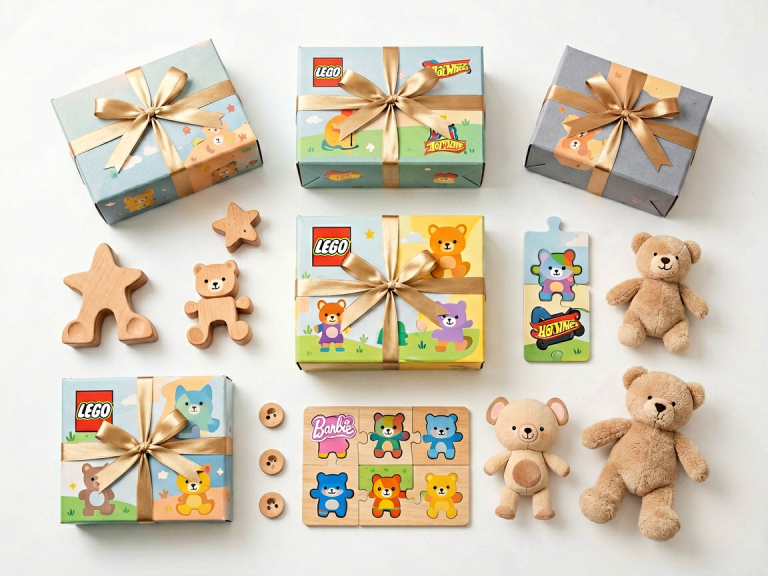
Building toys are perhaps the most classic creativity tools. For absolute beginners, simple wooden blocks or large interlocking bricks (like Duplo) are ideal because they require no fine motor precision and can be stacked in countless ways. As confidence grows, more sophisticated systems such as LEGO Classic sets or magnetic tiles (e.g., Magna-Tiles) introduce concepts of stability, symmetry, and geometry. The beauty of construction toys lies in their reversibility: you can build a castle, knock it down, and rebuild a spaceship in minutes. This malleability teaches beginners that creativity is not about a single perfect outcome but about playful iteration.
Modeling and Sculpting Materials: Tactile Expression for All Ages
There is something primal about shaping a material with your hands. Air-dry clay, polymer clay, and modeling dough (like Play-Doh for younger beginners) provide an immediate sensory experience. Beginners can start by rolling simple spheres and snakes, then progress to pinch pots and basic animal figures. Silicone mold sets with simple shapes (stars, hearts, geometric forms) help novices produce satisfying results without needing advanced skills. The key is that these materials forgive errors: if you don’t like the shape, you simply squash it and start over. For those who prefer a cleaner option, kinetic sand and modeling foam offer similar benefits with less mess.
Drawing and Painting Kits: From Scribbles to Stories
Many beginners feel intimidated by a blank piece of paper. That is why starter kits that include guided prompts or restricted palettes are so effective. Watercolor sets with pre-printed outlines (like a flower or a landscape) allow novices to focus on color mixing rather than composition. Similarly, “paint by numbers” kits have evolved into more creative versions that let you choose your own color substitutions. For drawing, an “art journal” with half-finished doodles encourages freehand completion. Stamping sets, stencils, and gel pen collections also lower the fear factor by providing tools that guarantee neat results. Over time, the beginner learns to combine these techniques, eventually drawing original works without scaffolding.
Puzzle and Logic-Based Creativity Toys
Creativity is not only about art; it also involves problem-solving. Tangram puzzles, pattern blocks, and magnetic geometric boards challenge beginners to recreate specific shapes using a limited set of pieces. This constraint-driven creativity teaches resourcefulness. Another excellent option is a “create your own marble run” kit, where beginners design tracks for marbles to roll down. The trial-and-error nature of these activities builds resilience and spatial reasoning. Even simple jigsaw puzzles can be creative if you flip the pieces and try to assemble them upside down, forcing you to rely on shape rather than image. Such off-label use is itself a creative act.
Digital and Coding Toys for the Modern Beginner
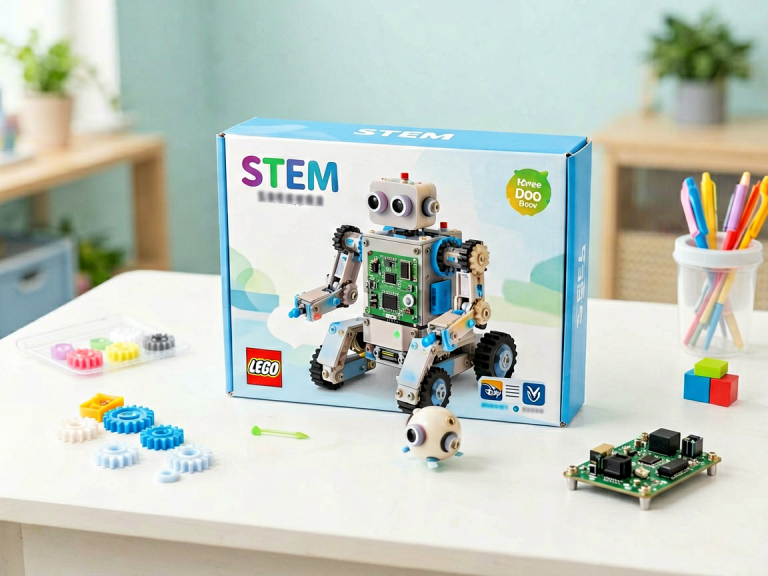
In the digital age, creativity toys extend into the virtual realm. For beginners interested in technology, programmable robots like the Sphero Mini or coding board games like “Robot Turtles” introduce logical thinking through play. More tactile options include circuit kits (e.g., Snap Circuits) that let users build working lights, fans, and alarms by snapping components together. These toys demystify technology and show that creativity can be expressed through code and circuits. For beginners who prefer digital art, drawing tablets with simple software (like the Wacom Intuos Small bundled with Corel Painter Essentials) allow effortless experimentation with brushes and colors. The key is to start with guided projects before exploring free creation.
How to Choose the Right Creativity Toy for a Beginner
Selecting the perfect creativity toy depends on the individual’s age, interests, and current skill level. For very young children (ages 3–5), prioritize safety with large, non-toxic pieces and avoid small parts. Look for toys that stimulate sensory exploration, such as textured blocks or molding compounds. For older children (6–12), consider toys that align with their budding passions: a science enthusiast might enjoy a chemistry lab kit with fluorescent reactions, while a story lover might thrive with a “create your own comic book” kit.
For adult beginners, the criteria shift. Adults often need toys that feel “adult-friendly” and don’t seem childish. High-quality adult coloring books with intricate mandalas, calligraphy practice sets, or wood-carving starter tools can be appealing. The key is to find a balance between novelty and accessibility. A toy that is too simple will bore the adult; one that is too complex will discourage them. Online reviews and unboxing videos can help gauge difficulty.
Another crucial factor is the environment in which the toy will be used. If space is limited, opt for compact kits like origami paper sets or travel-sized drawing pads. If the beginner prefers solitary play, choice is less important, but for social creativity, collaborative toys like giant floor puzzles or group building sets are better. Finally, always check the “expandability” of the toy—does it offer add-on packs or online communities? LEGO, for instance, has thousands of instructions and community builds online, ensuring that the toy remains challenging as the beginner improves.
Tips for Maximizing Creative Play with Beginners
Owning the toy is only the first step; how you use it matters immensely. Here are practical strategies to help beginners get the most out of their creativity toys:
Set aside dedicated “play time” without pressure. Creativity thrives when the mind is relaxed. Designate 20–30 minutes daily or weekly where the only goal is to explore the toy freely. No judgment, no expectation of a finished product.
Encourage “bad” ideas. Beginners often self-censor because they fear their attempts look ugly or silly. Counter this by praising the process, not the result. Say “I love how you tried a different color there!” instead of “That looks beautiful.” This shifts focus from outcome to exploration.
Model creative behavior yourself. If you are an adult introducing a toy to a child, sit down and build or draw alongside them. Share your own mistakes: “Oops, my tower fell again. Let me try making the base wider.” Your example normalizes failure as part of learning.
Introduce constraints intentionally. Sometimes too much freedom can overwhelm a beginner. Challenge them with a specific task: “Can you build a bridge that spans this gap of 10 blocks?” or “Let’s use only two colors for this painting.” Constraints narrow the decision space and actually fuel creative solutions.
Combine toys across categories. Creativity often blossoms at the intersection of different mediums. For instance, use modeling clay to create characters, then draw a comic strip featuring those characters. Or build a structure from blocks and photograph it from different angles, editing the photo with a digital drawing app. Such cross-pollination teaches versatility.
Join a community. Many creativity toys have online forums, social media groups, or local meetups. Sharing progress, asking for tips, and seeing others’ work can inspire beginners to push further. For digital toys like coding kits, communities often share scratch projects or mods that provide endless new challenges.
Conclusion: Start Your Creative Adventure Today
Creativity toys for beginners are far more than mere distractions—they are catalysts for a mindset that values curiosity, resilience, and self-expression. By choosing the right tool, setting a supportive environment, and embracing the joy of playful exploration, anyone can unlock their creative potential. Whether you are a parent looking to nurture your child’s imagination, an adult seeking a fulfilling hobby, or a teacher hoping to spark innovation in the classroom, the journey begins with a single block, a lump of clay, or a colored pencil. Remember that creativity does not demand perfection; it asks only that you show up, try something new, and enjoy the process. So pick up a creativity toy today—your imagination is waiting.