The Ultimate Guide to Safe Toys for Beginners: Choosing Playthings That Protect and Inspire
Introduction
Play is the foundation of childhood development. For beginners—whether they are infants taking their first grab at a rattle, toddlers exploring shapes and colors, or preschoolers building their first block tower—toys are more than entertainment; they are tools for learning, sensory stimulation, and emotional growth. However, the joy of play can quickly turn into a parent’s worst nightmare if safety is overlooked. Every year, thousands of children worldwide are treated in emergency rooms for toy-related injuries, many of which are entirely preventable.
Selecting safe toys for beginners is not just about reading age labels; it requires a comprehensive understanding of materials, design, choking hazards, chemical safety, and age-appropriate complexity. This guide aims to equip parents, caregivers, and educators with the knowledge they need to make informed decisions. By the end of this article, you will understand what constitutes a safe toy, how to identify potential risks, and how to create a play environment that fosters curiosity without compromising well-being.
Why Safety Matters in Early Play
For beginners, particularly children under three, the world is explored through the mouth, hands, and whole-body movement. Their immune systems are still developing, their motor skills are unrefined, and they have little sense of danger. A seemingly harmless toy can pose multiple threats: sharp edges, small detachable parts that can cause choking, toxic paints that leach chemicals, or long cords that create strangulation risks.
Beyond physical injuries, unsafe toys can also impact mental health. A toy that breaks easily may frustrate a child, while one that emits loud sounds can damage sensitive hearing. The American Academy of Pediatrics emphasizes that the primary purpose of toys is to support development, not to create hazards. Therefore, safety must be the non-negotiable starting point, especially for beginners who rely entirely on adults to curate their environment.
Key Safety Features to Look For
When evaluating toys for beginners, several features should be at the top of your checklist. First, smooth edges and rounded corners are essential. Toys made of hard plastic or wood should have no sharp points that could scratch or puncture skin. Second, secure assembly is critical—check that all parts are firmly attached and cannot be pulled off by a child’s grip. Third, size matters: any toy or part that can fit through a standard toilet paper tube (about 1.25 inches in diameter) is a choking hazard for children under three. Fourth, sturdiness ensures that the toy will not shatter into small fragments if dropped or bitten. Finally, non-toxic finishes are a must; look for certifications such as ASTM (American Society for Testing and Materials) or EN71 (European safety standard). These standards guarantee that paints, dyes, and materials are free from lead, phthalates, and BPA.
Material Considerations: Wood, Plastic, and Fabric
The material of a toy significantly affects its safety profile. Wood is a classic choice for beginner toys because it is durable, natural, and often biodegradable. However, not all wood is equal. Look for toys made from solid hardwood like beech, maple, or birch, which resist splintering. Avoid toys made from particleboard or MDF, as they may contain formaldehyde-based glues. The finish should be water-based, non-toxic varnish or wax, never solvent-based paints.
Plastic is ubiquitous in toy manufacturing due to its low cost and versatility. Yet, beginners should only be given high-quality plastics that are BPA-free, phthalate-free, and free from PVC. Soft plastics, like those used in teething rings, should be food-grade silicone or natural rubber. Always avoid cheap, brittle plastics that crack easily, as the shards can be sharp.
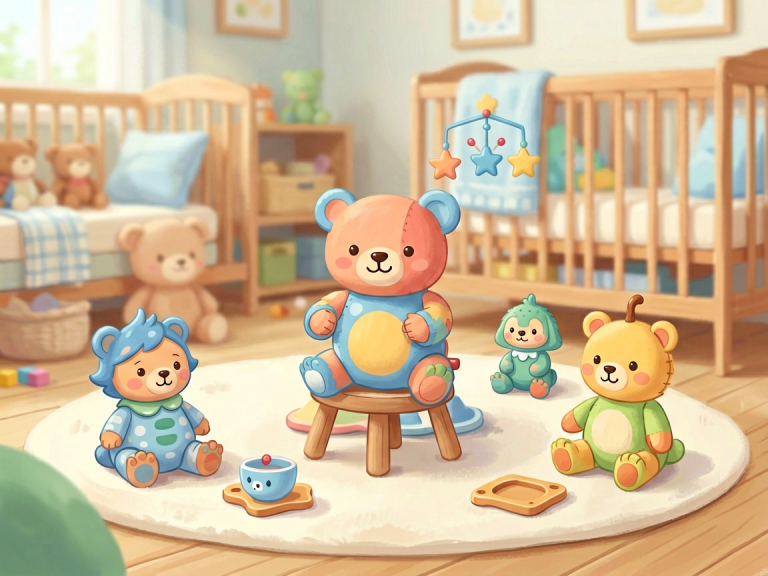
Fabric toys such as stuffed animals, cloth books, and play mats are popular for babies. Here, the main risks are loose fibers, buttons, and ribbons that can be chewed off. Choose fabric toys with embroidered eyes and noses instead of plastic ones, and ensure that all seams are double-stitched. Machine washable fabrics are a bonus for hygiene, especially for toys that end up in mouths.
Age-Appropriate Toys: Matching Development Milestones
Beginners are not a homogeneous group. A toy that is safe for a 12-month-old may be dangerous for a 6-month-old, and a toy that delights a 3-year-old may be boring or frustrating for a 5-year-old. Age labeling, however, is not arbitrary. It is based on a child’s physical and cognitive readiness. For infants (0–12 months) , the safest toys are simple, soft, and sensory-rich. Examples include high-contrast black-and-white cards, unbreakable mirrors, soft rattles with no small parts, and fabric texture balls. Avoid toys with batteries, magnets, or strings longer than 12 inches.
For toddlers (1–3 years) , toys should encourage exploration without risk. Large wooden blocks, shape sorters with chunky pieces, push-and-pull toys without cords, and chunky crayons (non-toxic) are excellent. At this stage, avoid toys that require assembly with tiny screws, as they often include small hardware that can be swallowed. For preschoolers (3–5 years) , safety concerns shift to durability and function. Simple puzzles with large pieces, play dough (homemade or certified safe), and building sets with oversized interlocking blocks are ideal. While they may be more coordinated, children still mouth objects, so non-toxicity remains key.
Choking Hazards: The Critical Concern
Choking is the leading cause of toy-related deaths among children. Beginners, especially those under 3, have a natural tendency to put everything into their mouths. To prevent this, the “small parts” rule is the most important safety guideline. Any toy that can be contained within a 1.25-inch opening is too small for a child under 3. This includes marbles, coins, beads, small game pieces, and the eyes or noses of stuffed animals.
Additionally, button batteries, which are found in many electronic toys, are both a choking hazard and a severe internal burn risk if swallowed. Toys with battery compartments should have a screw-lock mechanism to prevent children from accessing the batteries. Similarly, magnets—especially rare-earth magnets (neodymium)—are deadly if ingested, as they can cause intestinal perforations. For beginners, avoid all toys with loose magnets.
Non-Toxic Materials and Chemical Safety
Beyond choking, chemical safety is another vital dimension. Many cheap toys, particularly those imported without oversight, contain heavy metals like lead, cadmium, or arsenic, often in the paint or plastic. Lead is a neurotoxin that can cause permanent developmental delays. Even toys labeled “environmentally friendly” may not be safe if they use organic but untested dyes.
To ensure chemical safety, look for the ASTM D4236 label (for art materials) and CPSIA (Consumer Product Safety Improvement Act) compliance in the U.S., or the CE mark in Europe. Better yet, choose toys made from natural materials like organic cotton, untreated beechwood, or natural rubber. For plastic toys, the safest types are polypropylene (PP) and polyethylene (PE) , which are less likely to leach harmful substances. Avoid toys with a strong chemical smell—this is often a sign of VOCs (volatile organic compounds).
Durability and Design: Preventing Accidents During Play
A toy that breaks mid-play can create sharp edges or unexpected small parts. Therefore, durability is a non-negotiable safety factor for beginners. Test the toy before giving it to a child: shake it, drop it, twist the parts. If anything feels loose, skip it.
Design also matters in terms of entrapment risks. Toys with holes, hinges, or foldable sections can pinch tiny fingers. Avoid toys with mechanisms that create gaps large enough for a finger to get stuck. For ride-on toys, ensure they have a wide base to prevent tipping. Pull toys should have short, rigid cords (less than 12 inches) or, better yet, no cords at all—simply a handle.
For electric or electronic toys (battery-operated), check that the battery compartment is sealed with a screw. Also, avoid toys that produce loud sounds over 85 decibels, as prolonged exposure can damage hearing. If a toy seems too loud to your adult ears, it is definitely too loud for a child.
Tips for Parents: How to Evaluate Toys Before Buying
Even with certifications, parental vigilance is the best safety measure. Here are actionable steps:
- Read labels carefully. Look for age recommendations, safety certifications, and manufacturer contact information. Avoid toys with vague or missing labels.
- Do the “toilet paper roll test.” If any part of the toy fits entirely inside a standard toilet paper roll, it is a choking risk for children under 3.
- Check for recalls. Before buying second-hand toys, visit the U.S. Consumer Product Safety Commission (CPSC) website or similar national databases to ensure the toy is not recalled.
- Feel the toy. Run your fingers along edges, seams, and joints. If you feel a sharp spot, so will your child.
- Smell the toy. A strong chemical odor is a red flag. Air out new toys for a few days before giving them to a child, but ideally, choose unscented ones.
- Consider the child’s personality. Some beginners are aggressive chewers; for them, soft rubber teethers are better than hard plastic. Others are climbers; avoid toys with parts that can become footholds.
- Observe during play. Even the safest toy can become dangerous if a child uses it in an unintended way, like standing on a toy truck. Supervision is essential, especially for beginners.
The Role of Standards and Regulations
Global safety standards exist to protect children. The ASTM F963 standard in the United States covers mechanical and physical hazards, while the EN71 series in Europe includes tests for flammability, migration of certain elements, and chemical composition. Australia has AS/NZS ISO 8124, and Japan follows the Toy Safety Standard (ST).
As a consumer, you do not need to memorize every standard, but you should know that toys bearing these marks have undergone rigorous testing. Be wary of toys sold at dollar stores, street vendors, or online marketplaces with no clear brand or certification—they often bypass safety tests. Similarly, “artisanal” or handmade toys can be wonderful but may lack safety testing; always ask the maker about materials and finishing.
Conclusion: Play with Confidence
Safe toys for beginners are not a luxury—they are a fundamental right of every child. By understanding the risks and knowing what to look for, parents and caregivers can create a play environment that nurtures development without fear. The best toy for a beginner is one that is age-appropriate, made from non-toxic materials, free from choking and strangulation hazards, and built to withstand the enthusiastic curiosity of a young mind.
Remember, safety does not mean sacrificing fun. Some of the most beloved beginner toys—simple wooden blocks, soft cloth balls, silicone teethers, and chunky puzzles—are also the safest. They allow children to explore, fail, try again, and succeed, all while protected from harm. As you navigate the overwhelming world of toys, let this guide be your compass. Prioritize safety first, and the joy of play will follow naturally. After all, the best gift you can give a beginner is not a fancy gadget, but the peace of mind that comes from knowing their play is protected.