The Ultimate Guide to Buying Problem-Solving Toys: Nurturing Young Minds Through Play
Introduction
In an age of instant gratification and digital distractions, the ability to think critically, analyze situations, and devise creative solutions is more valuable than ever. Parents and educators alike are turning to problem-solving toys—games and puzzles designed to challenge a child’s cognitive abilities while keeping them engaged and entertained. But with a market flooded with colorful boxes and bold claims, how do you choose the right problem-solving toy for your child? This comprehensive buying guide will walk you through everything you need to know—from understanding developmental stages to recognizing quality features—so you can make informed purchases that truly benefit your child’s growth.
Why Problem-Solving Toys Matter
Problem-solving toys are not just about keeping children busy; they are powerful tools for cognitive development. When a child works through a puzzle, builds a structure, or plots a strategy in a board game, they engage multiple brain regions responsible for logic, spatial reasoning, memory, and executive function. These toys teach perseverance—children learn that failure is part of the process, and that trying a different approach can lead to success. Moreover, problem-solving play fosters independence. Instead of relying on step-by-step instructions, children experiment, hypothesize, and draw their own conclusions. This foundational skill set translates directly into academic success and real-world problem-solving later in life. Investing in these toys means investing in your child’s ability to think for themselves.
Age-Appropriate Problem-Solving Toys: A Stage-by-Stage Guide
Children’s cognitive abilities evolve rapidly, so a toy that challenges a six-year-old may frustrate a three-year-old or bore an eight-year-old. Here is a breakdown by developmental stage to help you match toys to your child’s current abilities.
Infants and Toddlers (0–2 Years): Sensory Exploration and Cause-and-Effect
At this earliest stage, problem-solving is all about sensory discovery and understanding basic cause-and-effect relationships. Look for toys that encourage manipulation, stacking, and simple matching.
- Shape sorters – Classic plastic or wooden boxes with holes for different shapes. As babies try to fit the triangle into the square hole, they learn spatial relationships and trial-and-error.
- Stacking rings and nesting cups – These require hand–eye coordination and an understanding of size sequencing. A toddler who stacks rings from largest to smallest successfully has solved a concrete problem.
- Simple puzzles with knobs – Chunky, easy-to-grasp pieces that fit into corresponding cutouts help develop fine motor skills and pattern recognition. Choose puzzles with only two or three pieces.
- Pop-up toys – Buttons that cause a puppet to jump out teach cause and effect, a foundational problem-solving concept. The child learns that pressing a button leads to a predictable result.
Preschoolers (3–5 Years): Building, Matching, and Simple Logic
Preschoolers have longer attention spans and can handle slightly more complex tasks. They begin to understand rules, sequences, and basic counting. Problem-solving toys for this age often blend creativity with logic.
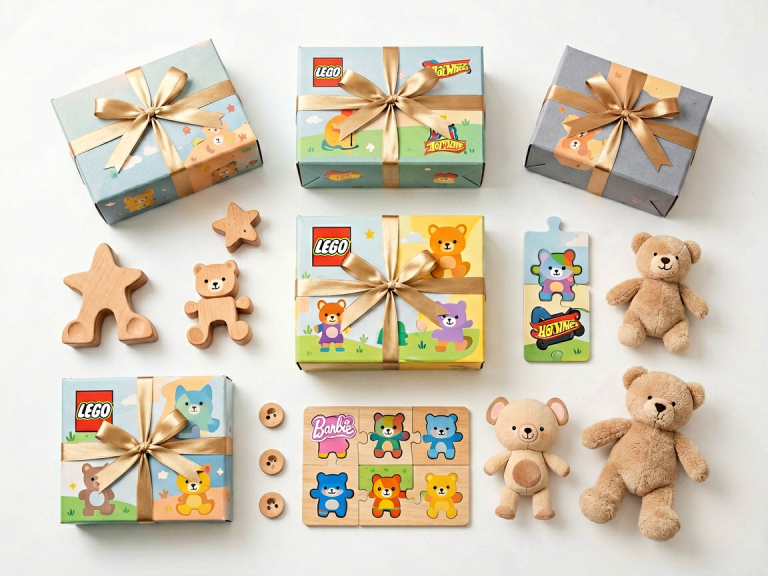
- Wooden blocks and construction sets – Building a tower that doesn’t fall requires planning, balance, and spatial awareness. Lego Duplo or Magna-Tiles are excellent choices.
- Jigsaw puzzles (10–48 pieces) – Start with floor puzzles featuring large pieces and familiar characters. As children complete a puzzle, they practice visual discrimination and patience.
- Memory card games – Flipping cards to find matching pairs trains short-term memory and concentration. Simple matching games with pictures of animals or shapes work well.
- Sequencing puzzles and lacing beads – These teach order and pattern recognition. A child who strings beads in a red-blue-red pattern is solving a sequential problem.
- Simple board games – Games like “Candy Land” (with no reading required) introduce turn-taking and following simple rules, both of which involve problem-solving decisions.
Early School Age (5–7 Years): Strategy, Math, and Creative Thinking
Children in this age group can handle multi-step processes and start to enjoy strategy-based play. Their reading and counting skills are emerging, making many classic games accessible.
- Building sets with instructions – Lego Classic sets (with specific builds) or K’NEX force children to follow diagrams and troubleshoot when pieces don’t line up. This bridges creativity with structured problem-solving.
- Logic puzzles and mazes – Books or magnetic mazes where a child must guide a ball through a path develop planning and spatial reasoning. “Labyrinth” board games are also great.
- Math-based games – “Sum Swamp” or “Sequence Numbers” combine arithmetic with strategic decisions. Children must calculate sums to move forward, blending fun with computation.
- Strategy board games – “Checkers,” “Connect Four,” and “Guess Who?” require players to think ahead, anticipate opponents’ moves, and adjust strategies.
- Science kits – Simple chemistry sets or magnetism kits allow children to hypothesize and observe results. They learn that not every experiment works the first time—a core problem-solving lesson.
Older Children (7+ Years): Complex Logic, Coding, and Open-Ended Challenges
As children approach adolescence, they can tackle sophisticated puzzles and games that require deductive reasoning, coding logic, and even engineering principles.
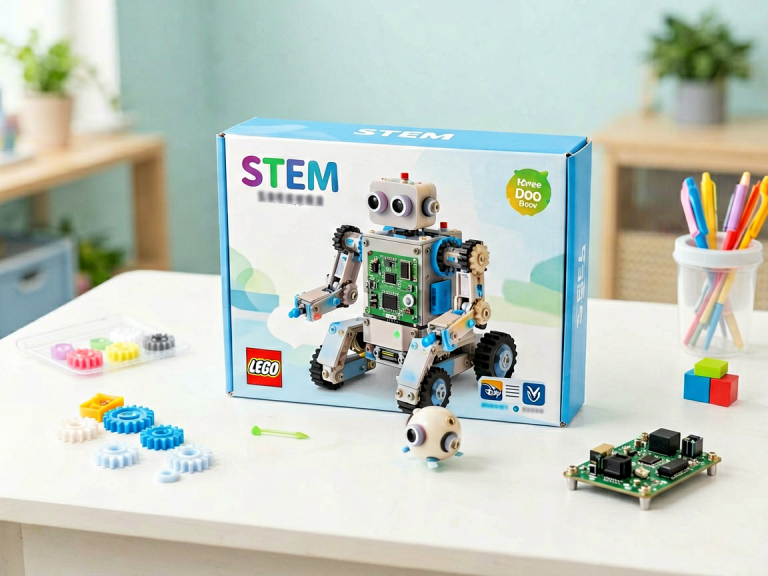
- Advanced building sets – Robotics kits (e.g., Lego Mindstorms or Sphero) that involve programming and mechanical design. These combine engineering with step-by-step debugging.
- Escape room board games – Games like “Unlock!” or “Exit” present a series of interconnected puzzles that must be solved collaboratively under time pressure. They foster teamwork and lateral thinking.
- Logic grid puzzles and Sudoku books – These refine pure deductive reasoning. For children who enjoy math, books of KenKen or binary puzzles are excellent.
- Strategy games – “Chess,” “Settlers of Catan,” “Blokus,” and “Rush Hour” (a traffic jam puzzle) all require forward planning, resource management, and flexible thinking.
- Coding toys – Unplugged coding games (like “Robot Turtles”) or app-driven robots (like “Botley” or “Ozobot”) introduce programming concepts without a screen. Children learn sequences, loops, and conditionals.
- DIY construction kits – Snap Circuits or littleBits allow children to build working electronic devices. Troubleshooting a circuit that won’t light up is a pure problem-solving exercise.
Key Features to Look for in a Problem-Solving Toy
Not all toys labeled “educational” deliver genuine cognitive challenges. When evaluating a potential purchase, keep these criteria in mind:
- Open-endedness – The best problem-solving toys have multiple solutions or ways to play, encouraging divergent thinking. A set of blocks is more open-ended than a puzzle with only one correct arrangement.
- Appropriate challenge level – A toy should be difficult enough to require effort but not so hard that it leads to constant frustration. The “Goldilocks zone” keeps a child in a state of productive struggle.
- Durability and safety – Children will manipulate, drop, and sometimes throw toys. Look for non-toxic materials, rounded edges, and sturdy construction. Avoid small parts for children under three.
- Clear rules or intuitive design – For games, a well-written rulebook is essential. For construction toys, clear diagrams or online tutorials help children get started without constant adult intervention.
- Scalability – Some toys can grow with the child. For example, a puzzle rack that holds pieces for different difficulty levels, or a building set with expansion packs. This extends the toy’s lifespan.
- Screen-free engagement – While apps can be educational, hands-on physical play offers tactile feedback that strengthens neural pathways. Prioritize toys that don’t require a digital device to function.
Tips for Choosing the Perfect Problem-Solving Toy
- Observe your child’s interests. A child obsessed with dinosaurs will respond better to a dinosaur-themed logic puzzle than a generic one. Tie the problem-solving challenge to something they already love.
- Start simple, then level up. If you introduce a complex toy too early, the child may feel defeated. Begin with a slightly easier version and gradually increase difficulty.
- Consider collaborative play. Many problem-solving toys, especially board games, can be played with siblings or friends. This teaches communication and negotiation, adding a social dimension to cognitive growth.
- Avoid over-scripted toys. Toys that talk too much or flash lights at every step can distract from the thinking process. Silence allows a child to concentrate on the problem itself.
- Read reviews from other parents and educators. Look for comments about a toy’s longevity—does it hold a child’s interest for weeks, or is it abandoned after one session? Also, check for mentions of durability.
- Beware of gender stereotypes. Problem-solving skills are essential for all children. Do not limit a girl to pink puzzles or a boy to construction sets. Offer a diverse range to develop a full skill set.
Where to Buy: Online vs. In-Store
Both channels have advantages. Online marketplaces (Amazon, specialty toy shops) offer extensive reviews, filters by age, and often better prices. However, when buying in a physical store, you can examine the toy’s size, weight, and quality firsthand. Small independent toy stores often curate collections of high-quality educational toys and can offer personal recommendations. For used or second-hand toys (e.g., puzzles, board games), check thrift stores or online marketplaces—just ensure all pieces are present before purchasing.
Conclusion
Problem-solving toys are more than just playthings; they are the building blocks of a resilient, curious, and intelligent mind. By choosing age-appropriate toys that challenge without overwhelming, you empower your child to embrace mistakes, think critically, and derive joy from the process of discovery. Whether you opt for a simple shape sorter for your toddler or a robotics kit for your preteen, each purchase is an investment in your child’s future. Let this guide be your compass—and remember that the best toy is one that sparks a question, not just an answer. Happy shopping, and happy problem-solving!