The Power of Play: How Problem-Solving Toys Shape Preschoolers’ Cognitive Development
—
Introduction
In the early years of childhood, play is far more than a simple pastime—it is the primary vehicle through which young children explore the world, build social connections, and develop essential cognitive skills. Among the vast array of toys available, problem-solving toys hold a special place. These are not just entertaining distractions; they are carefully designed tools that challenge a preschooler’s mind, encouraging them to think critically, experiment, and persist through difficulties. From simple stacking blocks to complex puzzles and building sets, problem-solving toys lay the foundation for logical reasoning, spatial awareness, and creative thinking. This article explores why these toys are vital for preschoolers, what types are most effective, and how parents and educators can choose and use them to maximize learning.
—
The Cognitive Benefits of Problem-Solving Toys for Preschoolers
Preschoolers, typically aged three to five, are at a critical stage of brain development. Their neural pathways are rapidly forming, and experiences during this period have a lasting impact on later learning. Problem-solving toys provide exactly the kind of structured challenge that stimulates executive functions—the mental processes that enable planning, focus, and self-regulation.
1. Enhancing Critical Thinking and Logical Reasoning
When a child tries to fit a puzzle piece into the correct spot or builds a tower that won’t topple, they engage in a cycle of hypothesis, testing, and revision. For example, a simple shape-sorter teaches the child that a square peg cannot fit into a round hole. Through trial and error, they learn cause and effect, pattern recognition, and the importance of strategy. These are the building blocks of logical reasoning that will later support mathematics and science.
2. Developing Persistence and Resilience
Problem-solving toys often require repeated attempts before success. A child who struggles to connect two LEGO bricks to form a stable wall must decide whether to try a different approach or ask for help. This process nurtures grit—the ability to keep going despite frustration. Research has shown that children who engage in such guided challenges develop greater emotional regulation and a growth mindset, believing that effort can overcome obstacles.
3. Boosting Spatial Awareness and Fine Motor Skills
Many problem-solving toys, such as wooden puzzles, magnetic tiles, and interlocking gears, require precise hand-eye coordination. Manipulating small objects strengthens the small muscles in the hands and fingers, preparing children for writing. At the same time, rotating pieces in space to see how they fit improves mental rotation skills, a strong predictor of later success in STEM fields.
4. Encouraging Social and Language Development
While problem-solving toys can be used solo, they are even more powerful in group settings. When two preschoolers work together to build a bridge, they must negotiate, share ideas, and explain their thinking. This social interaction supports language development, turn-taking, and empathy. Through cooperative play, children learn that problems often have multiple solutions and that collaboration can lead to better outcomes.
—
Types of Problem-Solving Toys and Their Unique Contributions
Not all problem-solving toys are created equal. Different categories target distinct cognitive domains, and a well-rounded collection can address a wide range of developmental needs.
1. Puzzles: From Simple to Complex
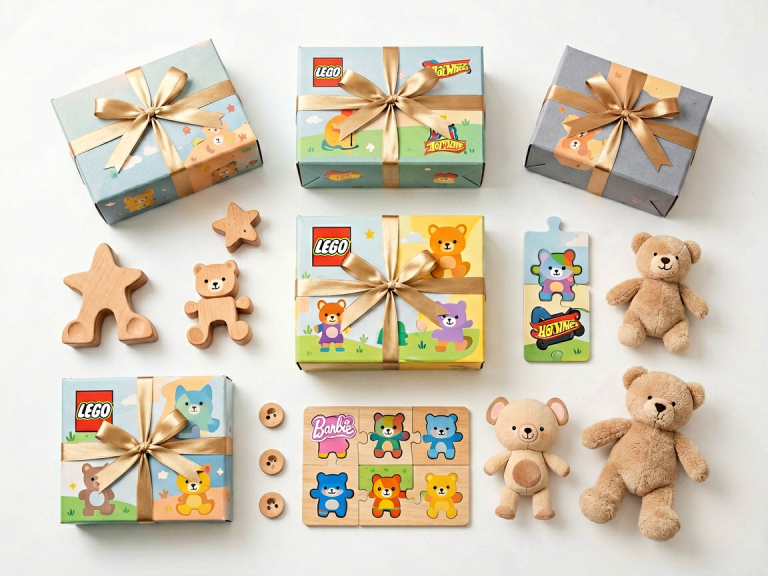
Puzzles are the quintessential problem-solving toy. For preschoolers, begin with large, chunky wooden puzzles featuring familiar shapes or animals. As the child grows, introduce jigsaw puzzles with 12–24 pieces. Puzzles teach visual matching, patience, and the concept of part-whole relationships. They also require sustained attention—a skill that is essential for academic learning.
2. Building and Construction Sets
Blocks, LEGO Duplo, magnetic tiles, and wooden planks allow children to create three-dimensional structures. These toys encourage planning and engineering thinking. A child who wants to build a tall tower must consider balance, weight distribution, and structural integrity. When the tower falls, they learn to redesign. Open-ended construction toys are especially valuable because they offer infinite possibilities, fostering creativity alongside logic.
3. Shape Sorters and Matching Games
Classic shape sorters require the child to match a shape to a corresponding hole. Modern variations include color-coding, number matching, or pattern sequencing. These toys strengthen classification skills—the ability to organize objects based on attributes—which is a precursor to mathematical thinking. Matching games, such as memory card pairs, also train working memory and concentration.
4. Logical Sequencing and Pattern Toys
Toys like bead threading sets, sequencing puzzles, and the popular “Snap Circuits” for older preschoolers help children understand order and patterns. For example, a child might be asked to replicate a pattern of red, blue, red, blue beads. This activity builds the foundation for recognizing sequences in stories, numbers, and daily routines.
5. Cause-and-Effect and Strategy Games
Simple board games like “Chutes and Ladders” or “Hi Ho! Cherry-O” introduce turn-taking and basic probability. Strategy games, such as “Hoot Owl Hoot!” (a cooperative game), require preschoolers to plan moves and consider consequences. These games teach rule-following, decision-making, and emotional control when losing or winning.
—
Selecting Age-Appropriate Problem-Solving Toys
Choosing the right toy is crucial. A toy that is too simple will bore the child; one that is too difficult will discourage them. For preschoolers, the key is to find toys that are challenging but achievable with effort.
1. Safety and Durability
Always check for non-toxic materials, rounded edges, and parts that are too large to swallow. Preschoolers often put toys in their mouths, so age labels are essential. Durable construction ensures the toy survives repeated use.
2. Open-Ended vs. Closed-Ended Toys
Both types have a role. Closed-ended toys (like a puzzle with a single solution) teach focus and completion. Open-ended toys (like building blocks) spark creativity and allow for multiple outcomes. A balanced mix is ideal. For instance, provide a puzzle that the child can complete independently, and also a set of blocks for free building.
3. Following the Child’s Interests
A child who loves animals will engage more deeply with an animal-themed matching game. A child fascinated by vehicles will benefit from a construction set that builds cars. When a toy aligns with their interests, motivation soars, and learning becomes effortless.
4. Avoiding Overstimulation
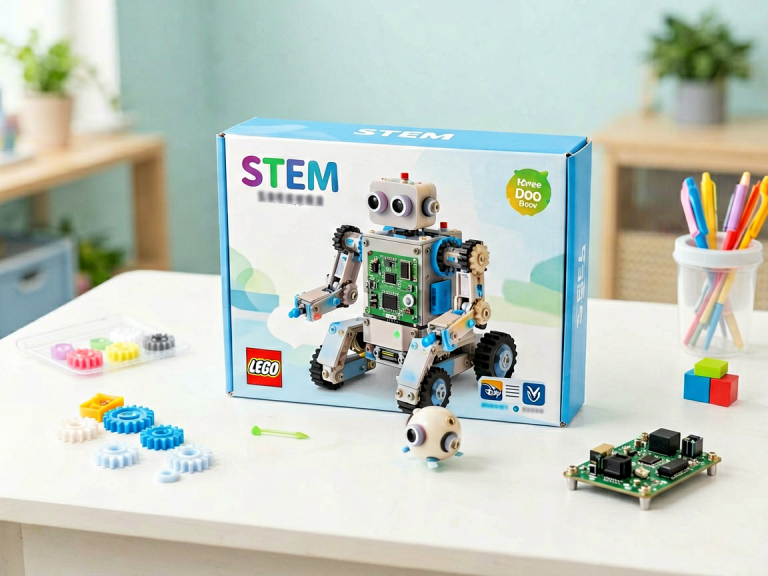
Many modern toys have flashing lights, sounds, and automatic responses. While these can be engaging, they may actually hinder deep problem-solving. Research suggests that simple, non-electronic toys often encourage more active thinking because the child must supply the imagination and the effort. A set of wooden blocks can teach more than a battery-operated robot that solves problems for the child.
—
The Role of Parents and Educators in Guided Play
Even the best problem-solving toy is only as effective as the environment in which it is used. Adults play a critical role in scaffolding the child’s learning—providing support without taking over.
1. Asking Open-Ended Questions
Instead of saying, “Put the blue piece here,” try asking, “Where do you think this piece might go?” or “What happens if you try turning it?” Open-ended questions encourage the child to verbalize their thought process and explore alternatives. This simple technique transforms a toy from a passive activity into an active learning exercise.
2. Modeling Problem-Solving Behavior
Children learn by watching. If a parent encounters a difficulty with a toy, they can narrate their own thinking: “Hmm, this piece doesn’t fit. Maybe I should look for a different one.” This modeling teaches children that frustration is normal and that systematic thinking can solve problems.
3. Encouraging Collaboration
When playing with multiple children, adults can facilitate cooperation. For example, in a block-building project, the adult can say, “You have the red blocks, and Lily has the blue ones. How can you work together to make a tall tower?” This not only builds social skills but also shows that problems often require teamwork.
4. Allowing for Failure
It is tempting to step in immediately when a child struggles, but some struggle is productive. The “Zone of Proximal Development” theory suggests that learning happens best when tasks are just beyond the child’s current ability. Allow a child to try and fail, then ask, “What could you try next?” This builds independence and confidence.
5. Integrating Toys into Daily Routines
Problem-solving doesn’t have to be confined to playtime. Use toys to teach real-world skills. For instance, while cooking, ask the child to sort ingredients by color using a shape-sorter-like toy. During cleanup, have them categorize toys into bins—a matching game in disguise. This reinforces that problem-solving is a lifelong skill.
—
Conclusion: Investing in Play for Lifelong Learning
Problem-solving toys for preschoolers are not a luxury—they are a necessity in any high-quality early childhood environment. Through puzzles, blocks, sorting games, and cooperative board games, children develop the cognitive, social, and emotional tools that will serve them for years to come. They learn to approach challenges with curiosity rather than fear, to persist when things are hard, and to work with others toward a common goal.
As parents, caregivers, and educators, our task is not to fill children with facts but to equip them with the ability to think. By choosing thoughtful, age-appropriate problem-solving toys and engaging in guided play, we give preschoolers the gift of active learning. In a world that changes rapidly, the most valuable skill we can cultivate is the ability to solve problems—and it starts with a simple toy in the hands of a three-year-old.
(Word count: approximately 1,250)