The Power of Play: How Educational Toys Shape Young Minds
Introduction
In an era where screens dominate children’s attention, the humble toy remains a cornerstone of early development. Yet not all toys are created equal. Educational toys for kids represent a deliberate bridge between fun and learning, transforming playtime into a fertile ground for cognitive, social, and emotional growth. These specially designed playthings encourage exploration, problem-solving, and creativity while subtly laying the foundation for academic skills. This article delves into the multifaceted world of educational toys, examining their evolution, categories, benefits, and the critical role they play in shaping young minds.
The Evolution of Educational Toys
The concept of learning through play is not new. Centuries ago, wooden blocks, simple puzzles, and counting beads served as primitive educational tools. However, the modern understanding of child development—championed by theorists like Maria Montessori, Jean Piaget, and Lev Vygotsky—has refined our approach. Today’s educational toys are meticulously crafted to align with developmental milestones. From shape sorters that teach geometry to complex robotics kits that introduce coding, the market now offers a vast spectrum of options. The underlying philosophy remains constant: when children are actively engaged, they absorb knowledge more naturally and retain it longer.
Categories of Educational Toys
Educational toys span multiple domains, each targeting specific skill sets. Understanding these categories helps parents and educators make informed choices.
STEM Toys
STEM—Science, Technology, Engineering, and Mathematics—toys have gained tremendous popularity. These include building sets like LEGO Technic or magnetic tiles, which allow children to experiment with structural integrity and spatial reasoning. Kits for basic electronics or chemistry experiments introduce scientific method and cause-effect relationships. In an increasingly digital world, coding robots such as Botley or Sphero teach algorithmic thinking without a screen. STEM toys foster curiosity, logical reasoning, and persistence—qualities essential for future innovators.
Language and Literacy Toys
From alphabet puzzles to interactive storybooks, language toys build vocabulary, phonemic awareness, and narrative skills. Magnetic letters, flash cards with pictures, and word-building games like Bananagrams make literacy acquisition playful. For bilingual households, toys that label objects in multiple languages reinforce cognitive flexibility. Even simple puppets encourage children to invent dialogues, enhancing oral communication and empathy.
Creative and Artistic Toys
Art supplies, modeling clay, musical instruments, and craft kits encourage self-expression and fine motor development. Open-ended materials like watercolor sets or clay allow children to explore colors, textures, and shapes without predetermined outcomes. Such toys nurture imagination and give children the confidence to experiment, make mistakes, and try again—a crucial aspect of growth mindset.
Social and Emotional Learning Toys
Board games, cooperative playsets, and role-play kits (e.g., doctor kits, kitchen sets) teach turn-taking, sharing, empathy, and conflict resolution. Dolls and action figures can become vehicles for children to act out social scenarios, helping them process emotions and understand different perspectives. These toys are particularly valuable in early childhood, when social skills are first being practiced.
Key Benefits of Educational Toys
The advantages of educational toys extend far beyond mere entertainment. Research consistently shows that well-designed playthings support holistic development.
Cognitive Development
When a child fits a puzzle piece into the correct slot, she is not just playing—she is honing visual-spatial reasoning, memory, and pattern recognition. Educational toys often require children to make decisions, recall sequences, or test hypotheses. For instance, a simple bead maze reinforces hand-eye coordination and counting. Over time, these small cognitive challenges build neural pathways that underpin higher-order thinking.
Problem-Solving Skills
Toys that present obstacles—such as a complex construction set without instructions or a logic puzzle—teach children to break down problems, try different strategies, and learn from failure. This “productive struggle” is vital for resilience. Unlike passive screen time, where answers are often given, educational toys demand active engagement. A child who cannot balance a tower keeps adjusting until stability is achieved; the lesson of iterative problem-solving stays with them.
Fine and Gross Motor Skills
Manipulating small objects—threading beads, turning knobs, stacking blocks—refines fine motor control essential for handwriting. Larger building systems or active games like hopscotch mats develop gross motor coordination. Educational toys that combine movement with learning (e.g., floor puzzles, balance games) reinforce body awareness and spatial orientation.
Social Interaction
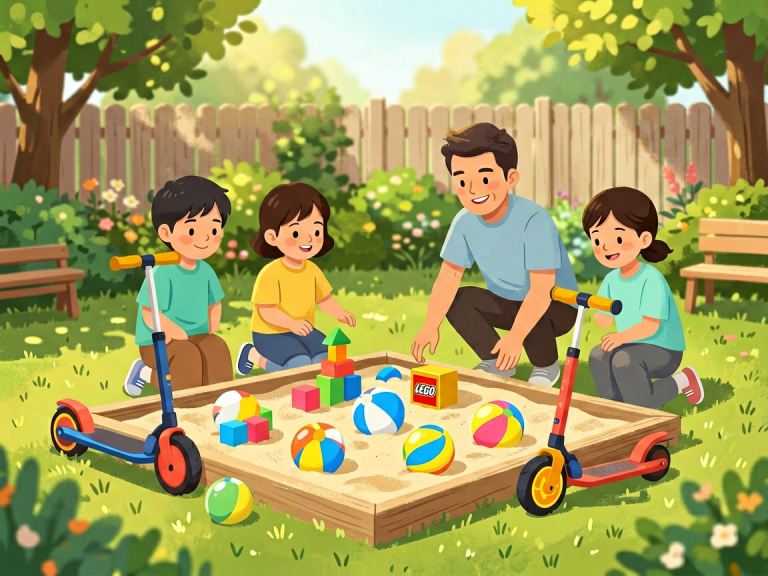
Many educational toys are designed for collaborative play. A group of children building a marble run must negotiate roles, share materials, and communicate ideas. These interactions teach patience, delegation, and compromise. Board games specifically target social rule-following and sportsmanship. While solitary play has value, cooperative educational toys prepare children for the collaborative nature of school and later life.
How to Choose the Right Educational Toys
With countless options available, selecting appropriate toys can feel overwhelming. A few principles can guide the choice.
Age Appropriateness
Manufacturers typically indicate age ranges, but these should be taken as guidelines rather than strict rules. A toy that is too simple will bore a child; one that is too complex will frustrate them. Ideally, a toy should offer a “just right” challenge—stretching the child’s abilities without causing discouragement. For toddlers, sensory toys with bright colors and varied textures work well. Preschoolers benefit from simple puzzles and matching games. School-age children enjoy more advanced STEM kits and strategy games.
Open-Ended vs. Structured Play
Open-ended toys—blocks, loose parts, clay—allow infinite possibilities and foster creativity. Structured toys, like board games or specific kits, teach rule-following and target skill mastery. A balanced toy chest should include both. Children who only play with structured toys may struggle with divergent thinking; those with only open-ended materials might miss out on learning systematic processes.
Quality and Safety
Always check for non-toxic materials, sturdy construction, and absence of small parts for young children. Well-made toys withstand repeated use and can be passed down. Additionally, consider whether the toy encourages independent play or constant adult intervention. The best educational toys empower children to direct their own learning.
The Role of Parents and Educators
Even the finest educational toy is merely a tool without adult guidance. Parents and teachers should actively participate in play—not by taking over, but by asking open-ended questions: “What do you think will happen if you add this block?” or “How can we make this structure stronger?” This scaffolding technique deepens learning. Furthermore, adults can rotate toys to maintain novelty and align them with current interests or school themes. It is also crucial to resist the urge to over-schedule; unstructured free play remains irreplaceable for creativity and emotional regulation.
Conclusion
Educational toys are not a substitute for loving interaction or quality time, but they are powerful allies in a child’s developmental journey. They transform mundane moments into opportunities for discovery, turning curiosity into competence. By choosing toys that stimulate the mind, encourage collaboration, and spark imagination, we give children the tools they need to navigate an ever-changing world. The best educational toy is one that a child returns to again and again, each time finding something new—a fresh challenge, a hidden connection, or a deeper understanding. In the end, that is the true magic of play.