The Power of Play: How Educational Learning Toys Shape Children’s Development
Introduction
In an age where screens dominate children’s attention, the humble toy often gets overlooked as a serious tool for learning. Yet decades of developmental psychology and neuroscience research tell a different story: play is the primary vehicle through which young children explore the world, build essential skills, and lay the foundation for lifelong learning. Educational learning toys for kids are not just colorful distractions; they are carefully designed instruments that integrate fun with cognitive, social, emotional, and physical development. From a toddler’s first stacking blocks to a preschooler’s coding robot, these toys transform abstract concepts into tangible, hands-on experiences. This article delves into the critical role of educational toys, categorizes the most effective types, offers guidance on selection, and highlights how parents and educators can maximize their impact. By understanding the science behind play, we can turn every playroom into a vibrant classroom.
The Importance of Educational Toys in Early Childhood Development
The first years of life are a period of extraordinary brain plasticity. Neural connections are formed at a rate of more than one million per second, and the quality of environmental stimuli directly influences this wiring. Educational learning toys serve as structured stimuli that encourage exploration, problem-solving, and creativity. Unlike passive entertainment, these toys require active participation—pushing, pulling, sorting, matching, and reasoning. This active engagement strengthens neural pathways related to executive function, language acquisition, and spatial reasoning.
Moreover, educational toys foster intrinsic motivation. When children discover that they can make a block tower stand or solve a puzzle, they experience a sense of mastery. This builds confidence and a growth mindset—the belief that abilities can be developed through effort. Maria Montessori, the pioneering educator, famously emphasized that “play is the work of the child.” Modern research supports her insight: children learn best when they are emotionally invested and physically active. High-quality educational toys provide the optimal balance of challenge and success, keeping children in a state of “flow” where learning feels effortless.
Beyond cognitive benefits, these toys also promote social and emotional development. Cooperative board games teach turn-taking, patience, and dealing with winning or losing. Role-playing sets (like kitchens or tool benches) encourage perspective-taking and language use. In a world where emotional regulation and collaboration are increasingly valued, educational toys offer a safe space to practice these skills.
Types of Educational Learning Toys and Their Benefits
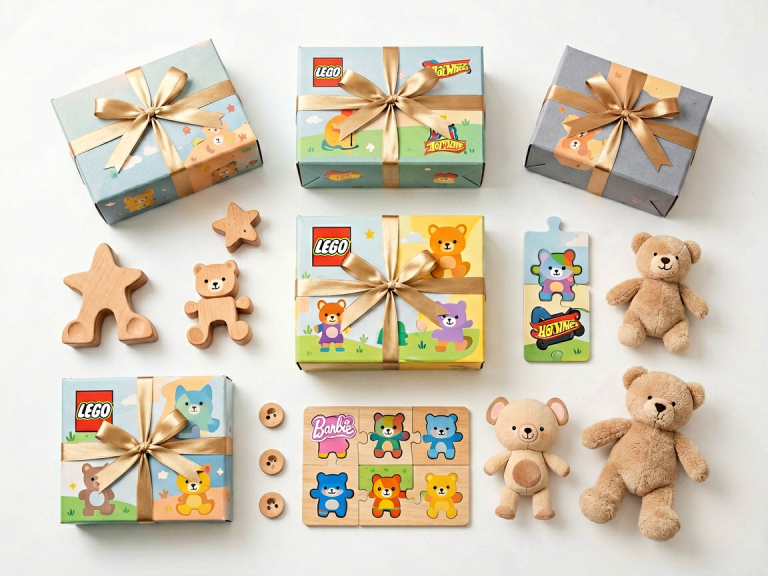
Educational toys come in a vast array, each targeting different developmental domains. Understanding these categories helps parents and educators make informed choices.
1. STEM and Construction Toys
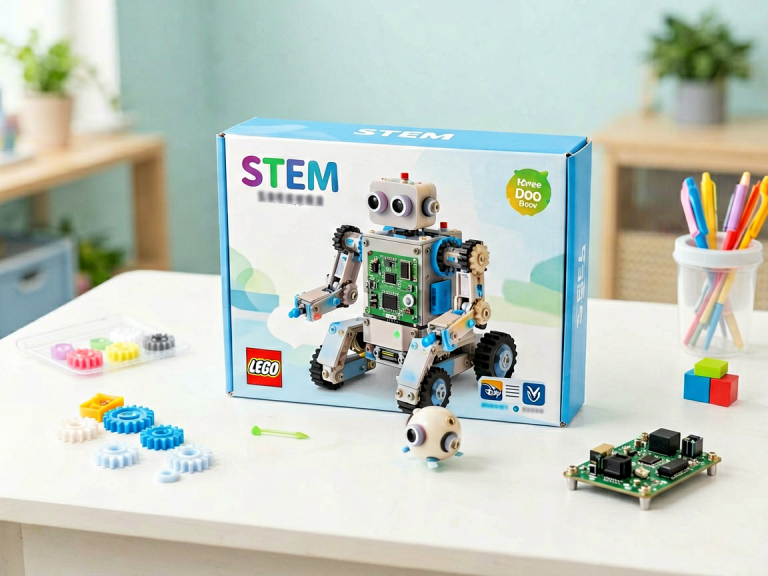
STEM (Science, Technology, Engineering, and Mathematics) toys are among the most popular and powerful learning tools. Building blocks (classic wooden or interlocking plastic like LEGO) teach spatial awareness, balance, and basic physics. Magnetic tiles allow children to create 3D structures while exploring magnetism and geometry. For older children, robotics kits such as LEGO Mindstorms or simple coding robots (e.g., Botley, Sphero) introduce programming logic through tactile play. These toys develop logical thinking, sequential reasoning, and perseverance because failure is a natural part of the building process.
2. Language and Literacy Toys
Alphabet puzzles, letter magnets, and phonics games turn early literacy into a game. More advanced toys include storytelling cubes, magnetic word boards, and electronic reading devices that narrate when a child touches a picture. Board games that require reading instructions or card games like “Boggle Junior” expand vocabulary and spelling. Importantly, the best language toys encourage conversation. Simple puppets, for instance, can spark dialogue and narrative creation, which are foundational to language development.
3. Math and Logic Toys
Counting bears, abacuses, number puzzles, and pattern blocks help children internalize mathematical concepts. Games like “Sum Swamp” (a board game involving addition and subtraction) make arithmetic fun. Logic puzzles, such as tangrams or “Rush Hour,” develop problem-solving and deductive reasoning. These toys teach children that numbers are not abstract symbols but represent quantities, patterns, and relationships.
4. Sensory and Fine Motor Toys
For toddlers and preschoolers, sensory play is crucial. Playdough, sand tables, water beads, and textured balls stimulate tactile senses while strengthening hand muscles. Threading beads, lacing cards, and pegboards refine fine motor control and hand-eye coordination—skills directly linked to later handwriting ability. Sensory toys also have a calming effect, helping children regulate their emotions through repetitive, soothing actions.
5. Role-Playing and Social-Emotional Toys
Dollhouses, action figures, doctor kits, and pretend grocery stores allow children to imitate adult roles. This type of play is essential for developing empathy, negotiation skills, and understanding social norms. Board games designed specifically for emotional learning, such as “The Feelings Game” or “Mad Dragon,” help children identify and manage emotions. Cooperative games (where players work together rather than compete) teach teamwork and shared decision-making.
How to Choose the Right Educational Toys for Your Child
Not all educational toys are created equal, and the “right” toy depends on the child’s age, interests, and developmental stage. Here are key considerations:
1. Age Appropriateness
Toys labeled with age recommendations are based on safety and developmental readiness. A toy that is too advanced may frustrate a child; one that is too simple may bore them. For example, a 12-month-old benefits from cause-and-effect toys like a shape sorter, while a 4-year-old may enjoy a simple puzzle with 24 pieces. Always check for small parts that could pose choking hazards.
2. Open-Ended vs. Closed-Ended Play
Open-ended toys (building blocks, art supplies, playdough) have no single “correct” outcome—they encourage creativity and divergent thinking. Closed-ended toys (puzzles, matching games) have a clear goal and teach specific skills. A healthy mix is ideal. Children need both the structure of a finished puzzle and the freedom to invent their own worlds with blocks.
3. Quality and Durability
Educational toys are an investment. Look for non-toxic materials, sturdy construction, and designs that withstand repeated use. Wooden toys are often more durable than plastic, and they age well. Avoid toys with loud, jarring sounds or flashing lights unless they serve a clear learning purpose. Simpler toys often promote deeper engagement.
4. Alignment with Current Interests
A child fascinated by dinosaurs will engage more deeply with a dinosaur excavation kit than with a generic building set. Observing your child’s natural curiosities allows you to select toys that extend their passion. If a child loves cooking, a pretend kitchen with play food can teach counting, sorting, and sequencing—all while nurturing that interest.
5. Screen-Free Options When Possible
While some digital educational apps and tablets have value, hands-on toys offer irreplaceable benefits: tactile feedback, three-dimensional exploration, and real-world social interaction. Limit screen time and prioritize physical toys that engage multiple senses.
The Role of Parents and Educators in Maximizing Learning Through Play
A toy is only as educational as the context in which it is used. Parents and educators are the “tour guides” who can transform a simple play session into a rich learning experience. Here are actionable strategies:
1. Active Participation
Sitting beside a child and commenting on their actions (“I see you put the red block on top of the blue one—that’s very tall!”) expands vocabulary and reinforces concepts. Asking open-ended questions (“What do you think will happen if we add another block?”) encourages prediction and critical thinking.
2. Scaffolding Without Overriding
Scaffolding means providing just enough help to allow the child to succeed on their own. If a child struggles with a puzzle, offer a hint rather than completing it for them. The goal is to build resilience and problem-solving skills, not to achieve a perfect outcome.
3. Creating a Rich Environment
Rotate toys periodically to maintain novelty. Keep a variety of educational toys accessible—some for independent play and some for cooperative play. A dedicated play space with low shelves and clear bins invites children to choose and return items, fostering independence and organization.
4. Integrating Learning into Daily Routines
Educational toys don’t have to be confined to playtime. Use magnetic numbers on the refrigerator during snack time to count apple slices. Bring a shape sorter to the doctor’s waiting room. The more natural the integration, the more children see learning as part of everyday life.
5. Modeling a Growth Mindset
When playing with a child, talk about your own mistakes and how you learn from them. If you drop a block tower, say, “Oops, I wonder how we can build it stronger next time.” This models resilience and shows that setbacks are opportunities, not failures.
Conclusion
Educational learning toys for kids are far more than mere pastimes; they are the building blocks of the developing mind. By engaging multiple senses, encouraging active problem-solving, and nurturing both cognitive and emotional growth, these toys prepare children for the complex demands of school and life. In a world that increasingly values creativity, collaboration, and critical thinking, investing in high-quality educational toys is an investment in a child’s future. Yet the most crucial element remains the caring adult who plays alongside—asking questions, offering encouragement, and celebrating the joy of discovery. When we combine thoughtful toys with intentional interaction, we unlock the full potential of play, turning every moment of fun into a stepping stone toward a lifetime of learning.