The Essential Guide to Learning Toys for Beginners: Nurturing Curiosity and Foundational Skills
Introduction
The first few years of a child’s life are a whirlwind of discovery. Every new sound, texture, and shape sparks questions, and every question is a doorway to learning. For beginners—whether toddlers just starting to grasp objects or preschoolers taking their first steps into structured play—the right toys can transform passive entertainment into active education. Learning toys are not mere distractions; they are carefully designed tools that stimulate cognitive development, fine motor skills, language acquisition, and social-emotional growth. This guide explores why these toys matter, what makes them effective, and how parents and educators can choose the best options for young learners. By understanding the principles behind purposeful play, we can set beginners on a path of joyful, lifelong learning.
Why Learning Toys Matter for Beginners
Play is the natural language of childhood. Through play, children experiment, fail, try again, and ultimately master new concepts. Learning toys accelerate this process by embedding educational objectives into engaging activities. For beginners, the stakes are especially high: the brain is developing neural connections at an astonishing rate, and early experiences shape lifelong attitudes toward learning.
Research in developmental psychology shows that hands-on, interactive toys—such as stacking rings, shape sorters, and simple puzzles—help build spatial awareness, problem-solving skills, and hand-eye coordination. Unlike passive screen-based entertainment, these toys require active participation. A child who fits a square block into a square hole is not just playing; she is practicing pattern recognition, cause and effect, and perseverance. Moreover, learning toys often introduce basic concepts like colors, numbers, letters, and sequences in a low-pressure context, making the first encounters with academic material feel like play rather than work. This positive association is crucial for maintaining intrinsic motivation as children grow.
Key Characteristics of Effective Learning Toys for Beginners
Not every colorful or noisy toy qualifies as a learning tool. Effective learning toys for beginners share several essential features.
First, they are age-appropriate and safe. A toy intended for a six-month-old should have no small parts, be made of non-toxic materials, and be easy to grasp. For older beginners (ages two to four), toys may include more complex mechanisms like hinges or sliding parts, but they must still pass rigorous safety standards.
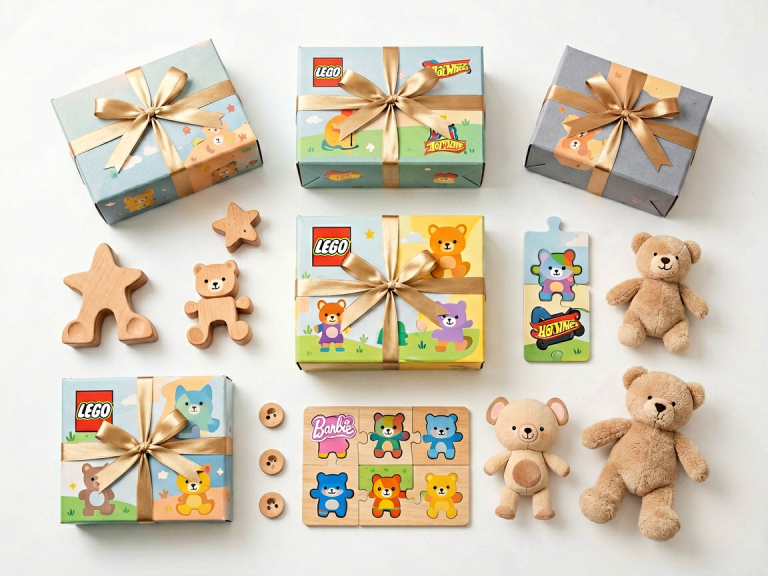
Second, they encourage open-ended exploration. The best learning toys do not dictate a single right answer. A set of wooden blocks can become a tower, a bridge, a castle, or a counting tool. This flexibility fosters creativity and divergent thinking—skills that are as valuable as memorizing numbers.
Third, they offer gradual challenge. A good learning toy grows with the child. For instance, a simple jigsaw puzzle with three pieces can later be replaced by one with twelve pieces, or the same toy can be used in different ways as the child’s abilities advance. This “scaffolding” effect keeps the child engaged without causing frustration.
Finally, effective learning toys provide immediate feedback. When a child pushes a button and hears a sound, or when a piece clicks perfectly into place, the toy communicates success or failure in a clear, non-judgmental way. This feedback loop reinforces learning and builds confidence.
Top Categories of Learning Toys for Beginners
Given the vast array of products on the market, it helps to categorize learning toys by the skills they target. Here are the most impactful categories for beginners:
- Sensory and Motor Skill Toys – These are often the first toys a child encounters. Examples include rattles, textured balls, stacking cups, and activity gyms with dangling objects. They stimulate touch, sight, and hearing while encouraging reaching, grasping, and eventually crawling. For slightly older beginners, playdough, finger paints, and large beads for threading develop fine motor control.
- Cognitive and Problem-Solving Toys – Shape sorters, simple puzzles, nesting dolls, and memory matching games fall into this group. They teach classification, sequencing, and logical thinking. Many of these toys also incorporate numbers or letters, providing an early introduction to literacy and numeracy without formal instruction.
- Language and Communication Toys – Books with textures, sound books that play animal noises, and toys that speak simple words or phrases support vocabulary building. Flashcards and magnetic letters are also popular, though experts recommend using them in playful contexts. The key is interaction: a toy that says “ball” when pressed is far less effective than one that encourages the child to repeat the word or point to a picture.
- Imaginative and Social Play Toys – Puppets, dollhouses, play kitchens, and toy tool sets allow children to act out real-life scenarios. This type of play develops empathy, narrative skills, and social cooperation. For beginners, simple role-play toys (like a doctor’s kit with a stethoscope) can demystify everyday experiences and reduce anxiety.
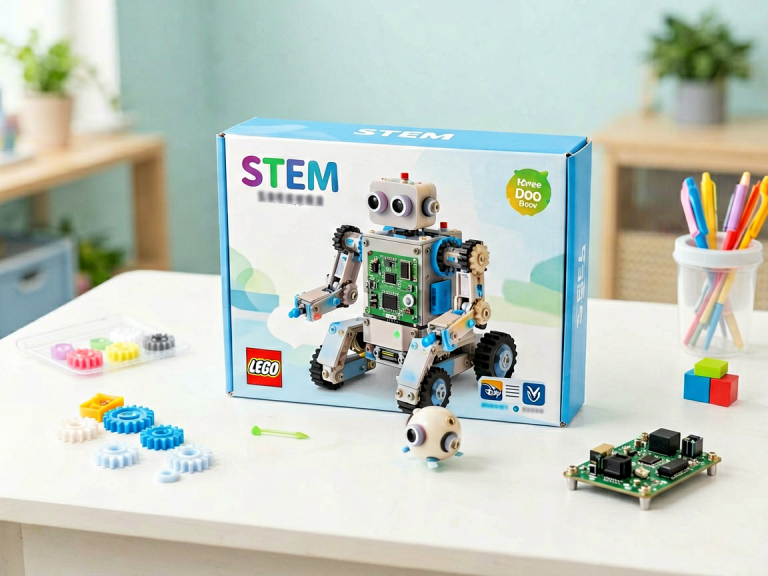
- STEM-Focused Toys for Beginners – Even very young children can engage with basic science and math concepts through toys like magnetic tiles, simple balance scales, or water wheels. These toys introduce cause and effect, measurement, and early engineering principles through hands-on experimentation.
How to Choose the Right Learning Toy for Your Child
Selecting a learning toy can be overwhelming, but a few practical guidelines can simplify the process.
First, observe your child’s current interests. A child who loves music might thrive with a xylophone or a simple drum, while a child fascinated by how things move might enjoy a car ramp or a marble run. Aligning toys with natural curiosity guarantees engagement.
Second, prioritize quality over quantity. A single, well-designed wooden puzzle often teaches more than a dozen cheap plastic toys that beep and flash. Look for durable materials that can withstand rough handling, and avoid toys that are overly distracting—too many lights and sounds can overwhelm a beginner’s developing senses.
Third, consider the toy’s “play value.” Will your child still use it in six months? Can it be used in multiple ways? A set of interlocking blocks, for example, can be used for stacking, sorting by color, building structures, or even pretending they are food. This longevity makes the investment worthwhile.
Fourth, avoid gender stereotypes. Learning toys should be gender-neutral in design and marketing. A pink “princess” puzzle may inadvertently discourage boys from engaging, while a “construction” set marketed only to boys may alienate girls. Choose toys that invite all children to explore, regardless of gender.
Finally, read reviews and seek expert recommendations. Organizations like the American Academy of Pediatrics and Zero to Three offer guides to age-appropriate toys. Parent communities and teacher blogs also provide real-world insights into which toys hold children’s attention and actually teach.
The Role of Parents and Educators in Guided Play
Even the most brilliant learning toy cannot replace the human element. Adults play a crucial role in maximizing a toy’s educational potential. When a parent sits beside a child and asks open-ended questions—“What happens if we stack this block here?” or “How many red rings do you see?”—the toy becomes a vehicle for dialogue and deeper thinking.
Guided play does not mean directing every move. Instead, it means scaffolding: offering a small challenge, then stepping back to let the child discover. For example, if a child struggles to fit a shape into a sorter, the adult can gently turn the piece to show the correct orientation, then allow the child to complete the action alone. This balance of support and independence builds persistence and self-efficacy.
Educators in preschool and kindergarten settings can integrate learning toys into lesson plans. For instance, a simple counting toy can be used during circle time to reinforce numbers, while building blocks can become tools for collaborative group projects. The key is to embed learning objectives into play without making the activity feel like a test.
Furthermore, adults should model curiosity. If a toy breaks, instead of throwing it away, explore it together: “Let’s see what’s inside! Can we fix it?” This attitude teaches problem-solving and resilience—qualities that no toy can impart alone.
Conclusion: Building a Foundation for Lifelong Learning
Learning toys for beginners are far more than commercial products; they are bridges between a child’s natural desire to play and the structured skills needed for future academic success. By choosing toys that are safe, open-ended, and appropriately challenging, and by engaging with children during play, parents and educators can create rich environments where curiosity thrives.
Remember, the goal is not to produce a toddler who can recite the alphabet at age two, but to cultivate a learner who loves discovering how the world works. The right learning toy can spark that love. It can turn a simple afternoon of stacking rings into a lesson in gravity, cause and effect, and patience. And when that excitement becomes internalized, the child will carry it into the classroom and beyond.
In the end, the best learning toy is the one that inspires a beginner to ask, “What’s next?”—and to reach out with both hands to find out.