The Best Toys for 3-Year-Olds: A Comprehensive Guide to Nurturing Growth Through Play
Introduction
The age of three is a magical milestone. Children at this stage are bursting with curiosity, energy, and a rapidly expanding vocabulary. They are transitioning from toddlerhood into early childhood, developing new cognitive skills, refining their motor abilities, and learning to navigate social interactions. The toys they play with during this critical period are not merely sources of entertainment; they are powerful tools that shape their learning, creativity, and emotional development. Choosing the right toys for a three-year-old can be overwhelming, given the sheer volume of options on the market. However, understanding the developmental needs of a three-year-old can guide parents, caregivers, and gift-givers toward selections that are both engaging and educational. This article explores the best types of toys for three-year-olds, breaking them down into key categories that support different areas of growth. From imaginative play to physical activity, each section highlights why these toys matter, what to look for, and how they can enrich a child’s daily life. By the end, you will have a clear roadmap for choosing toys that will delight a three-year-old while laying a strong foundation for future learning.
—
Understanding the Developmental Landscape of a Three-Year-Old
Before diving into specific toy categories, it is essential to grasp what a typical three-year-old is capable of and what they are beginning to master. Cognitively, they are moving from concrete, single-step thinking to more complex reasoning. They can follow two- or three-step instructions, recognize simple patterns, and engage in short conversations. Their attention span has lengthened to about five to ten minutes for a single activity, though it can vary greatly depending on interest. Language explodes at this age: many three-year-olds know hundreds of words, can form short sentences, and ask endless “why” questions. Socially, they are learning to share, take turns, and cooperate, though they still struggle with impulse control and emotional regulation. Physically, they are becoming more coordinated: they can run, jump, climb, pedal a tricycle, and manipulate small objects with increasing dexterity. Fine motor skills are improving, allowing for simple puzzles, stacking blocks, and using crayons with a more mature grip. All of these developmental markers point to a child who needs toys that challenge without frustrating, encourage independence, and provide opportunities for both solitary and cooperative play. Toys that are too simple bore them, while those that are too complex lead to frustration. The sweet spot lies in open-ended toys that can be used in multiple ways, allowing a child’s imagination to take the lead.
—
Imaginative Play and Pretend Toys
One of the most powerful ways a three-year-old learns about the world is through pretend play. At this age, children begin to engage in simple role-playing scenarios, such as pretending to cook, care for a baby doll, or drive a car. Imaginative play helps them process everyday experiences, develop empathy, and practice language skills in a natural context. The best toys for this category are those that spark creativity rather than dictate a specific outcome. A wooden kitchen set with simple pots, pans, and play food allows a child to mimic adult activities. A dollhouse with furniture and figures encourages storytelling and social scripts. Dress-up clothes—simple capes, hats, and costumes—invite a child to become a superhero, a doctor, or a firefighter. What makes these toys ideal is their open-ended nature. Unlike a battery-operated toy that does one thing and then stops, a set of plastic animals or a collection of fabric blocks can be rearranged and reimagined endlessly. When selecting pretend toys, prioritize durability and safety: avoid small parts that could be choking hazards, and look for non-toxic materials. Also, observe what your child is naturally interested in. If they love helping in the kitchen, a play kitchen will be a hit. If they are fascinated by animals, a veterinarian playset might be perfect. The key is to let the child lead the play, with the toy serving as a springboard rather than a script.
—
Building and Construction Toys
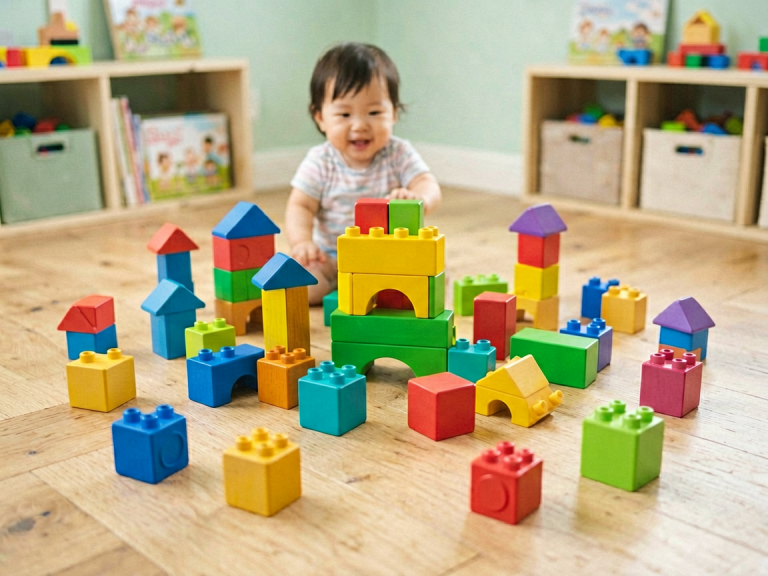
Three-year-olds are natural engineers. They love to stack, connect, knock down, and rebuild. Construction toys develop spatial awareness, problem-solving skills, hand-eye coordination, and even early math concepts like balance and symmetry. The best building toys for this age group are those that are easy to manipulate and that offer a satisfying sensory experience. Large wooden blocks are a classic choice; they are heavy enough to stay put, smooth to the touch, and allow for creative structures. Duplo blocks, which are larger than standard Lego bricks, are also excellent because they can be easily connected and pulled apart by small hands. Magnetic building tiles, such as Magna-Tiles, are another outstanding option. They click together with a satisfying sound, are transparent and colorful, and allow children to create flat shapes, three-dimensional cubes, and even simple houses. Unlike some construction toys that require precise alignment, magnetic tiles forgive small errors, which reduces frustration. For a three-year-old, the process of building is more important than the finished product. Encourage them to experiment, knock down towers, and start again. This type of play teaches resilience and the concept of cause and effect. When choosing building toys, ensure that the pieces are large enough to prevent swallowing, and avoid sets with many tiny accessories that can easily be lost. A good starter set of 30 to 50 pieces provides enough variety without overwhelming a three-year-old’s limited attention span.
—
Art and Creative Supplies
Three-year-olds are often at the peak of their scribbling phase. They love to make marks, mix colors, and explore textures. Art supplies are not just about creating a pretty picture; they are essential for fine motor development, self-expression, and sensory exploration. The best art toys for this age are those that are mess-controlled but still allow for freedom. Washable markers and crayons are a must—they are easy to grip, come in vibrant colors, and clean up easily from skin and surfaces. Thick triangular crayons help promote a proper pencil grip. Finger paints are another wonderful option, though they require more supervision. Spreading paint with hands and fingers is a deeply satisfying tactile experience that also strengthens hand muscles. Play-Doh or modeling clay provides a different kind of sensory input: children can squish, roll, and shape it, which improves hand strength and coordination. Stickers, dot markers, and large stampers are also great because they allow for creative patterns without requiring precise drawing. When setting up art time, prepare the environment: cover the table with newspaper or a plastic mat, dress the child in a smock or old shirt, and keep wet wipes handy. The goal is not to produce a masterpiece but to let the child explore. Avoid directing them to “draw a house” or “color inside the lines.” Instead, praise their process: “I love how you used so many colors!” Art supplies that are open-ended, such as a simple pad of paper and a set of crayons, can provide hours of independent play and support cognitive flexibility.
—
Active and Outdoor Toys
Physical development accelerates at age three. Children have seemingly endless energy, and they need opportunities to run, jump, climb, and balance. Outdoor play is critical not only for gross motor skills but also for overall health and emotional regulation. The best active toys for three-year-olds are those that encourage movement in a safe, controlled way. A tricycle or balance bike is an excellent investment. Tricycles teach pedaling and steering, while balance bikes (without pedals) help a child learn to balance and glide, which later makes transitioning to a pedal bike easier. A small slide, especially one with gentle steps and a low height, provides climbing and sliding practice. Balls of various sizes are also fantastic: a large soft ball for rolling and catching, a small bouncy ball for throwing and chasing. Simple tossing games, like bean bags and a bucket, help develop hand-eye coordination. For indoor active play, consider a child-sized tunnel or a pop-up play tent. These can be used for crawling, hiding, and imaginative games. Also, consider a small trampoline with a handlebar—many three-year-olds love jumping, and it helps build leg strength and coordination. Safety is paramount with active toys. Always supervise outdoor play, ensure equipment is age-appropriate and stable, and use helmets for riding toys. The goal is to make physical activity fun and habitual, setting the stage for a lifetime of movement. Moreover, active play often involves social interaction—taking turns on the slide or chasing a ball together—which teaches cooperation and patience.
—
Puzzles and Problem-Solving Games
As a three-year-old’s cognitive abilities develop, they become increasingly interested in solving problems. Puzzles are a perfect vehicle for this. They teach shape recognition, spatial reasoning, and patience. The best puzzles for this age are those with large, thick pieces and simple images. Start with puzzles that have four to eight pieces, featuring familiar objects like animals, vehicles, or food. Chunky wooden puzzles with knobs are ideal for beginners because the knobs help little fingers grasp and place the pieces. As a child gains confidence, you can introduce jigsaw puzzles with interlocking pieces. Also consider matching games: simple memory cards with pictures of animals or shapes that the child turns over to find pairs. These games develop memory and concentration while being fun. Another excellent problem-solving toy is the shape sorter or an activity cube with gears, doors, and sliding pieces. These multi-activity toys keep a child engaged for longer periods and teach cause and effect. When playing with puzzles, resist the urge to solve them for the child. Instead, offer gentle guidance: “This piece has a blue car on it. Can you find where the blue car is in the picture?” Celebrate their successes, but also normalize mistakes. A three-year-old who learns that it’s okay to try again is building a growth mindset. Avoid puzzles that are too difficult, as they will lead to crying and frustration. The sweet spot is a puzzle that requires a few tries but can eventually be completed independently.
—
Musical Instruments and Sound Toys
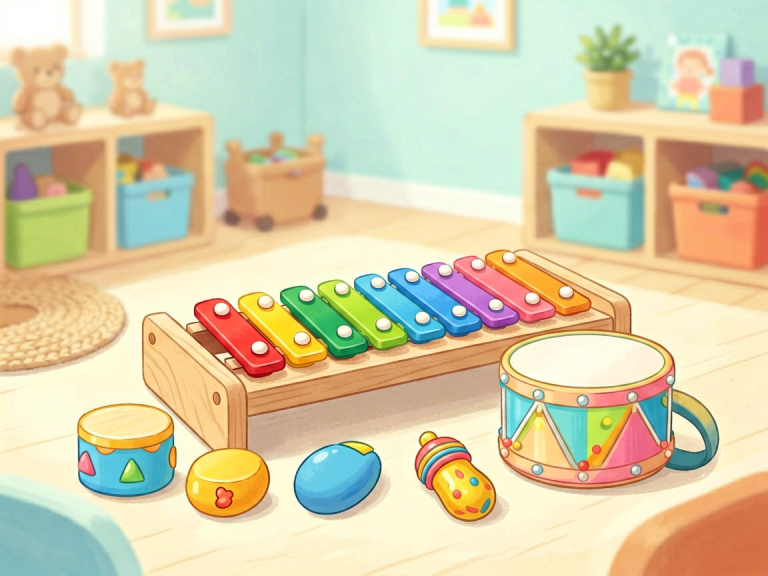
Music is a universal language, and for three-year-olds, it is a source of immense joy and cognitive stimulation. Playing musical instruments helps develop rhythm, listening skills, and fine motor coordination. Moreover, making music is a form of self-expression that doesn’t require words. The best musical toys for this age are simple, durable, and produce pleasant (or at least tolerable) sounds. A xylophone with a wooden mallet teaches cause and effect: hitting different bars produces different notes. A simple drum or djembe encourages a child to keep a beat. Shakers, maracas, and bells are easy to hold and can be incorporated into dance and movement. A child-sized tambourine is another great option. For a more guided experience, consider a simple keyboard with a few keys and pre-programmed melodies. Some children love to sing along. It’s important to note that at age three, there is no right or wrong way to play music. The goal is exploration, not performance. Let the child bang, shake, and experiment freely. In fact, unstructured musical play has been shown to enhance brain development by strengthening neural connections. To avoid an overwhelming cacophony, you can introduce one instrument at a time, or establish a “music time” when it’s okay to be loud. Additionally, listening to a variety of music—from classical to folk to kids’ songs—exposes the child to different rhythms and melodies. Musical toys that encourage both solo play and family jam sessions are excellent for bonding and emotional development.
—
Conclusion
Choosing the best toys for a three-year-old is about more than simply buying the newest or most popular item on the shelf. It is about understanding where the child is developmentally and providing tools that challenge, delight, and inspire them. The best toys are not necessarily the most expensive or high-tech; they are the ones that invite the child to participate actively, to use their imagination, and to explore the world on their own terms. From pretend play kitchens and sturdy building blocks to washable crayons and tricycles, each category of toys serves a unique purpose in nurturing a child’s growth. As parents and caregivers, we can observe our own three-year-old’s interests and temperament to tailor our choices. Remember that a toy can also be something simple—a cardboard box can become a spaceship, a blanket draped over a chair can become a fort. The magic is in the child’s mind, and the toys we provide are merely catalysts. Ultimately, the most important ingredient is presence and interaction. Playing alongside a three-year-old, asking questions, and celebrating their discoveries is what truly turns a toy into a learning experience. By investing in thoughtful, developmentally appropriate toys, we give three-year-olds the gift of joyful learning—one that will carry them through their early years and beyond.