The Beginner’s Guide to Problem-Solving Toys: Unlocking Cognitive Potential Through Play
Introduction
In an age where screens dominate children’s attention and structured academic pressures begin earlier than ever, a quiet revolution is taking place in the world of early childhood development. Parents, educators, and psychologists are increasingly turning to a timeless tool: toys. But not just any toys—specifically, problem-solving toys designed for beginners. These are not the flashy, battery-operated gadgets that do all the thinking for a child. Instead, they are deceptively simple objects—wooden blocks, interlocking puzzles, magnetic tiles, and logic games—that require a child to engage actively with a challenge, think critically, and persist through frustration. For a beginner, whether a toddler encountering their first shape sorter or a school-age child tackling a Rubik’s Cube for the first time, these toys offer a gateway to developing essential life skills. This article explores the world of problem-solving toys for beginners, examining why they matter, which ones stand out, and how to use them effectively. By the end, you will understand that these toys are not merely entertainment; they are foundational tools for cultivating resilience, creativity, and analytical thinking.
What Are Problem-Solving Toys?
Problem-solving toys are any playthings that present a challenge requiring cognitive effort to overcome. Unlike passive toys that entertain through lights, sounds, or pre-programmed actions, these toys demand active participation. They often involve tasks such as matching shapes, completing a sequence, building a structure that stands, or figuring out how to fit pieces together. The key element is that the child must identify a problem, experiment with solutions, learn from mistakes, and ultimately succeed. For beginners, these toys are designed to be accessible—not too easy, which would induce boredom, and not too difficult, which would cause frustration. They scaffold learning, allowing children to progress from simple to more complex challenges.
Examples include wooden puzzles with chunky knobs for toddlers, interlocking building bricks for preschoolers, magnetic construction sets for kindergarteners, and strategy games like “Connect Four” or “Mastermind” for early elementary students. What unites them is their focus on process over outcome. The value does not lie in the finished product (the completed puzzle or the assembled tower) but in the thinking that happened along the way. A child who struggles to fit a square peg into a round hole is learning about geometry, spatial reasoning, and the virtue of trying again. These toys are also open-ended in many cases, meaning there is no single “correct” answer. A set of wooden blocks can become a castle, a spaceship, or a bridge—and each project requires different problem-solving approaches.
Why Are Problem-Solving Toys Critical for Beginners?
The early years of a child’s life are a period of extraordinary brain development. Neural connections are formed at an astonishing rate, and the experiences a child has during this time shape their cognitive architecture. Problem-solving toys act as catalysts for this growth. They stimulate the prefrontal cortex, the part of the brain responsible for executive functions such as planning, impulse control, and flexible thinking. When a child tries to balance a block on top of another and it falls, they are not just playing; they are building neural pathways that will later help them solve math problems, navigate social conflicts, and innovate in their careers.
For beginners, these toys offer a safe environment to fail. In the classroom, failure can be stigmatized, but with a puzzle, it is simply part of the game. The toy does not judge. This encourages a growth mindset—the belief that abilities can be developed through dedication and hard work. Children learn that a “wrong” attempt is not a dead end but a stepping stone. Additionally, problem-solving toys foster independence. Unlike guided lessons or video tutorials, these toys allow a child to set their own pace, make their own mistakes, and experience the triumph of self-directed discovery. This builds confidence. A four-year-old who finally figures out how to stack a dozen blocks without them toppling has accomplished something meaningful on their own terms, and that feeling is addictive. It fuels a desire to take on greater challenges.
Moreover, these toys teach persistence in an era of instant gratification. Many electronic toys reward a child with a sound or animation the moment they press a button. Problem-solving toys rarely offer such immediate rewards. A child must work for it. This delayed gratification is a critical skill for academic and later professional success. Research in developmental psychology consistently shows that children who learn to persist through difficult tasks develop better self-regulation and higher academic achievement. Problem-solving toys are arguably the most natural and enjoyable way to practice this skill.
Top Problem-Solving Toys for Beginners
Not all problem-solving toys are created equal. For a beginner—whether a curious two-year-old or a reluctant seven-year-old—the right toy can ignite a passion for learning. Below are several categories and specific examples that have proven effective across different ages and skill levels.
1. Shape Sorters and Simple Puzzles (Ages 1–3)
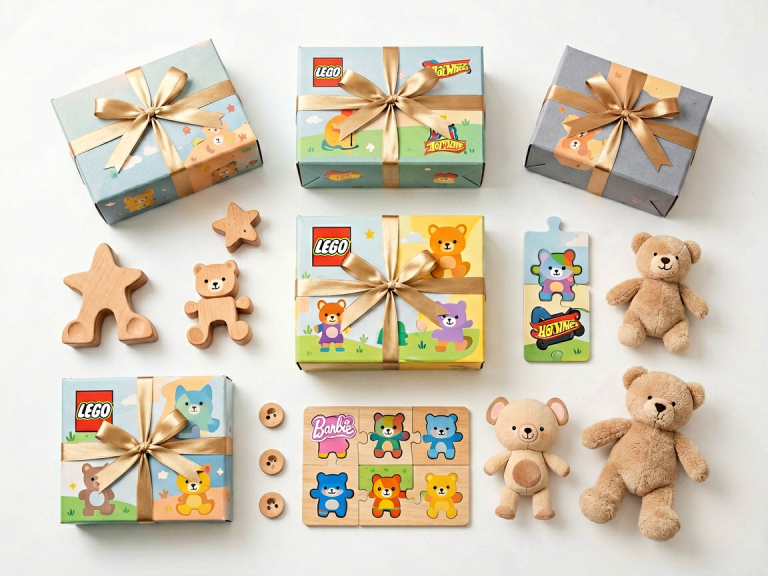
For the youngest beginners, shape sorters are the quintessential problem-solving toy. The classic version consists of a box with holes in various shapes and a set of corresponding blocks. The child must match the block to the correct hole, rotating it if necessary. This seemingly trivial task teaches shape recognition, hand-eye coordination, and basic spatial reasoning. More advanced versions include puzzles with chunky wooden pieces that fit into a board with outlines. Brands like Melissa & Doug and Hape offer excellent options. The key for this age is that the toy is large enough to be safe and the pieces are easy to grasp. The problem is concrete: the block either fits or it doesn’t. The child learns that they must observe, compare, and adjust.
2. Interlocking Building Blocks (Ages 2–6)
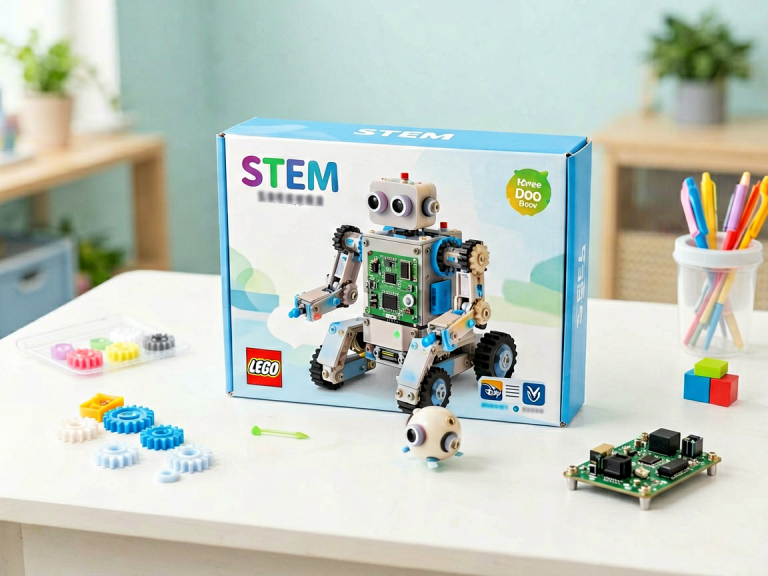
Building blocks, particularly those that connect such as LEGO Duplo or Mega Bloks, take problem-solving to the next level. Here, the child is not just matching shapes but constructing something from scratch. They must decide how to create a stable base, how to build walls that do not collapse, and how to create symmetrical or functional designs. These toys introduce concepts of balance, structural integrity, and cause-and-effect. For a beginner, a set with a few dozen brightly colored blocks and a simple instruction booklet is ideal. The instruction booklet provides a simple goal—a house, a car, an animal—but the path to achieving it requires problem-solving. Children learn to follow sequential steps, count pieces, and troubleshoot when a wall falls down. Over time, they gain the confidence to abandon instructions and build their own creations, which is where true creative problem-solving flourishes.
3. Magnetic Tiles (Ages 3–8)
Magnetic building tiles, such as Magna-Tiles or PicassoTiles, have skyrocketed in popularity for good reason. These translucent, colorful tiles have magnets embedded in their edges, allowing them to snap together easily. They require significantly less fine motor control than traditional blocks, making them accessible to younger children while still offering complex challenges for older ones. A beginner can start by building simple 2D shapes—a square, a triangle—and then move on to 3D structures like cubes, pyramids, and castles. The magnetic connection provides immediate feedback: if the magnets do not align, the tiles fall apart. This teaches children about polarity, symmetry, and structural stability. One of the greatest strengths of magnetic tiles is their open-endedness. A child can spend an hour trying to build a bridge that spans two chairs, and that single problem will involve trial and error, estimation, teamwork (if playing with others), and spatial visualization.
4. Simple Board Games with Logic Components (Ages 4–8)
Board games are an excellent medium for problem-solving because they combine cognitive challenges with social interaction. For beginners, games like “The Sneaky, Snacky Squirrel Game” or “Hoot Owl Hoot!” require players to solve problems collaboratively (e.g., which color acorn to pick, or how to move the owls before the sun rises). Slightly older children can enjoy “Robot Turtles,” which is a playful introduction to programming logic. Players give commands to a turtle to reach a jewel, learning simple sequences and debugging without a screen. “Blokus” is another fantastic game for ages 5 and up, where players must place their geometric pieces on a grid while blocking opponents. This teaches strategic thinking, pattern recognition, and spatial planning. The beauty of these games is that they are structured enough to guide the child but uncertain enough to require real thought.
5. Logic Puzzles and Brain Teasers (Ages 5–10)
For children who are ready for a more concentrated cognitive workout, logic puzzles are ideal. The classic “Rush Hour” game by ThinkFun is a standout. The player must slide cars and trucks out of a gridlocked traffic jam by moving pieces in the correct order. This teaches sequential thinking, planning, and visualization. Another excellent option is “SmartGames” puzzles, which range from simple to advanced. For instance, “Day and Night” requires a child to replicate a picture using blocks and rods, but the catch is that the picture may show only the shadow or outline, forcing the child to infer the arrangement. Rubik’s Cube is a timeless challenge, but for beginners, there are simplified versions like the “Rubik’s Junior” with fewer squares and easier algorithms. These toys encourage systematic thinking—trying one move at a time, observing the result, and adjusting.
How to Choose the Right Problem-Solving Toy
Selecting the perfect toy for a beginner can feel overwhelming given the abundance of options. The golden rule is to match the toy to the child’s current developmental stage, not their chronological age alone. Some children are advanced spatially but struggle with patience; others are patient but lack fine motor skills. Here are several guidelines.
First, look for toys that offer a “just right” challenge. If a child can solve it instantly, they will quickly lose interest. If it is too hard, they may give up in frustration. A good indicator is the “five-minute rule”: if a child cannot make any progress within five minutes, the toy is likely too difficult for now. Second, prioritize toys that allow for multiple solutions or open-ended play. A puzzle with only one correct answer is fine in moderation, but open-ended toys like blocks or magnetic tiles provide endless opportunities for problem-solving. Third, consider the material and durability. Beginners often drop, throw, or step on toys. Wood, high-quality plastic, and strong magnets are preferable. Fourth, look for toys that can grow with the child. For example, a magnetic tile set can be used for simple towers at age 3 and complex engineering projects at age 8. Finally, involve the child in the selection. A toy that aligns with their current passions—dinosaurs, cars, space—will be more motivating. A dinosaur-themed puzzle is far more likely to engage a young paleontologist than a generic one.
Tips for Maximizing the Learning Experience
Owning problem-solving toys is only half the battle. How you present them and interact with your child matters enormously. Here are some strategies for parents, caregivers, and educators.
- Allow independent struggle. It can be tempting to step in and show a child the “right” way to do something. Resist this urge. Let them try, fail, and try again. Your role is to encourage, not to solve. A simple “Hmm, that didn’t work. What else could you try?” is far more valuable than demonstrating the solution.
- Ask open-ended questions. Instead of saying “Put the red block there,” ask “Where do you think the red block might go?” or “How could you make the tower taller without it falling?” These questions stimulate critical thinking.
- Celebrate effort, not just success. Praise the process: “I noticed you tried three different ways to make that piece fit. That was really persistent!” This reinforces a growth mindset.
- Rotate toys. Children can become bored with the same toy after a while. Rotate problem-solving toys every week or two to keep them fresh. When a toy reappears after a break, it is often met with renewed enthusiasm.
- Introduce cooperative play. Many problem-solving toys are even more powerful when used with a friend or sibling. Collaborative problem-solving teaches communication, negotiation, and compromise. For instance, two children building a large structure with magnetic tiles must decide together which pieces to use and how to support each other’s ideas.
- Connect toys to real-world problems. If a child loves building with blocks, talk about how architects design buildings to withstand earthquakes. If they enjoy logic puzzles, discuss how computer programmers use similar thinking to write code. This bridges play and real life.
Conclusion
Problem-solving toys for beginners are far more than mere pastimes. They are the quiet architects of cognitive development, building the foundational skills of critical thinking, persistence, creativity, and confidence. From the simple satisfaction of a shape sorter clicking into place to the triumphant moment a child solves a complex logic puzzle, these toys offer lessons that last a lifetime. In a world that increasingly demands adaptability and complex reasoning, the value of learning to solve problems through play cannot be overstated. For parents and educators looking to give children a head start, the prescription is simple: step away from the screens, invest in high-quality problem-solving toys, and then step back. Let the child lead. The toys will do the rest—turning play into profound learning, one block, one puzzle, one triumphant “aha!” moment at a time.