The Art of Selection: A Comprehensive Guide on How to Choose Problem-Solving Toys for Growing Minds
Introduction
In an age where screens dominate children’s attention, the humble problem-solving toy remains a timeless cornerstone of cognitive development. From the simple wooden puzzle to the complex coding robot, these toys do more than entertain—they teach persistence, logical reasoning, spatial awareness, and creative thinking. However, the market is flooded with options, and not every "educational" toy lives up to its promise. Selecting the right problem-solving toy requires a thoughtful approach that balances age appropriateness, skill targets, material quality, and long-term engagement. This article provides a structured framework to help parents, educators, and gift-givers make informed decisions that nurture a child’s intellectual growth while keeping the joy of play intact.
Understanding the Core of Problem-Solving Toys
Before diving into selection criteria, it is essential to define what a problem-solving toy truly is. Unlike simple action-reaction toys (e.g., a ball that lights up when shaken), problem-solving toys require active mental effort. They present a challenge—a puzzle, a maze, a construction goal, or a logical sequence—that the child must work through, often through trial and error. The value lies not in the toy’s complexity but in the process it invites: planning, hypothesis testing, and adaptation. A good problem-solving toy should encourage the child to ask, "What happens if I do this?" and then allow them to see the consequences. With this understanding, we can now explore the key factors in choosing one.
1. Match the Toy to the Child’s Developmental Stage
The most brilliant toy becomes a source of frustration if it is too advanced, or boredom if too simple. Developmental appropriateness is the first and most critical filter.
Ages 1–3: Sensory-Motor Foundations
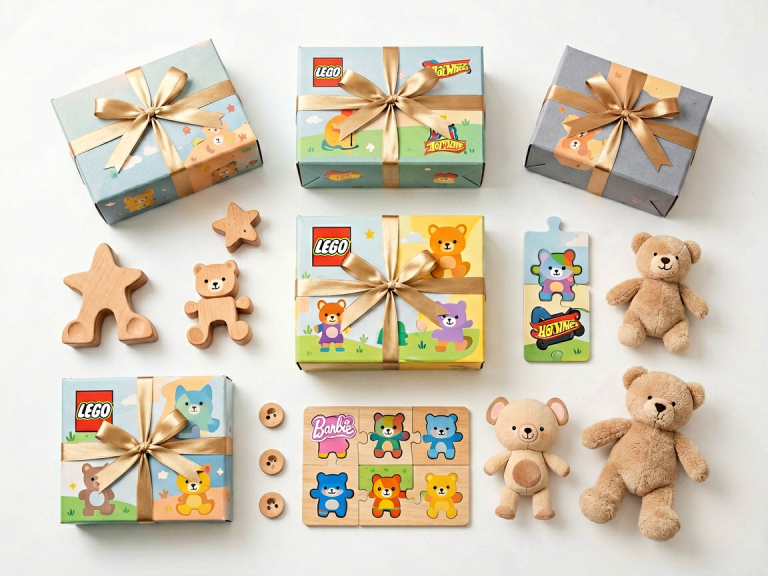
For toddlers, problem-solving begins with cause-and-effect. Toys like shape sorters, stacking rings, and simple peg puzzles are ideal. They require the child to match shapes, recognize sizes, and coordinate hand movements. At this stage, avoid toys with tiny pieces that pose choking hazards. Look for chunky pieces with bright colors and tactile variety. The goal is not to solve a complex puzzle but to build basic pattern recognition and fine motor control.
Ages 3–5: Pre-Operational Logic
Preschoolers begin to understand classification, sequencing, and simple rules. Classic toys like wooden block sets, magnetic tiles, and jigsaw puzzles with 12–24 pieces are excellent. Also consider toys that introduce basic counting or letter matching. At this age, children enjoy repetition, so a toy that can be solved in multiple ways—like a set of geometric blocks that can form different shapes—offers lasting value. Avoid electronic toys that do the thinking for the child; the best problem-solving toys for this age require physical manipulation.
Ages 5–7: Concrete Operational Thinking
Children enter a phase where they can reverse mental operations and solve problems systematically. Construction sets like LEGO Classic, simple marble runs, and board games that require strategy (e.g., "Robot Turtles" or "Candy Land" with decision elements) are appropriate. Puzzles can increase to 48–100 pieces. This is also a good time to introduce pattern blocks, tangrams, and beginner logic puzzles that require deductive reasoning. The key is to offer challenges that require multiple steps but remain achievable with effort.
Ages 7–9: Advanced Reasoning and Strategy
School-age children benefit from toys that demand planning, trial and error, and abstract thinking. Complex construction kits (e.g., K’NEX, Meccano), coding toys (e.g., beginner programmable robots like Botley or Sphero Mini), and strategy board games (e.g., Chess, Checkers, or "Blokus") are excellent. Also consider brain teasers like Rubik’s cubes, maze puzzles, and 3D puzzles. At this stage, children can handle longer play sessions and appreciate toys that allow for customization and creative problem-solving.
Ages 9 and Up: Critical Thinking and STEM Integration
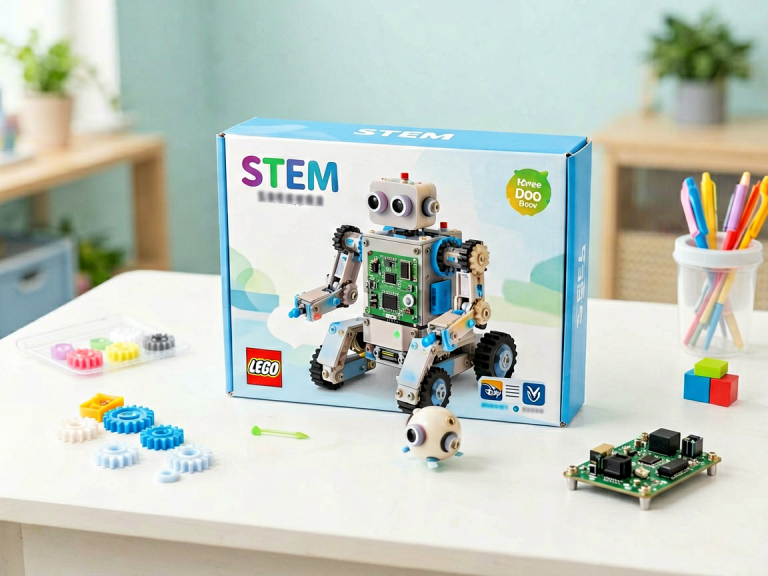
Older children and teens are ready for toys that simulate real-world challenges. Robotics kits, electronic circuits (e.g., Snap Circuits), computer coding platforms (e.g., Micro:bit), and model-building sets (e.g., wooden ship models) are superb. These toys often require reading instructions, debugging errors, and applying scientific principles. They also encourage perseverance, as solutions are not immediate. Avoid overly prescriptive toys; the best ones allow for open-ended exploration and self-directed learning.
2. Identify the Specific Cognitive Skills You Want to Develop
No single toy can develop all problem-solving abilities. Some toys target spatial reasoning, others logical deduction, and still others creative flexibility. Understanding your child’s current strengths and weaknesses can guide your choice.
Spatial Reasoning and Visual-Spatial Skills
Toys like building blocks, tangrams, puzzles, and construction sets strengthen the ability to visualize objects in space. For children who struggle with geometry or map reading, these toys are invaluable. Look for toys that require rotating pieces, fitting shapes into complex slots, or building symmetrical structures.
Logical Reasoning and Sequential Thinking
Board games with rules, coding toys, and string puzzles enhance logical deduction and the ability to follow a sequence of steps. For example, a maze puzzle forces the child to plan a path and avoid dead ends. Toys that present a series of clues to a mystery (like "Clue" or "Mastermind") develop hypothesis testing and elimination.
Creative Problem-Solving and Divergent Thinking
Open-ended toys that have no single correct answer foster creativity. Loose parts like LEGO bricks, magnetic tiles, modeling clay, and craft kits allow children to invent their own problems and solutions. These toys are often overlooked in favor of structured puzzles, yet they are crucial for developing flexibility and resourcefulness.
Executive Function Skills (Planning, Inhibition, and Working Memory)
Complex board games that require managing resources, waiting for turns, and remembering past moves train executive functions. Toys like "Ticket to Ride" (junior version) or "Qwirkle" balance luck and strategy. Also consider logic puzzle books or apps that require holding multiple conditions in mind simultaneously.
3. Prioritize Open-Ended Play Over Prescriptive Solutions
A common mistake is choosing a toy that appears sophisticated but offers only a single way to play. For example, a "coding robot" that only follows pre-programmed paths without allowing the child to modify or create new patterns quickly loses its problem-solving value. The best problem-solving toys are those that allow for multiple solutions, varied difficulty levels, and user-generated challenges.
Why Open-Endedness Matters
When a toy has a fixed outcome, the child’s problem-solving stops once they "win." In contrast, an open-ended toy like a building set or a modular puzzle encourages the child to invent new problems. For instance, a set of magnetic tiles can be used to build a tower, a bridge, a rocket ship, or a geometric sculpture. Each build presents its own structural and spatial challenges. This not only extends the toy’s lifespan but also trains the child to look for problems rather than waiting for one to be given.
How to Assess Open-Endedness
Read product reviews and look for phrases like "endless possibilities" or "reconfigurable." Avoid toys that come with a single instruction booklet and no options for variation. Check if the toy offers companion apps or expansion packs that add complexity. Also, consider toys that encourage collaboration—such as group building kits—since social problem-solving is another dimension of cognitive growth.
4. Evaluate Material, Safety, and Durability
Problem-solving toys are often handled intensely; children may drop, throw, or dismantle them in frustration or excitement. Safety and robustness are non-negotiable.
Material Safety
For younger children, ensure that paints, plastics, and finishes are non-toxic and free from BPA, phthalates, and lead. Wooden toys should be splinter-free with rounded edges. For electronic toys, check for proper insulation and battery compartment security. Always follow the age recommendations on the packaging, which are based on safety standards.
Durability
Construction toys that snap together must withstand repeated assembly and disassembly. Check user reviews for reports of pieces that break easily, or magnets that detach. For magnetic toys, ensure magnets are fully enclosed to prevent swallowing. Puzzles should have thick, laminated pieces that resist bending. A toy that falls apart after five uses is more frustrating than educational.
Noise and Features
Some problem-solving toys include sound effects or lights. While these can be engaging, they should not be overwhelming or distract from the cognitive task. Toys that sing the answer or flash the solution undermine the problem-solving process. Choose toys where the feedback is minimal or contextual, such as a musical reward only after the correct solution is achieved.
5. Consider the Child’s Interests and Temperament
A child who loves stories may engage more with a narrative-driven puzzle game (like "Escape Room" board games or detective puzzles) than a pure logic grid. A child who is kinesthetic may prefer hands-on construction over desktop puzzles. Matching the toy to the child’s natural curiosities ensures intrinsic motivation.
For the Reluctant Problem-Solver
If a child avoids challenges due to fear of failure, start with toys that have a low barrier to entry and high probability of success. For example, a simple shape sorter or a 24-piece puzzle can build confidence. Incrementally increase difficulty. Avoid competitive toys initially; cooperative board games (e.g., "Hoot Owl Hoot!" or "Race to the Treasure") allow children to solve problems as a team, reducing anxiety.
For the Avid Problem-Solver
For children who already seek out challenges, select toys that reward deep exploration. Consider subscription boxes like KiwiCo or Bitsbox that deliver new, progressively harder projects. Also look for toys that connect to real-world applications, such as a mechanical engine model or a coding kit that programs a robot to navigate an obstacle course.
6. Check for Long-Term Value and Expandability
A good problem-solving toy should not be a one-time purchase. Look for systems that are expandable—for example, magnetic building tiles that can be added to over time, or a coding platform that supports advanced blocks languages. Some companies offer replacement parts or community challenges. Also consider toys that grow with the child. For instance, a wooden marble run can be used by a 4-year-old to roll marbles, and by an 8-year-old to design complex tracks with loops and jumps.
Community and Support
Toys that have online communities, instructional videos, or shared idea galleries extend the play experience. Children can see how others solved the same problem differently, which broadens their own thinking. This is especially valuable for construction and coding toys.
Conclusion
Choosing a problem-solving toy is an investment in a child’s cognitive future—but it requires more than picking the most popular item on the shelf. By considering developmental stage, targeted skills, open-endedness, safety, individual interests, and long-term value, you can select a toy that not only entertains but also cultivates resilience, curiosity, and the joy of figuring things out. Remember that the best toy is one that the child returns to again and again, each time discovering a new challenge, a new failure, and a new triumph. In a world full of quick answers, problem-solving toys teach the slow, rewarding art of thinking for oneself.