Screen-Free Educational Toys: Reclaiming Childhood Through Tangible Learning
In an era where children are increasingly immersed in digital devices—from tablets to smartphones and interactive screens—the concept of screen-free educational toys has emerged as a powerful counterbalance. These tangible, hands-on playthings are not merely nostalgic artifacts; they represent a deliberate pedagogical shift toward fostering deep cognitive, emotional, and social development. Unlike their digital counterparts, which often rely on passive consumption or algorithmic feedback loops, screen-free toys encourage active exploration, problem-solving, and imaginative engagement. This article explores the multifaceted benefits of such toys, examining their role in cognitive development, creativity, social skills, and emotional resilience. By understanding the unique value of unplugged play, parents and educators can make informed choices that nurture well-rounded children in a hyperconnected world.
—
The Rise of Screen-Free Educational Toys: A Response to Digital Overload
The past two decades have witnessed an unprecedented proliferation of digital media in children’s lives. According to the American Academy of Pediatrics, children aged 8 to 12 spend an average of four to six hours per day in front of screens, not including time spent on schoolwork. This reality has sparked growing concern among developmental psychologists, neuroscientists, and educators about the potential consequences of excessive screen time on attention spans, language acquisition, and emotional regulation. In response, a renaissance of screen-free educational toys has emerged, not as a Luddite rejection of technology, but as a conscious effort to restore the balance between digital and physical experiences.
Screen-free toys are defined by their lack of electronic components, batteries, or internet connectivity. They include classic wooden blocks, puzzles, building sets, board games, science kits, and art supplies, as well as modern innovations such as magnetic tiles, programmable robots without screens, and open-ended construction sets like LEGO or K’NEX. What unites them is their insistence on active participation: the child must manipulate, assemble, experiment, or create, rather than simply tap or swipe. This distinction is critical because the brain learns most effectively when it engages multiple senses simultaneously—a principle known as multisensory integration. For example, when a child stacks wooden blocks, they feel the weight and texture of the wood, hear the clack of pieces hitting each other, and see the geometric relationships; this rich sensory input strengthens neural connections in ways that a digital simulation cannot replicate.
Furthermore, screen-free toys are inherently slower-paced. They require patience, trial-and-error, and sustained concentration. A jigsaw puzzle cannot be “fast-forwarded”; a marble run must be carefully constructed before it can function. This slow, deliberate process cultivates executive function skills such as planning, impulse control, and working memory. In contrast, many digital games are designed to provide immediate rewards and rapid sensory stimulation, which can undermine the development of these higher-order cognitive abilities. By choosing screen-free options, caregivers are not only reducing exposure to blue light and digital distractions but also deliberately fostering a mindset of persistence and deep focus.
—
How Screen-Free Toys Enhance Cognitive Development
One of the most compelling arguments for screen-free educational toys lies in their capacity to promote cognitive growth across multiple domains. Research in developmental psychology has consistently shown that hands-on learning is superior to passive instruction for encoding information into long-term memory. When a child uses a set of wooden counting blocks to understand addition, they are not just memorizing numbers; they are physically manipulating quantities, visualizing patterns, and developing number sense. This concrete operational stage, as described by Jean Piaget, is essential for young children who are not yet ready for abstract symbolic reasoning. Screen-based math apps, while visually appealing, often bypass this critical tactile component, potentially leaving gaps in foundational understanding.
Similarly, construction toys like building bricks, magnetic shapes, or interlocking gears actively develop spatial reasoning—the ability to visualize and manipulate objects in three-dimensional space. Spatial reasoning is a strong predictor of future success in STEM fields, including engineering, surgery, and computer graphics. Yet it is notoriously underdeveloped in digital learning environments where objects are confined to a flat screen. By physically rotating a gear or balancing a tower, a child learns about force, gravity, and symmetry through embodied cognition. The mistakes they make—the tower that falls, the gear that doesn’t mesh—become powerful learning opportunities that require reflection and adjustment. Digital simulation often provides automatic correction or hints, robbing the child of the chance to struggle productively.
Moreover, screen-free toys such as logic puzzles, mazes, and board games like chess or checkers challenge children to think systematically. They must consider multiple variables, anticipate opponents’ moves, and develop strategies—all while managing frustration. These experiences build cognitive flexibility and executive function. A study published in the journal *Frontiers in Psychology* found that children who regularly played strategic board games showed improved attention and inhibitory control compared to peers who played digital games. The social interaction inherent in board games also adds a layer of emotional regulation, as children learn to win graciously and lose with resilience.
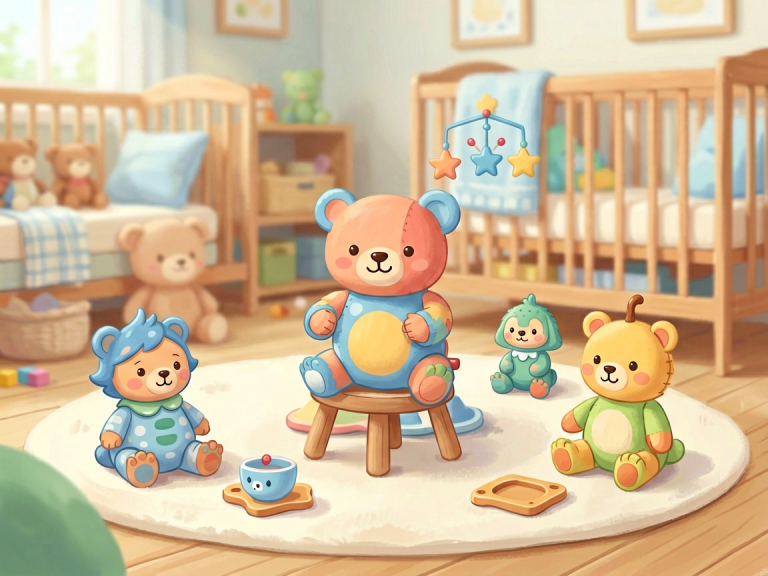
Language development also benefits from screen-free play. Storytelling toys—puppets, felt boards, picture cards without text—encourage children to create narratives, expand vocabulary, and practice syntax. Unlike watching a passive video, where language is delivered in a fixed sequence, screen-free narrative play allows children to experiment with cause and effect, character development, and dialogue. A child who arranges toy animals into a farm and invents a story about them is engaging in complex linguistic and cognitive processing that builds literacy foundations.
—
Fostering Creativity and Imagination Through Unstructured Play
Perhaps the most profound advantage of screen-free educational toys is their ability to nurture creativity. In the digital realm, many toys and games come with predetermined rules, storylines, and outcomes. Even “creative” apps often constrain children within a set palette of colors, shapes, or sounds. While these tools can be useful, they rarely encourage the kind of open-ended, divergent thinking that truly fuels innovation. Screen-free toys, by contrast, are typically underdetermined: a set of wooden blocks can become a castle, a spaceship, a dinosaur habitat, or an abstract sculpture, depending on the child’s whim. A pile of fabric scraps and buttons can be transformed into a doll’s wardrobe or a quilt for a teddy bear. This absence of fixed purpose is not a limitation; it is the very source of creative potential.
Imagination flourishes when children are given the freedom to impose their own meanings on objects. This process is known as symbolic play, and it is a cornerstone of cognitive development. When a child uses a cardboard tube as a telescope or a leaf as a plate, they are engaging in abstract thinking—understanding that one thing can represent another. Digital toys often hijack this imaginative process by providing hyper-realistic images and sounds that leave little room for mental representation. A photograph of an apple is an apple; a toy apple is also an apple; but a red block that the child decides is an apple requires a leap of imagination that strengthens neural pathways associated with creativity.
Furthermore, screen-free toys encourage iteration and experimentation. A child building a bridge from popsicle sticks will try different configurations, test weaknesses, and redesign. This iterative cycle mirrors the creative process used by artists, engineers, and scientists. Digital tools, while offering undo buttons, often lack the tangible feedback that comes from physical failure—the crack of a stick breaking or the wobble of an unstable structure. These sensory cues teach children about material properties and the importance of revising ideas.
Unstructured screen-free play also reduces the pressure of achieving specific outcomes. In many digital educational games, success is measured by points, stars, or levels. This extrinsic motivation can actually stifle intrinsic curiosity. When a child plays with a set of magnetic tiles, there is no wrong way to use them; they can build a cube, a tower, or simply enjoy the sensation of magnets clicking together. This freedom fosters a growth mindset, where the process of exploration is valued over the final product. Such a mindset is associated with lifelong learning and resilience.
—
The Role of Screen-Free Toys in Social and Emotional Learning
Social and emotional development is another critical domain where screen-free toys excel. While digital platforms can facilitate communication through video calls or multiplayer games, they often lack the subtle, non-verbal cues that are essential for building empathy and social skills. Physical toys, especially those designed for group play, provide rich opportunities for collaboration, negotiation, turn-taking, and conflict resolution. Board games, for example, require players to read each other’s facial expressions, manage disappointment, and celebrate others’ successes—all in real time. These experiences build emotional intelligence in ways that screen-mediated interactions cannot replicate.
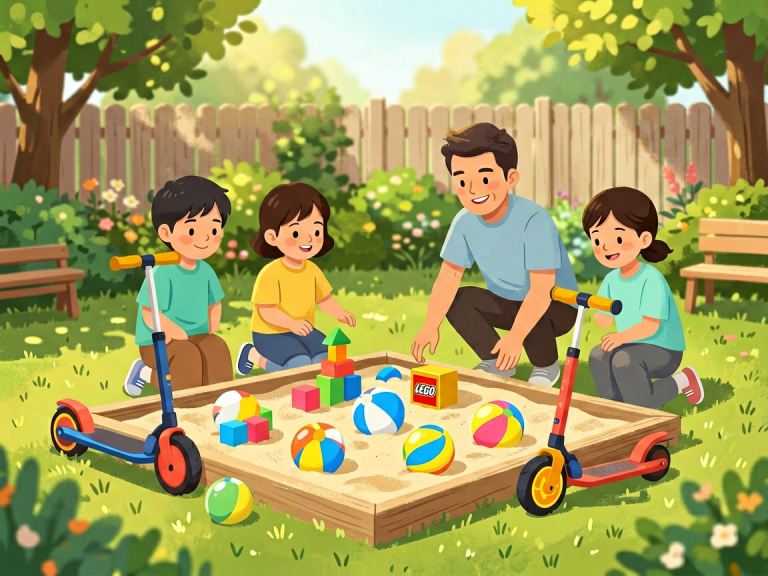
Cooperative toys, such as building kits that require two children to work together, teach teamwork and communication. When a pair of children tries to assemble a large structure, they must articulate ideas, listen to feedback, and compromise. This social negotiation is a complex skill that develops gradually through repeated practice. In contrast, many digital “cooperative” games are actually played in solo mode with virtual teammates, or involve competition against others online, which can foster individualism rather than collaboration.
Emotional regulation also benefits from screen-free play. A child who becomes frustrated when a puzzle piece doesn’t fit must learn to calm down, take a deep breath, and try a different approach. There is no “skip” button or hint system. This self-soothing process builds resilience and coping mechanisms. Board games, in particular, teach children how to handle both winning and losing with grace—an essential life skill often neglected in digital games where players can simply restart a level without consequences.
Moreover, screen-free toys can be powerful tools for emotional expression. Dolls, action figures, and animal figurines allow children to act out scenarios that reflect their own feelings or experiences. A child who has had a difficult day at school might reenact the conflict with toys, gaining a sense of mastery and understanding. This therapeutic dimension of play is well-documented in child psychology. Digital toys, even those with avatars, often lack the tactile intimacy that makes such role-playing effective.
—
Practical Examples of Effective Screen-Free Educational Toys
To fully appreciate the value of screen-free educational toys, it is helpful to consider specific examples that span various developmental domains.
- Magnetic Building Tiles (e.g., Magna-Tiles, Magformers): These translucent geometric tiles snap together via embedded magnets. Children can build 2D and 3D structures, exploring symmetry, geometry, and balance. They are excellent for spatial reasoning and creativity, and they naturally encourage collaboration when used in groups.
- Wooden Unit Blocks: The classic set of plain wooden blocks in various shapes (cubes, cylinders, arches, etc.) is a staple of high-quality early childhood education. They allow for unlimited architectural constructions and promote understanding of physics, measurement, and design. Unlike plastic blocks with pre-set connectors, wooden blocks require careful balancing and alignment.
- Logic Puzzles and Brain Teasers: Puzzles like tangrams, Sudoku for kids, or Rush Hour (a car-traffic puzzle) challenge problem-solving skills without requiring literacy. They teach persistence and systematic thinking. The physical act of moving pieces provides kinesthetic feedback.
- Simple Board Games (e.g., Candy Land, Connect Four, Sequence for Kids): These games introduce strategic thinking, turn-taking, and emotional regulation. They are also excellent for building family bonds and language skills when adults play alongside children.
- Art Supplies and Open-Ended Craft Kits: Crayons, modeling clay, watercolor paints, yarn, scissors, and glue offer infinite creative possibilities. Unlike digital drawing apps that limit colors or undo mistakes, real art supplies allow for texture, mixing, and unexpected results.
- Science Experiment Kits (screen-free): Crystal-growing kits, volcano-making sets, and simple microscope slide collections let children observe natural phenomena. They cultivate curiosity and scientific thinking—hypothesizing, testing, and concluding—without the distraction of screens.
- Construction Sets (e.g., LEGO Classic, K’NEX, Tinker Toys): These kits come with instructions but also encourage free building. The constraint of interlocking pieces requires fine motor coordination and planning. Children often modify designs, demonstrating creativity and resourcefulness.
- Musical Instruments (e.g., xylophones, tambourines, drums): Making music without digital accompaniment teaches rhythm, auditory discrimination, and cause-effect relationships. It also provides an outlet for emotional expression.
—
Conclusion: Embracing a Balanced Approach to Child Development
Screen-free educational toys are not a complete rejection of technology but rather a vital component of a balanced developmental diet. In a world saturated with digital stimuli, these tangible playthings offer children the chance to slow down, engage deeply, and learn through their hands and hearts. They support cognitive growth by promoting concrete manipulation, spatial reasoning, and systematic problem-solving. They nurture creativity by leaving room for imagination and iteration. They build social and emotional skills through real-time collaboration, negotiation, and self-regulation. Most importantly, they foster a sense of agency—the child is the active architect of their own learning, not a passive consumer of programmed content.
For parents and educators, the challenge is not to eliminate screens entirely but to intentionally curate a rich environment of physical, open-ended toys that invite exploration. The best screen-free educational toys are those that grow with the child, offering increasing complexity and new possibilities over time. They are the toys that inspire conversations, spark questions, and create memories. In an age of distraction, these simple objects may be one of the most powerful tools we have to raise curious, resilient, and creative thinkers. By choosing screen-free, we are not rejecting progress—we are reclaiming the essence of childhood itself.