Science Kits vs Building Toys: Which Sparks Better Learning?
Introduction
In the ever-evolving landscape of childhood education, parents and educators constantly seek tools that not only entertain but also educate. Two prominent contenders in the realm of STEM (Science, Technology, Engineering, and Mathematics) playthings are science kits and building toys. Science kits—such as chemistry sets, circuit boards, or microscope labs—offer structured experiments that introduce children to scientific principles through step-by-step procedures. Building toys, like LEGO bricks, magnetic tiles, or wooden blocks, provide open-ended construction opportunities that foster creativity and spatial reasoning. While both categories are celebrated for their educational value, they engage young minds in fundamentally different ways. This article delves into the strengths and limitations of each, exploring which better cultivates critical thinking, problem-solving, and a lifelong love for learning. By the end, you will understand that the choice is not about picking a winner, but about recognizing how these two types of toys complement each other to create a rich developmental experience.
The Core Differences: Guided Discovery vs Open-Ended Creation
At their essence, science kits and building toys represent two distinct pedagogical approaches: guided discovery and open-ended creation. Science kits are designed around a predetermined outcome. A child following a manual to grow crystals, build a simple motor, or test pH levels is engaging in a structured activity that teaches specific concepts—like chemical reactions, circuits, or acids and bases. The instructions provide a clear path, and success is measured by achieving the expected result. This guided approach is excellent for introducing foundational knowledge and building confidence in following procedures. However, it can also limit spontaneity; if a child deviates from the steps, the experiment may fail, which can be frustrating for some.
Building toys, on the other hand, thrive on ambiguity. A set of interlocking bricks or magnetic rods offers no fixed goal. A child might construct a tower, a spaceship, or an abstract sculpture—the only limit is imagination. This open-ended nature encourages iterative design: initial structures collapse, prompting modifications. The failure is not a setback but a learning opportunity. Building toys teach resilience, flexibility, and the engineering design process through trial and error. While science kits deliver precise information, building toys cultivate a mindset of exploration. Both are valuable, but they cater to different learning styles and developmental stages.
Cognitive and Skill Development: Analytical vs Spatial Thinking
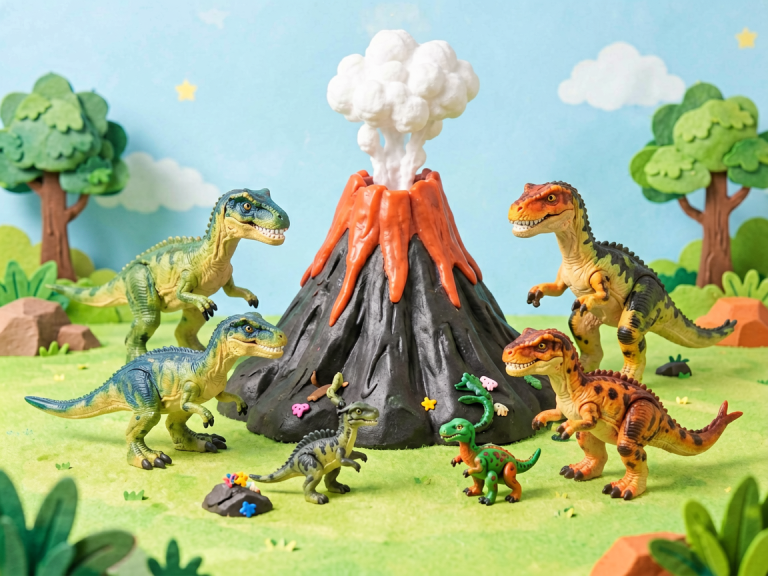
The cognitive skills honed by science kits and building toys differ markedly. Science kits primarily nurture analytical thinking. When a child follows a multi-step protocol to observe a chemical reaction, they practice sequencing, attention to detail, and logical deduction. They learn to hypothesize: “If I add more vinegar, will the volcano erupt more violently?” This cause-and-effect reasoning is fundamental to scientific literacy. Moreover, many kits require reading comprehension and mathematical calculations (e.g., measuring volumes), reinforcing cross-curricular abilities. The structured nature of science kits also teaches children to respect safety guidelines, which is a crucial life skill.
Building toys, conversely, excel at developing spatial intelligence and motor skills. Constructing a complex 3D model demands visualization—the ability to rotate an image mentally and understand how parts fit together. This spatial reasoning is a strong predictor of success in fields like engineering, architecture, and even surgery. Additionally, building toys enhance fine motor control, especially in younger children who must precisely connect small pieces. The repetitive act of aligning, snapping, and balancing builds hand-eye coordination. Furthermore, building toys often involve collaborative play; children negotiate roles, share pieces, and solve conflicts, fostering social and emotional skills that science kits, which are typically solitary or parent-led, may not promote as directly.
Creativity and Imagination: Structured vs Unstructured Play
The debate over creativity is central to this comparison. Critics argue that science kits with rigid instructions stifle creativity, turning children into passive instruction-followers. While this concern has merit, it overlooks a subtler point: science kits can spark curiosity that leads to creative inquiry. A child who learns how a simple battery powers a light bulb might then experiment with different materials to create a homemade lamp—a creative act born from structured knowledge. Moreover, many advanced science kits now include open-ended challenges, such as “design a machine that can lift a marble,” blending structure with innovation.
Building toys are the undisputed champions of unstructured play. They provide a blank canvas where children can invent narratives, solve self-imposed problems, and explore aesthetic choices. A child building a castle may prioritize symmetry or color patterns, exercising artistic judgment. The absence of a manual means every creation is original, which boosts self-esteem and ownership. However, this freedom can overwhelm some children, especially those who thrive on guidance. Without any constraints, they may feel lost or become frustrated. Therefore, building toys require a certain level of intrinsic motivation or adult facilitation to channel creativity effectively.
Practical Considerations: Safety, Cost, and Age Appropriateness
When choosing between science kits and building toys, practical factors play a significant role. Safety is paramount. Many science kits contain chemicals, small parts, or electrical components that pose risks for younger children. A chemistry set for a six-year-old may require constant adult supervision, which can be burdensome for parents and limiting for children’s independent play. Building toys, especially those made from non-toxic materials and with larger pieces, are generally safer for toddlers and preschoolers. However, tiny bricks (like classic LEGO) are choking hazards for children under three, so age-appropriate selection is critical.
Cost is another consideration. Science kits are often single-use or limited in repeatability. Once a child has mixed the baking soda and vinegar, the excitement fades, and the kit becomes less engaging. In contrast, building toys offer virtually infinite replay value. A single set of magnetic tiles can be used for years, evolving in complexity as the child grows. The initial investment might be higher for quality building toys, but the cost per play session is much lower. That said, some science kits (like robotics or programmable kits) have reusable components and can be updated with new software, offering longevity if the child stays interested.
Age appropriateness also differs. Science kits typically target children aged 8 and up, as they require reading ability and abstract reasoning. Younger children may benefit more from simpler science-themed toys (e.g., color-mixing kits) but often lack the patience for complex experiments. Building toys start as early as six months with soft blocks and progress to advanced technic sets for teenagers. The versatility of building toys across age groups makes them a staple in many households.
The Synergy: Combining Both for Holistic Development
Rather than pitting science kits against building toys, the most effective educational strategy may be to integrate both. They address different aspects of cognition and play, and their combination can produce a synergistic effect. For example, a child can first build a sturdy base using LEGO bricks (building toy), then attach a simple motor and a light bulb (science kit) to create a working lighthouse. This hybrid activity teaches both structural engineering and electrical circuits, while encouraging creativity and troubleshooting. The child learns that scientific principles are not abstract rules but tools that can be used to enhance their constructions.
Many modern educational tools are already blurring the lines. Robotics kits, like LEGO Mindstorms or Makeblock, combine the open-ended building of blocks with programmable electronics and sensors. These products require children to follow some instructions (for wiring and coding) while also designing original mechanical solutions. Similarly, chemistry kits with modular lab equipment allow repeated experiments with different variables. The trend toward interdisciplinary STEM toys reflects the understanding that real-world problems rarely fall into neat categories. By exposing children to both guided experimentation and free-form construction, we prepare them to be versatile thinkers who can apply knowledge creatively.
Conclusion
In the debate of science kits versus building toys, there is no single winner—because the goal is not to choose one but to understand what each uniquely offers. Science kits provide structured paths to scientific literacy, teaching precision, analytical reasoning, and respect for the scientific method. Building toys cultivate imagination, spatial intelligence, and the resilience to learn from failure. The best educational outcome emerges when children have access to both, moving fluidly between guided discovery and open-ended creation. Parents and educators should consider the child’s age, interests, and learning style when selecting toys, but should always remember that the most powerful learning happens when play is varied and balanced. Ultimately, whether a child is mixing chemicals in a test tube or stacking blocks into a towering castle, they are building something far more important: the foundational skills for a lifetime of curiosity and growth.