The Science of Age: Why Age Recommendations on Science Kits Matter More Than You Think
In a world where children are increasingly encouraged to explore STEM from their earliest years, science kits have become a staple in homes, classrooms, and gift registries. A quick search on any online marketplace reveals thousands of options, from "My First Chemistry Set" to "Quantum Physics Lab for Kids." But amidst the colorful boxes and enticing promises of "hours of fun" lies a small, often overlooked detail: the age recommendation. Many parents and educators dismiss these labels as marketing fluff, assuming that a bright child can handle anything a few years above their age, or that a younger child might enjoy "growing into" a kit. Yet these assumptions can lead to frustration, safety hazards, and even a dampened enthusiasm for science. This article unpacks the science behind age recommendations for science kits, exploring child development stages, safety considerations, and practical strategies for choosing the perfect kit for every young scientist.
Understanding Child Development Stages and Science Learning
To appreciate why age recommendations exist, one must first understand how children’s cognitive, motor, and emotional abilities evolve. The pioneering work of developmental psychologist Jean Piaget provides a useful framework, though modern research has refined his ideas. Science kits are designed to align with the typical capabilities of children at different stages, ensuring that the activities are neither too trivial nor impossibly challenging.
The Sensorimotor and Preoperational Years (Ages 3–5)
For preschoolers, learning is primarily sensory and kinesthetic. They explore the world by touching, tasting (unfortunately), shaking, and observing immediate cause-and-effect relationships. At this stage, a science kit should focus on open-ended sensory play: mixing colored water, observing magnets, exploring textures, or using simple tools like magnifying glasses. Kits for this age group avoid small parts that pose choking hazards, use non-toxic materials, and require minimal reading or fine-motor precision. The goal is not to teach the scientific method but to build curiosity and vocabulary—words like "float," "sink," "hot," "cold," and "magnetic" emerge naturally through guided play. Parents should expect to be heavily involved, narrating observations and asking simple questions like "What do you think will happen next?"
The Concrete Operational Stage (Ages 6–8)
Children in early elementary school begin to think logically about concrete events. They can follow two- to three-step instructions, understand basic cause-and-effect, and start grasping concepts like gravity, buoyancy, and simple chemical reactions. Science kits for this age typically introduce structured experiments with predictable outcomes—growing crystals, building a simple circuit, or creating a vinegar-and-baking-soda volcano. Reading skills are emerging, so kits often include picture-heavy instructions and minimal text. Safety remains paramount: kits should avoid strong acids, sharp objects, or anything that requires precise measurement. At this stage, children can work more independently but still benefit from adult supervision to guide discussions about "why" something happened. The age recommendation of "6+" is not arbitrary; it reflects the typical child’s ability to sustain attention for 20–30 minutes and follow sequential steps without becoming overwhelmed.
The Transition to Formal Operations (Ages 9–11)
As children approach adolescence, their capacity for abstract reasoning blossoms. They can hypothesize, control variables, and understand concepts like density, chemical bonding, and energy transfer. Kits for this age often involve real scientific equipment—beakers, test tubes, microscopes, or simple robotics. The complexity increases: experiments may require careful measurement, patience for multi-day projects, and the ability to troubleshoot when results don’t match expectations. Age recommendations like "8+" or "10+" consider not only cognitive readiness but also fine-motor skills (e.g., handling small screws or pipettes) and reading comprehension. A child who struggles with reading may find a kit labeled "8+" frustrating even if they are intellectually capable, because the instructions are text-heavy. Conversely, a highly verbal 8-year-old might excel with a kit meant for older children, provided an adult helps with reading. This is where individual differences become critical, but the age label sets a baseline.
Adolescence and Beyond (Ages 12+)
Teenagers are capable of formal operational thought: they can reason about hypotheticals, design their own experiments, and engage in systematic inquiry. Science kits for this group often mimic real laboratory or engineering challenges—building a working radio, extracting DNA from fruit, or constructing a hydraulic robot. These kits assume a higher tolerance for frustration, the ability to work independently for extended periods, and an understanding of safety protocols. Age recommendations of "12+" or "14+" reflect the potential for hazardous materials (e.g., small amounts of certain chemicals), the need for precise technique, and the length of time required to complete a project. Importantly, they also signal that the kit is intended as a serious learning tool rather than a toy. A younger child might lose interest or become discouraged if they cannot complete the project without constant adult help.
The Hidden Dangers of Ignoring Age Labels
When parents bypass age recommendations, they often do so with good intentions—wanting to challenge a gifted child or save money by buying a kit that can be used for years. However, the consequences can be significant.
Safety Risks: The Most Obvious Concern
The primary reason for age labels is safety. Kits for young children are rigorously tested to ensure they contain no small parts that could be swallowed, no sharp edges, and no toxic substances. Older-kids’ kits may include items like borax, potassium permanganate, or small batteries—all of which can be dangerous in the hands of a curious 4-year-old. Even if a parent supervises closely, accidents happen quickly. A 2019 study published in *Pediatrics* reported that over 30% of toy-related emergency room visits involved children under five, and many incidents were linked to toys with small parts. Science kits are not exempt. Ignoring age recommendations can turn an educational experience into a trip to the ER.
Cognitive Overload and Loss of Interest
Equally damaging is the emotional toll. When a child is given a kit that is too advanced, they may feel incompetent, frustrated, and ashamed. The carefully designed sequence of learning steps is lost; instead of building confidence, the child experiences repeated failure. This is particularly harmful in early childhood, when attitudes toward science are being formed. A 2021 survey by the American Chemical Society found that adults who recalled negative childhood experiences with science—such as feeling "dumb" during a failed experiment—were significantly less likely to pursue STEM careers. Conversely, age-appropriate challenges that end in success foster a growth mindset. The age recommendation is not a measure of intelligence; it is a measure of developmental readiness.
Boredom and Understimulation
On the flip side, giving an older child a kit meant for a younger age can be equally problematic. A 10-year-old given a "My First Chemistry Set" with pre-measured, non-reactive substances will likely be bored within minutes. They may miss the opportunity to develop patience, critical thinking, and perseverance that a more complex kit would provide. Worse, they might develop a belief that science is "babyish" and lose interest altogether. Age recommendations help ensure that the challenge level matches the child’s zone of proximal development—that sweet spot where learning is optimally engaging.
How to Choose the Perfect Science Kit by Age
Given the importance of age recommendations, how should parents and educators navigate the marketplace? The following guidelines can help, but remember that every child is unique. Use the age label as a starting point, not a strict rule.
For Ages 3–5: Sensory and Safety First
Look for kits that emphasize exploration rather than instruction. Ideal features include: large parts (no smaller than a ping-pong ball), non-toxic materials (look for ASTM D-4236 certification), washable items, and simple cause-and-effect activities. Examples include color-mixing labs, magnetic wands, water play kits, and nature observation sets. Avoid any kit that requires reading, precise measuring, or contains liquids that could stain. Expect to participate actively; the kit is a tool for shared discovery, not independent play.
For Ages 6–8: Structure and Wonder
Choose kits that offer clear, step-by-step instructions with many pictures. The experiments should yield visible, satisfying results—growing a crystal, making slime, or launching a rocket with baking soda. Safety features remain important: avoid glass containers, use only vinegar and baking soda (no acids), and ensure all chemicals are food-grade or labeled safe for children. The best kits for this age include a "why it works" section that explains the science in simple terms. Look for kits that offer multiple experiments, so a child can repeat and vary them. Avoid kits that require adult help for every step; the goal is to foster independence while maintaining supervision.
For Ages 9–11: Depth and Authenticity
At this stage, children crave real tools and real science. Good choices include microscope kits with prepared slides, chemistry sets with non-toxic but genuine chemicals (e.g., copper sulfate, citric acid), electronics kits that teach circuits and soldering (with safe, low-voltage components), and engineering kits like simple robotics. The instructions should be text-heavy but well-organized, with troubleshooting tips. Look for kits that encourage open-ended exploration—for example, a chemistry set that includes empty beakers and allows the child to design their own mixtures (with safety guidelines). The age recommendation often includes a range like "8–12" or "10–14"; choose the lower end for children who need more guidance, the upper end for those who can work independently.
For Ages 12+: Independence and Rigor
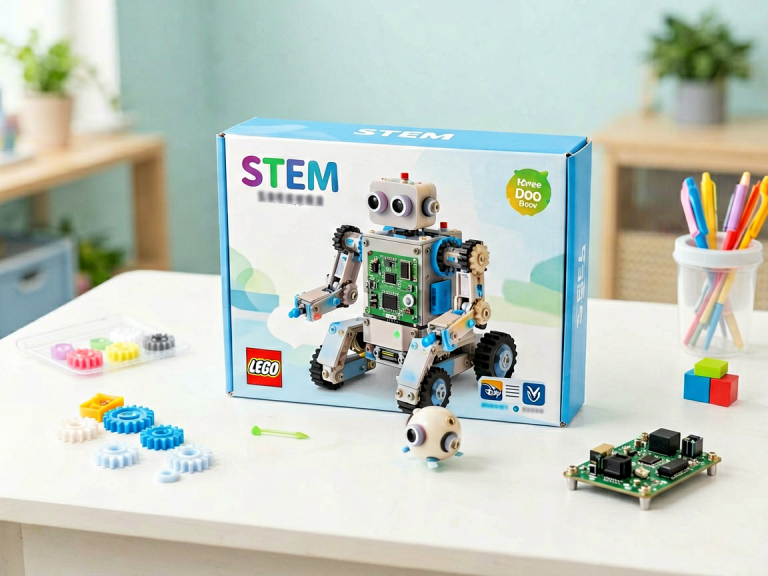
Teenagers thrive on projects that feel like real scientific work. Consider kits for building a functional radio, extracting DNA, performing chromatography, or constructing a programmable robot. Many kits at this level require a computer or smartphone for coding, so ensure technical compatibility. Safety is still paramount: look for kits that include safety goggles, gloves, and clear hazard warnings. The best kits also teach the scientific method—hypothesis, experiment, data collection, conclusion—rather than just following recipes. They should challenge the child to think critically and solve problems, not just replicate results.
Beyond the Box: Parental Involvement and Adaptation
No age recommendation can account for every child’s unique abilities, interests, and prior exposure to science. Parents and educators should feel empowered to adapt kits to better suit their child. For example:
- Simplify a complex kit: If a 7-year-old wants a crystal-growing set meant for ages 10+, the parent can pre-mix the solutions and let the child simply observe and record the growth over days. The reading can be done aloud, and the concepts explained in simpler terms.
- Extend a simple kit: An 11-year-old who receives a "My First Physics Lab" can be challenged to modify the experiments—changing variables, predicting outcomes, and writing up their results as a "scientific report."
- Combine kits: Sometimes a kit meant for a younger age can be a great introduction, and then the older child can move to a more advanced kit in the same theme. The key is to meet the child where they are, not where the package says they should be.
The most important factor is the adult's presence. Studies consistently show that guided interaction—asking "what do you think?" rather than "do it like this"—enhances learning from science kits. Age recommendations simplify the initial choice, but the real magic happens when a curious child and an engaged adult explore together.
Common Myths About Science Kit Age Ratings
Despite the clear rationale, several myths persist. Let's debunk them.
- Myth 1: "Age recommendations are just for liability protection." While liability is a factor, the recommendations are primarily based on developmental research. Companies employ child development experts and conduct play-testing to determine appropriate age ranges. Ignoring them is like ignoring car seat weight limits—possible, but risky.
- Myth 2: "My child is gifted, so they can handle any age." Giftedness often manifests in specific areas—verbal, mathematical, or spatial. A child may excel in reading but have average fine-motor skills, making a kit for older kids frustrating. Moreover, emotional maturity matters: gifted children can still be overwhelmed by frustration. Better to choose a kit that challenges without exceeding the child's coping abilities.
- Myth 3: "More expensive kits are automatically better for older kids." Price is not a reliable indicator of age appropriateness. Some expensive kits target preschoolers with high-quality materials, while some affordable kits are perfect for older children. Always check the label and read reviews from other parents.
- Myth 4: "It's okay to let siblings of different ages share a kit." Siblings can certainly explore together, but supervision must account for the youngest child's safety. A 4-year-old should not handle small magnets from an older sibling’s kit. Consider creating a "safety zone" where age-inappropriate materials are kept out of reach.
Conclusion: The Right Kit at the Right Time
Age recommendations on science kits are not arbitrary numbers stamped by a marketing department. They are the product of careful research into child development, safety standards, and pedagogical design. When respected, they provide a roadmap for fostering a lifelong love of science—scaffolding curiosity from simple sensory play to sophisticated experimentation. When ignored, they risk turning an exciting journey into a frustrating or even dangerous detour.
The next time you pick up a science kit, pause and look at that tiny label. Ask yourself: Does this match my child’s current abilities, attention span, and safety needs? If the answer is yes, you are not just buying a toy—you are investing in a personalized learning experience. If the answer is no, consider adjusting—either by choosing a different kit or by planning how you will adapt the one you have. In the end, the true science kit is not the box of chemicals and instructions; it is the curious mind that uses them. And that mind, at every age, deserves a thoughtful, age-appropriate invitation to explore the world.