The Power of Play: Hands-On Learning Toys Under $50 That Transform Education
In an age dominated by screens and passive entertainment, the quiet revolution of hands-on learning has never been more vital. Parents, educators, and child development experts are rediscovering what generations before us knew instinctively: children learn best when they touch, build, manipulate, and experiment. The challenge, however, is finding high-quality educational toys that don't break the bank. Fortunately, a wealth of brilliant, engaging, and truly educational hands-on learning toys exists for under $50. These affordable gems offer more than just fun—they provide tangible pathways to critical thinking, creativity, and problem-solving skills that will serve children for a lifetime.
The Unmatched Value of Tactile Learning
Why does hands-on learning matter so much? The answer lies in how the brain develops. When a child physically interacts with an object—snapping together magnetic tiles, pouring water through a funnel, or weaving a loom—multiple sensory pathways are activated simultaneously. The kinesthetic, visual, and sometimes auditory inputs create rich neural connections that passive learning, such as watching a video, rarely achieves. Research consistently shows that children retain information far longer when they have manipulated materials themselves. A child who builds a bridge with wooden blocks understands structural balance not because they memorized a definition, but because they felt the wobble and adjusted the supports. This embodied knowledge is deep, durable, and transferable.
Moreover, hands-on toys foster what psychologists call "self-directed learning." When a toy does not come with a single correct answer, children are free to experiment, fail, and try again. This builds resilience and a growth mindset. Toys under $50 are particularly wonderful because they force designers to focus on core concepts rather than expensive electronics. The result? Pure, unadulterated learning through play.
Top Categories of Hands-On Learning Toys Under $50
The market for affordable educational toys is rich and varied. To help navigate the options, here are several categories that deliver exceptional value for under fifty dollars.
Building and Construction Sets
Perhaps the most classic hands-on learning toys, construction sets develop spatial reasoning, fine motor skills, and early engineering intuition. Magnetic tile sets, such as Magna-Tiles or Picasso Tiles, are a perennial favorite. A basic set of 32 to 50 pieces often falls under $50 and allows children to build towers, houses, geometrical shapes, and even simple machines. The magnets provide satisfying clicks and hold structures together, enabling even toddlers to create stable forms. Beyond magnetic tiles, wooden interlocking blocks like Tegu or traditional unit blocks (available in smaller sets at low prices) offer timeless lessons in gravity, balance, and symmetry. Children learn fractions intuitively when they discover that two small blocks equal one large block, all without a worksheet in sight.
Science and Experiment Kits
For children fascinated by how the world works, science kits under $50 are gateways to discovery. Chemistry sets, crystal-growing kits, and volcano-making kits are classic options, but look for those that emphasize open-ended experimentation rather than pre-packaged results. For instance, a "potions lab" set with safe household chemicals, test tubes, and pipettes encourages children to mix, observe, and record their findings—building the foundational skills of scientific inquiry. Another excellent choice is a simple microscope kit (some portable models cost around $30–$40) that includes prepared slides and blank slides for children to collect their own specimens. The act of focusing a lens and identifying the cellular structure of a leaf transforms abstract biology into a tangible adventure.
Artistic and Creative Manipulatives
Creativity is a core component of hands-on learning. Art supplies that encourage physical manipulation go beyond coloring books. Play-Doh and modeling clay sets (often bundled with tools for under $20) allow children to sculpt, roll, and shape, strengthening hand muscles and encouraging three-dimensional thinking. More sophisticated options include weaving looms, friendship bracelet kits, or sewing projects—all available for under $50. These activities teach pattern recognition, sequencing, and fine motor control. A child who weaves a small potholder must understand over-under patterns, measure threads, and troubleshoot tangles. The finished product provides immense pride and a concrete sense of accomplishment. Additionally, string art kits or beginner's woodworking sets (with safe, rounded tools) introduce basic geometry and engineering concepts through creative design.
Puzzles and Brain Teasers
Puzzles are the unsung heroes of hands-on learning. A high-quality jigsaw puzzle under $50 can teach patience, pattern matching, and visual-spatial reasoning. But beyond jigsaws, consider three-dimensional puzzles like the classic Rubik's Cube (or its cheaper, kid-friendly variants), wooden block puzzles that require fitting irregular shapes into a frame, or logic puzzles like tangrams. Tangram sets—seven geometric pieces that can form countless silhouettes—are incredibly cheap (often under $10) yet offer infinite challenges. Children learn about fractions, symmetry, and area as they try to replicate shapes. Similarly, gear-based puzzles or maze boards where children guide a marble through obstacles develop planning and fine motor control.
STEM Construction Kits
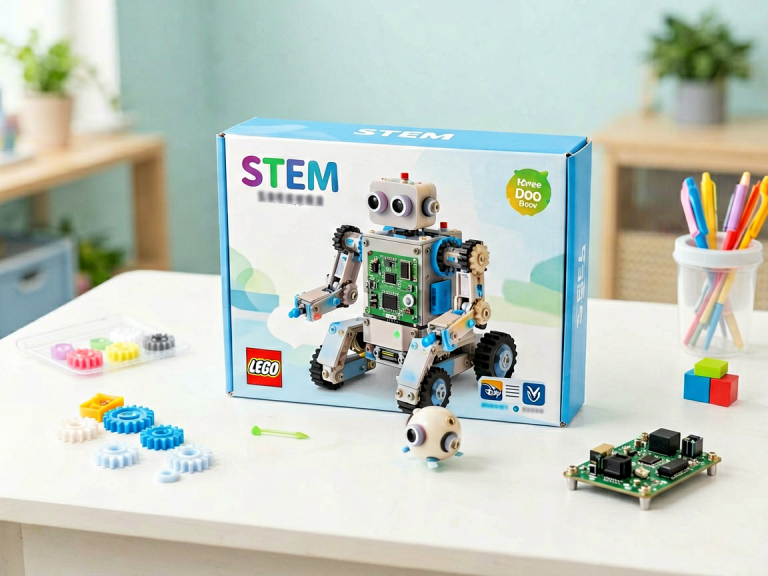
STEM (Science, Technology, Engineering, Math) toys have exploded in popularity, but many are overpriced. Fortunately, affordable options exist. Snap circuits, for example, come in junior kits for around $30–$40. Children snap together electronic components to create working lights, fans, and alarms. They learn about circuits, conductivity, and cause-and-effect relationships without soldering or advanced knowledge. Another favorite is a simple robotics kit, like a bristlebot (a tiny robot made from a toothbrush head and a vibrating motor) that costs under $15 to assemble. More comprehensive kits, such as those that build a solar-powered car or a hydraulic arm, are available for $35–$50. These projects demystify technology and show children that they can create machines with their own hands.
Ten Specific Hand-On Learning Toys Under $50: Reviews and Recommendations
To make this guide practical, here are ten specific toys that deliver extraordinary educational value without exceeding the budget. Prices are approximate and may vary by retailer, but each typically falls under the $50 threshold.
1. Magna-Tiles Clear Colors 32-Piece Set (approx. $40–$50)
These translucent magnetic tiles are a classroom and home favorite. They teach geometry, symmetry, and structural engineering. Children as young as three can build simple cubes, while older kids construct castles and geodesic domes. The magnetic edges make building frustration-free.
2. ThinkFun Gravity Maze Marble Run (approx. $25–$30)
This logic game combines a marble run with puzzle cards. Children build a pathway using towers and ramps to guide a marble to a target. It develops sequential reasoning, spatial planning, and critical thinking. The self-contained design means no lost pieces.
3. National Geographic Break Open Geodes Kit (approx. $20–$30)
A hands-on geology experience: children use a hammer to crack open real geodes and discover crystals inside. The kit includes safety goggles and a learning guide. It teaches geology, patience, and the excitement of scientific discovery.
4. LEGO Classic Creative Bricks Set (11022 or similar) (approx. $35–$45)
LEGO sets often exceed $50, but the classic box of basic bricks in assorted colors and sizes (around 500–1000 pieces) is usually under $40. Without instructions, children must imagine and build freely, fostering creativity and engineering instincts. Bonus: it never becomes obsolete.
5. Learning Resources Botley the Coding Robot (approx. $35–$45)
Botley is a screen-free coding robot. Children use a remote programmer to input sequences of moves, turns, and loops. It teaches coding logic, directional awareness, and sequencing. The activity set includes obstacle course pieces for endless challenges.
6. 4M KidzLabs Crystal Mining Kit (approx. $15–$20)
Children excavate real crystal specimens from a plaster block using tools. It combines paleontology-style digging with mineral identification. The hands-on process builds fine motor skills and scientific observation.
7. Melissa & Doug Wooden Building Blocks Set (approx. $25–$35)
A classic set of 60–100 wooden blocks in different shapes. Simple, durable, and open-ended. Children learn balance, weight distribution, and creativity. Unlike plastic blocks, wood provides sensory feedback and a satisfying weight.
8. Snap Circuits Jr. SC-100 Electronics Kit (approx. $30–$40)
This kit includes over 30 parts that snap together to build 100+ projects, including a doorbell, a flying fan, and a light-controlled switch. It teaches basic electronics, circuit theory, and problem-solving. No soldering required.
9. Klutz LEGO Gear Bots Science STEM Kit (approx. $25–$35)
This kit combines LEGO bricks with papercraft and gears to build kinetic sculptures like a drumming octopus or a flying robot. It teaches mechanical engineering principles such as gear ratios and torque. The instruction book is excellent.
10. Educational Insights GeoSafari Jr. Talking Microscope (approx. $30–$40)
While not strictly hands-on in the manipulation sense, this microscope allows children to place prepared slides and hear facts about the specimen. It combines tactile slide loading with auditory learning. Perfect for ages 4–7.
How to Choose the Right Hands-On Toy for Your Child
With so many options, selecting the best toy depends on a child's age, interests, and developmental stage. Here are guiding principles.
Consider the Open-Ended Factor
The best hands-on toys under $50 are those that can be used in multiple ways. A set of magnetic tiles can be a castle today, a rocket ship tomorrow, and a geometric study the next day. Avoid toys that have only one correct use or that require constant parental intervention. Open-ended toys encourage independent play and longer engagement.
Match the Toy to the Child's Current Passion
A child obsessed with dinosaurs will benefit more from a dinosaur excavation kit than from a coding robot—at least initially. Follow their interests to maintain intrinsic motivation. However, do not be afraid to introduce gently novel toys that stretch their abilities. A child who loves building may also enjoy a marble run, which adds a new dimension of planning.
Prioritize Quality and Safety
Just because a toy is under $50 does not mean it must be flimsy. Look for toys made from non-toxic materials, with smooth edges and durable construction. Read reviews for chocking hazards, especially for children under three. Many reputable brands like Melissa & Doug, Learning Resources, ThinkFun, and National Geographic offer affordable, safe products.
Avoid Overstimulation
Some budget-friendly toys pack too many features into one box: flashing lights, loud sounds, and dozens of small pieces. These can overwhelm a child and reduce deep engagement. The best hands-on toys are often simpler than you think. A wooden balance scale with a few weights teaches more about mass than a digital scale with voice commands.
Embrace the Process, Not the Product
Remember that the goal is learning, not a perfect final outcome. A child's lopsided tower or messy crystal garden is a testament to their experimentation. Do not correct them immediately; let them discover why the tower fell or why the crystals didn't form as expected. This builds resilience and scientific thinking.
The Long-Term Impact of Affordable Hands-On Learning
Investing in hands-on learning toys under $50 is not just a purchase; it is an investment in a child's cognitive, emotional, and social development. These toys are the tools of curiosity. They transform abstract concepts into concrete experiences. A child who plays with snap circuits may later pursue electrical engineering, but even if they do not, they have learned that failure is a stepping stone, that curiosity is rewarded, and that their own hands can create remarkable things.
In families with tight budgets, the affordability of these toys is a gift. One $40 set of magnetic tiles can be passed down through siblings, shared with friends, and used for years. They do not require batteries, Wi-Fi, or subscriptions. They simply ask for a child's imagination and willingness to try. And that is the most powerful learning tool of all.
Conclusion: Small Price, Big Learning
Hands-on learning toys under $50 prove that educational excellence does not require a hefty price tag. From magnetic tiles that teach engineering to crystal kits that spark geological curiosity, these toys offer rich, multi-sensory experiences that screens cannot replicate. They empower children to become active creators rather than passive consumers. As you browse the aisles or scroll through online stores, look for toys that invite touch, experimentation, and open-ended play. The return on this small investment—measured in confidence, creativity, and a lifelong love of learning—is truly priceless. So go ahead, buy that marble run or that set of wooden blocks. Watch as your child builds, fails, rebuilds, and learns. That is the essence of education.