The Power of Play: Why Hands-On Learning Toys Are Essential for Beginners
Introduction: The Shift from Passive to Active Learning
In an age dominated by screens, digital apps, and passive entertainment, the concept of “learning through doing” has never been more critical—especially for beginners. Whether the beginner is a toddler exploring the world for the first time, a young child struggling with foundational math, or an adult venturing into a new hobby, the tools we use to learn shape not only the speed of acquisition but also the depth of understanding. Hands-on learning toys—physical, tactile, manipulative objects that require active engagement—offer a powerful alternative to passive instruction. They transform abstract concepts into concrete experiences, turning frustration into curiosity and confusion into mastery. This article explores why hands-on learning toys are indispensable for beginners, how they work, what categories exist, and how to choose the right ones.
What Are Hands-On Learning Toys?
Before diving into benefits, it is essential to define the term. Hands-on learning toys are physical objects designed to facilitate learning through direct manipulation, experimentation, and open-ended exploration. Unlike traditional textbooks or video tutorials, these toys require the user to touch, build, move, assemble, or deconstruct. They often involve problem-solving, fine motor skills, spatial reasoning, and creativity. Examples include building blocks, puzzles, chemistry sets, modeling clay, abacuses, robotics kits, and Montessori-inspired materials. The key characteristic is that the learner is an active participant, not a passive receiver of information.
For beginners, this active participation is particularly powerful. When a child (or adult) picks up a set of gears and figures out how to make them turn together, they are not just learning about mechanics—they are internalizing cause and effect, trial and error, and persistence. The toy becomes a teacher that responds to the learner’s actions, providing immediate feedback that no video can replicate.
The Cognitive and Developmental Benefits for Beginners
Hands-on learning toys are not merely fun; they are scientifically proven to enhance cognitive development. Research in developmental psychology and neuroscience shows that multisensory learning—engaging touch, sight, and sometimes sound or smell—strengthens neural pathways. For beginners, especially young children, the brain is most plastic during early years. Manipulating objects helps build connections between the motor cortex and cognitive regions, improving memory retention and concept formation.
One of the most significant benefits is the development of fine motor skills. Beginners often struggle with coordination—learning to hold a pencil, tie a shoelace, or use scissors. Hands-on toys like threading beads, pegboards, or snap-together blocks strengthen the small muscles in hands and fingers, preparing them for more complex tasks. Furthermore, these toys promote executive function skills such as planning, focusing, and self-regulation. When a beginner attempts to build a tower that won’t fall, they must plan, adjust, and persist through frustration—a microcosm of real-world problem-solving.
Equally important is the emotional benefit. Hands-on learning toys provide a low-stakes environment where failure is safe. A block tower collapses—so what? The beginner can rebuild it differently. This resilience is crucial for lifelong learning. Unlike a worksheet with a red “X,” a tangible toy offers the chance to try again immediately, fostering a growth mindset.
Categories of Hands-On Learning Toys for Different Ages and Skills
The diversity of hands-on learning toys is vast, and selecting the right category depends on the beginner’s age, interest, and developmental stage. Below are several major categories, each with examples and explanations of their learning value.
Building and Construction Sets
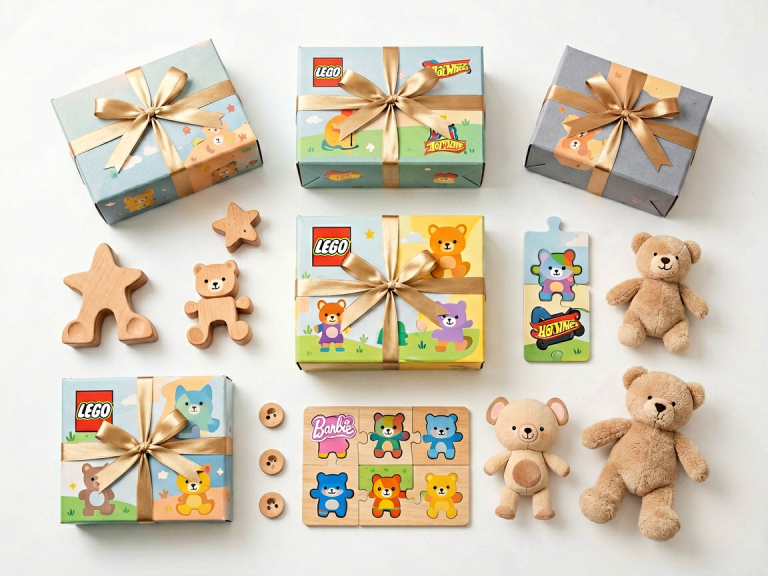
The classic building block—whether LEGO, wooden blocks, or magnetic tiles—is perhaps the most versatile hands-on toy. For beginners as young as 18 months, large, chunky blocks teach stacking and gravity. For older beginners, LEGO sets with gears, axles, or even programmable motors introduce engineering principles. Construction toys develop spatial awareness, symmetry, and structural logic. They also encourage creativity because there is no single “right” way to build. A beginner can follow instructions or invent their own design, learning both systematic thinking and improvisation.
Science and Experiment Kits
For beginners curious about the natural world, science kits offer a safe, guided introduction to chemistry, physics, and biology. Simple kits might include a magnifying glass, a magnet set, or a volcano-making experiment. More advanced kits for older children or adult beginners might involve crystal growing, circuit building, or microscope slides. The hands-on nature of these kits demystifies scientific concepts. Instead of memorizing that “acid plus base produces carbon dioxide,” the beginner sees it happen, feels the fizz, and understands the reaction on a sensory level.
Art and Craft Materials
Art is a profoundly hands-on learning activity. Modeling clay, finger paints, sewing kits, weaving looms, and bead sets all engage tactile senses while teaching design, color theory, fine motor control, and patience. For a beginner learning letters, tracing shapes in sand or forming them with clay reinforces letter recognition far more effectively than a workbook. Art materials also allow for open-ended expression, which is critical for emotional development. A beginner who feels shy or anxious can channel feelings into a sculpture or painting, learning self-regulation simultaneously.
Puzzles and Logic Games
Puzzles are the quintessential hands-on brain teasers. Jigsaw puzzles teach pattern recognition, patience, and spatial reasoning. Logic games like tangrams, Rubik’s cubes, or peg solitaire challenge beginners to think step-by-step. For younger beginners, simple shape sorters or number puzzles introduce categorization and counting. The physical act of rotating a piece until it fits trains the brain in mental rotation—a skill linked to math and science achievement later in life.
Montessori-Inspired Manipulatives
The Montessori method emphasizes hands-on learning with specially designed materials. Examples include the pink tower (blocks of decreasing size), sandpaper letters, golden bead materials for place value, and fraction circles. These materials are self-correcting, meaning the beginner can see their own mistake without a teacher’s intervention. For a child first learning to count, moving physical beads from one container to another makes the abstract concept of quantity tangible. The materials isolate one concept at a time, reducing cognitive load for the beginner.
How to Choose the Right Hands-On Toy for a Beginner
With so many options, choosing the right toy can feel overwhelming. The key is to match the toy to the beginner’s current ability and interest, not their age alone. A five-year-old with advanced fine motor skills might benefit from a more complex puzzle, while a seven-year-old who struggles with focus may need a simpler building set.
First, consider the learning goal. Is the beginner working on counting? Look for an abacus or counting bears. Building vocabulary? Alphabet blocks or magnetic letters. Problem-solving? A maze board or logic puzzle. Second, prioritize open-ended toys that allow multiple uses over single-purpose gadgets. A set of wooden blocks can be used for years in countless ways; a battery-operated talking toy quickly loses educational value.
Third, ensure safety. For very young beginners, avoid small parts that pose choking hazards. Look for non-toxic materials, smooth edges, and durable construction. For older beginners, consider tools like child-safe scissors or non-toxic glue. Fourth, involve the beginner in the selection process. A toy they choose themselves will sustain engagement longer. Finally, remember that the adult’s role is to scaffold, not direct. Sit alongside the beginner, ask open-ended questions (“What happens if you put this piece here?”), and let them discover.
Real-World Examples: Success Stories and Recommended Products
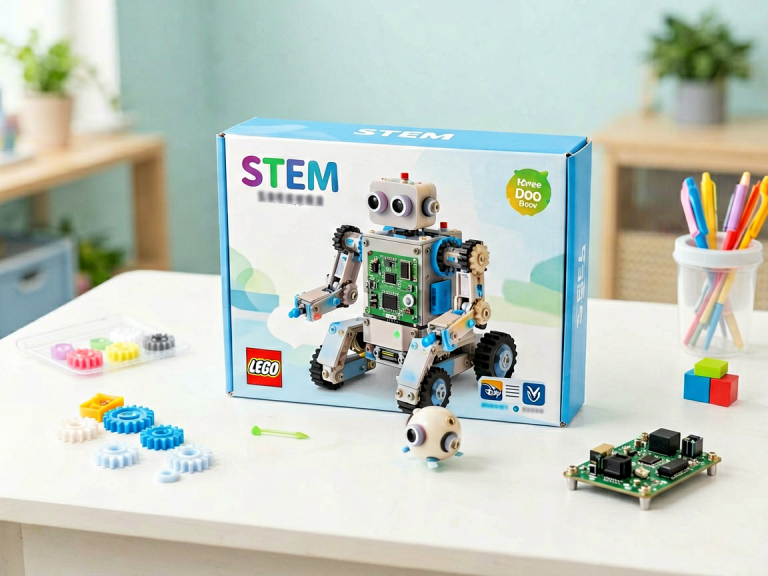
Countless educators and parents attest to the power of hands-on toys. One notable example is the LEGO Education SPIKE Essential kit, designed for elementary beginners. It combines brick building with simple coding, allowing children to build a robot that moves when they program it. Teachers report that students who struggle with math suddenly engage when they must calculate the number of gear teeth needed to make the robot climb a hill.
Another classic is the Montessori golden bead material. A Montessori teacher in California shared a story of a five-year-old beginner who could not grasp place value. After working with golden beads—physically grouping ten units into a “ten bar” and ten bars into a “hundred square”—the child exclaimed, “Now I see why 100 is bigger than 10!” The tactile experience clicked where verbal explanation had failed.
For adults who are beginners in a new field, hands-on kits like Arduino starter sets for electronics or woodworking kits for carpentry provide similar benefits. A retired engineer learning woodworking reported that using actual hand planes and chisels helped him understand grain direction and joinery far better than watching YouTube videos.
Conclusion: Investing in a Hands-On Future
Hands-on learning toys are not just playthings; they are the silent teachers that shape how beginners think, feel, and learn. In a world that increasingly values speed and instant answers, these toys slow us down, inviting us to touch, try, fail, and try again. For the toddler stacking blocks, the child mixing baking soda and vinegar, the adult soldering a circuit—the lesson is the same: understanding comes through the hands as much as the mind.
Parents, educators, and anyone guiding a beginner should prioritize these tools. They are an investment not in a product, but in a mindset—a mindset that embraces curiosity, resilience, and the joy of discovery. The next time you see a beginner struggling with an abstract concept, remember: sometimes the best teacher is a handful of colorful blocks, a pile of magnetic tiles, or a simple jar of clay. Give them something to hold, and watch them learn.
[Word count: approximately 1,320]