The Ultimate Parent’s Guide to Choosing and Using Science Kits for Lifelong Learning
—
Introduction: Why Science Kits Matter More Than Ever
In an age where screen time often dominates childhood leisure, finding hands-on, engaging, and educational activities can feel like searching for a needle in a digital haystack. Science kits offer a powerful antidote. They transform abstract concepts—chemistry reactions, physics principles, biological processes—into tangible, memorable experiences. For parents, navigating the vast marketplace of science kits can be overwhelming. Some kits dazzle with colorful packaging but deliver shallow learning; others require adult supervision so intense that they become chores rather than joys. This guide is designed to equip you with the knowledge to select age-appropriate, high-quality science kits, and to use them effectively to nurture curiosity, critical thinking, and a genuine love for discovery in your child. Whether your child is three or thirteen, the right kit can spark a lifelong passion for science.
—
Why Invest in Science Kits? The Critical Benefits for Child Development
Before diving into selection criteria, it is essential to understand the multifaceted benefits science kits provide. They are not merely toys; they are educational tools that support cognitive, social, and emotional growth.
Hands-On Learning Deepens Understanding
Children learn best when they can see, touch, and manipulate. A textbook explanation of a volcano is forgettable; mixing baking soda and vinegar in a plastic model is unforgettable. This tactile engagement creates stronger neural connections, making scientific principles stick. Studies in educational psychology consistently show that hands-on activities improve retention by up to 75% compared to passive reading or listening.
Encourages Problem-Solving and Resilience
Science experiments rarely work perfectly on the first try. A crystal that won't form, a rocket that fizzles instead of launches—these “failures” are valuable lessons. When parents guide children to troubleshoot (e.g., “What if we used less water?”), they teach resilience and the scientific method itself: hypothesis, test, observe, iterate. This mindset transfers to schoolwork and future careers.
Bridges the Gap Between Curiosity and Knowledge
Children are natural scientists. They ask endless “why” questions. Science kits provide structured answers while leaving room for open-ended exploration. A weather kit, for instance, can help a child understand why clouds form, then inspire them to track daily conditions and predict patterns. This bridge transforms passive wonder into active inquiry.
Quality Bonding Time for Families
Science kits are perfect for shared activities. Parents learn alongside their children, modeling curiosity and humility. The shared laughter over a messy experiment or the “aha!” moment when a circuit lights up creates lasting memories. This collaborative environment strengthens parent-child relationships and normalizes learning as a lifelong pursuit.
—
How to Choose the Right Science Kit by Age and Development Stage
Not all science kits are created equal, and the biggest mistake parents make is buying a kit either too simple (boring) or too complex (frustrating). Here is an age-based breakdown to help you match the kit to your child’s abilities and interests.
Ages 3–5: Focus on Sensory Exploration and Simple Cause-Effect
For preschoolers, the goal is to ignite wonder, not to teach formal science. Look for kits that emphasize texture, color, sound, and movement. Examples include water play sets with funnels and measuring cups, magnetic discovery boards, or simple color-mixing labs. Avoid kits with small parts that are choking hazards. At this stage, adult supervision is mandatory, and the experience should be mess-friendly. The best kits for this age require no reading; instructions are visual or rely on parent demonstration. A “magic” milk experiment (milk + food coloring + dish soap) is perfect: it shows immediate cause and effect without needing explanation.
Ages 6–8: Basic Principles with Clear Instructions
Early elementary children can follow simple, step-by-step directions (with help). Kits that introduce concepts like density (sink-or-float), magnetism, plant growth, or static electricity work well. Look for kits that include child-safe tools like plastic test tubes, non-toxic chemicals, and large magnifying glasses. The instructions should be picture-heavy with minimal text. At this age, children love showing off results—growing a bean in a bag, making slime, or building a simple motor. Choose kits that allow repeatability: a single-use kit is disappointing; one that can be used multiple times encourages experimentation.
Ages 9–12: Real Experiments with Scientific Method
Preteens are ready for kits that require reading, measurement, and recording data. Chemistry sets with safe but authentic reactions, electronics kits that teach circuits and sensors, or dissection kits (with synthetic or preserved specimens) are excellent. At this stage, look for kits that include a notebook or prompts for recording hypotheses and observations. Children can work more independently, but parental oversight remains important—especially for any experiment involving heat or chemicals. Encourage them to modify procedures: “What happens if you change the voltage?” This builds creativity within a structured framework.
Ages 13 and Up: Advanced Kits and Open-Ended Projects
Teenagers crave autonomy and real-world relevance. Choose kits that align with their specific interests: robotics, coding, forensic science, astronomy (telescope kits), or environmental testing (water quality, soil pH). Many advanced kits connect to online platforms or apps, allowing teens to share data with a community. Consider subscription boxes that deliver new challenges monthly, such as building a working speaker or analyzing DNA in fruit. At this level, the kit should be a launching pad for independent projects, science fair entries, or even potential career exploration.
—
Key Features to Evaluate Before Buying: Quality, Safety, and Longevity
Beyond age labels, scrutinize the actual contents and design of the kit. Here are criteria that separate excellent kits from mediocre ones.
Safety First: Non-Toxic Materials and Clear Warnings
Always check that the kit complies with safety standards (e.g., ASTM, CE marking). Look for non-toxic, washable materials, and avoid kits that use real glass for young children. The instruction manual should include clear safety warnings, disposal guidelines, and an adult supervision icon where needed. If a chemistry kit contains chemicals without proper labeling or safety data, reject it immediately. Reputable brands like Thames & Kosmos, National Geographic, and MEL Science prioritize safety.
Instruction Quality: Clarity, Learning Goals, and Extension Activities
The best kits do not just list steps; they explain the “why.” Look for manuals that include background science, a glossary, and suggestions for further exploration. For example, a rocket kit should explain Newton's third law, not just tell you to pump air. Extension activities (“Try using different ratios of vinegar to baking soda”) turn a one-time experiment into a multi-day learning experience. Avoid kits that rely on flashy gimmicks but offer zero educational content.
Reusability and Open-Ended Play
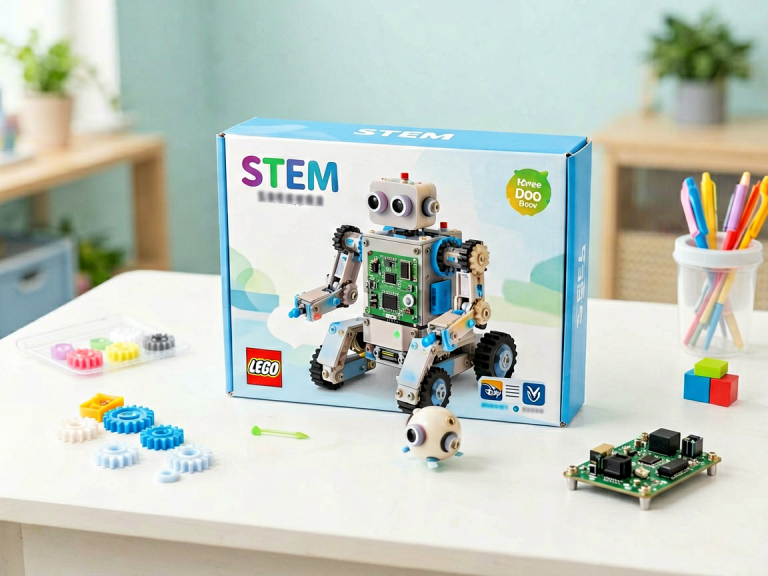
Single-use kits (e.g., a plaster volcano mold that hardens and cannot be reused) have limited value. Prioritize kits that include durable, reusable components such as beakers, tubes, wires, and magnets. Some kits allow you to refill consumables (crystals, chemicals) through the manufacturer. Also, consider kits that encourage open-ended design: building blocks with motors and gears, or microscope sets that invite exploration of any object, not just prepared slides.
Alignment with School Curriculum (Optional but Helpful)
If your child struggles with science at school, look for kits that complement topics in their grade. For example, a kit about electrical circuits reinforces what they learn in physical science. Some brands, like The Young Scientists Club, explicitly align with Next Generation Science Standards (NGSS) or Common Core. This can boost confidence in the classroom.
Parent Reviews and Community Feedback
Read reviews from other parents, not just product pages. Look for comments about ease of use, missing parts, actual enjoyment, and whether children returned to the kit repeatedly. Also, check online forums or parenting groups for “hidden gem” suggestions.
—
Maximizing the Learning Experience: How to Use a Science Kit Effectively
Even the best kit can fall flat if used carelessly. Here are actionable strategies to turn a science kit into a meaningful educational experience.
Set the Stage for Inquiry
Before opening the kit, ask your child open-ended questions: “What do you think will happen?” “Why do you think this material is used?” “How could we test this differently?” This primes their brain for active learning. Avoid simply reading instructions aloud; instead, have your child preview the steps and predict outcomes.
Embrace the Mess and the Mistakes
Science is messy—literally and figuratively. Allow spills, failed crystals, and off-color reactions. When something goes wrong, resist the urge to fix it immediately. Instead, ask: “What happened that we didn't expect?” “What variable might have changed?” You can then guide them to repeat the experiment controlling for that variable. This teaches the essence of scientific investigation.
Document and Discuss
Provide a simple notebook or binder for your child to record observations, drawings, and data. Encourage them to write down questions that emerge. After the experiment, have a brief conversation: “What was the most surprising part?” “How does this relate to something we see in nature or daily life?” This deepens understanding and connects the kit to the real world.
Combine Multiple Kits for Thematic Learning
If your child becomes fascinated with a topic (e.g., space), combine a rocket kit, a star projector, and a book about astronauts to create a mini-unit study. This interdisciplinary approach mimics how science works in real life—blending physics, astronomy, engineering, and even art.
Incorporate Technology Thoughtfully
Some high-quality kits integrate apps for augmented reality or data logging. Use these as supplements, not replacements, for hands-on work. For example, a chemistry app that shows molecular animations can enhance understanding, but your child should still touch and mix real substances. Limit screen time during the experiment to avoid distraction.
—
Common Pitfalls to Avoid: What Every Parent Should Know
Even well-intentioned parents can undermine the value of science kits. Watch out for these common traps.
Over-Scripted, Cookbook-Style Experiments
If the kit’s manual tells you exactly what will happen and leaves no room for deviation, your child learns to follow instructions but not to think. Choose kits that include “try this” variations or prompts for open-ended exploration. If you’re stuck with a rigid kit, invent your own modifications.
Buying Based on Age Label Alone
Age labels are guidelines, not rules. A gifted 7-year-old may be bored by a 7+ kit; a cautious 8-year-old may need a simpler 6+ kit. Know your child’s attention span, reading level, and motor skills. Always preview the contents online (many brands provide PDFs of instructions) before purchasing.
Expecting Instant Results or Perfection
Some experiments take time—a crystal may need days to grow, a plant may take weeks to sprout. Modern children, accustomed to instant gratification, may lose interest. Prepare them in advance: “This will take patience, and we’ll check on it each day.” Celebrate the process, not just the outcome.
Ignoring Storage and Cleanup
A disorganized kit with missing pieces is frustrating. After each use, involve your child in sorting and storing components. Label bags, put small parts in containers, and designate a shelf for the kit. This teaches responsibility and ensures the kit remains usable for future experiments.
Using Science Kits as Babysitters
While it’s tempting to let a child play alone with a kit, the richest learning happens when an adult is present to ask questions, explain concepts, and model curiosity. Even 10 minutes of shared attention significantly boosts learning outcomes. If you are busy, set up a “science date” on weekends where both of you are fully engaged.
—
Conclusion: Cultivating a Scientific Mindset at Home
Science kits are not magical solutions; they are tools that, in the hands of an attentive parent, can unlock a world of discovery. The ultimate goal is not to create a professional scientist but to foster a mindset—one that values evidence, embraces curiosity, and finds joy in asking “What if?” By choosing age-appropriate, high-quality kits and using them with intention, you transform your home into a laboratory of lifelong learning. Remember, every failed experiment is a lesson in resilience; every successful one is a moment of triumph. So roll up your sleeves, clear the kitchen table, and let the exploration begin. Your child’s next big idea might start with a simple burette, a magnifying glass, or a single question you help them answer. And that is the most powerful science kit of all.