Hands-On Learning Toys: Creative Gift Ideas That Inspire Growth and Curiosity
In an age dominated by screens and passive entertainment, the most meaningful gifts are those that engage a child’s hands, mind, and imagination. Hands-on learning toys—often called “active play” or “manipulative” toys—offer an antidote to digital overload. They invite children to build, experiment, create, and problem-solve, turning play into a rich, sensory experience that nurtures cognitive development, fine motor skills, and emotional resilience. Whether you are shopping for a birthday, holiday, or just-because occasion, choosing a hands-on learning toy is an investment in a child’s future. This article explores a range of inspired gift ideas, organized by category, to help you find the perfect present that will spark curiosity and provide hours of meaningful fun.
The Power of Tactile Play: Why Hands-On Toys Matter
Before diving into specific suggestions, it’s worth understanding why hands-on learning toys are so effective. Research in developmental psychology consistently shows that children learn best when they can touch, manipulate, and experiment. Unlike passive screen time, which often delivers information in a pre-packaged format, hands-on toys require active participation. A child building a bridge with blocks is unconsciously learning about balance, gravity, and geometry. A child mixing colors with clay is exploring chemical reactions and artistic expression. These experiences build neural connections, enhance concentration, and foster a growth mindset—the belief that abilities can be developed through effort. Moreover, hands-on play is intrinsically motivating; children persist longer and engage more deeply when they are physically involved. So, when you give a toy that requires building, assembling, or creating, you are not just giving a plaything—you are giving a tool for lifelong learning.
Building Blocks and Construction Sets: Foundations of Creativity
Few categories of toys are as timeless and versatile as construction sets. From classic wooden blocks to advanced magnetic tiles, these toys encourage spatial reasoning, planning, and fine motor coordination. They also teach persistence: when a tower falls, a child learns to rebuild stronger.
Magnetic Tiles (e.g., Magna-Tiles, PicassoTiles)
These translucent, magnetic shapes click together effortlessly, allowing children as young as three to create 2D patterns and 3D structures. They are perfect for open-ended play—a child can build a castle, a rocket, or a geometric sculpture. The magnets provide satisfying feedback, and the transparent colors make light play possible. For older children, sets with wheels, windows, and arches expand the possibilities. These toys also sneak in math concepts: symmetry, angles, and fractions.
Classic Wooden Block Sets
Unpainted, solid hardwood blocks remain a staple in Montessori and Waldorf education. Their simplicity is their strength. A set of 100 or more blocks in different shapes encourages children to imagine and construct without limitations. Unlike themed plastic sets, wooden blocks do not dictate a specific outcome. They promote creativity, balance, and even social skills when children collaborate on a joint project.
LEGO and Compatible Building Kits
For children aged five and up, LEGO sets offer structured builds (complete with instructions) or free-form creation. Themed sets—like those featuring animals, vehicles, or famous landmarks—spark interest in specific topics. However, the real educational magic happens when children mix pieces from different sets to invent new designs. LEGO also has educational lines like LEGO Education SPIKE Prime, which incorporate coding and robotics.
Science and STEM Kits: Experimenting Like a Real Scientist
Hands-on science kits transform abstract concepts into tangible experiences. They are ideal for curious minds who love to ask “why?” and “how?”. Many kits come with all necessary materials and a guide, making them easy to use at home.
Chemistry and Geology Kits
A beginner chemistry set can include safe experiments like making slime, growing crystals, or creating a volcano eruption. Geology kits with rock tumblers or fossil excavation blocks teach Earth science while satisfying the desire to dig and discover. For example, the National Geographic Mega Science Series includes an earth science kit with real meteorite specimens and a digging tool. Children develop observation skills, learn to follow step-by-step procedures, and practice patience (crystal growth takes days).
Electronic Circuit Kits
Snap Circuits is a classic choice: colorful components snap onto a board to build working radios, alarms, and lights. No soldering required. As children follow the diagrams, they learn about conductors, resistors, and switches. For older kids, littleBits or Makey Makey offer modular electronics that can be connected to everyday objects—imagine playing a piano using bananas! These kits demystify technology and foster a sense of technological confidence.
Microscopes and Biology Exploration
A child-friendly microscope with prepared slides and blank slides allows young biologists to explore pond water, onion skin, or their own cheek cells. Brands like My First Lab or AmScope offer durable models that magnify up to 1200x. This gift encourages careful observation, documentation (sketching what they see), and a deeper appreciation for the hidden world. For an extra touch, pair it with a field guide to insects or plants.
Art and Craft Supplies: The Joy of Creating Something New
Artistic hands-on toys nurture self-expression, fine motor control, and visual-spatial skills. They also provide a healthy outlet for emotions. When children paint, sculpt, or weave, they are not just making art; they are developing patience, planning, and the ability to revise their work.
Pottery Wheels and Clay Kits
A small tabletop pottery wheel with non-drying modeling clay lets children experience the tactile pleasure of shaping a vase or bowl. Air-dry clay or polymer clay (which can be baked in a home oven) extends the possibilities. Children can make beads, figurines, or ornaments. The process of centering, shaping, and trimming teaches cause and effect—too much water makes the clay slump, while too little makes it crack. It’s a wonderful gift for children aged six and up.
Weaving Looms and Sewing Kits
Weaving is an ancient craft that builds hand-eye coordination and pattern recognition. Simple handheld looms (like the Harrisville Designs Potholder Loom) allow children to weave colorful loops into a potholder or mat. For older children, a small sewing machine or a embroidery kit with felt shapes encourages them to create stuffed animals, pillows, or clothing. These gifts also teach practical life skills and patience.
Open-Ended Art Supplies
Sometimes the best gift is a well-curated art box: high-quality watercolors, oil pastels, watercolor paper, glue sticks, scissors, and a sketchbook. Add some modeling dough or air-dry foam clay. The key is to avoid kits that only produce one specific outcome (e.g., a pre-printed canvas with numbered paint spots). True creativity thrives when children have the freedom to make mistakes and express themselves. Consider also a light-up tracing pad for budding animators.
Puzzles and Brain Teasers: Sharpening Logic and Perseverance
Puzzles teach children to focus, analyze, and think flexibly. They are excellent for quiet independent play and can be enjoyed alone or with others.
Jigsaw Puzzles with Increasing Complexity
Start with a 24-piece floor puzzle for a preschooler and progress to 500- or 1000-piece puzzles for an older child. Jigsaw puzzles improve visual perception, memory, and patience. Theme-based puzzles—such as maps, dinosaurs, or outer space—also reinforce knowledge. For a twist, try 3D puzzles, like a wooden globe puzzle or a model of the Taj Mahal. These require assembling curved pieces and following spatial instructions.
Logic and Strategy Games
Games like Rush Hour (a traffic jam logic game), Gravity Maze (a marble run puzzle), or Kanoodle (a solo puzzle with colored pieces) challenge children to solve increasingly difficult layouts. They are portable and often come with a booklet of 100+ challenges. These games teach deduction, trial-and-error, and the satisfaction of a breakthrough. They are also great for car rides or rainy afternoons.
Tangrams and Pattern Blocks
Wooden tangram sets (seven geometric pieces that form a square) or colorful pattern blocks inspire children to recreate silhouettes of animals, letters, and objects. They are deceptively simple yet develop geometric intuition. Many sets come with challenge cards, but free-play is equally valuable.
Interactive Electronic and Robotic Toys: Coding Without Screens
For children fascinated by technology, hands-on coding toys offer a screen-free introduction to programming logic. They are perfect for building computational thinking—a skill that involves breaking down problems into smaller steps.
Coding Robots (e.g., Botley, Code & Go Robot Mouse)
These robots do not require a tablet or computer. Instead, children program them by pressing buttons (forward, backward, turn left, turn right) in sequence. Botley, for example, can detect objects, follow a black line, and even loop commands. Children learn sequencing, debugging, and algorithmic thinking. The tactile feedback of seeing the robot move according to their instructions is incredibly rewarding.
Build-Your-Own Robot Kits
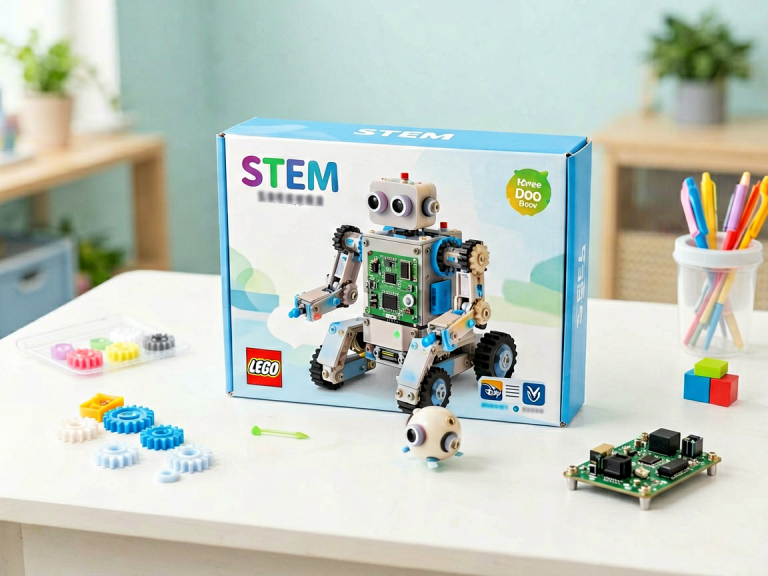
For older children (ages 8+), a kit like the 4M Tin Can Robot or the Thames & Kosmos Robotics Workshop allows them to assemble a motorized robot from scratch. They learn about gears, circuits, and mechanics. Some kits incorporate solar panels or remote controls. The sense of accomplishment when the robot finally wiggles or rolls is unparalleled.
Electronic Music Kits
Making an actual theremin or a synthesizer from a kit combines music and electronics. The littleBits Synth Kit, for example, lets children build a custom instrument by snapping together modules. They experiment with pitch, volume, and effects while learning the basics of sound waves and electronic circuits.
Outdoor and Nature Exploration Kits: Learning from the Real World
Not all hands-on learning happens indoors. Nature-based toys encourage children to observe, collect, and experiment with the environment. They foster a sense of wonder and environmental stewardship.
Bug Catching and Observation Kits
A classic bug catcher with a magnifying lid, tweezers, and a field guide turns a simple backyard into a science lab. Children can catch ants, beetles, or butterflies, observe them for a short time, and release them. This teaches respect for living creatures and scientific observation. For a more elaborate gift, consider a butterfly garden kit with a mesh habitat and live caterpillars.
Gardening Sets for Kids
A child-sized trowel, gloves, seeds, and a biodegradable pot allow children to plant and care for their own herbs or flowers. There are also root-viewing planters with transparent sides so children can watch roots grow. Gardening teaches responsibility, biology, and patience. Plus, eating a cherry tomato you grew yourself is a powerful lesson in food provenance.
Water Science and Sand Play
Water tables, sand and water-sifter kits, or even a small water rocket (using a bicycle pump) provide hours of messy, joyful learning. Children experiment with flow, volume, and displacement. For a more structured activity, a set of pipettes, measuring cups, and food coloring lets them practice mixing and measuring. These toys are ideal for hot summer days.
How to Choose the Perfect Hands-On Toy for a Child
With so many options, consider the child’s age, interests, and attention span. A three-year-old will benefit from large wooden blocks and simple magnetic tiles, while a ten-year-old might enjoy a more complex science kit or a robotics set. Observe what the child naturally gravitates toward: are they a builder, a tinkerer, an artist, or a nature explorer? Also, look for toys that offer open-ended possibilities rather than a single, fixed outcome. The best gifts grow with the child—they can be used in different ways as skills develop. Finally, remember that the most valuable gift is your own presence and encouragement. Sit down with the child, build alongside them, and ask open-ended questions like “What do you think will happen if we add another piece?”. The conversation and connection are as important as the toy.
Conclusion: Gifts That Keep on Giving
Hands-on learning toys are more than just presents; they are invitations to explore, create, and think critically. From the satisfying click of magnetic tiles to the awe of a homemade volcano eruption, these toys provide experiences that screen-based gadgets cannot replicate. They build confidence, resilience, and a love of discovery that lasts a lifetime. The next time you are searching for a gift, look beyond the latest electronic gadget and consider a toy that puts the child’s hands—and mind—to work. You will be giving a foundation for curious, capable, and joyful learning.