The Ultimate Hands-On Learning Toys Buying Guide: Unlocking Your Child’s Potential Through Play
Introduction: Why Hands-On Learning Toys Matter
In an era dominated by screens and passive entertainment, the value of hands-on learning toys has never been more critical. These tactile, interactive tools—ranging from building blocks and chemistry sets to puzzles and craft kits—engage children in active, multi-sensory exploration. Unlike digital games that often reward rapid tapping or passive watching, hands-on toys require physical manipulation, trial-and-error problem solving, and creative thinking. Research in early childhood education consistently shows that kinesthetic learning—learning by doing—strengthens neural connections, improves memory retention, and fosters intrinsic motivation. But with an overwhelming array of products on the market, how can parents, educators, and caregivers choose the right tools for their child’s developmental stage and interests? This comprehensive buying guide will walk you through everything you need to know, from age-appropriate recommendations to safety considerations, budget tips, and red flags to avoid.
Why Hands-On Learning? The Science Behind the Play
Before diving into product specifics, it’s essential to understand *why* hands-on toys are more than just fun. Studies in developmental psychology indicate that when children manipulate objects physically, they activate multiple brain regions simultaneously—the motor cortex, the sensory cortex, and the prefrontal cortex responsible for planning and decision-making. This cross-brain activation leads to deeper learning compared to passive instruction. For example, a child who builds a bridge with wooden blocks must negotiate balance, weight distribution, and symmetry; these concepts become embedded through physical experience, not abstract memorization. Furthermore, hands-on play naturally encourages “flow” states—periods of focused concentration where children lose track of time, a hallmark of deep learning. The tangible feedback (a block falls, a circuit lights up, a puzzle piece fits) provides immediate reinforcement, building confidence and resilience. In contrast, many “educational” apps offer only virtual rewards, which can be less satisfying and fail to develop fine motor skills.
Age-by-Age Guide: Matching Toys to Developmental Milestones
Toddlers (Ages 1–3): Sensory Exploration and Basic Motor Skills
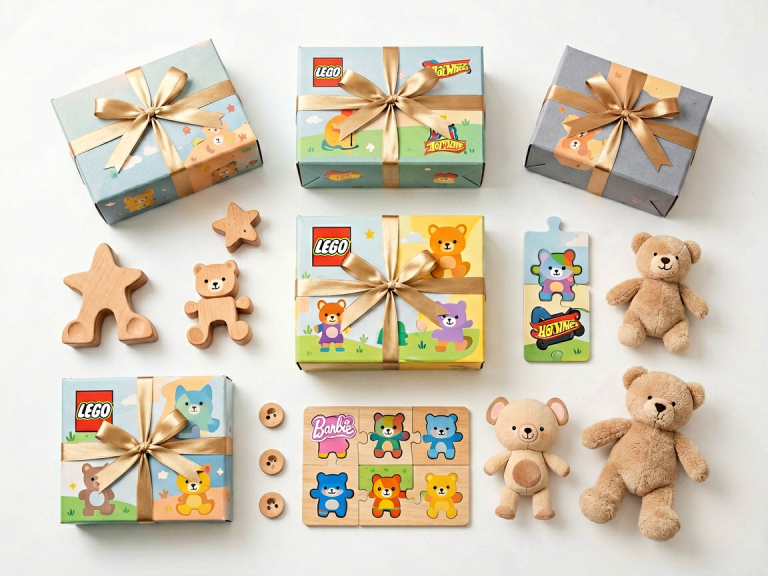
For the youngest learners, the best hands-on toys are simple, safe, and designed to stimulate the senses. Look for items that encourage grasping, stacking, pounding, and sorting. High-quality wooden blocks (non-toxic, with rounded edges) are timeless classics—they teach cause and effect, spatial awareness, and early physics (e.g., “Why did my tower fall?”). Shape sorters and large-piece puzzles with knobs help refine fine motor control and introduce basic problem-solving. Sensory bins filled with rice, sand, or water (with appropriate supervision) allow tactile exploration. Avoid toys with small parts that pose choking hazards. Brands like Melissa & Doug, Hape, and Lovevery offer well-researched, durable options. When buying for this age, prioritize materials (untreated wood, food-grade silicone) and ease of cleaning; drool and mess are inevitable.
Preschoolers (Ages 3–5): Imagination, Early Math, and Language
At this stage, children’s growing vocabulary and symbolic thinking make pretend play and construction toys especially powerful. Magnetic tiles (e.g., Magformers or Magna-Tiles) teach geometry, symmetry, and magnetism while allowing open-ended creativity. Simple board games that require counting spaces or matching colors (like “Hi Ho! Cherry-O” or “Candy Land”) introduce turn-taking and basic numeracy. Art supplies—play dough, washable markers, safety scissors, and glue—develop hand strength and pre-writing skills; avoid toxic paints and choose non-toxic certifications. Letter and number magnets for a fridge or whiteboard turn everyday moments into learning opportunities. Science kits designed for preschoolers, such as “Primary Science” sets with magnifying glasses and bug viewers, cultivate curiosity. Key buying tip: look for toys that can be used in multiple ways (e.g., blocks that can become a castle or a spaceship) to maximize cognitive flexibility.
Early Elementary (Ages 5–8): Logic, Engineering, and Collaboration
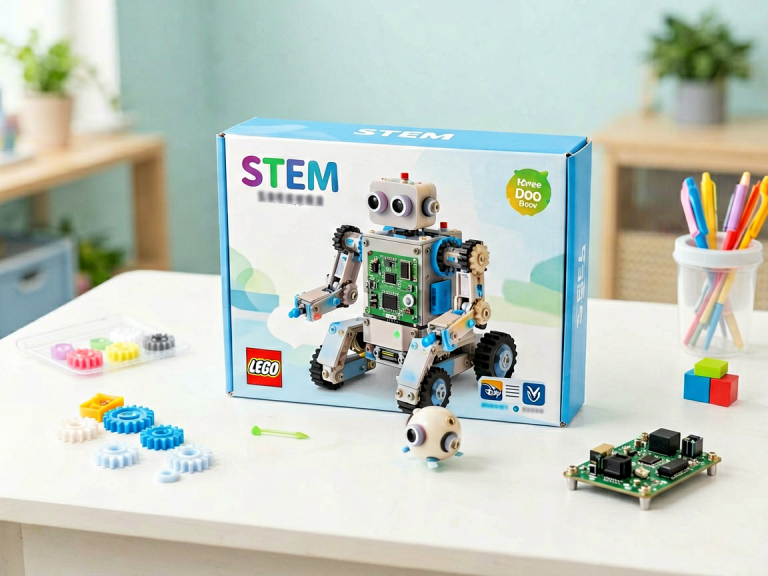
Children in this age range are ready for more complex challenges that require sequencing, following instructions, and working with others. Building kits like LEGO Classic sets or K’NEX encourage engineering thinking and patience. Simple robotics kits (e.g., Botzees or LEGO Boost) introduce coding concepts through tactile assembly and sensor-based play—no screen necessary. Board games with strategy (e.g., “Outfoxed” or “Race to the Treasure”) develop logical deduction and cooperative skills. Science experiment kits focusing on chemistry, crystals, or volcanoes offer structured discovery; check that all chemicals are safe and instructions are age-appropriate. Craft and sewing kits (with plastic needles) improve fine motor precision and allow self-expression. When buying for this group, consider durability—children can be rough on toys—and the potential for replay value. A kit that can be rebuilt or reused (like a marble run) is far better than a one-time project.
Tweens (Ages 8–12): Advanced STEM, Creativity, and Real-World Skills
Older children benefit from toys that bridge the gap between play and serious skill-building. Advanced coding and electronics kits (e.g., littleBits, Snap Circuits, or Arduino starter sets) teach circuit design, programming logic, and troubleshooting. Microscopes, telescopes, and biology dissection kits turn abstract science into tangible exploration. Woodworking or metalworking kits (with child-safe tools) provide hands-on experience with measurement, geometry, and craftsmanship. Strategy board games like “Settlers of Catan” or “Ticket to Ride” promote critical thinking, negotiation, and resource management. Art and design kits—pottery wheels, loom weaving, or graphic novel creation sets—foster patience and self-direction. At this age, buyers should prioritize adjustable difficulty (e.g., a robotics kit with expandable modules) and real-world relevance (e.g., toymaking kits that teach math and physics underlying engineering).
Key Factors to Consider When Buying Hands-On Learning Toys
Safety First: Materials and Certifications
No buying guide is complete without a thorough safety checklist. Always check the recommended age range—it’s there for a reason. For children under three, avoid small parts, long cords, and sharp edges. Look for certifications like ASTM (American Society for Testing and Materials), CPSC (Consumer Product Safety Commission), or CE (European conformity). For wooden toys, ensure they are painted with non-toxic, lead-free paints (often labeled “water-based” or “EN71” for European standards). BPA-free and phthalate-free labels are critical for plastic toys. For art supplies, look for AP (Approved Product) seal from the Art & Creative Materials Institute. Avoid cheap, unbranded toys sold on suspicious websites; they may contain harmful chemicals or shatter into dangerous pieces.
Educational Value: Open-Ended vs. Closed-Ended Toys
A crucial distinction is between open-ended toys (which can be used in countless ways, like wooden blocks or play dough) and closed-ended toys (which have a single correct solution, like a puzzle). Both have value. Open-ended toys foster creativity, divergent thinking, and independence; they adapt as the child grows. Closed-ended toys build perseverance, pattern recognition, and the satisfaction of achieving a goal. A balanced toy collection should include both. However, avoid toys that are overly prescriptive (e.g., a craft kit that only makes one specific item, with no room for adaptation). The best hands-on learning toys encourage experimentation and “failure” as part of the learning process.
Quality and Durability: The Long-Term Investment
Hands-on toys often take more physical abuse than digital ones. Cheap plastic may break quickly, creating sharp edges or swallowing small magnets. Pay attention to construction: well-made wooden toys have smooth, sanded surfaces; magnetic pieces have fully enclosed magnets; joints are glued or screwed, not just snapped. Customer reviews can reveal common issues like peeling paint, weak magnets, or pieces that don’t fit. Consider warranty and return policies; reputable brands often guarantee their products. For slightly older children, you may also look for expandable systems (like LEGO, which can be combined with other sets) to extend play value.
Budget Strategies: Where to Splurge and Where to Save
Hands-on learning toys can range from a few dollars for a set of stacking cups to hundreds for a robotics kit. Splurge on core, versatile items: a high-quality set of wooden blocks, a good magnetic tile set, a durable microscope—these will be used for years. Save on consumables: play dough, art paper, and simple science supplies can be homemade or purchased in bulk. Check second-hand markets (Facebook Marketplace, thrift stores, garage sales) for wooden toys and LEGO; they hold value and can be sanitized. Avoid gimmicky, trendy toys that promise “learning” but are essentially flash-in-the-pan marketing; the best learning toys are often the simplest. Also watch for holiday sales and subscription boxes (like KiwiCo) that offer curated, age-appropriate projects at a reasonable monthly cost—though check cancellation policies.
Common Pitfalls to Avoid
1. Overwhelming Choice
It’s tempting to buy many toys, but research shows that children engage more deeply with fewer, high-quality options. Too many choices can lead to decision fatigue and shallow play. Aim for a rotating selection—store some toys away and bring them out in cycles.
2. Ignoring Your Child’s Unique Interests
A buying guide is general, but your child is specific. If they show no interest in building but love art, don’t force engineering kits. Personalized learning is the most effective. Observe what your child naturally gravitates toward—magnets, water, drawing, sorting—and invest in that domain.
3. Falling for “Educational” Marketing
Be skeptical of packaging that claims “STEM” or “teaches 10 skills!” without specifics. Check the actual activities: do they truly require problem solving and hands-on manipulation, or are they just flashcards in disguise? Read independent reviews from educators or parent blogs.
4. Overlooking Storage and Maintenance
Hands-on toys generate clutter. Before buying, think about where pieces will live. Magnetic tiles need a flat bin; building sets need compartmentalized containers; craft supplies must be sealed against dust. Losing pieces is a common frustration—choose toys where parts are easy to inventory (e.g., sets with color-coded pieces) or where replacements are available.
Conclusion: The Gift of Active Learning
Investing in hands-on learning toys is an investment in your child’s cognitive, social, and emotional development. These tangible tools teach resilience, creativity, and critical thinking in ways that screens never can. By choosing age-appropriate, safe, and thoughtfully designed toys—and balancing open-ended exploration with structured challenges—you create an environment where learning feels like play. Remember that the best “buying guide” is your own observation: watch how your child interacts with the world, and let their curiosity lead you. Whether it’s a simple set of wooden blocks or a programmable robot, the goal is not the toy itself, but the joy of discovery it unlocks. Choose wisely, play together, and watch your child thrive.