Building Bright Futures: A Comprehensive Guide to Construction Toys for 5-Year-Olds
Introduction
At the age of five, children stand at a remarkable crossroads of development. Their fine motor skills are becoming more precise, their imaginations are bursting with possibility, and their cognitive ability to understand cause, effect, and spatial relationships is rapidly expanding. It is precisely at this stage that building toys—those marvelous collections of blocks, bricks, connectors, and beams—transform from simple playthings into powerful tools for learning. For parents, educators, and caregivers, selecting the right building toys for a 5-year-old is not merely a matter of entertainment; it is an investment in a child’s future problem-solving skills, creativity, and even social development. This article explores the multifaceted world of construction toys designed for children of this age, examining their benefits, the key types available, safety considerations, and practical tips for maximizing the play experience.
Why Building Toys Matter for 5-Year-Olds
The five-year-old brain is a sponge, but more importantly, it is a builder. Neuroscientific research shows that hands-on, constructive play triggers the development of neural pathways associated with executive function, planning, and logical reasoning. When a child stacks wooden blocks, snaps together plastic bricks, or connects magnetic rods, they are not just playing—they are engaging in a form of early engineering. They learn that a tall tower requires a wide base, that weight distribution matters, and that symmetry can make a structure more stable. These are concepts that textbooks cannot teach as effectively as the simple act of seeing a tower fall and rebuilding it differently.
Furthermore, building toys for 5-year-olds serve as a bridge between solitary play and collaborative interaction. At this age, children are beginning to enjoy cooperative games and shared projects. A set of interlocking bricks or a marble run can become the centerpiece of a playdate, where two or three children must negotiate, share pieces, and combine ideas to create something larger than any one of them could build alone. This social dimension is just as critical as the cognitive one, teaching patience, communication, and the joy of shared accomplishment.
Key Types of Building Toys for 5-Year-Olds
Classic Wooden Blocks and Unit Blocks
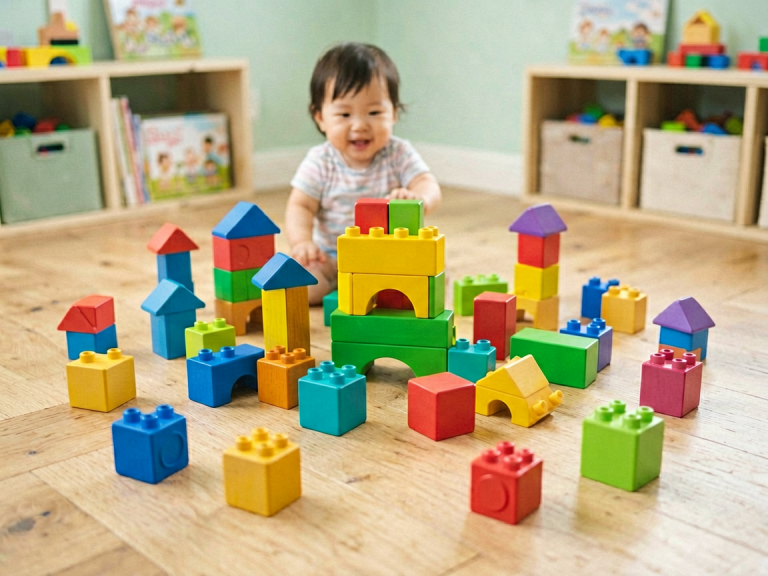
There is timeless value in a set of simple, unpainted wooden blocks. For a 5-year-old, these blocks offer an open-ended experience that requires no instructions, no batteries, and no predetermined outcome. The child can build a castle, a bridge, a spaceship, or simply a pile that they then knock down with glee. The tactile feel of wood, the weight of each piece, and the natural variation in grain provide sensory feedback that plastic simply cannot replicate. Unit blocks, cut in precise mathematical ratios (e.g., a half-unit, a double unit), also introduce early math concepts like fractions and symmetry in a very physical way.
Interlocking Plastic Bricks (e.g., LEGO Duplo and Classic LEGO)
LEGO Duplo remains the gold standard for 5-year-olds transitioning from toddler toys to more complex sets. The larger Duplo bricks are easy for small hands to grasp and connect, and many sets include figures, wheels, and themed elements like animals or construction vehicles. As children approach age six, many are ready for the smaller classic LEGO bricks, but it is important to start with sets that have a manageable number of pieces—typically 50 to 200—and clear, picture-based instructions. The themed sets (fire station, farm, pirate ship) provide scaffolding for creativity, while the classic boxes of assorted bricks encourage free-form building.
Magnetic Building Tiles (e.g., Magna-Tiles, Magformers)
Magnetic tiles have become a modern classic for good reason. They are brilliantly simple: a set of square, triangle, and rectangular plastic tiles with strong magnets embedded in the edges. Children can snap them together to form 2D shapes, then lift them into 3D structures—cubes, pyramids, houses, and even complex geometric forms. The magnetic connection is satisfying and forgiving; if a piece is placed incorrectly, it can be easily adjusted. For 5-year-olds, these toys teach geometry, magnetism basics, and the concept of structural integrity in a way that is almost magical. They also encourage adults to join in, as building a large geodesic dome together can be a family bonding experience.
Construction Sets with Connectors and Rods (e.g., K'NEX, Tinkertoys, Straws and Connectors)
Toys that use rods, sticks, and flexible connectors introduce children to the idea of frameworks and skeletons. K'NEX sets, for example, allow children to build ferris wheels, bridges, and vehicles that actually move. Tinkertoys offer wooden spools and sticks that can create everything from windmills to abstract sculptures. Straws and connectors sets are inexpensive and highly versatile, perfect for building tall towers, tunnels, and even wearable structures like a giant hat. These toys are excellent for developing spatial reasoning because children must visualize how a three-dimensional frame will hold together.
Marbles Runs and Track Systems
A marble run is a building toy with a kinetic payoff. Children construct a track—using ramps, curves, tunnels, and drops—and then release a marble to watch it race down. The trial-and-error nature of marble runs is deeply educational. If the marble flies off the track, why? Perhaps the ramp is too steep, or the curve is too tight. The child must hypothesize, adjust, and test again. This is the essence of scientific inquiry. Many marble run sets now include magnetic components, LED lights, and sound effects, but the simplest plastic track systems are often the most engaging for 5-year-olds.
How to Choose the Right Building Toy for Your 5-Year-Old
Consider Fine Motor Skill Development
At age five, children’s hand muscles and coordination are developing rapidly but are not yet refined. Look for toys that require some effort to connect but are not frustratingly difficult. Magnetic tiles and Duplo bricks are ideal; tiny LEGO bricks or very small connector pieces may still be too challenging. A good rule of thumb: if the child can manipulate the pieces without adult help more than 80% of the time, the toy is appropriate.
Prioritize Open-Endedness Over Pre-Scripted Fun
While themed sets have their place, a child who only ever builds according to instructions may miss the chance to innovate. The best building toys offer a balance: a few starter ideas in a booklet, but the freedom to invent. A box of plain magnetic tiles, for example, has no instructions at all—and that is its strength. For children who need a nudge, you can suggest challenges: “Can you build a tower taller than your teddy bear?” or “Let’s make a bridge that two toy cars can cross at the same time.”
Safety First: Materials, Size, and No Small Parts
The safety landscape for 5-year-olds is different from that for toddlers. They are past the mouthing stage, but small parts can still be a choking hazard for younger siblings. When choosing building toys, ensure there are no tiny pieces that could be swallowed. Also check for sharp edges, toxic paints, and magnets that could be dislodged. High-quality brands like LEGO, Magna-Tiles, and Hape adhere to strict safety standards. Buy from reputable manufacturers and avoid cheap knock-offs that may use inferior materials or weak magnets.
Durability and Storage
Five-year-olds can be surprisingly rough. Toys must withstand being dropped, stomped on, or thrown into a bin. Wooden blocks can chip; plastic can crack. Read reviews that mention durability. Also consider storage: a building toy that scatters across the floor is a recipe for frustration. A large, sturdy plastic bin or a dedicated toy chest with compartments can make clean-up part of the play—a lesson in organization.
Creative Play Ideas to Extend the Building Experience
Storytelling with Structures
Encourage your child to create a story around their building. “You built a castle. Who lives there? Is there a dragon? What happens next?” This integrates literacy and narrative skills with construction. You can even write a short story together about the characters and their adventures in the newly built world.
Building Challenges and Games
Turn building into a friendly competition: “Who can build the tallest tower using only ten blocks?” or “Let’s see who can make a bridge that holds the most toy cars.” These challenges teach resourcefulness and resilience. If a structure fails, it is not a failure—it is data for the next attempt.
Combine Building with Other Toys
Building toys do not exist in a vacuum. Add toy animals, people, and vehicles to the construction scene. A child can build a zoo with magnetic tiles and then populate it with plastic animals. They can construct a garage for toy cars using interlocking bricks. This cross-play helps children see how different systems can integrate, sparking even more complex pretend play.
Introduce Simple Physics and Math
While playing, casually mention concepts: “Why do you think the tower fell? Because the base was too small compared to the top.” Or count together: “How many blocks did you use in the bottom layer? How many in the second layer? That is a pattern!” These informal lessons are far more effective than formal instruction because they are embedded in the joy of play.
Conclusion: The Lasting Impact of Building Toys
In a world increasingly dominated by screens and pre-packaged digital entertainment, building toys offer something profoundly different: the opportunity to create something real, from scratch, with one’s own hands. For a 5-year-old, each click of a brick, each balanced stack, each completed archway is a small victory. It is a moment of empowerment that says, “I made this.” The skills honed through construction play—persistence, spatial reasoning, creativity, and collaboration—are the very skills that will serve them well in school, in future careers, and in life. So whether you choose wooden blocks, magnetic tiles, or a classic LEGO set, know that you are giving a child more than a toy. You are giving them a foundation upon which to build their own bright future.